Loading Search...


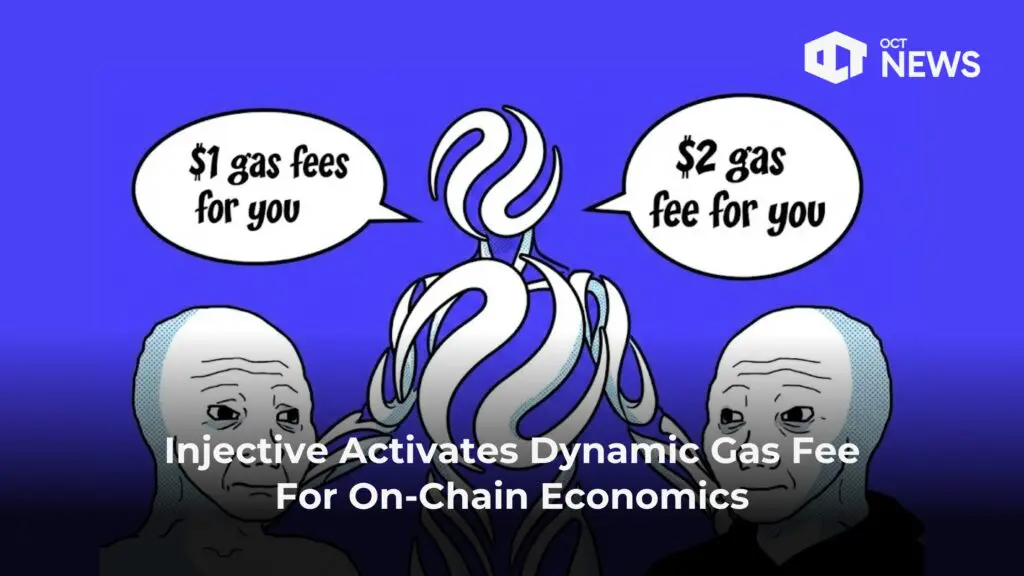
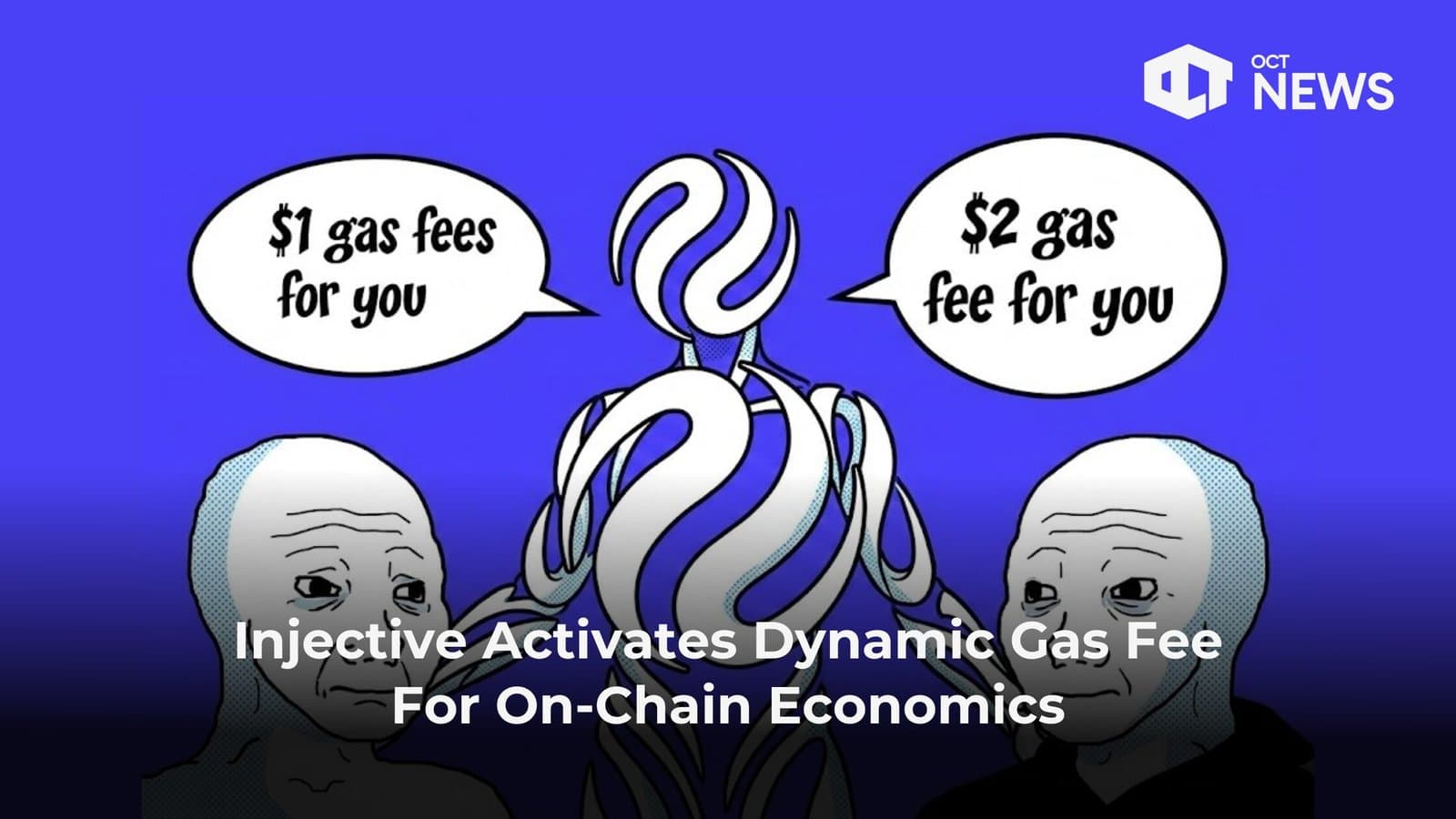
Injective dynamic gas fee upgrade goes live, capped demand-based pricing to boost revenue while keeping transaction costs predictable.

Author: Chirag Sharma
February 21, 2026 Injective has officially activated its latest mainnet enhancement, introducing a fully implemented dynamic gas fee mechanism tied to its native INJ token. The Injective dynamic gas fee upgrade adjusts transaction costs in real time based on network demand while imposing a predictable cap linked to the minimum gas price.
High Signal Summary For A Quick Glance

Crypto Promo
@CryptoVPromo

@injective Dynamic gas is actually a big step. If fees adjust based on demand while keeping revenue optimized, that’s strong token design. Lower user cost + sustainable onchain revenue That’s the model chains need long term. The real question is adoption. Upgrades matter only if volume
🔥NEW: Injective has officially released its new chain upgrade to implement dynamic gas fees with $INJ Now Injective is engineered to lead the industry with optimized onchain revenue generation while simultaneously lowering costs for all onchain users. https://t.co/j5tHKRPElh
06:20 PM·Feb 21, 2026

Minotaurus Presale $MTAUR
@minotaurus_io
@injective lower costs and more revenue at the same time is a rare combo curious how this actually plays out
🔥NEW: Injective has officially released its new chain upgrade to implement dynamic gas fees with $INJ Now Injective is engineered to lead the industry with optimized onchain revenue generation while simultaneously lowering costs for all onchain users. https://t.co/j5tHKRPElh
05:44 PM·Feb 21, 2026

Vadim Wright (❖,❖)
@VadimWright
@injective dynamic gas fees? that's smart for inj
🔥NEW: Injective has officially released its new chain upgrade to implement dynamic gas fees with $INJ Now Injective is engineered to lead the industry with optimized onchain revenue generation while simultaneously lowering costs for all onchain users. https://t.co/j5tHKRPElh
05:40 PM·Feb 21, 2026
High attention and emotional sentiment detected.
During low-traffic periods, users benefit from near-minimal fees, preserving Injective’s reputation for cost efficiency. However, during spikes in activity, the mechanism intelligently prioritizes transactions without allowing runaway congestion pricing. This balance directly addresses a long-standing issue across many blockchains, where fee volatility can discourage participation.
Importantly, fee revenue now feeds into ecosystem mechanisms, including scheduled buybacks and burns. This strengthens $INJ’s deflationary profile while keeping user costs manageable. Early post-upgrade data indicates smooth validator coordination and stable dApp performance, confirming a seamless rollout after governance approval.
Loading chart...
The Injective dynamic gas fee upgrade builds on years of gradual optimization. In 2024, gas compression technology reduced average transaction costs to fractions of a cent. The April 2025 Lyora upgrade introduced preliminary demand-based adjustments, improving mempool efficiency.
However, as EVM scaling expanded under IIP-619, rising activity created the risk of unpredictable fee spikes. Governance discussions revealed a need for refinement rather than expansion. The solution emerged through IIP-620, which introduced a capped structure to prevent volatility while preserving revenue growth.
This evolution reflects Injective’s finance-first positioning. Rather than maximizing short-term fee extraction, the protocol designed a model that aligns user retention with ecosystem sustainability. Revenue scales with demand, but the cap ensures predictability—an essential feature for institutional traders, RWA flows, and high-frequency DeFi.
With the Injective dynamic gas fee upgrade now active, the network attempts to solve a structural challenge facing many Layer-1 chains: balancing revenue generation with user retention.
Unlike models that rely on congestion-driven fee spikes, Injective’s capped dynamic approach creates a more predictable environment. Fees scale intelligently, revenue flows into deflationary mechanisms, and users avoid extreme volatility.
As MultiVM capabilities expand and institutional-grade DeFi grows, stable fee architecture becomes a competitive advantage. The coming weeks will determine whether this model strengthens Injective’s positioning as infrastructure for scalable, finance-native blockchain applications.
Comparison vs previous Injective fee updates (Lyora 2025 + 2024 gas compression)
Comparison vs competitor fee models (Ethereum EIP-1559 + Solana priority fees)
The Injective dynamic gas fee upgrade follows strong governance momentum. IIP-619 for EVM scaling passed with near-unanimous approval and activated on February 19, 2026. IIP-620 secured approval shortly after, enabling the February 21 deployment.
Upcoming dates or deadlines:
Injective’s monthly buyback and burn cycle continues as a recurring deflationary event. No immediate deadline is tied to this upgrade.
Key governance votes or roadmap items:
MultiVM expansions, potential SVM compatibility, enhanced cross-chain bridging, and RWA/payment infrastructure upgrades remain core roadmap targets.
Important confirmations or risks:
Validator telemetry confirms stable performance so far. However, high-load stress scenarios could reveal latency or unforeseen integration issues.
Conditions that would change the narrative:
A sustained surge in on-chain activity validating the revenue-UX balance would reinforce bullish sentiment. Conversely, muted builder migration or competing L1 fee innovations could limit the upgrade’s perceived impact.
Our Crypto Talk is committed to unbiased, transparent, and true reporting to the best of our knowledge. This news article aims to provide accurate information in a timely manner. However, we advise the readers to verify facts independently and consult a professional before making any decisions based on the content since our sources could be wrong too. Check our Terms and conditions for more info.



Injective Activates Dynamic Gas Fee For On-Chain Economics
BGD Labs Exits Aave DAO After Four Years
Base Shifts to In-House Stack, Reducing Reliance on OP Stack
Nexus Labs Launch USDX Stablecoin Backed by US Treasuries
Injective Activates Dynamic Gas Fee For On-Chain Economics
BGD Labs Exits Aave DAO After Four Years
Base Shifts to In-House Stack, Reducing Reliance on OP Stack
Nexus Labs Launch USDX Stablecoin Backed by US Treasuries