Loading Search...


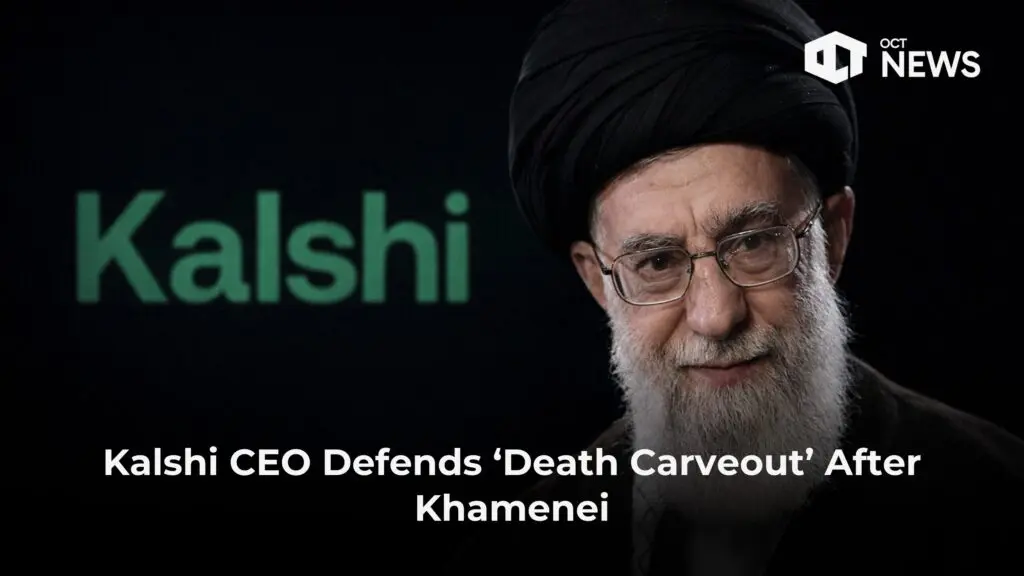
Kalshi CEO Tarek Mansour publicly addressed backlash after the platform declined to resolve its “Khamenei out as Supreme Leader”.

Author: Sahil Thakur
Steady attention without excessive speculation.
1st March 2026 – Kalshi CEO and co-founder Tarek Mansour publicly addressed backlash after the platform declined to resolve its “Khamenei out as Supreme Leader” market to “Yes” following reports of Ayatollah Ali Khamenei’s death.
High Signal Summary For A Quick Glance

Andrew
@AndrewArcz

@mansourtarek_ It’s obvious Kalshi is throwing away their “prediction market” customers as long as they can keep the sports betting which I imagine is a much larger % of business. if that’s the case maybe they should be regulated like a sports betting company and not a “prediction market”
On Khamenei: We don’t list markets directly tied to death. When there are markets where potential outcomes involve death, we design the rules to prevent people from profiting from death. That is what we did here. I know some of you disagree and prefer that we list these
02:41 AM·Mar 1, 2026

Dvldog0352
@dvldog0352
@mansourtarek_ Ahh yes because a dictator was going to willingly just “step down” Your rules were ambiguous regarding death and intentionally wording it in a way to cause confusion. If you didn’t want people to bet on death of a leader, then there should have been a giant red warning “In the
On Khamenei: We don’t list markets directly tied to death. When there are markets where potential outcomes involve death, we design the rules to prevent people from profiting from death. That is what we did here. I know some of you disagree and prefer that we list these
02:01 AM·Mar 1, 2026

Lance Uppercut
@LanceupperPI
@mansourtarek_ I don't understand this. People made money by buying and selling during the fracas, how is that different from buying a position post-strike and holding it? What happens to those realized or unrealized gains/losses?
On Khamenei: We don’t list markets directly tied to death. When there are markets where potential outcomes involve death, we design the rules to prevent people from profiting from death. That is what we did here. I know some of you disagree and prefer that we list these
01:56 AM·Mar 1, 2026
In a post on X, Mansour explained that Kalshi does not allow users to directly profit from death-related outcomes. He said the company designs its markets to prevent payouts triggered specifically by a person’s death. According to him, that policy aligns with Kalshi’s obligations as a U.S.-regulated entity under the Commodity Futures Trading Commission.
“We don’t list markets directly tied to death,” Mansour wrote. “When there are markets where potential outcomes involve death, we design the rules to prevent people from profiting from death.”
The post quickly gained traction, drawing tens of thousands of views and hundreds of replies. Many users criticized the decision and accused the company of ambiguity in its rules.
The disputed market asked whether Khamenei would be “out” as Supreme Leader. After reports circulated that he had died following U.S.-Israel strikes, traders expected the market to resolve to “Yes.”
However, Kalshi applied what Mansour described as a “death carveout.” Instead of treating death as an automatic “Yes” outcome, the company followed pre-existing rules designed to prevent direct profit from death events.
Mansour argued that leadership change markets still serve an important forecasting function. He said such markets help participants assess geopolitical, economic, and national security consequences tied to transitions of power. He also pointed out that rulers can step down or transfer power without dying, citing Venezuela as a recent example.
At the same time, he acknowledged that the controversy exposed user confusion. He said Kalshi plans to improve how it surfaces rules and clarifies edge cases within its user interface.
To address user backlash, Kalshi announced several remedial steps.
First, it will reimburse all trading fees from the market. Second, traders who held positions before Khamenei’s reported death will receive payouts based on the last traded price before confirmation. Third, anyone who entered positions after news of the death will receive a full reimbursement of their cost of entry.
Kalshi did not delist the concept entirely. Instead, it effectively neutralized death as a qualifying trigger for a “Yes” resolution under its framework. The platform has since shifted focus to a successor market asking who will become the next Supreme Leader of Iran.
Meanwhile, Polymarket handled similar markets differently.
On Polymarket, the equivalent “Khamenei out” market has traded at 100 percent probability for “Yes,” with roughly $45 million in volume. Other related markets, such as those predicting a successor announcement or public appearances, also reflect strong trader belief that Khamenei is no longer in power.
Unlike Kalshi, Polymarket does not operate under CFTC regulation. As a crypto-based prediction platform, it applies different rule structures. User commentary suggests that death qualifies as an “out” resolution under its market definitions. Some reporting has indicated that Polymarket may resolve certain death-related markets based on last traded prices to avoid perverse incentives, but it has not implemented the type of reimbursement structure seen at Kalshi.
The key distinction appears to be regulatory.
Kalshi operates as a CFTC-regulated exchange in the United States. Therefore, it must comply with rules that restrict markets directly tied to death. Mansour emphasized that direct death-based payouts are not allowed for U.S.-regulated entities.
Polymarket, by contrast, operates on blockchain infrastructure and does not face the same U.S. regulatory framework. As a result, it allows broader market definitions and has seen significantly higher volumes in geopolitical betting.
The episode highlights growing tension between regulated U.S. prediction markets and offshore crypto platforms. While Kalshi prioritizes regulatory compliance and ethical guardrails, some traders argue that its approach introduces complexity and payout ambiguity.
Our Crypto Talk is committed to unbiased, transparent, and true reporting to the best of our knowledge. This news article aims to provide accurate information in a timely manner. However, we advise the readers to verify facts independently and consult a professional before making any decisions based on the content since our sources could be wrong too. Check our Terms and conditions for more info.



Kalshi CEO Defends ‘Death Carveout’ After Khamenei
New X Customization Will Allow Crypto Users to Curate Timeline
$1.2M Profit on Polymarket Before U.S. Strike on Iran Sparks Insider Trading Concerns
Vitalik Buterin Proposes EIP-8141 for Full Account Abstraction
Kalshi CEO Defends ‘Death Carveout’ After Khamenei
New X Customization Will Allow Crypto Users to Curate Timeline
$1.2M Profit on Polymarket Before U.S. Strike on Iran Sparks Insider Trading Concerns
Vitalik Buterin Proposes EIP-8141 for Full Account Abstraction