

Loading Ratings...


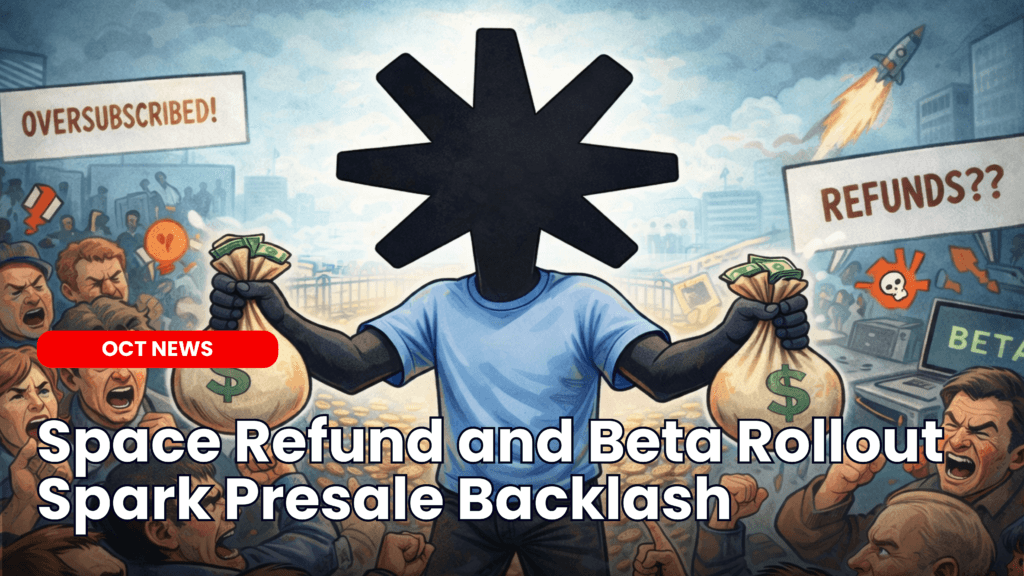
Space Refund and Beta Rollout begin after a $20M oversubscribed sale, as users demand fairness and proof of product delivery.

Author: Akshat Thakur
Published On: Sun, 25 Jan 2026 17:28:09 GMT
January 24, 2026 — Space Refund and Beta Rollout plans are now at the center of controversy after the Solana-based leveraged prediction market raised over $20 million despite marketing a $2.5 million soft cap. The project is facing heated backlash over refund fairness, oversubscription messaging, and perceived preferential treatment, while simultaneously pushing toward a beta release designed to prove real utility before its token launch.
High Signal Summary For A Quick Glance
Space is positioned as a leveraged prediction market on Solana, blending event-based markets (politics, sports, crypto outcomes) with DeFi leverage mechanics. The platform has marketed itself as a next-generation alternative to traditional prediction apps by offering up to 10x leveraged bets, fast settlement, and low-fee execution powered by Solana’s high-throughput network.
Its fundraising, however, has become the dominant narrative.
Space’s sale originally framed $2.5 million as the “target”, which many interpreted as a functional cap even if not explicitly described as a hard limit. Once commitments expanded toward and past the $20 million range, the discussion shifted from excitement to suspicion. Critics argued the structure resembled a capital capture mechanism that blurred the line between “soft cap” fundraising and open-ended presale extraction.
That tension is now shaping how the market interprets the project’s next steps, especially the promised Space Refund and Beta Rollout sequence.
The controversy can be traced through a clear timeline:
Space’s public sale closed on January 16, 2026, after raising more than $20 million. Soon after, community posts began circulating on X highlighting the mismatch between the “$2.5M” messaging and the final raise. Calls for refunds accelerated, with some users alleging that the project’s communication shifted after funds were secured.
By the following week, Space began outlining a refund framework. That framework, however, became its own flashpoint because users accused the team of prioritizing certain wallets, delaying refunds for retail, and keeping too much capital under the justification of growth funding.
Now Space is pushing forward with the second half of the plan: a beta rollout designed to show the product is real and shipping.
Key milestones in the token sale refunds and beta rollout
The public token sale opens and quickly becomes oversubscribed due to strong demand.
The sale closes at $20M raised and initial refunds begin, totaling approximately $7.3M.
An AMA outlines details of a second refund round and invites community input on distribution plans.
Updated refund structure and rollout timelines are shared publicly via X.
A platform demonstration is released for public viewing, showcasing early product functionality.
The second refund claims process begins while beta registration opens to onboard early users.
Refund claims continue processing while testing feedback is actively collected from early participants.
The mainnet beta goes live ahead of the Token Generation Event, marking the start of real user activity.
The first Space refund wave was presented as an attempt to reduce pressure and address oversubscription. But it quickly became controversial due to two perceptions:
First, the refund process appeared selective. Wallet trackers and on-chain observers pointed to clusters of addresses that received refunds earlier than others. While Space supporters argued this could reflect operational batching, funding logistics, or allocation-based processing, critics framed it as favoritism especially if larger allocations were prioritized.
Second, the sale itself had created a fairness trap. In oversubscribed presales, refund logic often depends on:
That discretion is exactly what retail participants distrust particularly after 2025–2026 saw multiple public sales criticized for insider advantage, unclear rules, and post-launch dumping.
In Space’s case, the refund debate became as damaging as the oversubscription itself, because it raised the possibility that the team was exercising unilateral judgment on which funds were “eligible” for return.
The second phase of the Space Refund and Beta Rollout plan centers on a structured claims flow, reportedly affecting thousands of eligible wallets.
This tiered system is where Space’s strategy becomes both more organized and more risky.
From Space’s perspective, the logic is simple: the project wants to:
But from the community’s perspective, tiered refund models can look like a “choose-your-own-fairness” system where:
Even if the team’s intentions are legitimate, the trust gap becomes structural. In crypto, credibility is not only about doing the right thing, it’s about being provably unable to do the wrong thing. That is why many users demanded either:
If the second refund round runs smoothly, Space could stabilise sentiment quickly. If it produces more “some got refunded, some didn’t” stories, the reputational damage could compound into the beta phase.
Over the next 1–2 weeks, Space will likely be judged on three measurable outcomes:
If Space can close the refund chapter cleanly and ship a strong beta, the project may regain the “build-first” narrative and position itself as a flagship Solana DeFi primitive in the prediction market category.
If not, the Space Refund and Beta Rollout may become remembered not as a recovery plan but as the point where community trust broke.
Real voices. Real reactions.
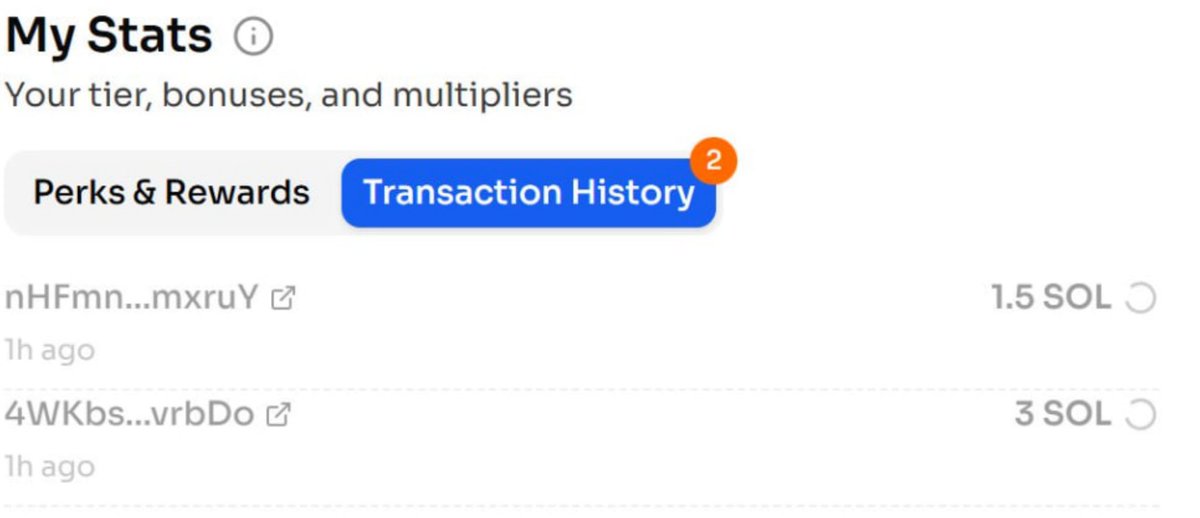
@intodotspace Everyone who sent funds after the end of the timer, unsubscribe here. We will show that this is a serious problem and we want to get an answer to which category we will fall https://t.co/qlQxgRS1it

@intodotspace "live streaming", would have thought if you were going to raise almost $10m you would have a finished product BEFORE the ICO not a beta AFTER

@intodotspace What about those that bought after public sale was closed? Are we getting a full refund?

Our Crypto Talk is committed to unbiased, transparent, and true reporting to the best of our knowledge. This news article aims to provide accurate information in a timely manner. However, we advise the readers to verify facts independently and consult a professional before making any decisions based on the content since our sources could be wrong too. Check our Terms and conditions for more info.