Loading Search...



Stablecoin Yield Debate grows as U.S. banks lobby Congress to limit crypto yield products during discussions around the CLARITY Act.

Author: Akshay
Steady attention without excessive speculation.
March 5, 2026 — Major U.S. banks are facing criticism after reports that industry groups are lobbying lawmakers to restrict stablecoin yield products as part of ongoing regulatory discussions. According to statements shared by Eric Trump, institutions including JPMorgan Chase, Bank of America, and Wells Fargo are pushing for tighter rules on crypto platforms offering higher returns to users. The debate centers on proposed legislation such as the Clarity for Payment Stablecoins Act, which could limit reward or yield features tied to stablecoin products as regulators weigh financial stability concerns against growing competition from digital asset platforms.
High Signal Summary For A Quick Glance

DXC Foundation
@Dxc_Foundation

@EricTrump Your father and you brought about the end of cryptocurrency and collaborated with CZ, everyone knows this, don't worry.
Let me make this very clear: Big Banks (think JPMorgan Chase, Bank of America, Wells Fargo, etc.) are lobbying overtime to block Americans from getting higher yields on their savings—while trying to block any rewards or perks from being given to customers. These banks, and
09:37 PM·Mar 4, 2026
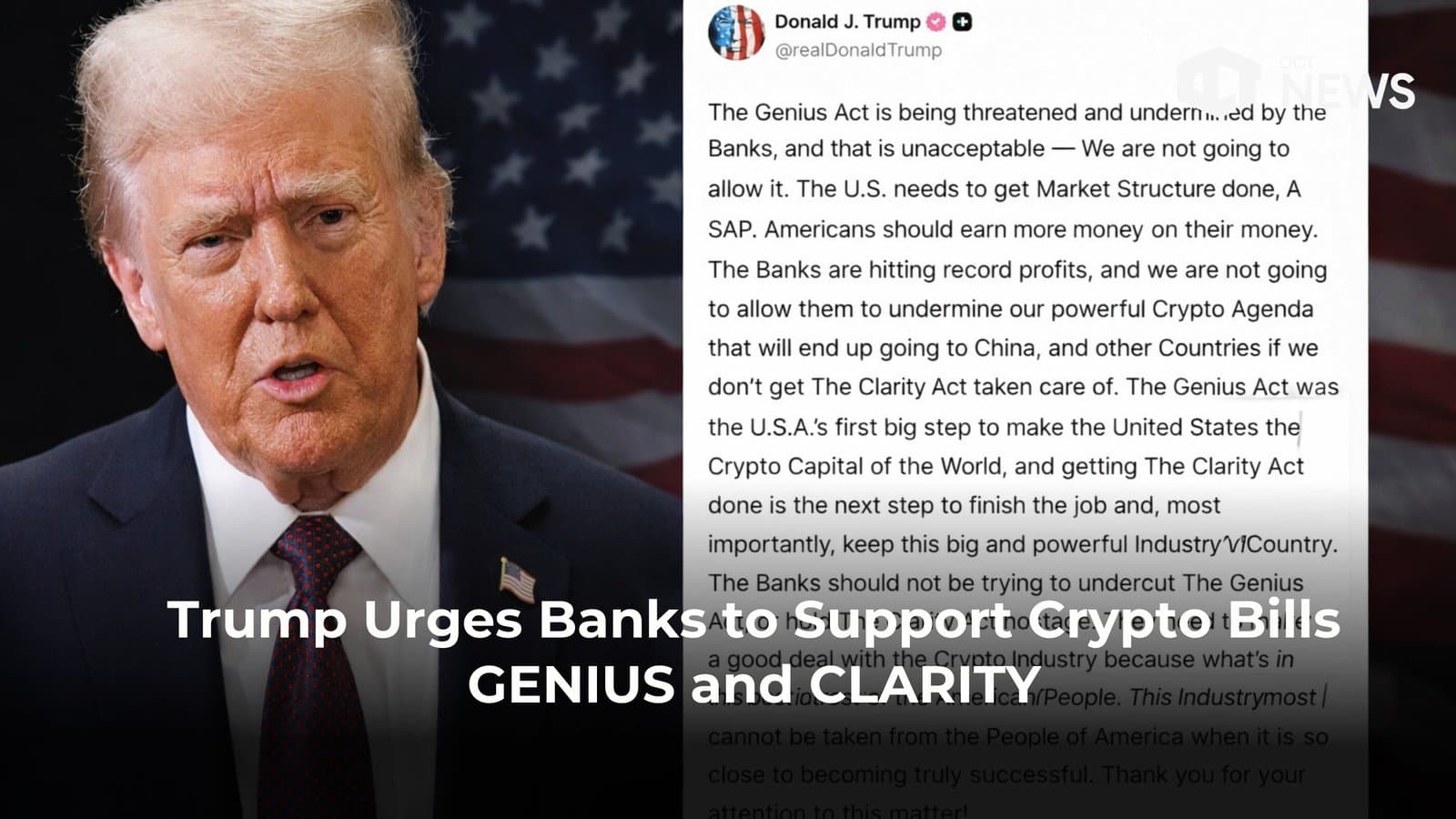
The dispute centers on U.S. regulatory efforts to define how stablecoins can operate within the financial system. Laws such as the GENIUS Act and the proposed Digital Asset Market Clarity Act aim to regulate digital asset markets, including whether stablecoins can offer yield or reward programs.
Eric Trump has criticized major banks including JPMorgan Chase and Bank of America for lobbying against such products. The debate also intersects with the crypto project World Liberty Financial, which is developing a dollar backed stablecoin and supports broader crypto based financial services.
Timeline: U.S. Stablecoin Regulation from Lobbying Push to GENIUS and CLARITY Act Battles
Major banking groups including the American Bankers Association push for restrictions on stablecoin yields to prevent deposit migration from traditional banks.
The GENIUS Act enters the Senate as the first major federal stablecoin framework, including strict reserve requirements and a prohibition on direct yield payments.
The CLARITY Act proposes clearer jurisdiction between the SEC and CFTC for digital assets while banks lobby to close stablecoin yield loopholes.
The Senate approves the bill with a 68–30 vote, strengthening reserve safeguards but maintaining the no-yield policy for stablecoin holders.
The House passes both the GENIUS Act and the CLARITY Act, with GENIUS containing loopholes allowing indirect yield rewards through third-party services.
President Trump signs the GENIUS Act, establishing the first federal stablecoin regulatory framework with implementation delegated to regulators.
Platforms begin offering indirect yield incentives through exchanges and DeFi integrations, triggering new complaints from banking groups.
The FDIC proposes regulatory procedures allowing banks to issue stablecoins through subsidiaries under GENIUS Act oversight.
Banks push for amendments banning indirect stablecoin yields as new stablecoin issuers and DeFi platforms expand offerings.
The OCC publishes proposed regulatory guidelines for stablecoin issuers and reserves, opening a 60-day public comment period.
The Senate Banking Committee holds hearings focused on yield rules and competitive concerns between crypto platforms and traditional banks.
Negotiations stall after the White House deadline for a compromise on stablecoin yield rules in the CLARITY Act passes without agreement.
The OCC introduces further rule proposals covering stablecoin reserves, issuer compliance standards, and enforcement of the no-yield structure.
Eric Trump publicly criticizes bank lobbying against stablecoin yields, framing it as protectionism as negotiations around CLARITY remain stalled.
Possible Senate markup and vote on the CLARITY Act, alongside final GENIUS Act regulatory rules from agencies such as the OCC and FDIC.
A similar conflict emerged during the 2025 debate around the GENIUS Act. Banking groups such as the American Bankers Association pushed lawmakers to prohibit stablecoin issuers from offering direct interest payments, arguing that yield bearing tokens could compete with traditional bank deposits.
Market reaction was limited but noticeable. Some stablecoins saw short term supply fluctuations of around 3–5% during the debate, though the sector quickly recovered. By the end of 2025, total stablecoin supply exceeded $300 billion as exchanges and DeFi platforms continued exploring reward based incentives.
The passage of the GENIUS Act in 2025 triggered noticeable market momentum across the stablecoin sector. Total stablecoin supply rose from roughly $205 billion at the start of the year to about $306 billion by December, representing nearly 49% growth. While some assets such as USD Coin experienced short term volatility during Senate debates, the sector quickly recovered as regulatory clarity encouraged broader adoption.
Sentiment across crypto communities shifted from mixed to largely positive after the law passed. Discussions initially focused on concerns about yield restrictions favoring traditional banks, but optimism grew as institutions began exploring stablecoin payments and settlement use cases. The clearer regulatory framework helped accelerate onchain activity and renewed lobbying efforts from banks, setting the stage for the current debate over stablecoin rewards.
Evolution from the GENIUS Act to the CLARITY Act in U.S. stablecoin regulation
Focus now shifts to progress around the Digital Asset Market Clarity Act, where lawmakers are debating whether stablecoins can offer rewards or yield programs. Upcoming negotiations in Congress will determine whether crypto platforms can provide incentives on stablecoin holdings.
The outcome could shape competition between banks and crypto platforms. Allowing rewards may accelerate stablecoin adoption, while strict restrictions could limit their role and preserve traditional banking dominance in savings products.
Our Crypto Talk is committed to unbiased, transparent, and true reporting to the best of our knowledge. This news article aims to provide accurate information in a timely manner. However, we advise the readers to verify facts independently and consult a professional before making any decisions based on the content since our sources could be wrong too. Check our Terms and conditions for more info.



Sui Launches USDsui Stablecoin to Power Global Payments
Stablecoin Yield Debate as Banks Push New Restrictions
Backpack Introduces On-Chain IPOs, Bringing Public Offerings to Solana
Crypto Trader $24M Wrench Attack Theft After Violent Assault
Sui Launches USDsui Stablecoin to Power Global Payments
Stablecoin Yield Debate as Banks Push New Restrictions
Backpack Introduces On-Chain IPOs, Bringing Public Offerings to Solana
Crypto Trader $24M Wrench Attack Theft After Violent Assault