Loading Search...



Crypto.com and Underdog launch sports prediction markets in 16 U.S. states, bypassing gambling laws with tradeable contracts tied to game outcomes. No sportsbook, no license needed.

Author: Sahil Thakur
In a bold regulatory workaround, Crypto.com and fantasy gaming giant Underdog have announced the launch of real-money sports prediction markets across 16 U.S. states where traditional sports betting remains outlawed.
Rather than seeking gaming licenses, the companies are leveraging a financial market structure that allows users to trade on game outcomes via derivatives contracts. It’s not betting, at least not legally. Instead, it’s a federally compliant structure that treats predictions as tradable assets.
The system hinges on Crypto.com’s CFTC-registered derivatives arm, CDNA, which supplies the back-end infrastructure. Underdog will manage the user-facing experience, integrating the contracts directly into its existing fantasy gaming app.
No sportsbooks are involved. There are no bookmaker odds. Prices are determined entirely by user activity. The more people buy into a particular outcome, the more expensive it becomes. Traders profit either by selling high or by being right and matching the final market consensus.
Jeremy Levine, Underdog’s CEO, called prediction markets “one of the most exciting developments” in recent sports gaming history. Speaking on CNBC, Levine said, “The future of prediction markets is going to be about sports, and no one does sports better than Underdog.”
Other platforms including Polymarket, Kalshi, and Robinhood , have offered similar event-based contracts. But none have launched at this scale or with this level of integration into an existing fantasy sports ecosystem.
Underdog’s edge lies in its existing user base and the infrastructure advantage gained through its partnership with . CDNA’s regulatory status under the CFTC allows the companies to operate nationally, without requiring state-by-state gaming licenses.
The timing is also critical. California, Texas, and Florida, the three most populous U.S. states still ban online sports betting. Florida’s market is tightly controlled by the Seminole Tribe through its exclusive casino and sportsbook rights.
By offering an alternative that avoids classification as gambling, Underdog aims to tap into a massive user base locked out of traditional betting markets.
The launch is likely to draw regulatory attention. Questions persist over whether these contracts violate state gaming laws or infringe on tribal sovereignty as defined by the Indian Gaming Regulatory Act.
So far, no state or federal agency has intervened. The Commodity Futures Trading Commission has not yet ruled on the classification of sports prediction contracts, leaving a grey zone the companies are eager to exploit.
Analyst Jordan Bender of Citizens Gaming noted back in April, “Prediction markets are too loud to ignore.” He estimated the sector could be worth $555 million in 2025. For context, online sports betting brought in over $16 billion in revenue last year.
This partnership comes as Crypto.com expands its U.S. footprint. On the same day, the company launched its revamped “Level Up” rewards program, which introduces subscription tiers offering better trading rates and CRO token incentives.
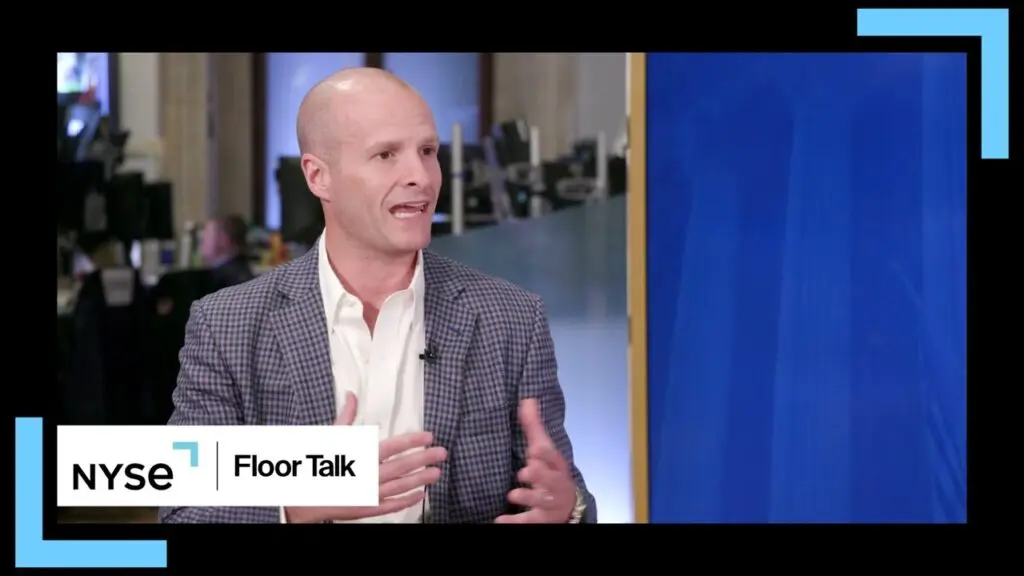
Travis McGhee, Global Head of Capital Markets at Crypto.com, said: “We were the first to offer sports event contracts. This partnership with Underdog significantly expands user access to our infrastructure.”
Src: NYSE Youtube
Together, the two firms are blending financial instruments, blockchain infrastructure, and fantasy sports to create a product that could reshape the regulatory debate around online betting in the United States.
Our Crypto Talk is committed to unbiased, transparent, and true reporting to the best of our knowledge. This news article aims to provide accurate information in a timely manner. However, we advise the readers to verify facts independently and consult a professional before making any decisions based on the content since our sources could be wrong too. Check our Terms and conditions for more info.



Pump.fun Multi-Chain Expansion Signals Ethereum, Base, Monad, BSC Launch
DoubleZero Launches Edge for Real-Time Solana Shred Data
GainBitcoin Fraud Arrest: India CBI Arrests Darwin Labs CTO
IXS Launches Tokenized Private Credit for SME Lending
Pump.fun Multi-Chain Expansion Signals Ethereum, Base, Monad, BSC Launch
DoubleZero Launches Edge for Real-Time Solana Shred Data
GainBitcoin Fraud Arrest: India CBI Arrests Darwin Labs CTO
IXS Launches Tokenized Private Credit for SME Lending