Loading Search...



Venice AI Becomes Recommended Model Provider for OpenClaw, driving VVV token surge as privacy-focused AI integrates with agent infrastructure.

Author: Akshat Thakur
March 3, 2026 — Venice AI Becomes Recommended Model Provider for OpenClaw following confirmation from founder Erik Voorhees that Venice is now highlighted within OpenClaw’s documentation as the preferred inference provider. The integration strengthens ties between privacy-focused AI infrastructure and autonomous crypto-native agents, triggering a sharp rally in Venice’s VVV token. The move positions Venice at the center of the fast-growing OpenClaw ecosystem, which has rapidly gained traction among developers building self-operating AI agents.
High Signal Summary For A Quick Glance

Venkat
@VenkatBalakumar

@ErikVoorhees @openclaw Why am I asked to pay immediately in the UK before trying out what Venice is? If it is age verification, it can be done with a simple £1 card transaction and allow limited feature?
Venice is now the recommended model provider for @openclaw 🌅🦞 https://t.co/0d0NjXIK26
06:21 PM·Mar 2, 2026

Amir
@amir0ffx
@ErikVoorhees @openclaw @ErikVoorhees Tempted to try it out! got tired of the pricing and ungenerous token limits of openrouter! which models are supported?
Venice is now the recommended model provider for @openclaw 🌅🦞 https://t.co/0d0NjXIK26
05:19 PM·Mar 2, 2026

Aamir
@aamir1rasheed
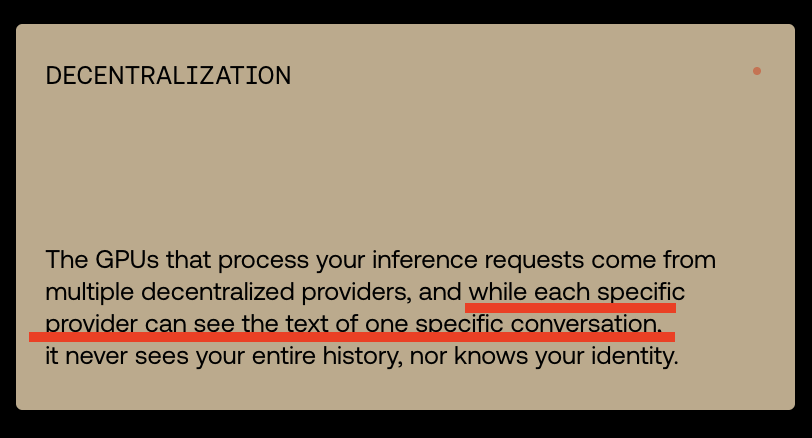
@ErikVoorhees @openclaw Sorry, but this doesn't seem private at all. On your website, it clearly says that random untrusted computers on the Venice network can read my data. I'm having trouble imagining who would accept this as reasonable privacy guarantee. https://t.co/qHbV5w28B3
Venice is now the recommended model provider for @openclaw 🌅🦞 https://t.co/0d0NjXIK26
04:34 PM·Mar 2, 2026
Steady attention without excessive speculation.
Venice AI launched in May 2024 as a censorship-resistant and privacy-first alternative to centralized AI platforms. Founded by Erik Voorhees, the platform operates on managed GPU infrastructure designed to provide zero-data-retention processing. Unlike mainstream AI providers, Venice markets itself as an uncensored and crypto-native inference layer.
The VVV token, deployed on Base in January 2025, enables autonomous AI agents and developers to pay for inference access via API. A significant portion of the supply was distributed to users and communities to bootstrap adoption.
OpenClaw, previously known as Moltbot and Clawdbot, emerged in late 2025 as an open-source framework for building autonomous AI agents. It allows agents to run locally across macOS, Windows, and Linux while integrating with messaging platforms like Telegram, Discord, Slack, and WhatsApp. With over 68,000 GitHub stars, OpenClaw has become one of the most visible agent frameworks in early 2026.
OpenClaw documentation initially listed Venice’s llama-based model as a default option, with Voorhees recommending upgrades to more advanced models such as GLM 4.6 for improved intelligence.
While Venice is one of more than 20 supported providers, its privacy guarantees distinguish it from centralized AI APIs. The designation as a recommended provider signals stronger ecosystem alignment between crypto-native AI infrastructure and agent frameworks.
Some users noted documentation changes shortly after the announcement, creating temporary confusion. However, the market reaction suggested the integration was taken seriously by traders and developers alike.
After Venice AI Becomes Recommended Model Provider for OpenClaw, the VVV token surged approximately 14% within 24 hours and recorded a 70% gain over the week.
At its peak, Venice briefly reached a fully diluted valuation above $600 million. The rally reflects growing investor interest in decentralized AI infrastructure, particularly projects that combine privacy guarantees with programmable economic agents.
The announcement also reinforces Base’s expanding role in the AI-agent economy, where developers are increasingly experimenting with onchain billing for inference services.
Loading chart...
OpenClaw enables users to configure model providers using API keys. By selecting Venice, agents route inference requests through Venice’s managed GPU fleet.
Venice claims it does not log or store user queries, offering zero-data-retention guarantees. This design is particularly relevant for agents handling financial data, sensitive information, or automated crypto transactions.
Payments for inference can be handled through crypto-native methods, including VVV tokens, enabling AI agents to transact without relying on traditional billing systems.
The integration has sparked debate around infrastructure transparency and potential eavesdropping risks. Critics questioned whether managed GPU infrastructure can fully guarantee privacy at scale.
Voorhees addressed concerns by emphasizing that Venice does not rely on distributed unknown nodes and plans further privacy improvements.
Supporters argue that privacy-preserving inference is essential as AI agents begin operating autonomously within financial and crypto ecosystems. The collaboration highlights the accelerating convergence between decentralized AI and onchain economic systems.
If adoption continues, Venice’s positioning within OpenClaw could expand the role of privacy-first AI models in the emerging agent-driven economy of 2026.
Our Crypto Talk is committed to unbiased, transparent, and true reporting to the best of our knowledge. This news article aims to provide accurate information in a timely manner. However, we advise the readers to verify facts independently and consult a professional before making any decisions based on the content since our sources could be wrong too. Check our Terms and conditions for more info.