Loading Search...



WLFI reported that its USD1 stablecoin briefly lost its $1 peg during what the team described as a “coordinated attack.”

Author: Sahil Thakur
24th February 2026 – WLFI reported that its USD1 stablecoin briefly lost its $1 peg during what the team described as a “coordinated attack.”
USD1, a dollar-backed stablecoin with a market cap of roughly $4.8–5 billion, dipped as low as $0.9802–$0.994 on major exchanges including Binance. However, within about 30 minutes, the token recovered close to parity, trading around $0.998–$1.00.
Importantly, WLFI stated that no smart contracts or treasury reserves were compromised. The project emphasized that USD1 remains fully backed 1:1 by short-term U.S. Treasuries and cash equivalents, with custody via BitGo and regular attestations.
High Signal Summary For A Quick Glance

Cointelegraph
@Cointelegraph

🚨 ALERT: WLFI says USD1 faced a coordinated attack involving hacked accounts and large $WLFI shorts, but the stablecoin continues to trade at par with full 1:1 backing. https://t.co/RaFketRcgo

06:00 PM·Feb 23, 2026

Coin Bureau
@coinbureau
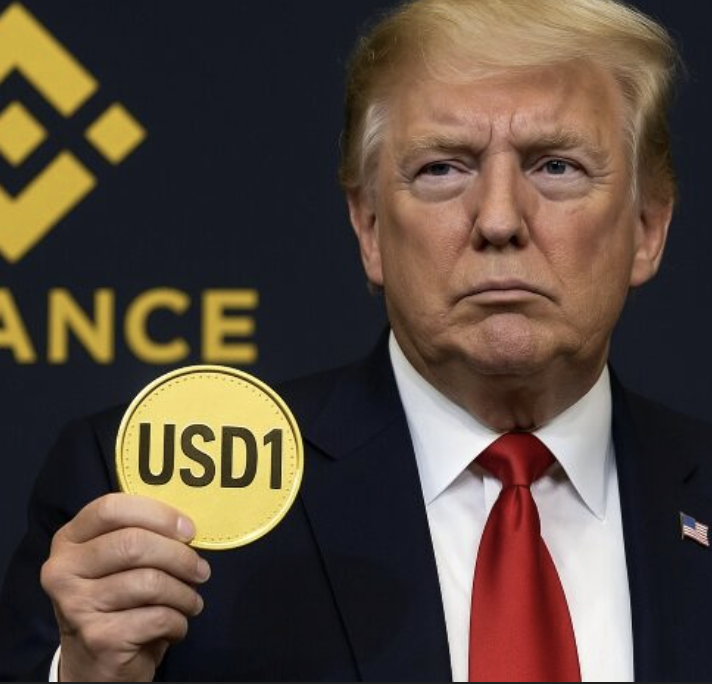
🔥TRUMP-LINKED STABLECOIN BRIEFLY DEPEGS USD1 slipped to around $0.98 on Binance before recovering within minutes. At the same time, $WLFI fell roughly 7%. World Liberty claimed it repelled a “coordinated attack” involving hacked X accounts, disinformation, and short-selling. https://t.co/U2RXDTXGs5
05:30 PM·Feb 23, 2026

Wise Advice
@wiseadvicesumit
🚨 #USD1 Briefly Depegs After Social Media Panic Today, USD1 dropped to $0.9942, with wicks touching $0.9802. At the same time, WLFI shows a little voltality What triggered it? A deleted retweet related to new USD1 pairs on Binance. That deletion sparked panic. But on-chain https://t.co/8m8nLXUSYF

03:21 PM·Feb 23, 2026
High attention and emotional sentiment detected.
According to WLFI’s official statement, attackers launched a multi-layered attempt to destabilize USD1 and profit from panic.
Specifically, the project alleges:
WLFI said the attackers attempted to trigger a cascading loss of confidence. However, the team argued that USD1’s mint-and-redeem structure prevented structural damage.
So far, WLFI has not publicly released transaction hashes, forensic reports, or third-party verification supporting the coordinated-attack claim. As of February 24, no independent security firm or regulator has confirmed the hacking allegations.
While USD1 quickly recovered, the WLFI governance token saw heavier volatility.
The token fell roughly 7–8% intraday, dropping near $0.107 before partially rebounding to around $0.11–$0.112. Trading volume surged sharply, with some reports estimating more than $300 million in 24-hour activity.
The spike in volume suggests aggressive repositioning, likely from both short-term traders and speculators reacting to the headline risk.
Loading chart...
At the center of the narrative sits Eric Trump, who is publicly linked to WLFI as a co-founder and promoter. His X bio continues to reference WorldLibertyFi and related projects.
However, during the volatility window, Eric Trump deleted at least one retweet promoting new USD1 trading pairs on Binance. Reports suggest he removed multiple recent promotional posts.
Observers quickly linked the deletions to the token drop. Headlines framed the move as potentially signaling distancing from the project. Social media speculation intensified, with users asking whether the deletions indicated internal issues.
Later that day, Eric Trump posted a supportive message praising USD1’s growth, transparency, exchange expansion, and proof-of-reserves framework. The post received strong engagement but also skeptical replies referencing the earlier deletions.
WLFI has not explicitly stated whether any deletions were linked to compromised accounts.

Src: X
The timing added further complexity.
On the same day, blockchain investigator ZachXBT teased a major February 26 investigation into “one of crypto’s most profitable businesses” involving alleged insider trading. The vague reference sparked widespread speculation. Polymarket bettors placed over $2 million wagering on potential targets, with WLFI among the names circulating.
ZachXBT has not confirmed WLFI as the subject.
Meanwhile, WLFI was already under political scrutiny. Earlier in February, House Democrats reportedly sent a letter investigating alleged UAE ties, potential policy conflicts, and links between USD1 and large Emirati crypto deals.
Together, these threads created a heightened sensitivity environment around WLFI.
The temporary depeg triggered comparisons to past stablecoin failures, including Terra’s collapse. However, key differences remain.
Unlike algorithmic stablecoins, USD1 claims full asset backing and redeemability. The peg recovered quickly, and no structural breakdown occurred.
That said, critics argue that short-lived depegs can expose liquidity fragility or exchange-side imbalances even without reserve impairment.
The situation remains fluid. If ZachXBT’s investigation or regulatory developments intersect with WLFI, volatility could return.
Our Crypto Talk is committed to unbiased, transparent, and true reporting to the best of our knowledge. This news article aims to provide accurate information in a timely manner. However, we advise the readers to verify facts independently and consult a professional before making any decisions based on the content since our sources could be wrong too. Check our Terms and conditions for more info.



WLFI’s USD1 Stablecoin Briefly Depegs Amid “Coordinated Attack”
IoTeX Hit by $2M–$4M Exploit After Private Key Compromise
ZachXBT Criticizes Phantom For Address Poisoning
Trove Markets Alleged Mastermind Doxxed in $11.5M ICO Scam
WLFI’s USD1 Stablecoin Briefly Depegs Amid “Coordinated Attack”
IoTeX Hit by $2M–$4M Exploit After Private Key Compromise
ZachXBT Criticizes Phantom For Address Poisoning
Trove Markets Alleged Mastermind Doxxed in $11.5M ICO Scam