Loading Search...


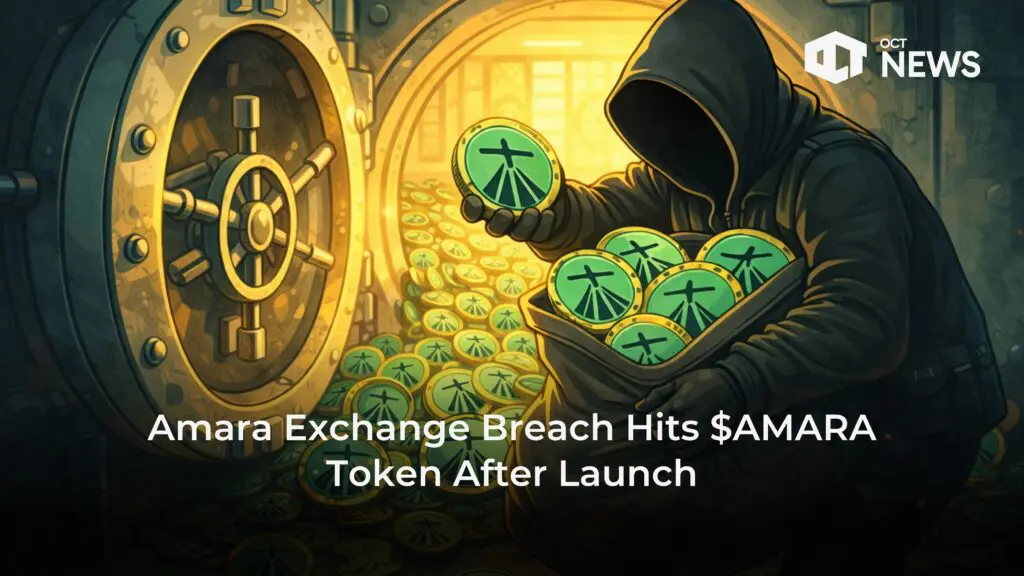
Amara exchange breach leads to $AMARA token crash after 5% supply sell-off, raising security and transparency concerns in DeFi.

Author: Akshat Thakur
February 14, 2026 — Amara exchange breach triggered a sharp sell-off in the newly launched $AMARA token after 5% of the total supply was dumped on-chain. The incident occurred two days after the token’s debut on Base and led to a rapid price decline. The event matters because Amara Exchange positioned itself as a sustainable perpetual futures DEX, and the security incident has raised immediate concerns about custody practices, token controls, and trust in new DeFi launches.
High Signal Summary For A Quick Glance

Nevermind
@ExistenZ0070

@AmaraeXchange Unfortunately Amara is/was just a way to gather funds from people. It is just a scam project to make money. Some people will learn this in a hard way. People who know $Dione and experinced knows the story already.
https://t.co/sMFfgQyBT0
11:38 AM·Feb 14, 2026

Shabbat.eth
@shabbat_eth
@AmaraeXchange Scammy scammerson
https://t.co/sMFfgQyBT0
09:50 PM·Feb 13, 2026
Steady attention without excessive speculation.
Amara Exchange launched as a decentralized perpetual futures platform built on Base, an Ethereum Layer 2 network. The project promotes a sustainability-focused model, positioning itself as a “clean perps DEX” aligned with carbon-neutral practices.
The Dione Protocol powers the platform and focuses on real-world asset integration and environmentally aligned infrastructure. The $AMARA token serves as the platform’s utility and governance asset, with use cases including staking rewards and trading fee discounts.
The token launched on February 11, 2026 with a total supply of 1 billion tokens. Dione Labs controlled multisig wallets that held a large portion of the supply and allocated funds for liquidity, treasury, and community incentives.
The Amara exchange breach involved a wallet holding approximately 50 million $AMARA tokens, representing 5% of total supply. The attacker transferred the tokens to another address and sold them into the AMARA/WETH pool on Uniswap V2, overwhelming available liquidity.
The sell-off drove the price from an early high of $0.002389 to a low near $0.000384 within hours. On-chain data shows the tokens were moved from an operational wallet linked to presale distributions before being liquidated in a single transaction. Blockchain records confirm the path of funds and the immediate impact on the liquidity pool, which could not absorb the size of the sell order.
Key milestones in the $AMARA token launch, breach, and aftermath
The $AMARA token debuts on Base with initial trading on Uniswap V2, quickly gaining traction and reaching an early all-time high.
50 million $AMARA tokens are transferred to an operational wallet intended for presale distribution and internal handling.
The operational wallet is compromised and tokens are dumped on the market, causing an 84% crash and pushing the token to its all-time low.
The team releases public updates, initiates token buybacks, and commits to honoring presale allocations despite the exploit.
$AMARA appears on major crypto trackers as community debates intensify, including allegations of insider involvement and fraud.
The token enters a volatile stabilization phase as the team teases upcoming catalysts aimed at restoring confidence.
The Amara team stated that a malicious site had previously exposed the affected personal operational wallet and later compromised it. According to the team, the incident did not affect treasury funds, liquidity pools, or multisig-controlled reserves.
However, the use of a personal wallet for presale distribution has drawn scrutiny from community analysts. On-chain observers noted that the wallet had direct links to the token minting flow, raising questions about internal controls.
Additional concerns were raised about contract permissions, including the ability for creators to modify certain parameters such as fees or token behavior, a feature sometimes flagged as a risk in new DeFi tokens.
Amara Exchange stated it would honor all presale allocations despite the loss and confirmed that buyback activity had started to stabilize the market. The team also announced new security measures, including stricter multisig requirements for operational wallets.
Lead builder statements acknowledged the compromised wallet and provided transaction references for verification. The team also signaled upcoming updates and potential partnerships as part of a recovery roadmap. While the team presented these actions as transparency measures, community reaction has remained mixed, with some users calling for further investigation into the incident.
Traders are now monitoring whether buybacks and liquidity support can stabilize the token’s price. Ongoing communication from the team and clarity around security upgrades will likely shape short-term sentiment.
Market participants are also watching for any independent on-chain investigations and whether additional safeguards are implemented at the protocol level. Future adoption of the platform’s perps trading product will be key to rebuilding confidence.
Our Crypto Talk is committed to unbiased, transparent, and true reporting to the best of our knowledge. This news article aims to provide accurate information in a timely manner. However, we advise the readers to verify facts independently and consult a professional before making any decisions based on the content since our sources could be wrong too. Check our Terms and conditions for more info.



Qubic’s Neuraxon AI Research Accepted by IEEE Conference
Injective Bug Bounty Dispute After Security Researcher Reports $500M Vulnerability
Pharos Network Secures Investment at $1B Valuation from GCL New Energy
Aave Releases Post Mortem Of $50M Swap Loss
Qubic’s Neuraxon AI Research Accepted by IEEE Conference
Injective Bug Bounty Dispute After Security Researcher Reports $500M Vulnerability
Pharos Network Secures Investment at $1B Valuation from GCL New Energy
Aave Releases Post Mortem Of $50M Swap Loss