

Loading Ratings...


Synternet enables decentralized, scalable, and secure blockchain data exchange, enhancing interoperability for Web3 applications.

Author: Akshat Thakur
Published On: Sat, 08 Feb 2025 10:49:24 GMT
The blockchain space needs to tackle big challenges like accessing decentralized data efficiently. Many decentralized applications (dApps) rely on Web2 infrastructure for data retrieval, undermining the core principles of decentralization. Synternet aims to solve this issue by offering an interoperable, modular data infrastructure that enables seamless on-chain data exchange.
Synternet is a decentralized data infrastructure platform designed to enable seamless and scalable blockchain data exchange. It provides developers and enterprises with efficient access to on-chain data without relying on centralized APIs. Unlike traditional data providers, Synternet operates through a decentralized data layer that ensures data security, accessibility, and interoperability across multiple blockchain networks.
By removing reliance on centralized APIs, it allows developers to create dApps that are fully aligned with Web3 principles, ensuring true decentralization. This approach enhances security and prevents single points of failure, a common issue in Web2-based data services.
Accessing blockchain data remains a major challenge for developers and enterprises, largely due to inefficient, centralized solutions. Current on-chain data access mechanisms face several challenges such as:
Synternet’s modular and decentralized approach addresses these challenges by offering an innovative and scalable data-sharing solution. Unlike traditional blockchain data providers, Synternet eliminates the need for centralized intermediaries, ensuring on-chain data remains decentralized and accessible at scale. Here’s how the platform solves these issues:
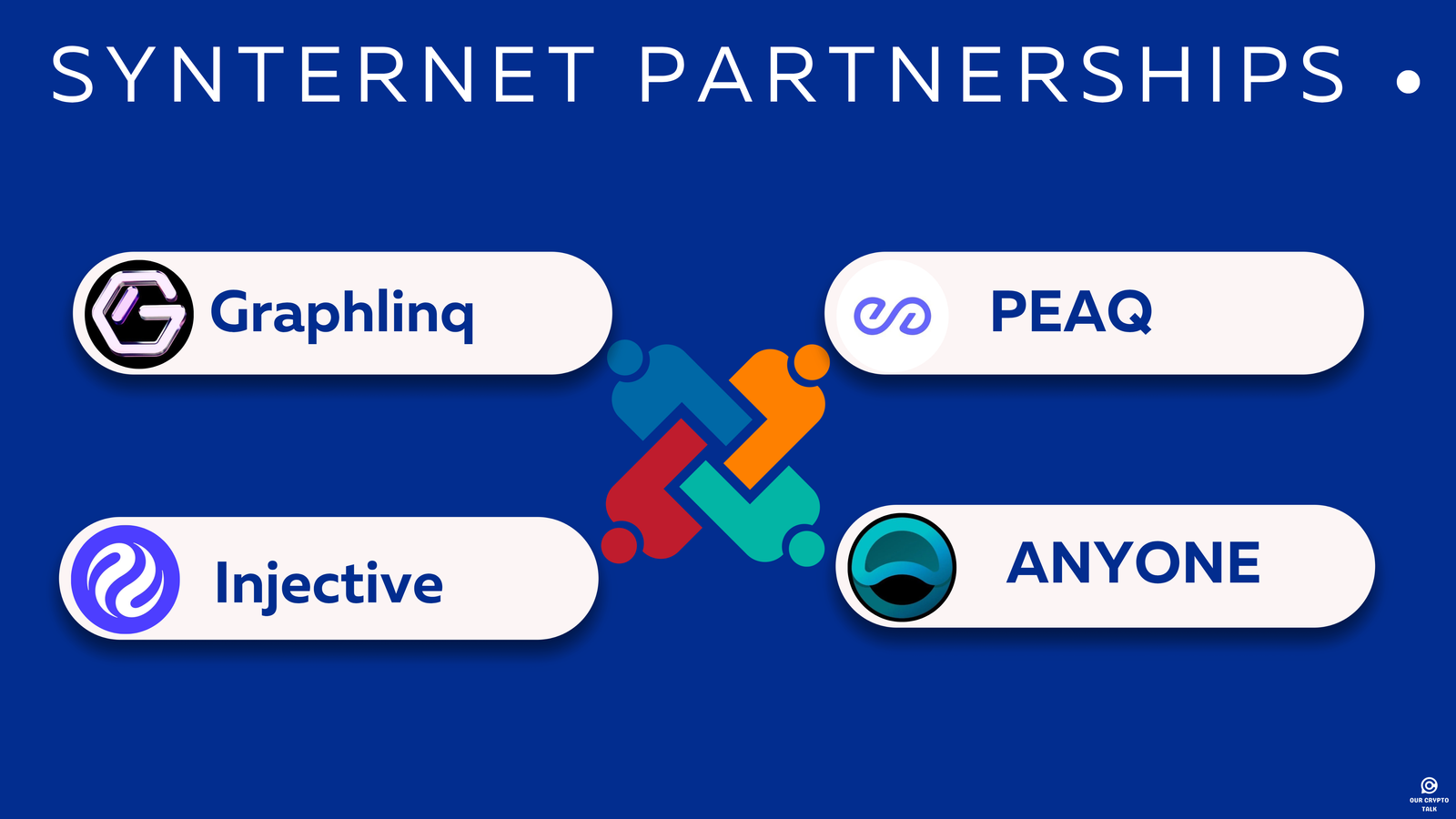
Synternet is expanding its ecosystem through strategic partnerships, strengthening its real-time data infrastructure and increasing adoption across blockchain networks. Key collaborations include:
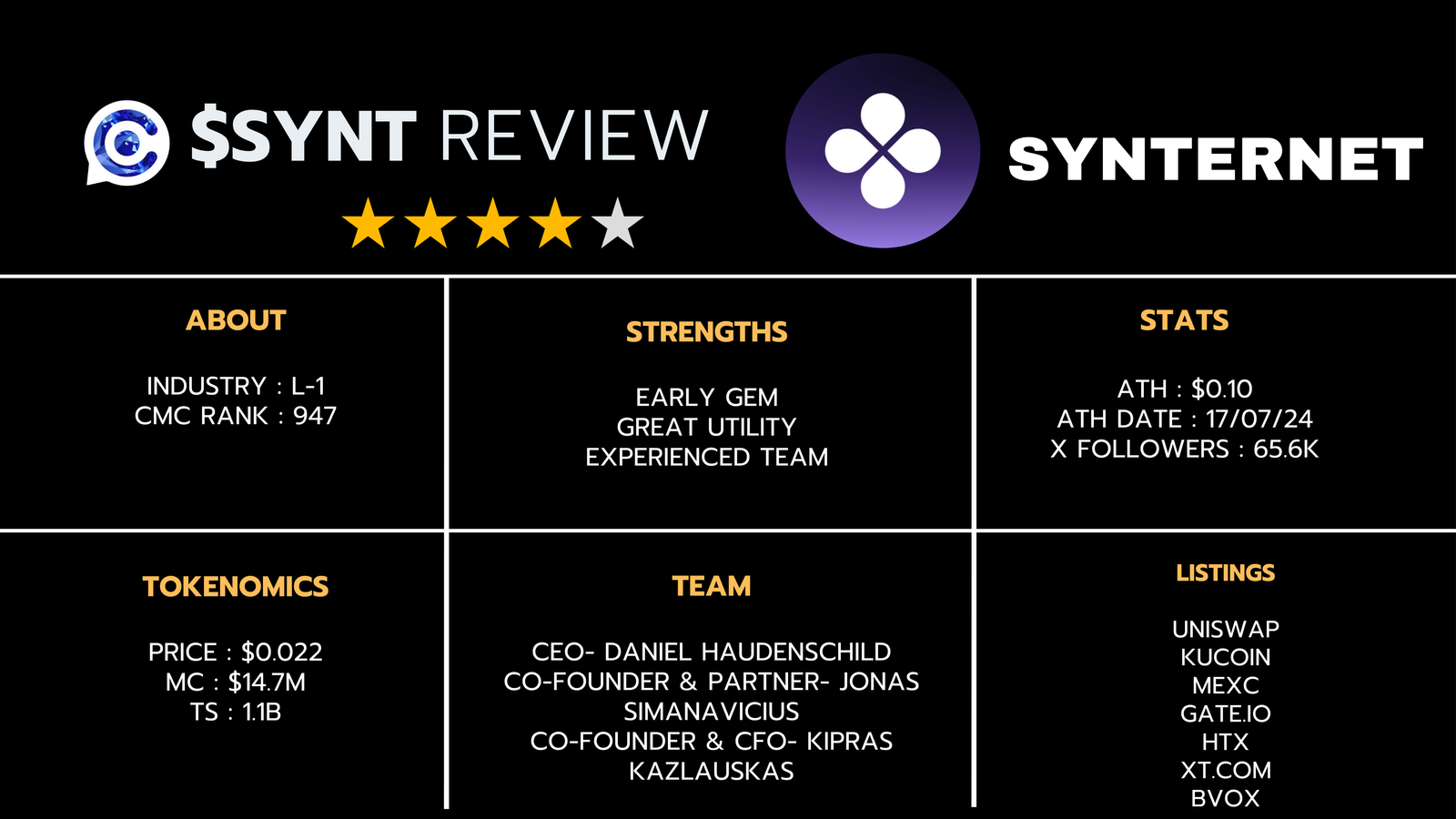
The Synternet ecosystem is powered by its native token, which serves multiple utilities within the platform. Below are the key details:
Our Crypto Talk reached out to the SYNT team for token information, but they stated that tokenomics have not yet been officially released. We will update this section once Synternet releases tokenomics.
The native token of Synternet plays a crucial role in maintaining the network’s decentralized infrastructure. It is used for transaction fees, staking, and incentivizing data providers to ensure accurate and high-quality blockchain data. Additionally, token holders can participate in governance, influencing the protocol’s future developments and upgrades.
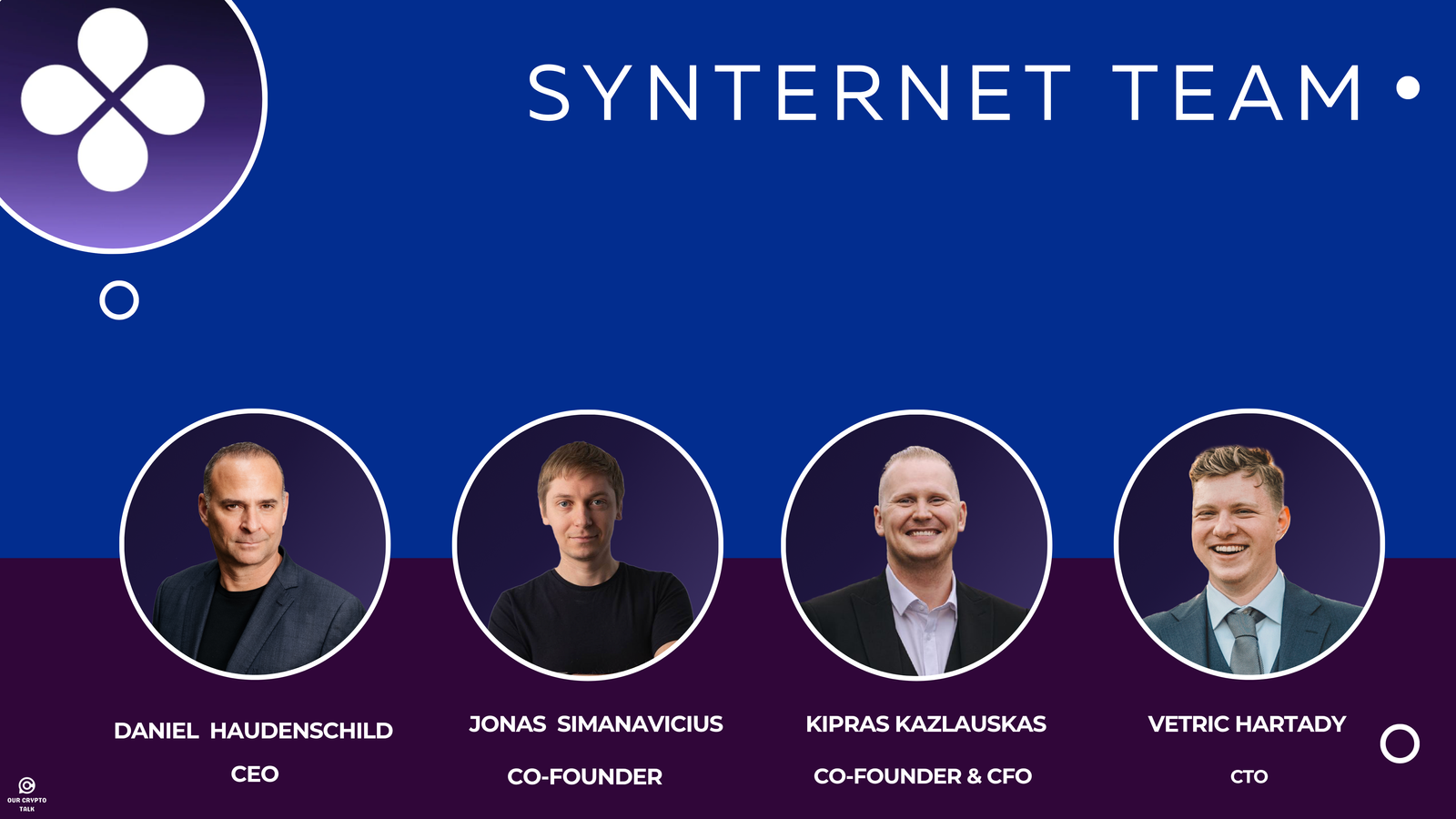
Daniel Haudenschild – CEO : With over 20 years of global financial services experience, Daniel has been focused on blockchain technology since 2015. He began his professional career at Ernst & Young, giving him a strong foundation in both traditional and emerging financial systems.
Jonas Simanavicius – Chief Technology Officer: Jonas has a diverse background in technology, having served as CTO and co-founder of Clouder. His experience spans roles at JPMorgan Chase, where he worked in technology analysis and application development. Additionally, he has taught JavaScript and data structures at the Turing Society, further establishing his expertise in tech education and development.
Kipras Kazlauskas – Chief Financial Officer: Kipras brings a wealth of entrepreneurial experience, co-founding Synternet and Moérie Beauty. He has been involved in various ventures, including the omnichannel call center solution Tellq, which he exited in 2020. His expertise ranges from strategic business development to angel investing, with a focus on innovative tech solutions and operational efficiency.
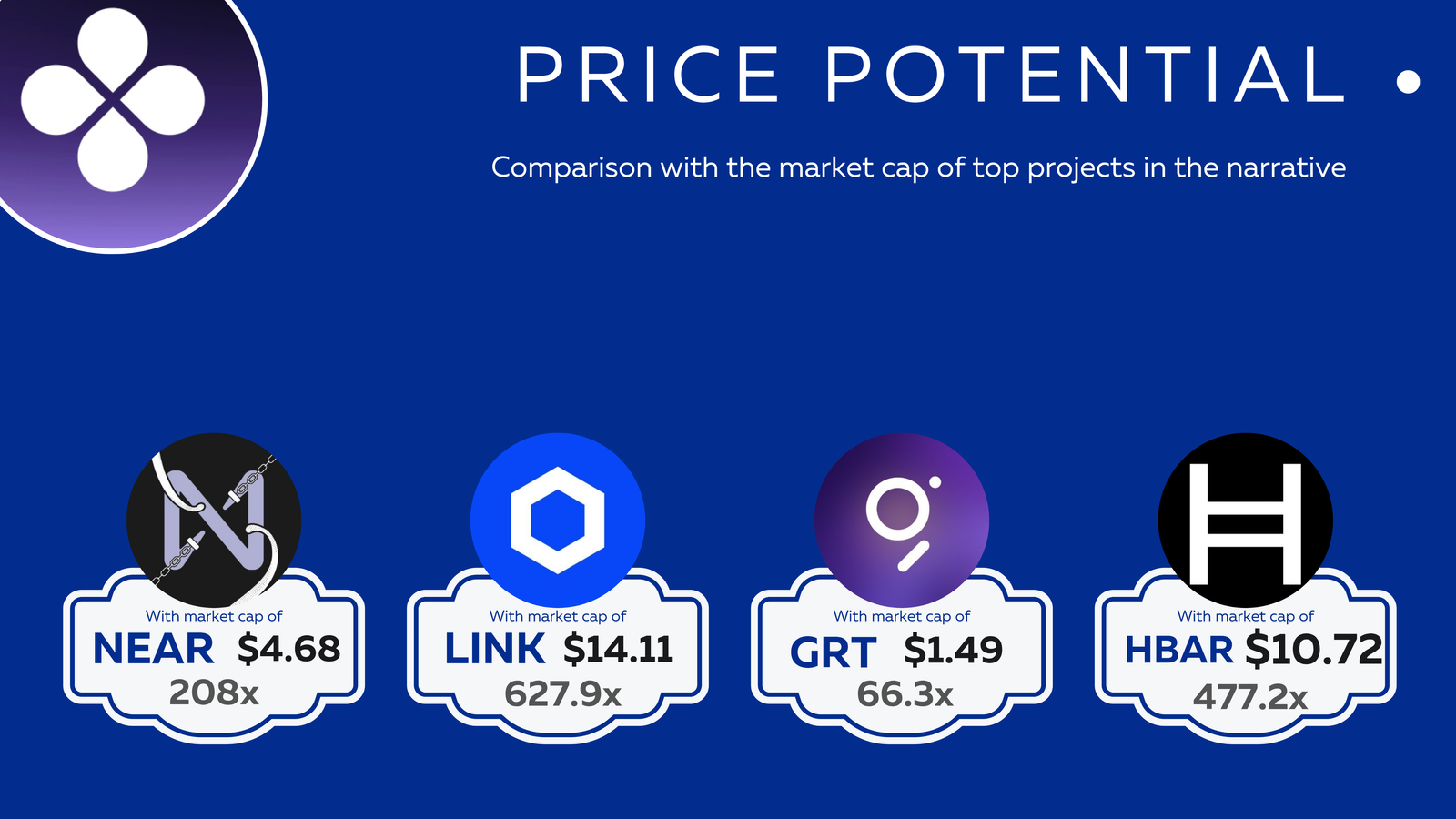
Synternet is tackling a fundamental problem in blockchain infrastructure—how to access and share on-chain data in a truly decentralized way. By introducing a permissionless data layer, a publish-subscribe model, and tokenized incentives, it presents a strong value proposition for developers and enterprises looking to build without reliance on centralized APIs. Its focus on interoperability, scalability, and economic incentives makes it an ambitious project with real utility.
However, Synternet is entering a competitive and technically challenging space. Established players like Chainlink and The Graph already offer data solutions, and onboarding developers to a new system requires both technical superiority and strong adoption incentives. Additionally, regulatory uncertainties surrounding blockchain-based data services could introduce future hurdles.
For developers seeking a decentralized alternative to existing data providers, Synternet offers a promising approach. Whether it can establish itself as the go-to infrastructure for blockchain data will depend on its ability to execute, attract partnerships, and differentiate itself in a growing market. For now, it remains a project to watch closely as the demand for decentralized data solutions increases.
However, challenges such as adoption barriers, regulatory uncertainties, and competition from established players must be addressed for long-term success. If Synternet can execute its vision effectively and build a strong ecosystem of users and partners, it could become a crucial piece of infrastructure for the decentralized web.
Explore More Reviews to Level Up Your DYOR Game
Real voices. Real reactions.