Loading Search...


DeFi airdrop farming is declining in 2026 as token incentives fail to retain users. Protocols focus on real utility and product market fit.

Author: Kritika Gupta
Steady attention without excessive speculation.
16th February 2026– DeFi airdrop farming is losing effectiveness as decentralized finance enters a more mature phase in 2026. For years, projects launched tokens and distributed airdrops to attract users and liquidity. These incentives encouraged yield farmers to bridge funds, provide liquidity, and interact with protocols in exchange for future token rewards. Initially, this approach helped bootstrap rapid growth and increased total value locked. However, in 2026, this model is breaking down as farmers sell tokens immediately after receiving them, causing prices to fall and weakening protocol stability.
At the same time, the broader crypto market has become more selective. Investors and users now prioritize protocols with real utility and sustainable economics. As a result, industry participants increasingly believe that airdrop driven growth alone cannot sustain long term value. Protocols that fail to retain users beyond incentives are now struggling to survive.
High Signal Summary For A Quick Glance

Nipherme
@NiphermeDave

>> blame airdrop farmers >> refuse to give them allocation >> proceeds to launch >> still goes to zero same old boring script nothing is going to change how bout you focus on your product instead of finding someone to blame for your tokens going to zero?
11:10 AM·Feb 16, 2026

Morsy
@morsyxbt
imagine a CEO blaming airdrop farmers for token dumps while launching campaigns and roles in discord to attract those farmers, lol (save your time bros, yk how its gonna end) we will do different we aren't like others ps in the end ceos and founders who talk alot like this are https://t.co/sS4QQLOGGV https://t.co/sJlbS301gv
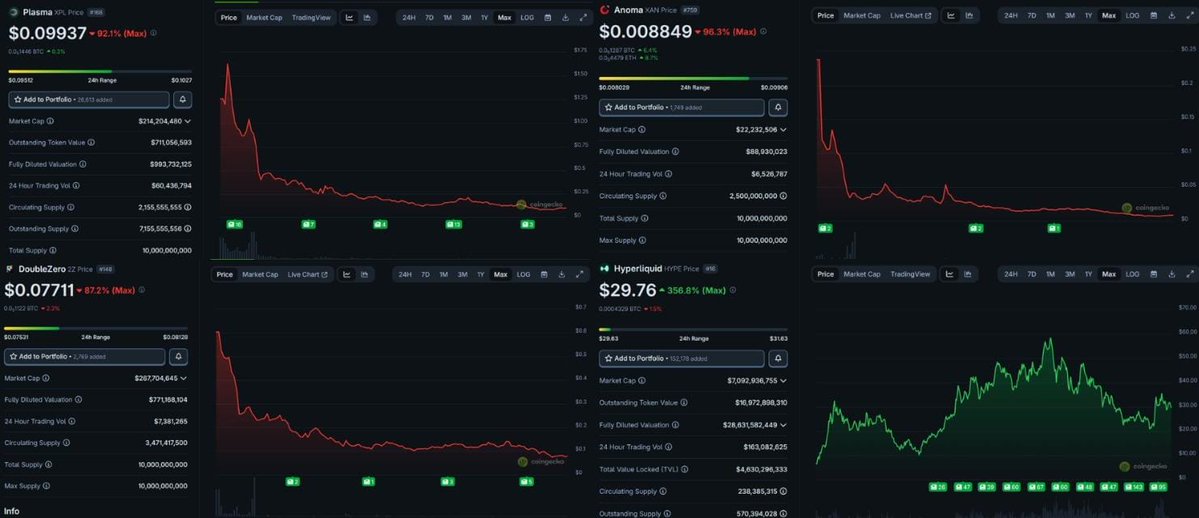
airdrop farmers are yesterday's news the playbook everyone's copying: - launch token - airdrop to farmers - fork 10 defi apps - hope capital stays farmers dump, you give more tokens, they dump more, token goes to 0 why does anyone think this works? the protocols surviving
09:23 AM·Feb 16, 2026

haonan
@haonan
airdrop farmers are yesterday's news the playbook everyone's copying: - launch token - airdrop to farmers - fork 10 defi apps - hope capital stays farmers dump, you give more tokens, they dump more, token goes to 0 why does anyone think this works? the protocols surviving
05:58 PM·Feb 15, 2026
The rise of DeFi airdrop farming accelerated during the 2024 to 2025 bull market. Earlier successes such as Arbitrum and Optimism demonstrated that rewarding early users could build strong ecosystems. Their airdrops helped attract capital, onboard new users, and establish long term adoption. Therefore, many newer Layer 2 networks and decentralized applications adopted similar strategies.
However, as more projects launched tokens, the ecosystem became saturated. Many users participated only to earn rewards rather than use the product long term. Farmers often created multiple wallets to maximize eligibility. Once tokens launched, they sold immediately, causing liquidity to decline and prices to fall.
This pattern has appeared before. During the 2021 DeFi summer, protocols used token incentives to rapidly attract capital. Although this initially boosted growth, many protocols failed when incentives declined. More recently, Berachain demonstrated a similar trajectory. Its TVL peaked above $3 billion before its token launch but later dropped by about 90 percent after heavy token emissions and selling.
Key milestones related to this development
Protocols like Uniswap and SushiSwap use airdrops to bootstrap liquidity and attract billions in TVL.
Many airdrop-driven protocols lose users and liquidity once rewards decline and token prices fall sharply.
Networks like Arbitrum, zkSync, Scroll, and Berachain launch tokens, attracting large but short-term capital inflows.
Most airdropped tokens lose significant value as farmers sell immediately, reducing TVL and weakening ecosystems.
Investors and builders prioritize sustainable tokenomics, real usage, and long-term user retention over incentives.
Protocols with genuine product-market fit gain adoption, while incentive-dependent ecosystems decline.
The core weakness of DeFi airdrop farming lies in its incentive structure. Farmers treat tokens as short term rewards rather than long term assets. Once tokens become tradable, they sell quickly to capture profits and move to the next opportunity. This creates immediate selling pressure and pushes prices downward.
In response, protocols often increase emissions to maintain activity and liquidity. However, this increases supply and dilutes existing holders. As token prices decline further, confidence weakens and user activity drops. Consequently, protocols enter a cycle where incentives temporarily boost activity but undermine long term sustainability.
Even advanced anti sybil measures have not solved the fundamental problem. Without real demand or product utility, users leave once incentives disappear. Artificial TVL disappears quickly, exposing weak adoption and fragile ecosystems.
Protocols succeeding in 2026 are focusing on sustainable growth rather than short term incentives. Instead of relying on large one time airdrops, they reward ongoing participation through staking, governance, and real usage. These incentives encourage long term alignment between users and protocols.
Hyperliquid demonstrates this shift. The protocol gained strong adoption by delivering real perpetual trading volume and distributing tokens to genuine users rather than relying heavily on venture capital allocations. Its growth reflects real demand rather than incentive driven speculation.
Looking ahead, capital will flow toward protocols that provide meaningful utility, generate revenue, and retain users organically. While DeFi continues to expand, the market is entering a more mature phase.
Our Crypto Talk is committed to unbiased, transparent, and true reporting to the best of our knowledge. This news article aims to provide accurate information in a timely manner. However, we advise the readers to verify facts independently and consult a professional before making any decisions based on the content since our sources could be wrong too. Check our Terms and conditions for more info.



Harvard Ethereum ETF Investment Signals Shift Away From Bitcoin
Airdrop Farmers Fade as DeFi Token Playbook Crumbles in 2026
Hyperbridge Bridging Pause During Polkadot Parathread Upgrade
Aptos Hits All-Time Low as Selling Pressure Intensifies
Harvard Ethereum ETF Investment Signals Shift Away From Bitcoin
Airdrop Farmers Fade as DeFi Token Playbook Crumbles in 2026
Hyperbridge Bridging Pause During Polkadot Parathread Upgrade
Aptos Hits All-Time Low as Selling Pressure Intensifies