Loading Search...


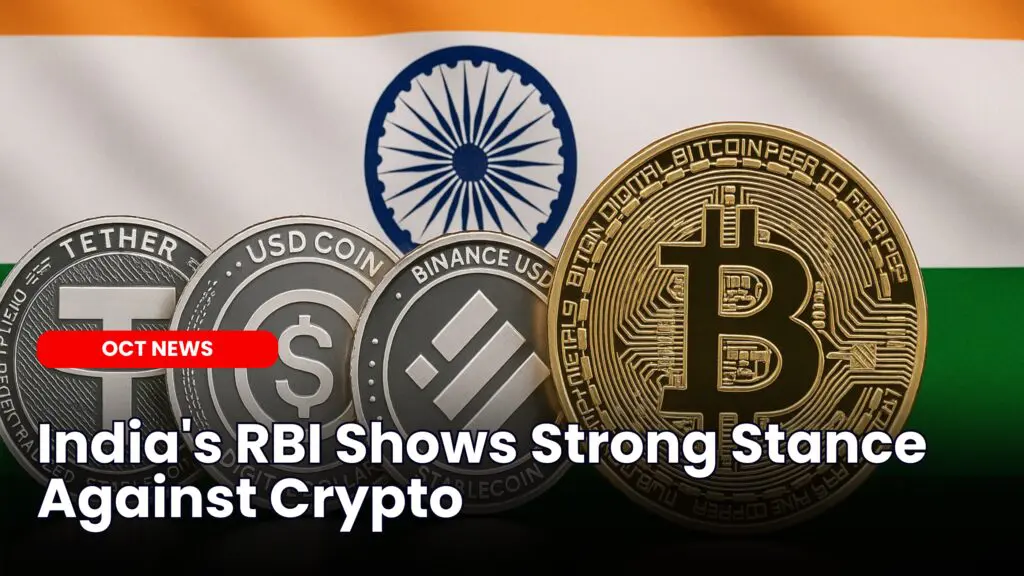
India's RBI has shown a strong stance against crypto - calling it something that could harm the financial system of India.

Author: Sahil Thakur
14th December 2025 – Reserve Bank of India ( RBI ) Deputy Governor T. Rabi Sankar delivered a keynote address at the Mint Annual BFSI Conclave in Mumbai, posing a strong stance against crypto . His message was clear. Stablecoins and cryptocurrencies pose serious risks to India’s financial system.
Sankar, who oversees fintech, payments, and information technology at the RBI, has long been the regulator’s most vocal crypto critic. This speech reinforced that position.
First, Sankar questioned whether stablecoins qualify as money at all. He said they lack the basic attributes of sovereign currency. In particular, they do not carry a guaranteed promise to pay. As a result, they remain vulnerable to instability despite their name.
He also argued that stablecoins offer no unique benefit. According to Sankar, India’s existing payment systems already solve the problems stablecoins claim to address. Platforms like UPI provide fast, low-cost, and reliable digital payments at scale.
Because of this, he said stablecoins add complexity without delivering meaningful innovation.

Next, Sankar warned about macroeconomic risks. He said stablecoins could encourage currency substitution, especially dollarization. This could weaken the RBI’s control over monetary policy and capital flows.
He also highlighted risks to banks. If users move funds into private stablecoins, traditional banking intermediation could suffer. Over time, this could undermine financial stability.
In addition, Sankar flagged concerns around illicit use. He said stablecoins can enable cross-border payments that bypass capital controls and regulatory oversight.
Given these risks, he said India must remain cautious. He effectively ruled out a role for stablecoins in the country’s financial system.
Sankar extended similar criticism to Bitcoin and other cryptocurrencies. He said they have no intrinsic value and generate no underlying cash flows. Because of this, he does not consider them financial assets.
Instead, he described cryptocurrencies as speculative instruments. He compared their price behavior to historical bubbles. In his view, unbacked crypto assets amount to mathematical bets rather than sound investments.
He also addressed Bitcoin directly. Sankar said Bitcoin mainly served to demonstrate blockchain technology. He argued it never had fundamental economic value.
Despite rejecting private crypto assets, Sankar reaffirmed support for central bank digital currencies. He said CBDCs offer programmability and efficiency without sacrificing trust or monetary control.
According to him, CBDCs allow innovation while preserving sovereignty and stability. This makes them a safer alternative to private stablecoins and cryptocurrencies.
Finally, Sankar made it clear that the RBI’s stance has not changed. While India has not banned crypto outright, the regulatory approach remains restrictive. The country continues to impose a 30 percent tax on crypto gains and a 1 percent transaction levy.
His remarks come amid speculation about global policy shifts and renewed crypto optimism elsewhere. However, the RBI appears unmoved.
For now, India’s central bank continues to view cryptocurrencies as a risk rather than an opportunity.
Our Crypto Talk is committed to unbiased, transparent, and true reporting to the best of our knowledge. This news article aims to provide accurate information in a timely manner. However, we advise the readers to verify facts independently and consult a professional before making any decisions based on the content since our sources could be wrong too. Check our Terms and conditions for more info.