Loading Search...


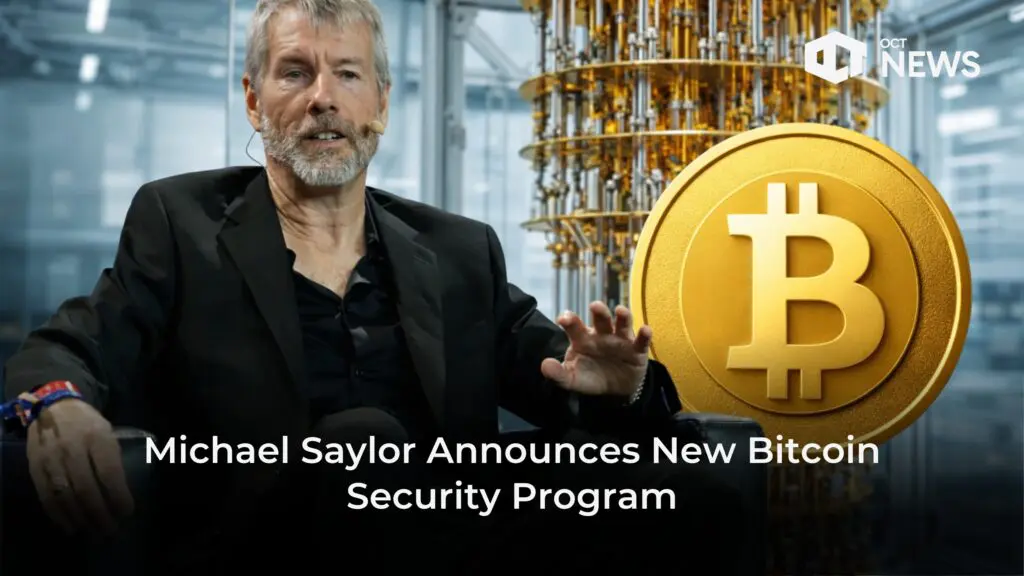
Michael Saylor has announced a new Bitcoin Security Program aimed at preparing the Bitcoin network for long‑term security risks

Author: Sahil Thakur
Steady attention without excessive speculation.
6th February 2026 – Michael Saylor has announced a new Bitcoin Security Program aimed at preparing the Bitcoin network for long‑term security risks, including future threats from quantum computing. The initiative comes from Strategy, formerly known as MicroStrategy, and focuses on funding and coordinating global efforts across cybersecurity, cryptography, and Bitcoin development communities.
High Signal Summary For A Quick Glance

Lyle Hauser
@LyleHauser

“Bitcoin will not sleepwalk into the quantum era.” Michael Saylor says Strategy is launching a coordinated Bitcoin security initiative with the global cyber, crypto, and Bitcoin security community to proactively address quantum computing and future threats. https://t.co/V8h2b0WI9a

01:52 AM·Feb 6, 2026

Cointelegraph
@Cointelegraph
🔥 LATEST: Michael Saylor says Strategy will initiate a Bitcoin Security Program coordinating with global cybersecurity and crypto communities to address quantum computing threats. https://t.co/iE56HATysV

01:00 AM·Feb 6, 2026
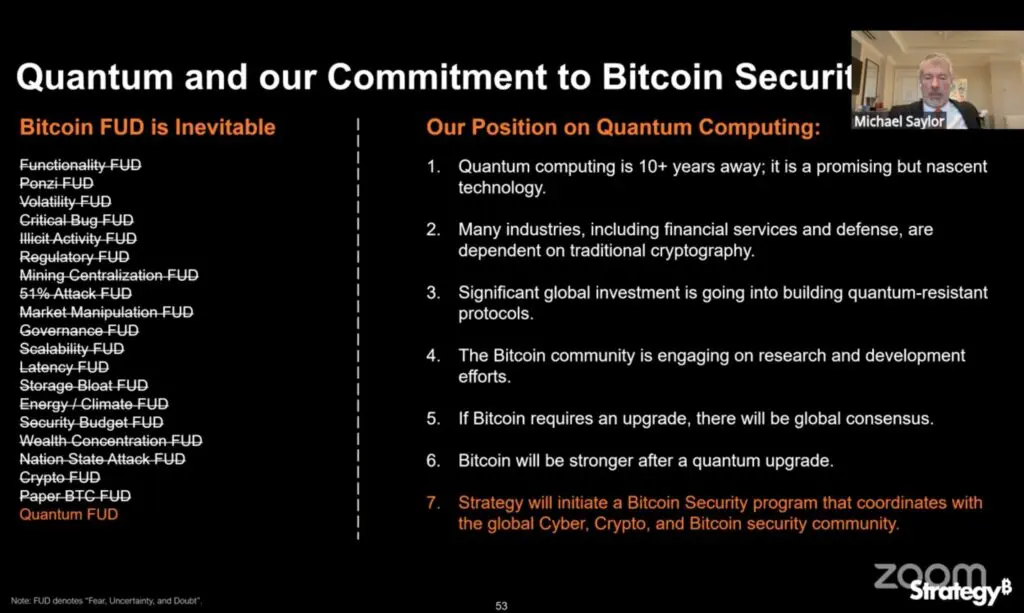
Saylor framed the program as proactive rather than reactive. He said Bitcoin should strengthen its defenses well before quantum computing becomes a realistic attack vector. In his view, credible quantum threats remain at least a decade away, giving the ecosystem ample time to prepare.
The Bitcoin Security Program is designed as a collaborative funding effort. Its goal is to support research, coordination, and implementation of security measures that protect Bitcoin against emerging risks. These include quantum computing, but also broader cryptographic and network‑level threats.
Saylor emphasized cooperation with cybersecurity experts, Bitcoin developers, and cryptographers worldwide. He positioned the program as long‑term infrastructure for Bitcoin’s resilience rather than a response to any immediate vulnerability.
Saylor has consistently downplayed the urgency of quantum computing as an existential threat to Bitcoin. He argues that quantum breakthroughs would first disrupt banks, military systems, and the internet itself before targeting Bitcoin’s cryptography.
According to Saylor, quantum risk is real but distant. He estimates a five‑to‑ten‑year timeline or longer before it becomes credible. More importantly, he believes Bitcoin can adapt through global consensus upgrades if required.
He has repeatedly dismissed near‑term quantum panic as fear‑driven speculation. In his view, Bitcoin’s design allows it to evolve defensively without undermining its core principles.
A central theme in Saylor’s comments is that internal protocol changes pose a greater danger than external technologies like quantum computing. He strongly favors protocol ossification and warns that frequent or opportunistic changes could weaken Bitcoin’s integrity.
Saylor argues that attempts to “improve” Bitcoin from within carry more risk than waiting to upgrade only when absolutely necessary. He sees protocol rigidity as a feature that protects Bitcoin’s long‑term credibility.
In past discussions, Saylor has floated specific mitigation ideas. One proposal involves freezing quantum‑vulnerable pay‑to‑public‑key outputs, including early coins associated with Satoshi Nakamoto and Hal Finney. This would require a network‑wide upgrade but could reduce attack surfaces and even shrink Bitcoin’s effective supply.
He also stresses that practical threats like phishing and social engineering remain far more likely than quantum attacks. By his estimate, these risks are orders of magnitude more dangerous today.
The announcement sparked mixed reactions across the crypto community. Supporters praised the program as responsible, forward‑looking leadership focused on Bitcoin’s longevity. Critics questioned whether quantum risk justifies new funding efforts or warned that security discussions could eventually justify controversial protocol changes.
Still, the broader industry has begun preparing for similar scenarios. Exchanges, custodians, and institutions are increasingly researching quantum‑resistant cryptography across multiple systems.
For now, Saylor maintains that Bitcoin’s greatest strength lies in its stability. The Bitcoin Security Program, he says, exists to protect that stability without compromising the network’s foundational rules.
First, watch for details on how the Bitcoin Security Program will be structured. Saylor has framed it as a funding and coordination effort, but specifics on governance, contributors, and decision‑making will matter.
Next, track whether Strategy commits capital publicly. A direct funding pledge would signal how serious the initiative is and could encourage other institutions to participate.
Also, pay attention to developer and core contributor reactions. If prominent Bitcoin developers engage with the program, it could shape how future security discussions evolve.
At the same time, monitor whether quantum‑related proposals move from theory to formal improvement drafts. Any talk of freezing legacy outputs or changing cryptographic assumptions would spark intense debate.
Finally, watch the broader industry. As banks, governments, and major tech firms address quantum risk, their timelines may influence how quickly Bitcoin security planning accelerates.
Our Crypto Talk is committed to unbiased, transparent, and true reporting to the best of our knowledge. This news article aims to provide accurate information in a timely manner. However, we advise the readers to verify facts independently and consult a professional before making any decisions based on the content since our sources could be wrong too. Check our Terms and conditions for more info.



Grvt Partners with Aave to Turn Idle Margin into Yield and Unveils 2026 Roadmap
Fabric Protocol $ROBO Token Launches on Virtuals
Tether Drops $200M Into Whop to Expand Stablecoin Payments
Zano Launches MCP For AI Tool Integration
Grvt Partners with Aave to Turn Idle Margin into Yield and Unveils 2026 Roadmap
Fabric Protocol $ROBO Token Launches on Virtuals
Tether Drops $200M Into Whop to Expand Stablecoin Payments
Zano Launches MCP For AI Tool Integration