Loading Search...


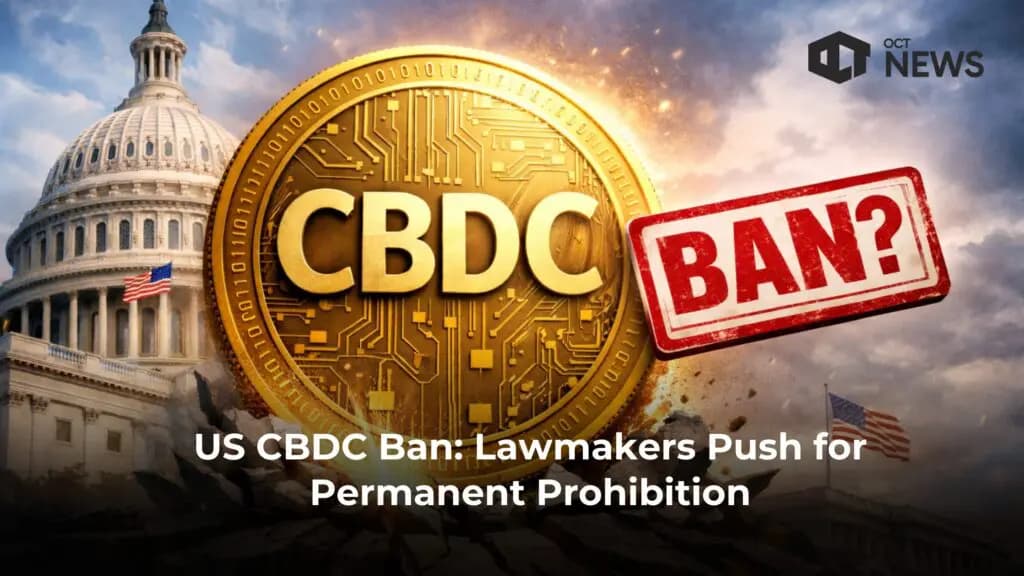
US CBDC ban gains traction as lawmakers led by Michael Cloud urge Congress to permanently block a central bank digital currency.

Author: Akshay
Steady attention without excessive speculation.
March 10, 2026 — A group of 28 U.S. lawmakers, led by Michael Cloud, urged congressional leaders to enact a permanent ban on central bank digital currencies (CBDCs) in the United States. In a letter sent to Mike Johnson and John Thune, the lawmakers argued that a digital dollar issued by the Federal Reserve could enable financial surveillance and expand government control over the monetary system. The request comes as Congress debates provisions in the 21st Century ROAD to Housing Act (HR 6644), which currently proposes a temporary ban on Federal Reserve CBDC issuance until December 31, 2031.
High Signal Summary For A Quick Glance

Chain Alpha
@Chain_AlphaX

@beincrypto Good. Let’s keep the government out of our crypto.
US House of Representatives members have demanded a permanent ban on CBDCs. They argue that these digital currencies could enable restrictions on how Americans use their money. https://t.co/rnMJWzf7gB
11:19 AM·Mar 8, 2026

Rep. Ralph Norman
@RepRalphNorman
A CBDC is essentially a digital dollar issued and controlled by the Federal Reserve. Unlike cash, it could allow the government to track transactions and monitor how Americans spend their money. That’s overreach at its core!!
I’m proud to sign onto a letter urging House and Senate leadership to permanently ban a Central Bank Digital Currency (CBDC). Americans deserve financial freedom, not government-controlled money. 🧵THREAD: https://t.co/RXRhrJtn40
01:07 AM·Mar 7, 2026

Rep. Michael Cloud
@RepMichaelCloud
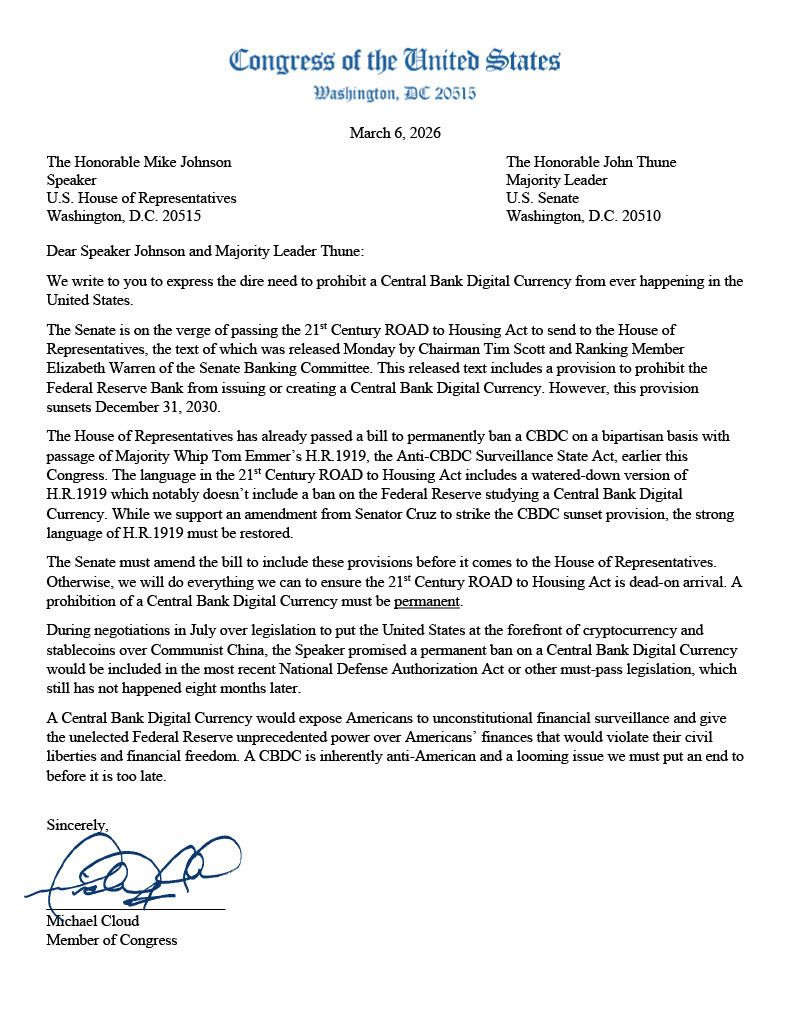
A Central Bank Digital Currency would expose every American to unconstitutional financial surveillance. It would hand the unelected Federal Reserve unprecedented power over your money — violating your civil liberties and financial freedom. The 21st Century ROAD to Housing Act https://t.co/YJpBpHubdy
04:24 PM·Mar 6, 2026
The effort stems from a letter sent by Michael Cloud and 28 lawmakers to Mike Johnson and John Thune calling for a permanent ban on a U.S. central bank digital currency (CBDC). They argue that a digital dollar issued by the Federal Reserve could enable financial surveillance and expand government control over private transactions. The demand comes as the 21st Century ROAD to Housing Act (H.R. 6644) proposes only a temporary CBDC ban until December 31, 2031.
Opposition to CBDCs has been building in Congress for several years. In 2025, the House passed the Anti CBDC Surveillance State Act, introduced by Tom Emmer, which sought to block the Federal Reserve from issuing a digital dollar. The latest push aims to revive those stronger restrictions as lawmakers debate digital currency policy.
Efforts to restrict a U.S. central bank digital currency have surfaced several times in Congress. In March 2022, Ted Cruz introduced legislation aimed at preventing the Federal Reserve from issuing a direct to consumer CBDC. A similar proposal was reintroduced in 2023, citing concerns over financial surveillance and government control of digital payments. These early bills gained attention but failed to advance beyond committee stages in the Senate.
Momentum increased in 2024–2025 when Tom Emmer introduced the CBDC Anti Surveillance State Act, which passed the House with votes such as 216–192 in 2024 and 219–210 in 2025. Although both versions stalled in the Senate, they signaled strong political opposition to a digital dollar. The debates also coincided with bullish crypto sentiment, with Bitcoin and privacy focused assets seeing increased interest as lawmakers pushed back against government issued digital currencies.
Timeline: CBDC Ban Negotiations within the 21st Century ROAD to Housing Act
H.R. 6644 is introduced in the House as a major housing reform bill that later becomes the legislative vehicle for additional policy riders.
The House Financial Services Committee advances the bill, moving it toward full House floor consideration.
The House overwhelmingly approves the legislation with bipartisan support, sending it to the Senate for further consideration.
Following House passage, the legislation is formally scheduled for Senate consideration.
The Senate Banking Committee publishes the combined “21st Century ROAD to Housing Act,” integrating House text, Senate housing proposals, and a temporary CBDC moratorium until roughly 2030–2031.
The Senate approves a motion to proceed with strong bipartisan backing, moving the legislation toward debate and amendments.
A group of House Republicans led by Rep. Michael Cloud urges leadership to replace the temporary CBDC moratorium with a permanent ban, warning the bill may fail in the House otherwise.
The Senate continues consideration of the merged housing package while negotiations intensify around the CBDC provision.
Lawmakers are expected to hold a full Senate vote on the legislation following debate and potential amendments.
If the Senate passes a modified version, the bill may return to the House for approval or enter conference negotiations to resolve CBDC policy differences.
If both chambers approve a unified version, the bill could be signed into law with either a temporary CBDC moratorium or a permanent ban depending on negotiations.
If the Senate version stands, the CBDC moratorium would expire at the end of 2031 unless extended by future legislation.
Early anti CBDC proposals in 2022–2023, including bills from Ted Cruz, had little direct impact on crypto markets. At the time, the industry was already in a bear cycle after the 2022 market crash, with Bitcoin falling from around $69,000 in 2021 to below $20,000 in 2022. Crypto Twitter sentiment was mildly supportive, framing the proposals as a stand against financial surveillance, but engagement remained limited.
Momentum increased when the CBDC Anti Surveillance State Act introduced by Tom Emmer passed the House in 2024 (216–192) and 2025 (219–210). Around these developments, Bitcoin traded near $67,000–$70,000 and briefly moved higher as traders viewed restrictions on a digital dollar as supportive for private stablecoins and decentralized assets.
The next key step is the Senate’s full vote on the 21st Century ROAD to Housing Act (H.R. 6644), expected in mid March 2026 after it cleared a procedural vote 84–6. If approved, the bill with its temporary CBDC ban until December 31, 2031 will return to the House, where lawmakers led by Michael Cloud are pushing to replace it with a permanent prohibition.
Lawmakers may also attempt to revive stronger language from the Anti CBDC Surveillance State Act backed by Tom Emmer. If no compromise emerges, the dispute could delay the housing bill and prolong uncertainty around whether the Federal Reserve will ever issue a U.S. digital dollar.
Our Crypto Talk is committed to unbiased, transparent, and true reporting to the best of our knowledge. This news article aims to provide accurate information in a timely manner. However, we advise the readers to verify facts independently and consult a professional before making any decisions based on the content since our sources could be wrong too. Check our Terms and conditions for more info.



US CBDC Ban: Lawmakers Push for Permanent Prohibition
Winklevoss Twins Offload $130M in Bitcoin Amid Gemini Struggles
KAST Raises $80M in Series A to Expand Stablecoin Payments
Sonic Labs Launches USSD Stablecoin on Frax Infrastructure
US CBDC Ban: Lawmakers Push for Permanent Prohibition
Winklevoss Twins Offload $130M in Bitcoin Amid Gemini Struggles
KAST Raises $80M in Series A to Expand Stablecoin Payments
Sonic Labs Launches USSD Stablecoin on Frax Infrastructure