Loading Search...


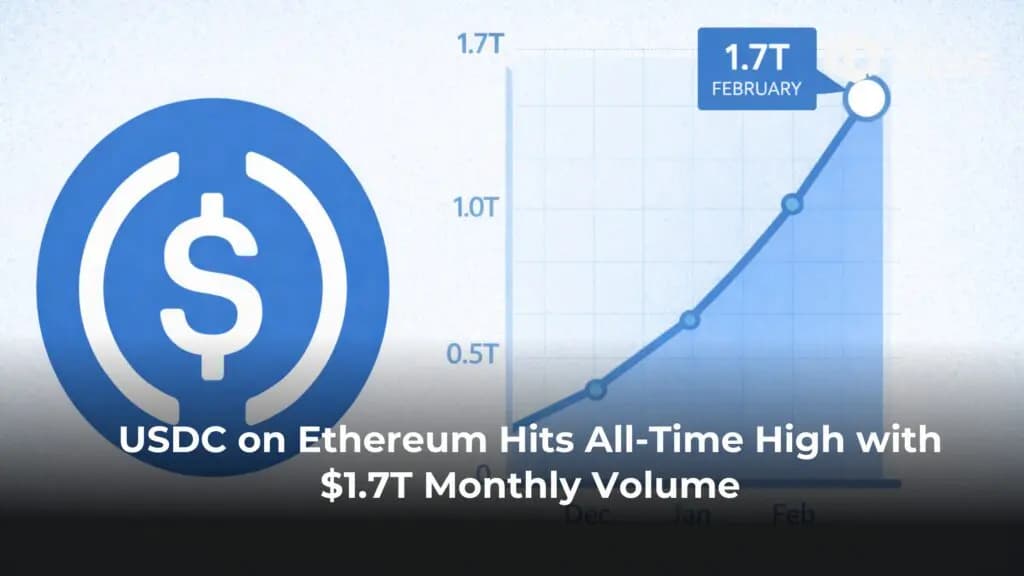
USDC on Ethereum reached $1.7 trillion in monthly volume, highlighting rapid stablecoin growth and rising institutional and DeFi adoption.

Author: Kritika Gupta
Steady attention without excessive speculation.
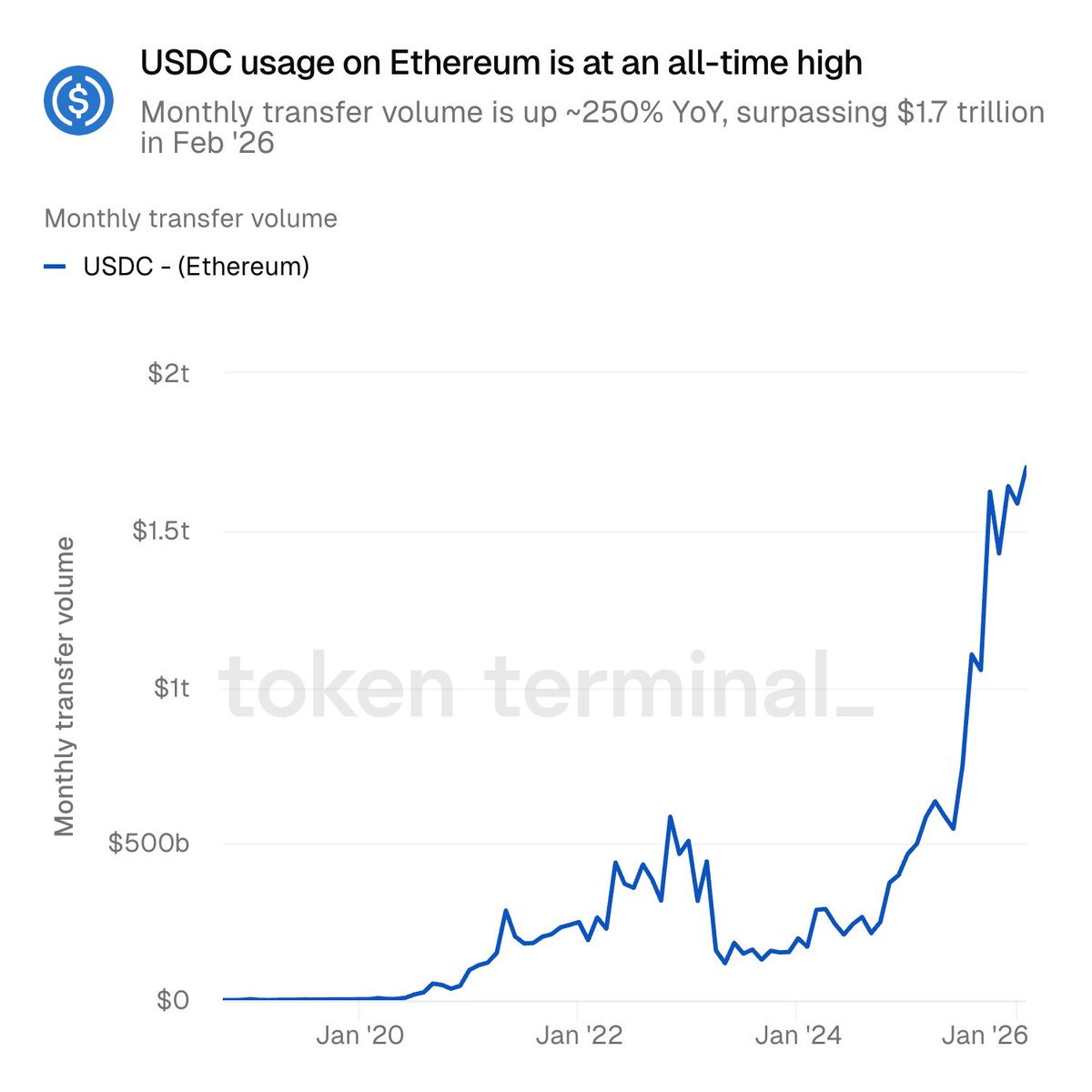
9th March 2026- USDC transfers on the Ethereum network reached a record $1.7 trillion in February 2026. This figure represents a 250 percent increase compared with the same month last year and signals a major expansion in stablecoin activity. The milestone highlights the growing importance of stablecoins in blockchain finance, particularly for decentralized finance transactions, automated payments, and institutional settlement.
Several developments contributed to this rapid growth. First, Ethereum’s scaling improvements and Layer 2 networks have significantly increased transaction efficiency. Networks such as Base now process large volumes of USDC transfers with very low fees. As a result, users can move large amounts of digital dollars across blockchain infrastructure quickly and cheaply.
High Signal Summary For A Quick Glance

Token Terminal 📊
@tokenterminal

USDC usage on @ethereum is at an all-time high. Monthly transfer volume is up ~250% YoY, surpassing $1.7 trillion in Feb '26. How will agentic usage impact this chart over the next 12 months? https://t.co/hbLsTBzhnO
04:31 PM·Mar 8, 2026
Although stablecoins have grown steadily for years, the scale of this USDC milestone is historically significant. During the 2021 crypto bull market, combined stablecoin transaction volumes briefly surpassed $2 trillion per month as activity surged in decentralized finance and NFT markets.
However, USDC activity on Ethereum alone had never reached this level. Even during the 2022 Terra collapse, when traders moved funds into stablecoins for safety, Ethereum-based stablecoin volumes remained closer to $500 billion per month.
More recently, stablecoin activity has expanded rapidly across multiple blockchains. In January 2026, total stablecoin transaction volume across all networks surpassed $10 trillion for the first time. Despite that large aggregate figure, the February surge stands out because USDC transfers on Ethereum alone exceeded $1.7 trillion.
Historically, spikes in stablecoin volume often indicate rising market liquidity. When traders hold large balances of stablecoins, they effectively maintain capital that can quickly move into cryptocurrencies or DeFi protocols. For example, during the 2021 market expansion, stablecoin liquidity helped fuel a major rally in digital assets.
A similar pattern appeared in late 2025. Stablecoin supply increased by roughly 72 percent year over year, while the total crypto market capitalization grew by about 50 percent. During the same period, Bitcoin rose around 30 percent and Ethereum gained nearly 60 percent. These trends reinforced the idea that stablecoins often function as liquidity reserves within the crypto ecosystem.
Loading chart...
The February milestone also strengthens USDC’s position within the stablecoin market. During the month, USDC accounted for more than 70 percent of stablecoin transfers on Ethereum. As a result, it temporarily outpaced competing stablecoins such as USDT in on-chain settlement activity.
For decentralized finance platforms, higher USDC usage typically means deeper liquidity pools and stronger lending markets. As liquidity increases, borrowing costs may decline while total value locked across DeFi protocols could rise during early 2026.
Institutional adoption also plays a growing role. According to estimates from Chainalysis, institutional entities now hold roughly 40 percent of the total USDC supply. Many financial firms use stablecoins for treasury management, international payments, and blockchain-based settlement.
Looking ahead, analysts expect stablecoin usage to continue expanding throughout 2026. Some forecasts suggest that USDC transaction volumes could double again by the end of the year as new blockchain applications emerge.
The rise of AI-driven economic activity could become a major catalyst. Industry projections estimate that AI agents may handle up to $5 trillion in annual on-chain transactions by 2027. Because these systems require stable pricing and efficient settlement, stablecoins will likely play a central role in those transactions.
Cross-chain interoperability could also accelerate growth. Technologies such as Wormhole allow stablecoins to move between different blockchain networks more easily while still using Ethereum as a primary settlement layer.
Our Crypto Talk is committed to unbiased, transparent, and true reporting to the best of our knowledge. This news article aims to provide accurate information in a timely manner. However, we advise the readers to verify facts independently and consult a professional before making any decisions based on the content since our sources could be wrong too. Check our Terms and conditions for more info.



$YELLOW Token Launch Activates Yellow Network Trading
USDC on Ethereum Hits All-Time High with $1.7T Monthly Volume
Pudgy Penguins Tease Find Polly Quest in Pudgy World
Starcloud Targets First Orbital Bitcoin Mining Satellite With Nvidia
$YELLOW Token Launch Activates Yellow Network Trading
USDC on Ethereum Hits All-Time High with $1.7T Monthly Volume
Pudgy Penguins Tease Find Polly Quest in Pudgy World
Starcloud Targets First Orbital Bitcoin Mining Satellite With Nvidia