


Loading Ratings...



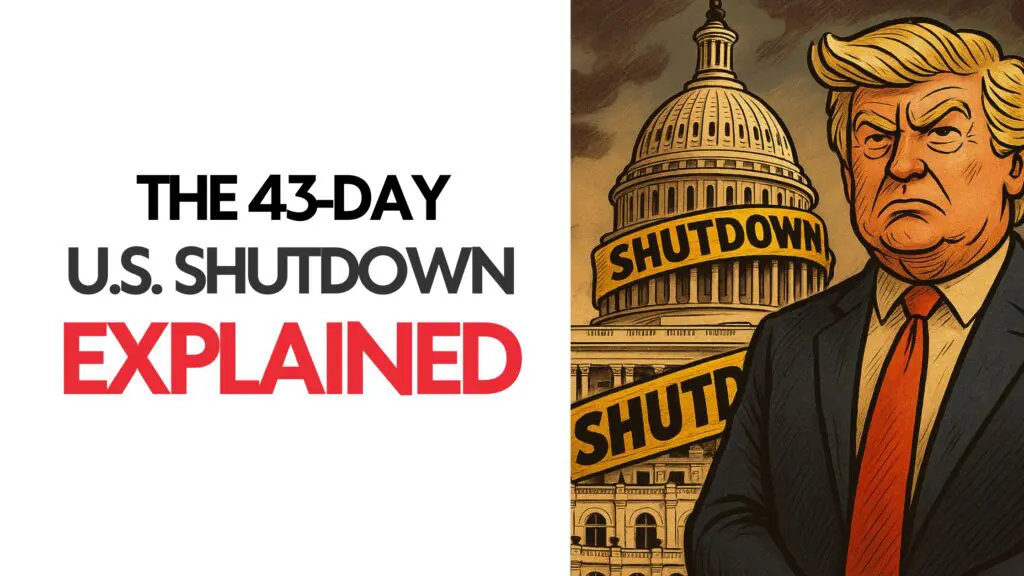
The 2025 U.S. shutdown lasted 43 days, froze regulators, hit liquidity, and moved crypto markets. Here’s the full breakdown and what's next.

Author: Tanishq Bodh
Published On: Thu, 13 Nov 2025 12:40:53 GMT
The 2025 U.S. government shutdown lasting 43 days from October 1 to November 12 became the longest shutdown in American history, surpassing the 2018–2019 standoff. What began as a routine budget dispute spiraled into a high-stakes political stalemate that froze federal operations, strained millions of families, rattled global markets, and even altered the trajectory of the crypto industry.
This explained guide breaks down exactly what happened:
Whether you are a crypto investor, policymaker, or simply a citizen trying to understand the chaos, this deep-dive gives you the full picture clearly and without political noise.
A U.S. government shutdown happens when Congress fails to pass federal funding. Essential services continue (air travel, Social Security, active-duty military), but nearly everything else pauses.

The shutdown wasn’t a symbolic fight — it disrupted millions of lives.
The Senate passed H.R. 5371 – The American Continuity Act of 2025

Global markets rallied instantly MSCI World Index jumped 1.4% on Nov 13. History was bullish every time a shutdown ends. Since 1990, the S&P 500 has risen after every shutdown with average +4.4% in 3 months, +12.7% in 12 months.

Crypto didn’t crash — but it was frozen in place. The shutdown hit crypto in three ways:
Major agencies furloughed staff:
Crypto regulation essentially went into deep-freeze mode.
During shutdowns, Treasury stops spending → TGA balance rises → liquidity drains from markets.
Result:
BTC dropped from $119,000 → $98,000 by Nov 8 (≈8% liquidity squeeze)

Using macro, liquidity, and regulatory signals, here are the three forward scenarios:
The 2025 shutdown wasn’t just political theatre, it was a stress test for markets, institutions, and digital assets. For crypto, it became a liquidity bottleneck and regulatory freeze, but also set the stage for powerful catalysts: ETF approvals, renewed federal spending, and potentially aggressive monetary easing.
As the government rebooted itself on November 12 at 9:45 PM ET, so did the crypto market. With fresh liquidity on the way, regulatory clarity returning, and macro tailwinds warming up, the shutdown may be remembered not as a setback but as the pause before acceleration.
Stay liquid. Stay informed.
Real voices. Real reactions.