Loading Search...


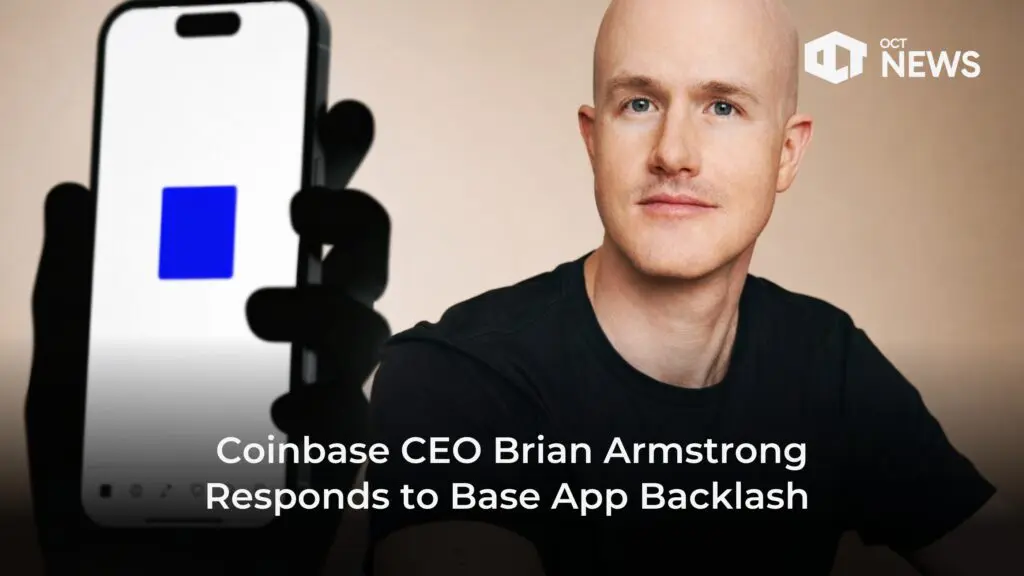
Tensions around the Base app spilled into public view after former Coinbase Wallet builder Hish and Brian Armstrong get into discussion.

Author: Sahil Thakur
Steady attention without excessive speculation.
18th February 2026 – Tensions around the Base app spilled into public view after former Coinbase Wallet builder Hish and Brian Armstrong get into discussion. What followed was a rare and candid exchange between Hish and Coinbase CEO Brian Armstrong that exposed deeper frustrations around strategy, execution, and ecosystem priorities.
High Signal Summary For A Quick Glance

kia
@mosayeri

@hishboy @baseapp @farcaster_xyz @base @zora all mistakes are avoidable if you're not taking any risk. in retrospect those bets didn't work but at the time they were somewhat obvious moves. specially farcaster graph integration.
As a $COIN shareholder, I’m deeply concerned with how @Baseapp was marketed and executed. It was pitched as the “mother of all superapps.” Then they integrated: - @farcaster_xyz, whose founders later pivoted to build a competing chain to @Base - @Zora’s creator/content coins,
12:40 AM·Feb 18, 2026

ross.wei
@z0r0zzz
@hishboy @baseapp @farcaster_xyz @base @zora I think the outcome is likely surprising to them as well, since farcaster and zora were both coinbase mafia cooks.
As a $COIN shareholder, I’m deeply concerned with how @Baseapp was marketed and executed. It was pitched as the “mother of all superapps.” Then they integrated: - @farcaster_xyz, whose founders later pivoted to build a competing chain to @Base - @Zora’s creator/content coins,
11:01 PM·Feb 17, 2026

pj
@playhead
@hishboy @baseapp @farcaster_xyz @base @zora Is killing Base App would primarily be to have users migrated back to Coinbase? I'm with you on concerns, but been wondering what would be the main outcome of doing that.
As a $COIN shareholder, I’m deeply concerned with how @Baseapp was marketed and executed. It was pitched as the “mother of all superapps.” Then they integrated: - @farcaster_xyz, whose founders later pivoted to build a competing chain to @Base - @Zora’s creator/content coins,
08:20 PM·Feb 17, 2026
Hish, a former Coinbase employee who worked on Coinbase Wallet, posted that he was deeply concerned as a $COIN shareholder. He said the Base App had been pitched internally as the “mother of all superapps.” However, he argued that leadership pushed social and experimental features that users did not want.
According to Hish, users consistently asked for a world-class wallet. Instead, they got social feeds, creator coins, and integrations with external projects. He specifically criticized:
He suggested Coinbase should fire those responsible for the pivot and refocus on its core product.
Brian Armstrong responded directly and publicly. Instead of deflecting, he said, “I’ll take ownership of that if you want to fire someone.”
He explained that the criticized direction was already “in the rearview mirror.” According to Armstrong, Base had pivoted weeks earlier. The new direction focuses on becoming a self-custodial version of Coinbase centered on trading.
He emphasized that:
Armstrong also invited Hish to return to Coinbase, acknowledging that he and his team built a strong foundation with Coinbase Wallet. Hish responded positively and said he was seriously considering it.
The tone remained constructive, but the exchange amplified broader ecosystem frustration.
Base integrated Farcaster into the super app vision to blend social networking with onchain activity. The idea was simple: merge wallet functionality with a decentralized social feed and tap into Coinbase’s user base.
In theory, this could have driven engagement and onchain growth.
In practice, several problems emerged.
First, the user experience suffered. Critics described the Base App as an “imperfect Farcaster client.” The wallet became cluttered. Social feeds interfered with trading workflows. Users who primarily wanted swaps and asset management found the app confusing.
Second, execution lagged. Standalone alternatives like Rainbow and Warpcast delivered cleaner experiences. As a result, power users migrated back to native tools.
Third, ecosystem tensions increased. Some builders felt Base tried to launch a Warpcast competitor rather than strengthen partnerships. By early 2026, Base removed the Farcaster social feed entirely and refocused on trading.
The retreat signaled that the social bet did not deliver sustainable engagement.
At the same time, Base leaned heavily into Zora’s creator coin experiment. The vision revolved around “coin everything.” Users could mint tokens tied to creators, posts, or ideas. Coinbase invested early in Zora and promoted the initiative as a major SocialFi push.
Initially, it generated excitement. Token mints surged. Some creator coins briefly reached multi-million-dollar valuations.
However, sustainability quickly became the issue.
Several creator tokens pumped rapidly and then crashed. One prominent example saw a token hit a $9 million fully diluted valuation before dropping more than 60% within hours. Critics argued that many coins lacked real utility. Volatility replaced community building.
Builders also complained about favoritism. Some said Base heavily promoted Zora while underfunding core infrastructure such as explorers and indexers. Others pointed to high slippage, gas issues, and poor UX as additional friction.
Eventually, Base ended certain creator reward programs and shifted attention back to trading. Meanwhile, Zora began expanding toward other ecosystems, including deeper integration with Solana.
The result was reputational damage. Many users saw the push as short-term hype rather than long-term ecosystem building.
The Hish thread triggered a wave of replies from other ecosystem participants.
Common themes included:
Some questioned major acquisitions while smaller builders struggled for grants. Others argued that Base had the technical potential to rival Solana but lacked disciplined execution.
Notably, Brian Armstrong has publicly stated that Base will evolve into a fully integrated super app. However, the recent pivot suggests that Coinbase now prioritizes trading and wallet fundamentals before layering social experiments.
The controversy ultimately highlights a deeper tension.
On one side, Coinbase wants to innovate aggressively. It wants to experiment with social, creator economies, and new token models. On the other side, users consistently demand reliability, trading performance, and clean UX.
The recent pivot indicates that Coinbase is recalibrating. Armstrong’s public ownership of the issue signals that leadership recognizes execution gaps. Meanwhile, the invitation for former builders to return suggests a renewed focus on fundamentals.
Going forward, Base appears to be shifting from social-first experimentation to trading-first infrastructure. Whether that reset restores builder confidence and ecosystem momentum will depend less on vision and more on disciplined delivery.
It will be interesting to see how the Base super app shifts in the coming weeks and months.
Brian Armstrong promised a more resources to be allocated to the retail side of the app and in self custody.
It will also be worthwhile to see how the social angle works on the super app.
Our Crypto Talk is committed to unbiased, transparent, and true reporting to the best of our knowledge. This news article aims to provide accurate information in a timely manner. However, we advise the readers to verify facts independently and consult a professional before making any decisions based on the content since our sources could be wrong too. Check our Terms and conditions for more info.