Loading Search...


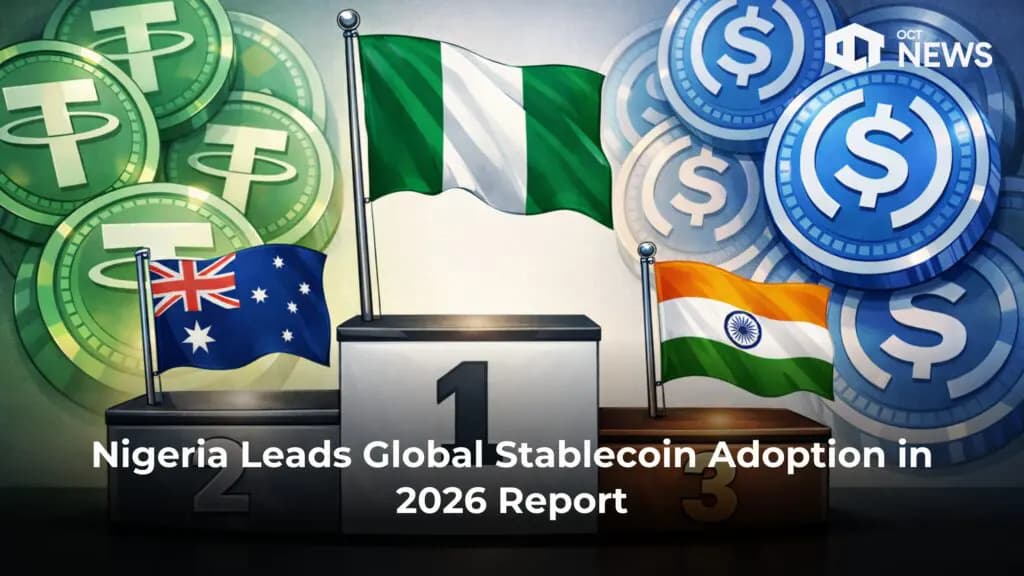
Nigeria leads all 15 countries surveyed for stablecoin adoption, with 59% of crypto-active adults holding USDT.

Author: Sahil Thakur
16th March 2026 – Nigeria leads all 15 countries surveyed for stablecoin adoption, with 59% of crypto-active adults holding USDT, according to the BVNK Stablecoin Utility Report 2026, published in February 2026.
High Signal Summary For A Quick Glance

Jeremy
@Jeremybtc

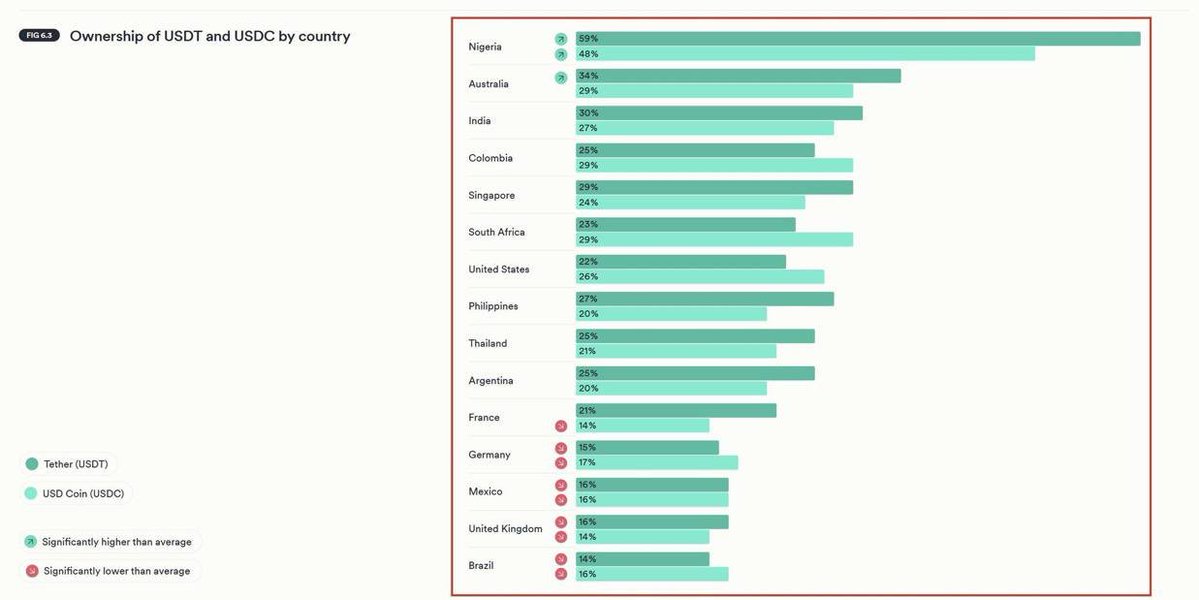
Countries with the most stablecoin ownership in 2026 🇳🇬 Nigeria leads the world at 59% 🇦🇺 Australia at 34% 🇮🇳 India at 30% 🇸🇬 Singapore at 29% 🇺🇸 United States at 22% Almost all of these countries face currency instability, banking gaps, or inflation issues Stablecoins https://t.co/Zw2Pyg2BdN
08:27 PM·Mar 15, 2026

Shy🌊
@Onoja_Cee
Nigeria is truly the global frontier for stablecoin adoption, and I cannot emphasize this enough. Avici Money is the bridge we’ve been waiting for. Direct on-ramping to local banks would be the ultimate flex for most Nigerians. Furthermore, the Avici Earn feature stands a high https://t.co/gUCk01eSXU https://t.co/pFjgbUzLnQ
USDT vs USDC ownership by country. Ranked. 🥇 🇳🇬 Nigeria: 59% USDT / 48% USDC 🥈 🇦🇺 Australia: 34% USDT / 29% USDC 🥉 🇮🇳 India: 30% USDT / 27% USDC 4. 🇨🇴 Colombia: 25% USDT / 29% USDC 5. 🇸🇬 Singapore: 29% USDT / 24% USDC 6. 🇿🇦 South Africa: 23% USDT / 29% USDC 7. 🇺🇸 United https://t.co/Vt7UQkSsyh
06:58 PM·Mar 15, 2026

Leon Waidmann
@LeonWaidmann
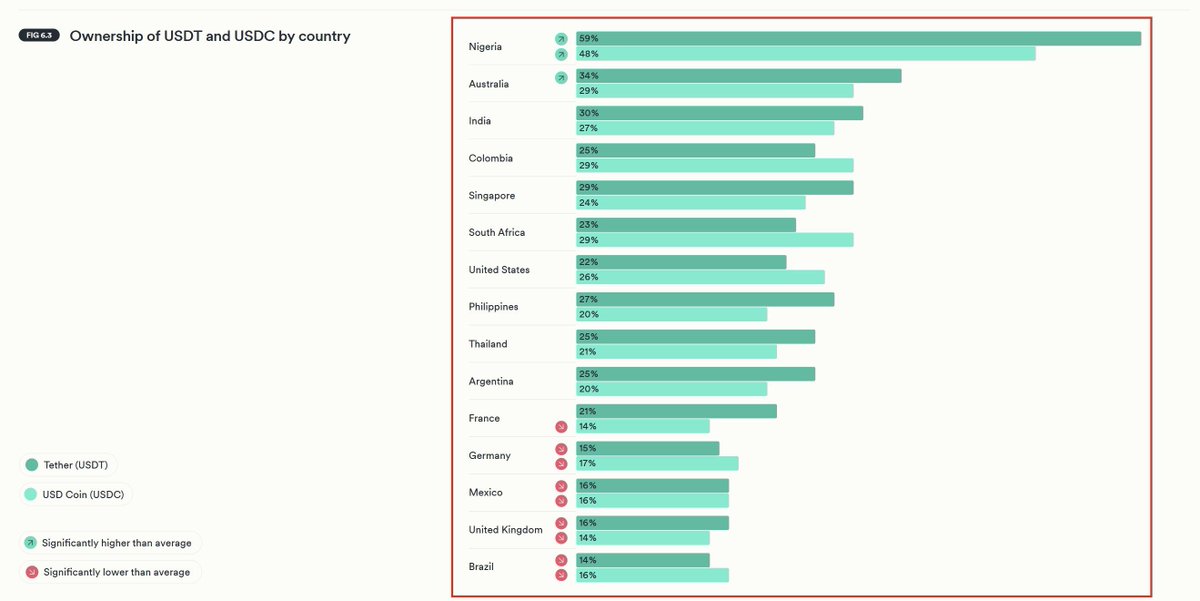
USDT vs USDC ownership by country. Ranked. 🥇 🇳🇬 Nigeria: 59% USDT / 48% USDC 🥈 🇦🇺 Australia: 34% USDT / 29% USDC 🥉 🇮🇳 India: 30% USDT / 27% USDC 4. 🇨🇴 Colombia: 25% USDT / 29% USDC 5. 🇸🇬 Singapore: 29% USDT / 24% USDC 6. 🇿🇦 South Africa: 23% USDT / 29% USDC 7. 🇺🇸 United https://t.co/Vt7UQkSsyh
11:03 AM·Mar 15, 2026
Steady attention without excessive speculation.
The report, produced by BVNK in partnership with YouGov, Coinbase, and Artemis, surveyed 4,600 adults across 15 countries. Data was collected in September and October 2025. Respondents were crypto-active, meaning they currently hold, have held stablecoins in the past year, or intend to acquire them. Australia ranked second for USDT ownership at 34%, followed by India at 30%.
The gap between Nigeria and every other country is stark. At 59% USDT ownership and 48% USDC ownership among crypto-active adults, Nigeria’s figures are nearly double Australia’s. No other country in the survey approaches both metrics simultaneously.
The drivers are economic. According to the report, 92% of African respondents cite their country’s economic conditions as a primary reason for holding stablecoins. The naira has lost significant value in recent years, with inflation historically running at 20–30% annually. For many Nigerians, dollar-pegged stablecoins function as a practical substitute for the local currency.
BVNK’s data shows that 95% of Nigerian respondents prefer to receive payments in stablecoins rather than naira. Around 35% of gig and freelance income in these markets is already paid in stablecoins. Stablecoin adoption across Nigeria has grown alongside transaction volumes, with annual stablecoin flows reaching $22 billion, per Chainalysis 2025 data. That represents 43% of all crypto transaction volume across sub-Saharan Africa.
Nigeria also ranks sixth globally for overall crypto use, per the Chainalysis 2025 Geography of Cryptocurrency Report. Approximately 10.3% of the population, around 22 million people, own crypto, up from 7–8% in 2023. The young demographic is a key factor. Globally, 54% of stablecoin holders are aged 18–34, and Africa shows a notably balanced gender split compared to other regions.
Australia ranked second for USDT ownership at 34%, with USDC at 29%. India followed at 30% USDT and 27% USDC. Both countries show strong stablecoin penetration within their crypto-active populations, though the use cases differ substantially from Nigeria’s.
In Australia, stablecoin use is more closely tied to trading and portfolio management within a maturing regulatory environment. The country’s crypto industry has operated under a relatively clear licensing framework, which has encouraged institutional and retail participation. India’s position reflects its large and fast-growing user base, where stablecoins serve both active trading and cross-border payment needs.
According to the report, 51–57% of stablecoin acquisitions in South Asia occurred in the past two years. That timing aligns with a broader global rebound in crypto activity after the 2022–2023 downturn. Stablecoin adoption in India has also been shaped by the high cost of traditional international remittances, where stablecoin rails offer a cheaper alternative.

Src: X (Leon Waidmann)
One of the more significant findings in the report is the USDT versus USDC ownership split across markets. In five of the 15 countries surveyed, USDC ownership exceeds USDT. Those countries are Colombia (25% USDT vs. 29% USDC), South Africa (23% vs. 29%), the United States (22% vs. 26%), Germany (15% vs. 17%), and Brazil (14% vs. 16%).
The pattern maps closely to the regulatory landscape. Europe’s MiCA framework, fully applied by the end of 2024, has steered users toward USDC, issued by regulated entity Circle, over USDT, which has not yet received EU authorization. Germany sits inside the eurozone and shows a clear USDC preference at 17% vs. 15%. France shows a similar lean at 14% USDC vs. 21% USDT, though USDT still leads there.
In the United States, similar compliance pressures and institutional preferences have tilted usage toward USDC. Circle has long positioned USDC as the regulated alternative, with monthly attestations and direct backing by US Treasury bills and cash equivalents. For asset managers and fintech firms operating under regulatory scrutiny, USDC carries fewer compliance risks.
USDT still leads globally in aggregate, but the gap is narrowing. The data suggests stablecoin adoption in emerging markets runs on USDT for its liquidity and deep exchange integration, while regulated markets increasingly favor USDC.
The global stablecoin market cap stood at over $300 billion as of early 2026. That represents 500% growth over five years, up from roughly $60 billion in 2021. Active stablecoin addresses grew 1,300% over the same period, according to BVNK’s report.
Africa leads all regions with 79% stablecoin ownership among surveyed crypto users. Latin America follows at around 65%. South Asia, led by India, sits in a range of 65–87% depending on the specific metric. The report found that 50% of current holders increased their stablecoin positions in the past 12 months, with Africa showing the strongest net uptick at 73%.
Forward intent is strong across all regions. Globally, 56% of respondents said they plan to increase stablecoin holdings next year. Among non-owners, 13% intend to acquire stablecoins in the near term, rising to 16% in lower-income regions such as Nigeria and India. These figures point to continued stablecoin adoption momentum even as market caps approach record levels.
Nigeria’s regulatory environment has shifted meaningfully. The country’s 2025 Investment Securities Act formally recognized crypto as an asset class, reversing the Central Bank of Nigeria’s 2021 directive that barred banks from servicing crypto companies. The law created a clearer framework for exchanges, custody providers, and payment firms operating in the country.
A naira-pegged stablecoin, the cNGN, has also been launched, though adoption remains nascent compared to dollar-denominated options. For most Nigerian users, USDT and USDC remain the default because they provide effective dollar exposure, which is the core utility driving stablecoin adoption in the market.
Across all 15 markets surveyed, 77% of stablecoin users said they would open a bank account that included a stablecoin wallet if one were available. That figure points to a potential convergence between traditional finance and crypto rails that could significantly accelerate stablecoin adoption in the coming years.
The BVNK report reinforces a shift already visible in on-chain data: stablecoins are no longer primarily a trading tool. They have become payments infrastructure for remittances, gig economy income, and everyday transactions in markets where local currency instability makes dollar alternatives not just useful, but necessary. This article does not constitute financial advice.
Our Crypto Talk is committed to unbiased, transparent, and true reporting to the best of our knowledge. This news article aims to provide accurate information in a timely manner. However, we advise the readers to verify facts independently and consult a professional before making any decisions based on the content since our sources could be wrong too. Check our Terms and conditions for more info.



Crypto lender BlockFills files for Chapter 11 bankruptcy in the US.
Nigeria Leads Global Stablecoin Adoption in 2026 Report
Qubic’s Neuraxon AI Research Accepted by IEEE Conference
Injective Bug Bounty Dispute After Security Researcher Reports $500M Vulnerability
Crypto lender BlockFills files for Chapter 11 bankruptcy in the US.
Nigeria Leads Global Stablecoin Adoption in 2026 Report
Qubic’s Neuraxon AI Research Accepted by IEEE Conference
Injective Bug Bounty Dispute After Security Researcher Reports $500M Vulnerability