Loading Search...



Chinese Bitcoin ETF inflows rumour grows after a mysterious Hong Kong entity disclosed a $436M position in BlackRock’s IBIT.

Author: Kritika Gupta
Steady attention without excessive speculation.
18th February 2026- A cryptic 13F filing has sparked a major rumour about potential Chinese Bitcoin ETF inflows into U.S. markets. Laurore Ltd, a Hong Kong based entity with no website, no public records, and no known operating history, disclosed a $436 million position in BlackRock’s iShares Bitcoin Trust (IBIT). Notably, this ETF represents its only reported holding. The filing lists Zhang Hui as the signatory, a very common Chinese name, which adds to the uncertainty surrounding the entity’s identity and origin.
As a result, analysts and market observers now speculate that mainland Chinese capital may have gained indirect exposure to Bitcoin through offshore structures. Since China bans domestic crypto ownership and trading, wealthy investors and institutions often use offshore vehicles to access global markets. Therefore, this development has raised questions about whether institutional Chinese capital has begun entering regulated U.S. Bitcoin ETFs.
High Signal Summary For A Quick Glance
The Laurore Ltd disclosure appeared in the latest quarterly 13F filings covering Q4 2025. These filings require institutional investors managing over $100 million in U.S. securities to publicly disclose their holdings. In this case, Laurore reported only one asset, BlackRock’s IBIT, which suggests a deliberate and focused strategy to gain Bitcoin exposure rather than maintain a diversified portfolio.
At the same time, China continues to face economic headwinds. The country struggles with slowing GDP growth, a prolonged property sector crisis, and tightening capital controls designed to prevent yuan outflows. Because mainland investors face a strict $50,000 annual foreign exchange limit, many wealthy individuals use offshore entities in Hong Kong or the Cayman Islands to access foreign assets.
Historically, Chinese capital has used crypto markets for similar purposes. During the late 2010s, investors moved tens of billions of dollars into Bitcoin and stablecoins such as Tether to bypass domestic restrictions. More recently, between 2024 and 2025, over the counter brokers and underground financial networks helped investors convert yuan into digital assets using offshore intermediaries.
Furthermore, China’s regulatory stance toward Bitcoin has evolved significantly. Initially, China dominated global Bitcoin mining and controlled over 75 percent of the hash rate by 2019. However, regulators began tightening restrictions in 2013 by banning financial institutions from handling Bitcoin. Eventually, China imposed a full ban on crypto trading and mining in 2021 to limit capital flight, reduce financial risk, and maintain monetary control.
Key milestones related to this development
Authorities ban financial institutions from handling Bitcoin transactions.
Domestic crypto exchanges shut down and ICO fundraising becomes illegal.
Chinese mining pools control over 75% of global Bitcoin hash rate.
Authorities ban Bitcoin mining and trading across mainland China.
Hong Kong licenses crypto firms and approves Bitcoin ETFs.
BlackRock launches IBIT, enabling regulated institutional Bitcoin exposure.
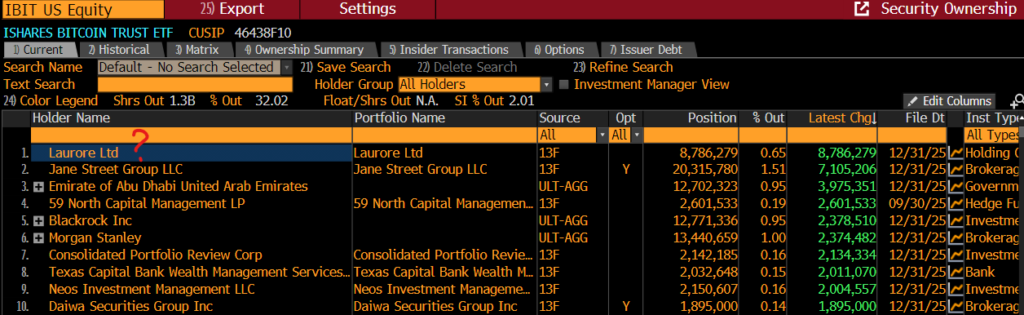
If Laurore Ltd represents mainland Chinese investors, this filing could indicate a new channel for capital outflows through regulated ETFs. Instead of relying on informal crypto markets or stablecoin transfers, investors could use institutional products such as IBIT. Therefore, Chinese Bitcoin ETF inflows may increasingly occur through compliant financial products rather than unregulated crypto channels.
This shift offers several advantages. Regulated ETFs provide secure custody, transparency, and institutional legitimacy. Therefore, they reduce operational risks compared to direct crypto ownership. At the same time, economic uncertainty, yuan depreciation, and weak domestic investment returns have increased demand for alternative assets.
However, regulatory risks remain significant. Chinese authorities closely monitor offshore financial activity and may increase enforcement if capital outflows accelerate. As a result, future Chinese Bitcoin ETF inflows could face sudden policy restrictions if regulators view them as a threat to financial stability.
Looking ahead, this filing could represent an early signal rather than an isolated event. If other offshore entities disclose similar Bitcoin ETF positions in future filings, analysts may confirm a broader trend of Chinese capital entering Bitcoin through regulated channels.
At the same time, this development highlights Bitcoin’s growing role as a global macro asset. Institutional investors increasingly treat Bitcoin as a hedge against currency instability, geopolitical risk, and capital restrictions.
Ultimately, the Laurore Ltd filing remains a rumour driven by circumstantial evidence rather than confirmed ownership data. Nevertheless, it underscores Bitcoin’s evolving role within global financial markets.
Our Crypto Talk is committed to unbiased, transparent, and true reporting to the best of our knowledge. This news article aims to provide accurate information in a timely manner. However, we advise the readers to verify facts independently and consult a professional before making any decisions based on the content since our sources could be wrong too. Check our Terms and conditions for more info.



Crypto Rover
@cryptorover

💥BREAKING: 🇭🇰🇨🇳 Mysterious Hong Kong-based shell company has allocated 100% of its portfolio into BlackRock’s IBIT. Quietly acquiring $436 million in Bitcoin exposure. Beijing’s stealth way of catching up in the BTC race without breaking its own crypto ban. https://t.co/rvve1JHKuJ
05:46 AM·Feb 18, 2026

Stuart A. Brown
@StuOnGold
The most likely scenario now is a short-term pause as Chinese citizens (& robots) celebrate the New Year, & then there should be a nice surge into April for the miners. From there, a seasonal range trade into the summer is likely, followed by a massive “real deal” breakout above https://t.co/chRnW1tujY

05:40 AM·Feb 18, 2026
Hong Kong entity reports a $436 million IBIT position.
Analysts suspect offshore Chinese capital entering Bitcoin ETFs.
Netherlands Ban Polymarket as Crypto Regulation Tightens
Hong Kong Filing Sparks Rumor of Chinese Bitcoin ETF Inflows
Omnipair Launches on Solana Enabling Lending Without Oracles
Supernova DEX Launches on Ethereum Mainnet
Netherlands Ban Polymarket as Crypto Regulation Tightens
Hong Kong Filing Sparks Rumor of Chinese Bitcoin ETF Inflows
Omnipair Launches on Solana Enabling Lending Without Oracles
Supernova DEX Launches on Ethereum Mainnet

Bitcoin
$68143.00