Loading Search...


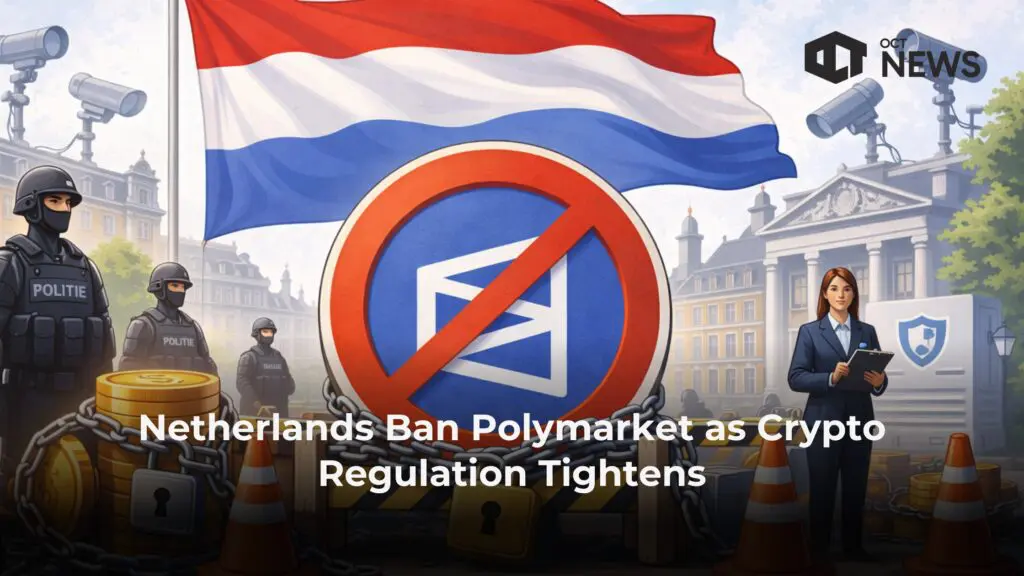
Polymarket Netherlands ban marks stricter crypto regulation as authorities block prediction markets and introduce a 36% tax.

Author: Kritika Gupta
Steady attention without excessive speculation.
18th February 2026- The Polymarket Netherlands ban marks a major escalation in the country’s regulatory approach toward crypto-linked platforms. On February 17, 2026, the Dutch gambling authority, Kansspelautoriteit (KSA), ruled that Polymarket operates as unlicensed gambling and ordered the platform to immediately block Dutch users. Regulators warned that failure to comply will result in weekly fines of €420,000, with penalties increasing if violations continue.
At the same time, Dutch lawmakers approved a major tax reform that introduces a 36 percent tax on crypto investment returns, including unrealized gains, starting January 1, 2028. These two actions signal a clear shift toward tighter crypto regulation. While the Netherlands still allows crypto ownership and trading, authorities now aim to enforce stricter oversight of platforms and investor profits.
High Signal Summary For A Quick Glance

Crypto Rover
@cryptorover

💥BREAKING: Polymarket has been banned in the Netherlands since today. The Netherlands is killing the crypto industry. https://t.co/ahIWaZditY

03:01 AM·Feb 18, 2026

Romano
@RNR_0
Polymarket has been banned in the Netherlands since today Users may be punishable as this country is slowly turning into a Polder prison https://t.co/qh0MyiyRhY

07:05 PM·Feb 17, 2026
Authorities launched an investigation months before announcing the Polymarket Netherlands ban. Regulators determined that Polymarket’s prediction markets qualify as gambling because users wager money on uncertain real-world outcomes. Dutch users reportedly placed more than $32 million in bets on the October 2025 parliamentary elections, which raised serious compliance concerns.
Dutch law strictly prohibits unlicensed gambling, especially betting on political events. Therefore, regulators ordered Polymarket to geoblock access for users in the Netherlands. If Polymarket fails to comply, it will face escalating fines and enforcement actions.
Furthermore, the Polymarket Netherlands ban reflects a broader global regulatory pattern. Ukraine banned the platform in January 2026, and Australia introduced similar restrictions earlier. Meanwhile, regulators in the United States continue debating whether prediction markets qualify as gambling platforms or financial instruments.
Despite these bans, crypto market reactions have remained limited. Previous restrictions caused short-term volatility, but trading volumes stabilized quickly as global users replaced restricted participants. However, repeated regulatory crackdowns could weaken investor confidence over time.
Relative positioning against past updates or peers
In addition to the Polymarket banned Netherlands enforcement, lawmakers approved the Actual Return in Box 3 Act, which significantly changes crypto taxation. This law replaces the previous system that taxed assumed returns with a model that taxes actual annual gains.
Under the new system, investors must pay a 36 percent tax on actual gains, including unrealized profits. This means investors owe taxes based on portfolio value increases even if they do not sell their crypto assets.
The law includes a €1,800 tax-free allowance and allows investors to offset losses against future gains. However, investors cannot recover taxes paid during temporary market increases if prices later fall.
This system creates liquidity pressure. For example, an investor holding €100,000 in Bitcoin that increases by 20 percent could owe more than €7,000 in taxes without selling any assets. Consequently, investors may need to sell crypto holdings to pay tax obligations.
The Netherlands continues to allow crypto ownership and trading, but regulators now enforce stricter oversight. Crypto companies must register with De Nederlandsche Bank and comply with anti-money laundering regulations.
At the same time, broader EU regulations such as MiCA strengthen oversight across Europe. Authorities have also introduced stricter gambling rules, which directly contributed to the Polymarket banned Netherlands enforcement.
While the government continues supporting blockchain innovation, recent actions show a shift toward stronger regulation. As a result, crypto businesses and investors face a more controlled and compliance-focused environment in the Netherlands.
Our Crypto Talk is committed to unbiased, transparent, and true reporting to the best of our knowledge. This news article aims to provide accurate information in a timely manner. However, we advise the readers to verify facts independently and consult a professional before making any decisions based on the content since our sources could be wrong too. Check our Terms and conditions for more info.



Across Protocol Plans Potential Move from DAO to U.S. C-corp Structure
Quant CEO Announces ISO’s First Global Blockchain Interoperability Standard
GEODNET Launches GEO-SWARM on Kickstarter
Grvt Postpones GRVT Token Launch Expanding Airdrop Share
Across Protocol Plans Potential Move from DAO to U.S. C-corp Structure
Quant CEO Announces ISO’s First Global Blockchain Interoperability Standard
GEODNET Launches GEO-SWARM on Kickstarter
Grvt Postpones GRVT Token Launch Expanding Airdrop Share