Loading Search...


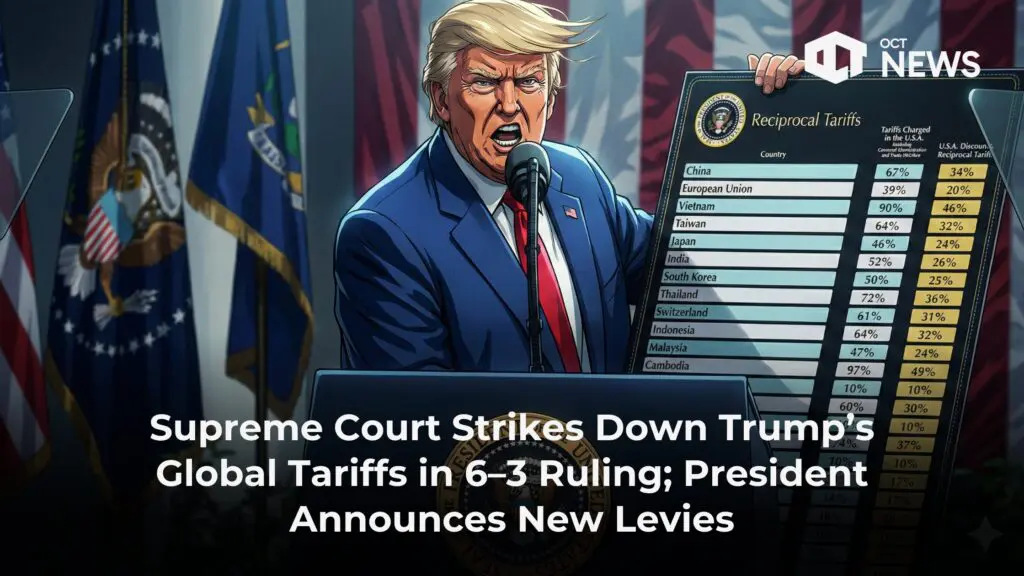
The US Supreme Court invalidates Trump ’s 2025 global tariffs in a 6–3 ruling, prompting new temporary levies under the Trade Act.

Author: Tanishq Bodh
High attention and emotional sentiment detected.
February 21, 2025 – Trade policy took a sharp turn Friday after the U.S. Supreme Court curtailed one of President Donald Trump ‘s most aggressive economic tools. The decision lands at a sensitive moment for global markets, as supply chains and inflation expectations remain closely tied to U.S. tariff policy. In a 6–3 ruling, the Court invalidated sweeping global tariffs imposed in 2025 under emergency powers, forcing the administration to pivot within hours.
High Signal Summary For A Quick Glance
In Learning Resources, Inc. v. Trump, the Supreme Court of the United States ruled that President Donald Trump lacked authority to impose broad tariffs under the International Emergency Economic Powers Act.
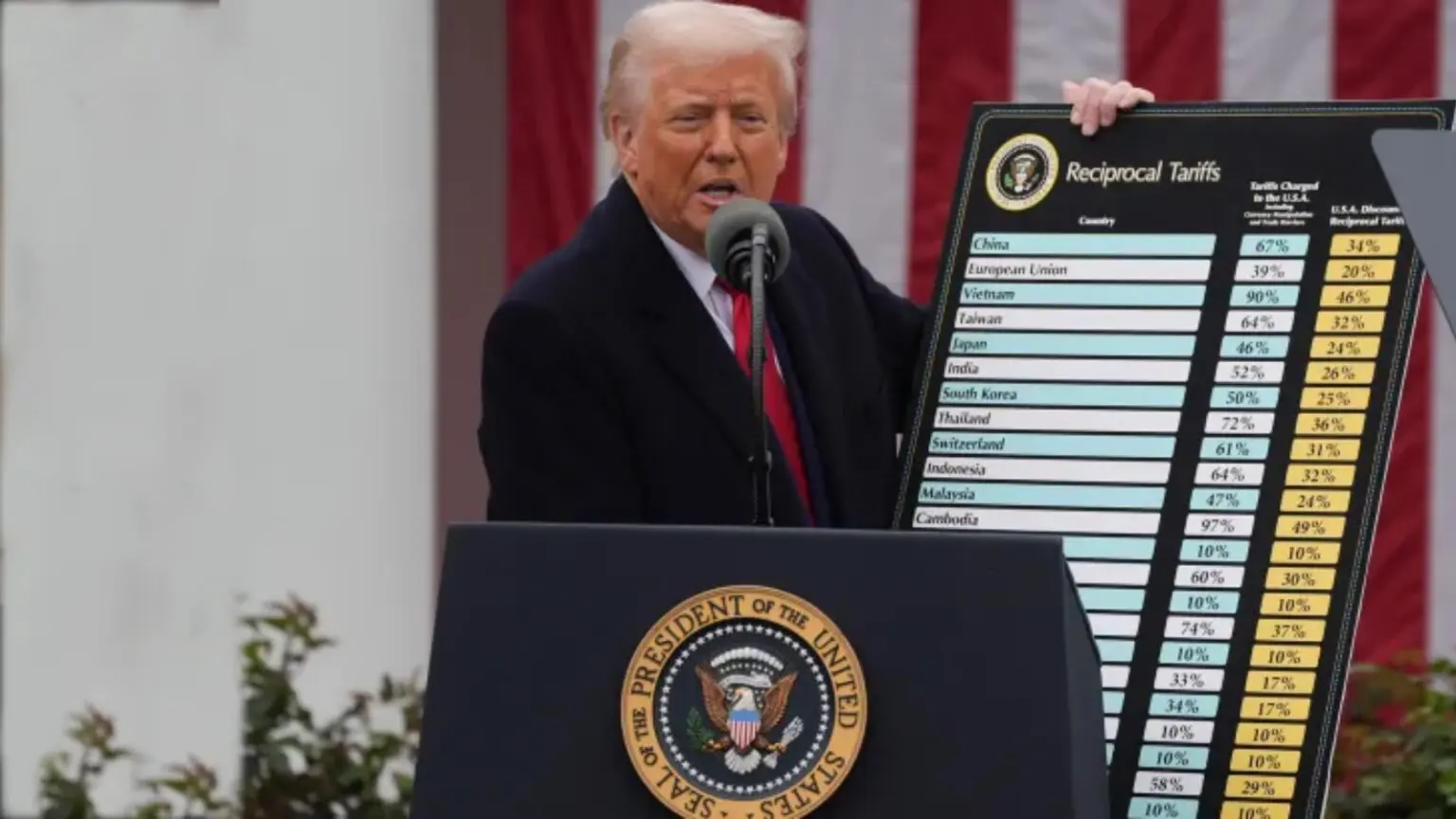
The tariffs included a baseline 10% “reciprocal” levy on imports from nearly all countries and higher duties targeting major partners. The administration justified the measures through declared emergencies tied to trade deficits and drug trafficking flows.
Chief Justice John Roberts wrote the majority opinion, stating that the Constitution grants Congress exclusive authority to impose tariffs. The Court found that IEEPA does not explicitly authorize taxation or duties and failed the “major questions” threshold for actions of large economic consequence.
Within hours of the ruling, Trump announced he would issue a new executive order under Section 122 of the Trade Act of 1974. That provision allows temporary surcharges of up to 15% for 150 days to address balance-of-payments concerns.
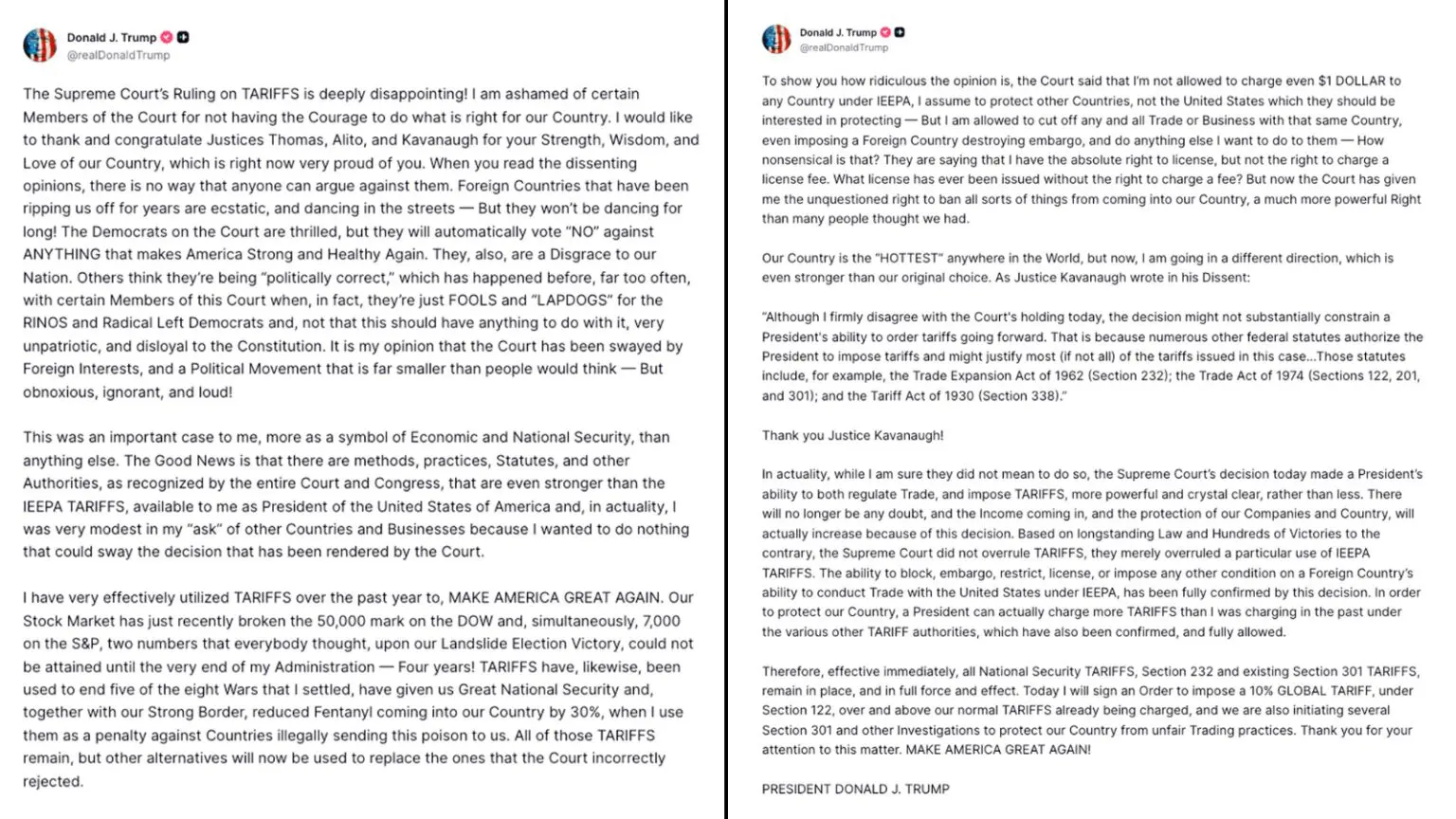
Source : Truth Social
The ruling reasserts congressional control over tariff authority. It narrows the executive branch’s ability to use emergency powers for large-scale trade actions.
For markets, the immediate effect reduces uncertainty tied to indefinite Trump ‘s emergency tariffs. However, Trump’s rapid pivot signals continued volatility in trade policy.
For businesses, the decision opens questions about refunds for more than $130 billion in collected duties. Lower courts will now handle potential reimbursement claims, which could take years.
At a constitutional level, the ruling reinforces separation of powers. The majority opinion emphasized that large economic actions require clear congressional authorization.
The invalidated tariffs generated significant revenue and influenced negotiations with major trading partners. They targeted imports from China, Canada, Mexico, the European Union, Japan, and South Korea.
The decision leaves intact other tariff programs imposed under separate legal authorities, including Section 232 national security measures and Section 301 China-specific actions.
Markets responded with modest gains following the announcement, reflecting relief over reduced executive unpredictability. Still, the administration’s move to invoke Section 122 suggests the trade debate remains active.
The ruling may shape future disputes over presidential authority in economic policy, especially as election cycles heighten political sensitivity around trade.
The immediate trigger is the expected executive order activating the new Section 122 tariffs, likely within days, which will formally start the 150-day clock running into roughly July 2026. Markets will also focus on the lower-court remedy phase, where refund litigation hearings expected in March–April could reshape business and liquidity expectations. Retaliatory responses from China or the EU would introduce fresh macro pressure, while any expansion under Section 232 national-security authorities would deepen risk sentiment.
On the political front, a summer push in Congress to codify permanent tariff legislation could either entrench trade friction or curb executive authority. If alternative statutes withstand court scrutiny, bearish pressure on global risk assets, including crypto, could intensify. Conversely, if Congress moves to limit Trump tariffs, it would mark a structural bullish reset for broader markets.
Our Crypto Talk is committed to unbiased, transparent, and true reporting to the best of our knowledge. This news article aims to provide accurate information in a timely manner. However, we advise the readers to verify facts independently and consult a professional before making any decisions based on the content since our sources could be wrong too. Check our Terms and conditions for more info.