Traditional finance operates on fragmented, inefficient infrastructure that limits transparency, accessibility, and capital efficiency. Real-world assets such as private credit, invoices, and structured financial products remain difficult to access globally, and transferring ownership often involves slow, opaque processes. This Centrifuge Review explores how blockchain infrastructure can address these limitations by bringing real-world financial assets on-chain in a secure, scalable, and institution-friendly manner.
Centrifuge enables asset issuers to tokenize financial products while allowing investors to access diversified yield opportunities through blockchain infrastructure. By bridging traditional finance with decentralized systems, the protocol expands access to real-world yield and improves capital efficiency.
By combining decentralized infrastructure with institutional compliance standards, Centrifuge positions itself as a foundational layer for tokenized finance. Its architecture allows real-world capital markets to connect with blockchain-based liquidity, unlocking new efficiency, transparency, and global accessibility.
Problem Statement
Traditional Financial Assets Lack Global Accessibility: Real‑world financial instruments such as private credit, asset‑backed securities, and invoices are typically restricted to institutional investors. These barriers limit capital access and prevent broader participation in real‑world yield opportunities.
Legacy Infrastructure Creates Inefficiencies and Delays: Traditional asset issuance, settlement, and servicing rely on intermediaries and manual processes. This increases operational costs, slows transactions, and reduces transparency for investors and issuers.
DeFi Lacks Direct Access to Real‑World Yield: Most DeFi protocols rely on crypto‑native yield sources, which are often volatile and dependent on market speculation. Without integration of real‑world assets, DeFi cannot fully replicate traditional financial markets.
Fragmented Blockchain Ecosystems Limit Institutional Adoption: Many blockchain platforms lack the compliance, scalability, and reliability required by institutional financial participants. This fragmentation slows adoption and limits large‑scale integration.
Limited Infrastructure for Compliant Tokenized Assets: Tokenizing real‑world assets requires regulatory alignment, identity verification, and structured governance. Existing protocols often lack built‑in mechanisms to support compliant financial infrastructure.
Solutions Provided by Centrifuge
Tokenization Infrastructure for Real‑World Assets: Centrifuge enables issuers to tokenize real‑world financial assets directly on blockchain infrastructure. This allows institutions to bring private credit, structured products, and financial instruments on‑chain with improved efficiency and transparency.
Decentralized Asset Financing Through Tokenized Pools: The protocol allows asset issuers to create tokenized pools representing underlying financial assets. Investors can provide capital to these pools and earn yield derived from real‑world financial activity.
Integration with DeFi Liquidity Markets: Centrifuge connects tokenized real‑world assets with DeFi protocols, allowing blockchain investors to access institutional‑grade yield opportunities. This expands the scope of decentralized finance beyond crypto‑native assets.
Centrifuge Chain Hub for Cross‑Chain Infrastructure: The protocol operates its own blockchain to coordinate asset issuance, governance, and tokenization while enabling interoperability with multiple blockchain ecosystems.
Institutional‑Grade Compliance and Governance Framework: Centrifuge incorporates governance mechanisms, identity verification systems, and structured financial controls to support institutional participation while maintaining decentralized infrastructure.
Problem–Solution Overview
ProblemsSolutions
Traditional Financial Assets Lack Global Accessibility: Private credit, asset-backed securities, and invoices are restricted to institutional investors, limiting participation and capital access.
Tokenization Infrastructure for Real-World Assets: Centrifuge enables issuers to tokenize private credit and financial instruments on-chain, expanding access and improving transparency.
Legacy Infrastructure Creates Inefficiencies and Delays: Intermediaries and manual processes increase costs, slow settlement, and reduce operational transparency.
Decentralized Asset Financing via Tokenized Pools: Issuers create pools backed by real-world assets, allowing direct capital provisioning and automated on-chain settlement.
DeFi Lacks Direct Access to Real-World Yield: Most DeFi yield is crypto-native, volatile, and disconnected from traditional financial income streams.
Integration with DeFi Liquidity Markets: Tokenized RWAs connect to DeFi protocols, allowing investors to access institutional-grade yield directly on-chain.
Fragmented Blockchain Ecosystems Limit Institutional Adoption: Lack of interoperability, compliance readiness, and scalability slows institutional integration.
Centrifuge Chain Hub for Cross-Chain Coordination: A dedicated chain manages issuance, governance, and interoperability across blockchain ecosystems.
Technology & Architecture
4.7/5
Technology & Architecture
Hub-and-Spoke Architecture
Centrifuge Chain Hub
Acts as the central infrastructure layer coordinating tokenization, governance, and protocol operations.
InfrastructureCoordination
Asset Issuance Layer
Provides structured infrastructure for tokenized asset issuance and lifecycle management.
TokenizationIssuance
Vault & Yield Infrastructure
ERC-4626 Vault Framework
Uses standardized vault structures to enable composable yield strategies and financial integrations.
ERC-4626Composable
Programmable Assets
Allows tokenized assets to function as programmable financial primitives across DeFi ecosystems.
ProgrammableDeFi Integration
Cross-Chain Interoperability
Multi-Chain Access
Enables tokenized assets to be accessed and utilized across multiple blockchain ecosystems.
Multi-ChainInteroperable
Liquidity Expansion
Improves liquidity, scalability, and capital efficiency for both institutional and decentralized participants.
Tokenomics
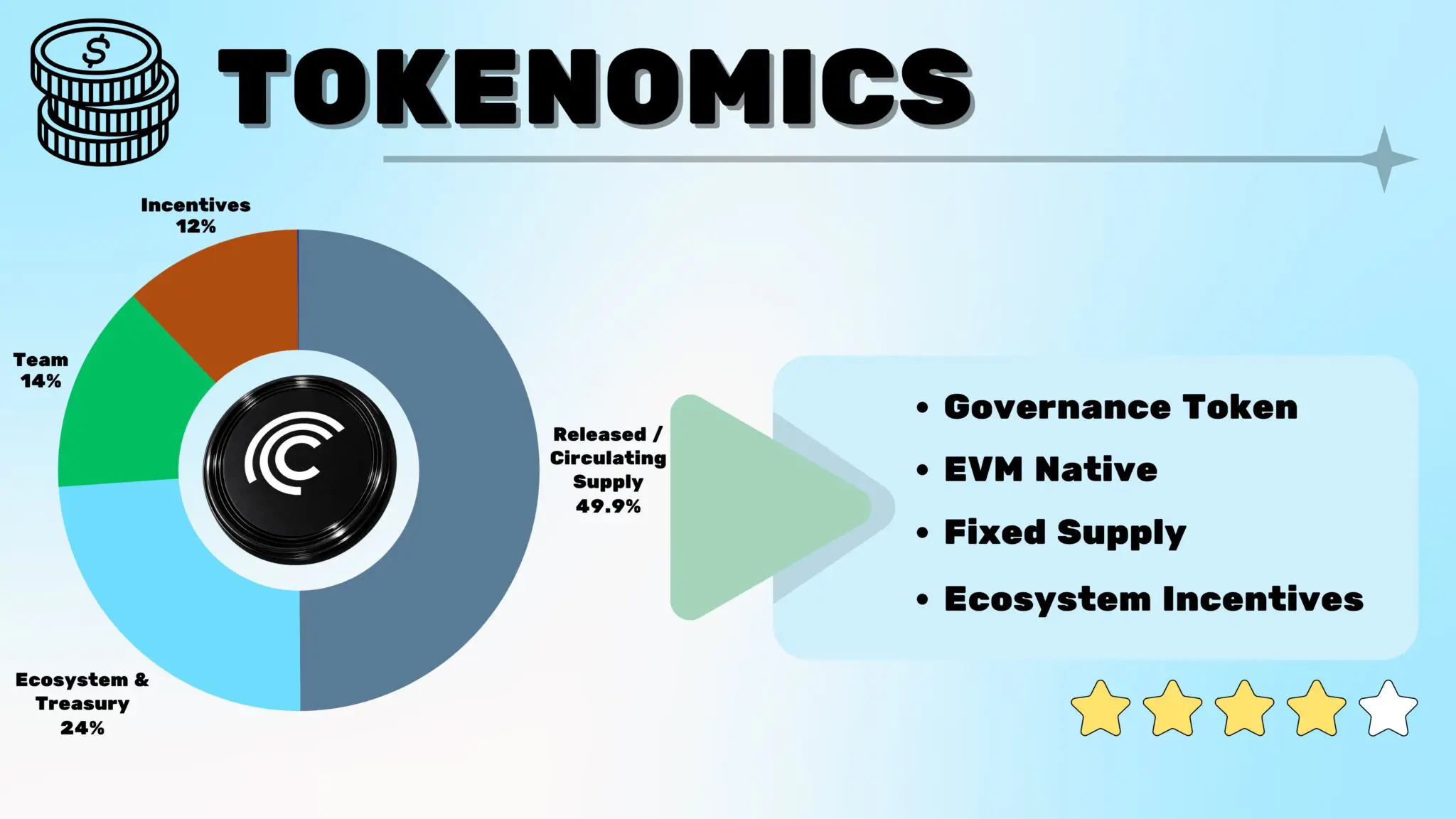
Centrifuge introduces the CFG token as the governance and economic coordination asset of the Centrifuge ecosystem. The protocol operates on an Ethereum-native EVM environment, enabling seamless interoperability while aligning governance incentives with long-term protocol growth, treasury sustainability, and real-world asset (RWA) market expansion.
Token Overview
Symbol: CFG
Total Supply: 691,800,000 CFG (as of January 2026)
Standard: ERC-20 (Ethereum-native, Centrifuge V3)
Decimals: 18
The CFG token functions as the governance, staking, and value accrual asset of the Centrifuge protocol. It enables governance participation, treasury oversight, protocol upgrades, and access to ecosystem incentives and rewards.
Token Allocation
Ecosystem & Treasury: 24% (Allocated to long-term ecosystem growth, protocol development, and treasury-managed initiatives).
Team: 14% (Allocated to contributors building the protocol, vesting linearly through March 2030).
Incentives (Locked CP-149 Tokens): 12% (Reserved for ecosystem growth programs, vesting linearly through April 2029 into the treasury).
Other Stakeholders: 0.1% (Remaining stakeholder allocations vesting through March 2026).
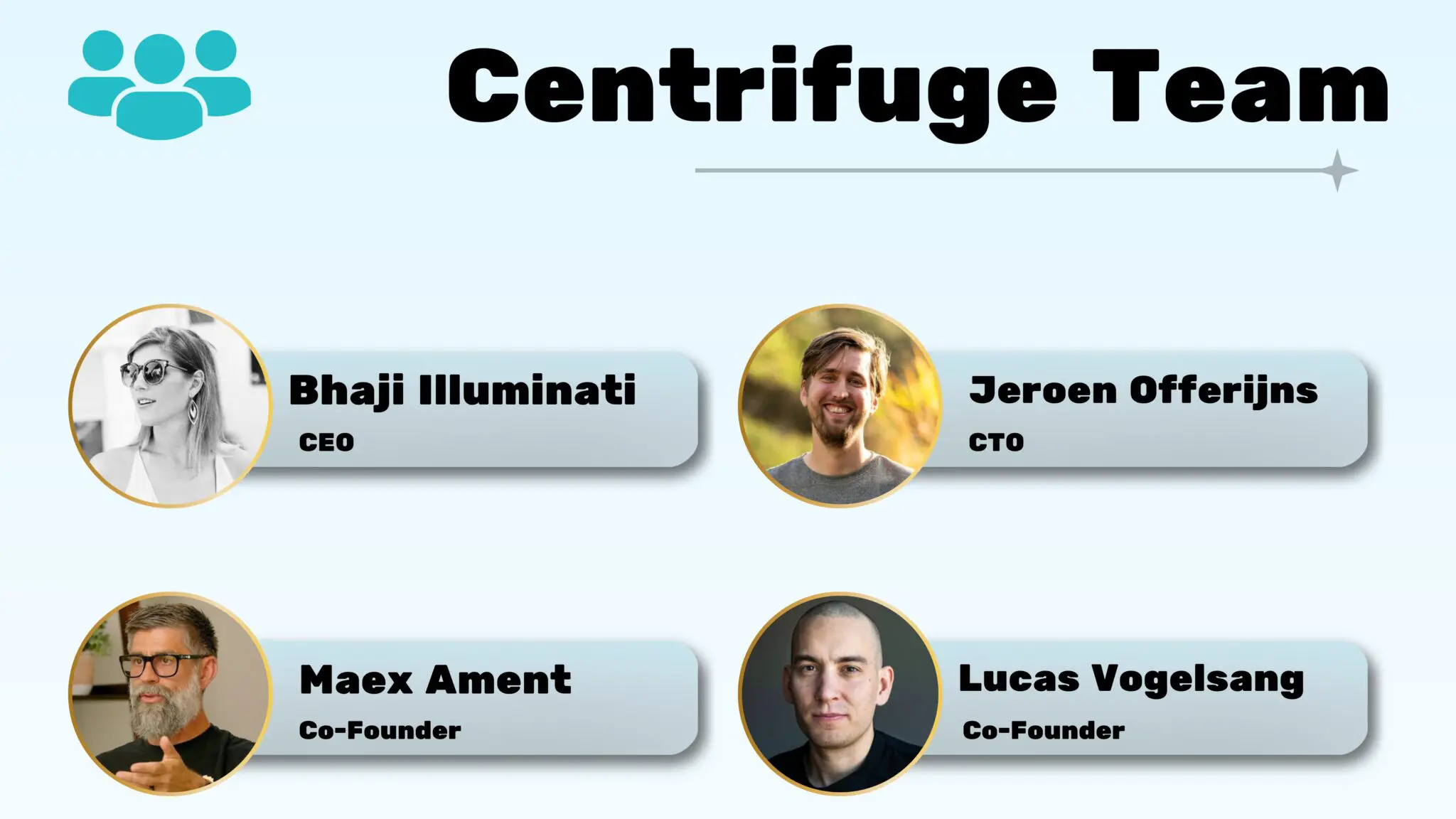
Centrifuge was founded by Lucas Vogelsang and Martin Quensel, who bring extensive experience in blockchain infrastructure, financial technology, and enterprise software. The broader team includes engineers, researchers, and financial specialists focused on bridging traditional finance with decentralized systems.
Co-Founder & Board Member: Maex Ament
Co-Founder: Lucas Vogelsang
Co-Founder: Martin Quensel
Co-Founder: Cassidy Daly
CEO: Bhaji Illuminati
CTO: Jeroen Offerijns
Project Analysis
Comparative Overview
Centrifuge vs. Ondo Finance: Ondo focuses primarily on tokenized treasury and credit products, while Centrifuge provides broader infrastructure for tokenizing diverse real‑world financial assets.
Centrifuge vs. RIZE: RIZE focuses on institutional intelligence and analytics alongside tokenization, while Centrifuge specializes in core asset issuance and liquidity infrastructure.
Centrifuge vs. Mantra Chain: Mantra emphasizes compliance‑focused DeFi infrastructure, while Centrifuge focuses specifically on real‑world asset tokenization and financing.
Centrifuge vs. Polymesh: Polymesh focuses on regulated asset issuance, while Centrifuge integrates asset financing directly into decentralized liquidity systems.
Strengths
Strong focus on institutional real‑world asset integration
Established infrastructure for tokenized financial markets
Clear alignment with institutional adoption trends
Composable architecture enabling DeFi integration
Challenges
Institutional adoption cycles can be slow
Requires regulatory clarity across jurisdictions
Competition from emerging tokenization protocols
Dependence on sustained real‑world asset issuance growth
Centrifuge vs RWA Tokenization & Institutional Asset Protocols
Project
Core Focus
Execution Architecture
Programmability
Token Utility
Notes
Centrifuge
Onchain asset management and real-world asset tokenization
Multichain EVM-native across Ethereum, Base, and Avalanche (formerly Polkadot parachain)
Full (EVM, Solidity)
Governance, protocol utility, staking
TVL exceeds $1.3B; over 1,768 assets tokenized; V3 multichain upgrade in 2025; partnerships with Aave and MakerDAO; Whitelabel launched Nov 2025; CFG supply 675M with ~3% inflation
Institutional real-world asset tokenization focused on U.S. Treasuries
Smart contracts on Ethereum and multichain deployments, including Ondo Chain
Centrifuge Review Conclusion
This Centrifuge Review highlights a protocol designed to bridge one of the most significant gaps in blockchain adoption: integrating real‑world financial assets into decentralized infrastructure. By enabling tokenization, financing, and liquidity access, Centrifuge provides infrastructure capable of connecting traditional capital markets with blockchain‑based systems.
Its focus on institutional‑grade architecture, compliance readiness, and scalable infrastructure positions Centrifuge as a foundational layer for tokenized finance. The protocol enables real‑world financial products to benefit from blockchain efficiency, transparency, and accessibility.
As tokenization becomes a central trend in financial innovation, Centrifuge’s infrastructure could play a critical role in enabling the transition toward on‑chain capital markets. Its long‑term success will depend on continued institutional adoption, ecosystem expansion, and the growth of tokenized financial products.
TL;DR
Infrastructure for institutional real-world asset tokenization.
Connects traditional finance directly with DeFi liquidity.
Limited Infrastructure for Compliant Tokenized Assets: Tokenization requires identity verification, governance, and regulatory alignment not supported by most protocols.
Institutional-Grade Compliance and Governance: Built-in identity verification, structured governance, and financial controls support regulated institutional participation.
Liquidity
Scalable
Institutional Financial Infrastructure
Tokenized Finance Layer
Combines blockchain infrastructure with institutional-grade financial architecture for scalable tokenized finance.
InstitutionalTokenized Finance



 Centrifuge
 Ondo Finance



 MakerDAO
 Goldfinch