Loading Search...


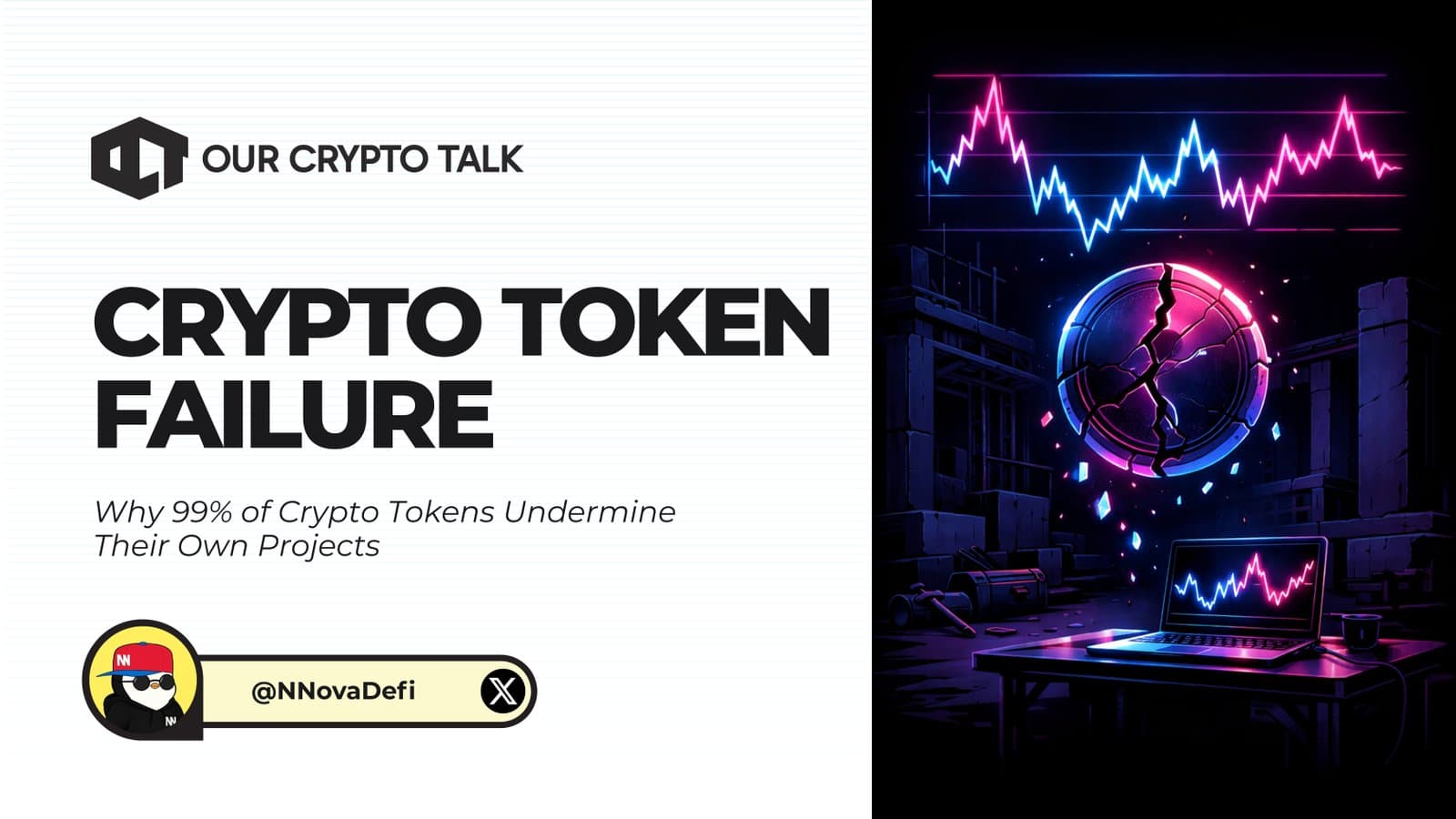
Launching a crypto token can fuel growth or destroy the product. Here’s why most fail and what actually works.
Everyone assumes launching a crypto token is the ultimate growth hack liquidity, hype, community incentives, and instant awareness. In practice, most crypto tokens quietly erode the very products they’re meant to support, shifting attention away from real progress and toward price charts that dominate perception.
This isn’t theory. Across the industry, the same pattern repeats: a crypto token launch initially amplifies visibility, but without a tightly integrated strategy, it becomes a long-term liability that damages reputation, adoption, and durability.
Before a crypto token exists, projects are judged by execution:
Post-token, the dominant question is simple: What’s the price doing right now?
Ship a major upgrade? Secure a key partnership? Add real utility? If the chart dips, the story collapses into “can’t devs do something?,” “project is dead,” or “team rugged.” Real progress gets ignored.
Conversely, weak projects surge on pure price momentum: “This is the next blue-chip” or “Team is cooking”even when fundamentals haven’t budged.
The token stops reflecting value. It defines value. Perception detaches from reality and anchors to candles.
Tokens transform holders into emotionally invested speculators:
Unlike traditional equities where strong fundamentals can outlast temporary stock weakness, crypto price performance is the reputation scorecard.
The result is a destructive feedback loop:
price decline -> sentiment collapse -> belief erosion -> user abandonment or toxicity. Product development alone rarely breaks through when emotional anchors are speculative rather than utility-driven.
Supply schedules, vesting, emissions, and allocations are hygiene factors.



They don’t answer the critical questions:
Absent clear answers, the market defaults to short-term, emotional narratives. Founders treat the token as fundraising or hype fuel; the market treats it as reputation proxy. That gap destroys adoption velocity and durability.
Failing patterns:
These deliver early pumps followed by inevitable collapse once speculative capital rotates.
Winning patterns:
A standout exception is @ether_fi and its $ETHFI token.
Ether.fi has evolved from a leading liquid restaking protocol into the dominant DeFi neobank, with a token strategy that directly reinforces product usage and long-term holder alignment.
Key elements:
This closed-loop design ensures the token isn’t a speculative overlay; it’s the economic engine powering (and benefiting from) expanded product adoption.
Congrats to founder @MikeSilagadze and the entire @ether_fi team for executing this vision and establishing Ether.fi as the dominant DeFi neobank.
Founders must treat token strategy as foundational architecture:
When executed with intention, price action becomes a lagging reflection of real value created.
The token amplifies everything, the good and the bad.
Master it, and the rocket flies.
Ignore it, and gravity wins.

Helping crypto projects grow at @hypepartners | Growth Marketer | In Crypto Since 2017 |
https://t.co/nPDzgNKpMe
Genome Protocol Rug Pull: Explained
Top 6 ZachXBT Revelations That Shocked The World
AI Agent Payments Explained: Circle Nanopayments and the x402 Protocol
Top 7 Projects in the World Liberty Financial (WLFI) Portfolio
Genome Protocol Rug Pull: Explained
Top 6 ZachXBT Revelations That Shocked The World
AI Agent Payments Explained: Circle Nanopayments and the x402 Protocol
Top 7 Projects in the World Liberty Financial (WLFI) Portfolio