Loading Search...


SocialFi promised to revolutionize social media with creator rewards. Instead, it became crypto's most efficient capital incinerator.

Author: Tanishq Bodh
They said SocialFi would replace Twitter.
Instead, it turned into the most efficient capital incinerator of the last cycle. Hundreds of millions raised. Tokens down 99%. Feeds empty. Communities gone without a goodbye.
In theory, SocialFi was one of crypto’s most seductive ideas. Ownership instead of exploitation. Creators paid directly instead of fed to advertisers. Social graphs turned into economic assets.
In practice, however, it turned conversation into a balance sheet.
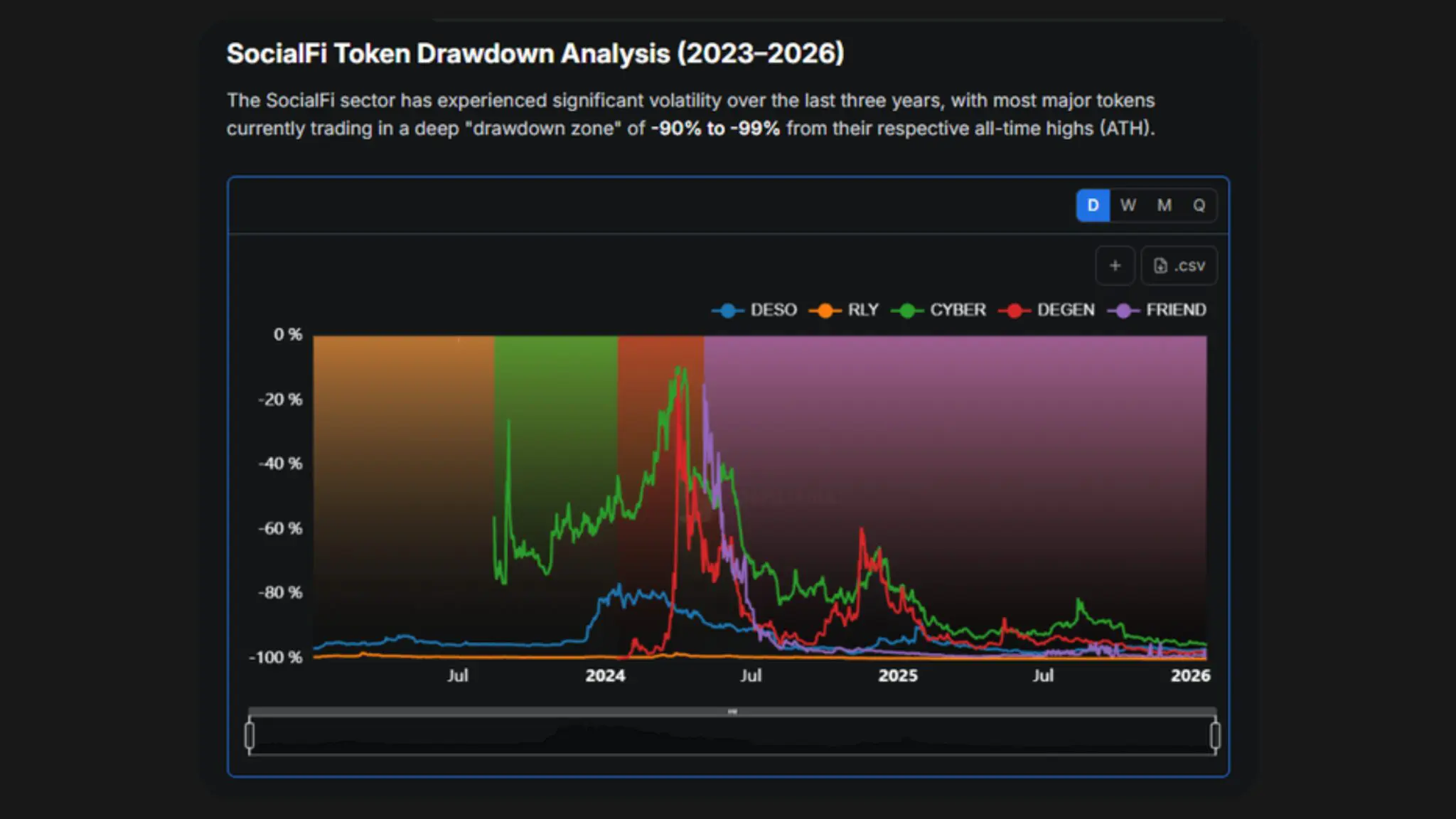
By early 2026, most SocialFi platforms are either abandoned, acquired, or functionally irrelevant. Tokens are down 90 to 99 percent. Communities evaporated the moment incentives dried up. What remains is a trail of postmortems and one uncomfortable question: Why did something that sounded so inevitable fail so completely?
SocialFi emerged at the intersection of two real frustrations.
First, Web2 social platforms extract enormous value from users while returning very little. Second, crypto promised ownership, permissionless access, and new economic models.
Put them together and the pitch writes itself. Instead of likes, you earn. Rather than platforms owning the graph, users do. Instead of ads, value flows peer to peer.
Consequently, early platforms sold a vision of a user-owned internet where attention, reputation, and creativity were finally priced correctly. Venture capital loved it. Crypto Twitter loved it. As a result, founders raised hundreds of millions to chase it.
But the pitch had a hidden assumption that turned out to be fatal.
SocialFi assumed that adding money improves social behavior. Unfortunately, that assumption is almost always wrong.
Money changes incentives. Subsequently, incentives change behavior. Finally, behavior changes culture.
Social networks don’t collapse because users aren’t paid enough. Rather, they collapse when interaction stops feeling human. SocialFi didn’t fix social media’s problems. Instead, it amplified them.
The first generation of SocialFi platforms made a crucial design choice. Specifically, they monetized people, not platforms.
Access tokens. Creator coins. Keys tied to individual profiles.
This turned social spaces into markets where the primary activity wasn’t conversation. It was trading.
On platforms like Friend.tech, users didn’t ask whether content was interesting. Instead, they asked whether this person would pump. Once that happens, the product is already lost.
At peak hype, SocialFi looked unstoppable. Daily volumes hit eight figures. DAUs spiked into the tens of thousands. Meanwhile, fees poured in.
However, the activity was hollow. Most engagement came from speculators rotating capital, bots farming incentives, and traders flipping keys. Not from people forming relationships, sharing ideas, or building communities.
When price action slowed, users didn’t complain. They disappeared.
That’s the difference between usage and activity. Activity can be bought. In contrast, usage requires something deeper.
Social platforms rely on a fragile social contract.
You speak because you want to be heard. Similarly, you follow because you care. You engage because it feels natural.
SocialFi replaced that with explicit financial signaling. Consequently, every post became a transaction. Every reply became yield seeking. Furthermore, every follow carried price implications.
As Vitalik Buterin warned early on, many of these systems didn’t improve discourse. Instead, they financialized attention and incentivized the loudest, not the best.
Once people feel like they’re being farmed or farming others, the social layer collapses. Trust evaporates. Authenticity becomes performance. Additionally, relationships become positions.
Even if incentives had been perfect, SocialFi still faced an impossible usability gap. Wallets. Gas fees. Private keys. Chain selection. All friction layered on top of something that, in Web2, is already effortless.
People don’t open social apps to think. Rather, they open them to scroll. When onboarding requires a tutorial, the game is over.
Competitors like Bluesky grew rapidly in 2025 by doing one boring thing extremely well. Specifically, they let users post without thinking about infrastructure. SocialFi never cleared that bar.
Social networks don’t grow linearly. Instead, they tip, or they stall.
You don’t join a social app because it’s better. Rather, you join because your friends are there.
SocialFi never solved this. Incentives brought users in temporarily, but they didn’t bring their graph. Therefore, when rewards stopped, users returned to where their real social lives already existed.
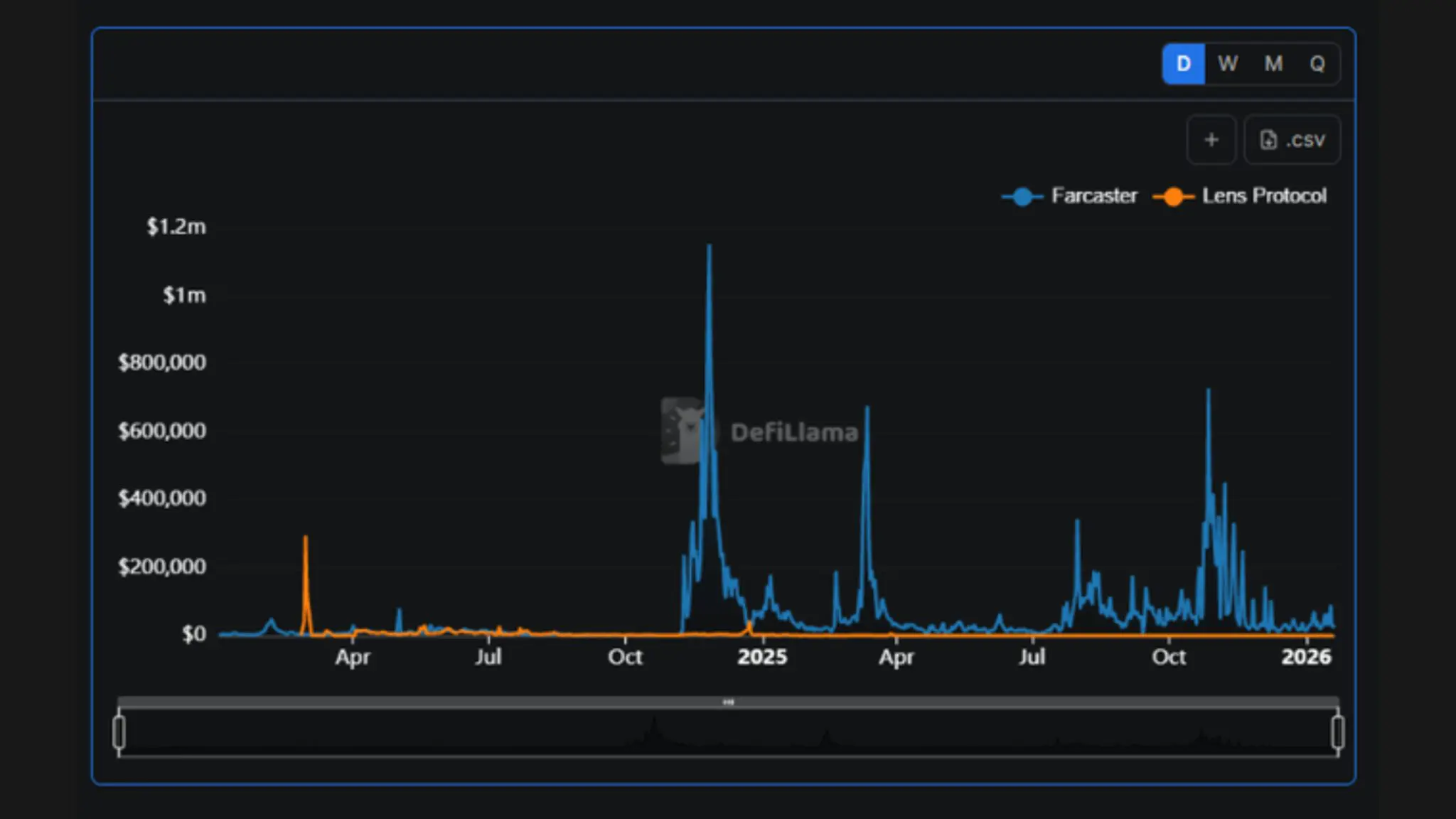
As Farcaster’s leadership later admitted, breaking free from X’s network effects was far harder than expected. Unfortunately, that admission came years too late.
Many SocialFi platforms marketed themselves as decentralized. In reality, however, they were deeply dependent on centralized platforms. APIs from X. Distribution through Web2 feeds. Furthermore, visibility tied to centralized moderation decisions.
When X began clamping down on incentive-driven engagement and data access in 2024 and 2025, entire SocialFi sub-narratives collapsed overnight.
This wasn’t censorship resistance. Instead, it was parasitic growth. Once the host changed the rules, the parasite died.
When incentives lead, mercenaries arrive. Subsequently, when mercenaries leave, nothing remains.
SocialFi platforms optimized for token emissions, referral rewards, and trading fees. In contrast, they did not optimize for retention, culture, or identity.
The result was predictable. DAUs fell 80 to 99 percent after the initial wave. Content quality collapsed. Moreover, bots outnumbered humans. Socializing turned into labor.
Labor without joy doesn’t last.
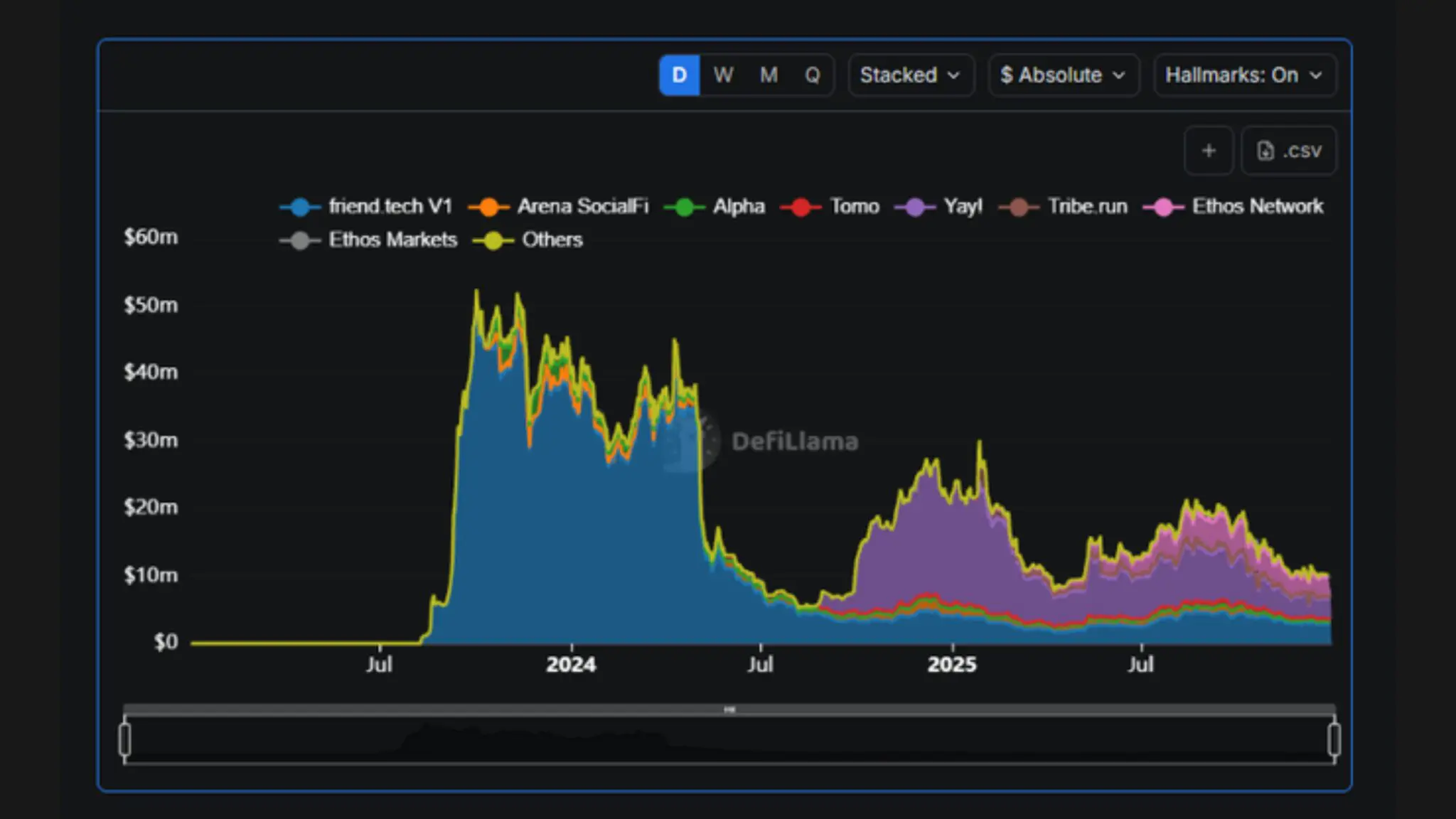
Friend.tech wasn’t just a failed app. Rather, it was a stress test for the entire narrative.
At its peak, it generated massive fees and attention. Within months, however, activity collapsed by over 95 percent. The token followed.
Nothing replaced it because there was nothing underneath it. As one early investor bluntly put it, one viral shot, no product depth.
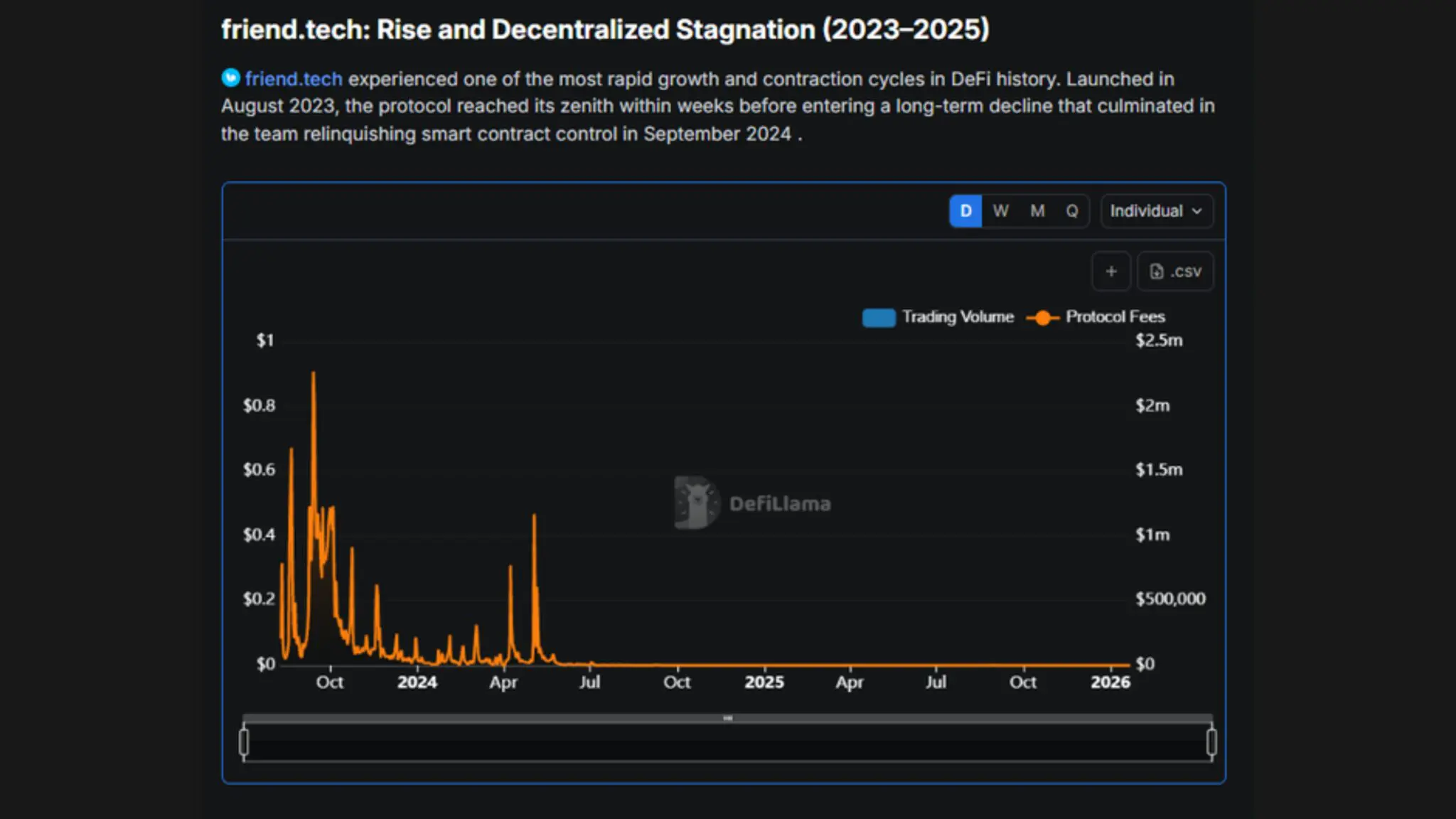
That wasn’t unique to Friend.tech. Instead, it was SocialFi in miniature.
Hundreds of millions were raised. Top tier funds. Elite angels. Strong technical teams. Nevertheless, none of it mattered.
Because money doesn’t fix incentive design. And incentive design is everything in social systems.
Platforms like BitClout raised enormous sums and still imploded under regulatory scrutiny, poor design, and community backlash. Ultimately, capital accelerated the rise, but also the fall.
Crypto has a bad habit. Specifically, when a narrative fails in its first form, we declare the entire category finished.
NFTs died. GameFi died. DeFi died.
Except none of them did. Rather, they shed bad incentives, bad products, and bad expectations.
SocialFi is doing the same thing right now. The wreckage looks terminal because the first wave was loud, speculative, and deeply misaligned with human behavior.
But under the surface, something else is happening.
The core flaw wasn’t social plus crypto. Instead, it was social plus speculation.
Early SocialFi assumed that if you make attention tradable, price reputation, and reward engagement with tokens, you’ll get healthier networks.
What you actually get is a distorted incentive graph. People don’t post to express. Rather, they post to extract. People don’t follow because they care. Instead, they follow because it’s a trade.
That’s not a social network. Rather, that’s a market wearing a social skin. And markets are brutal places to live.
SocialFi tried to replace social networks. That was never realistic.
What survives doesn’t replace Twitter, Instagram, or TikTok. Instead, it augments them. Or quietly competes by removing friction, not adding ideology.
The winning products won’t say here’s a decentralized social network. Rather, they’ll say here’s an app you like using. And you won’t even notice the chain.
Infrastructure compounds. In contrast, apps churn.
Most SocialFi apps failed because they tried to do both at once. Build new social behavior. Educate users. Onboard wallets. Manage incentives. Grow networks.
That’s too much.
What’s quietly surviving instead are identity layers, wallets, social primitives, social trading rails, and creator monetization tools that don’t scream crypto.
Those aren’t exciting narratives. However, they’re durable ones.
The real survivors of SocialFi don’t call themselves SocialFi. Rather, they look like wallets with feeds, feeds with payments, trading apps with social overlays, and communities where money is optional, not mandatory.
The social layer becomes context. Meanwhile, the financial layer becomes utility. Neither dominates the other.
That balance is what the first version never found.
This sentence explains the entire collapse. The financial graph is not the social graph.
Who you trust. Who you like. Who you listen to. These don’t map cleanly to who you pay.
When SocialFi forced them together, it broke both. Future versions will keep them loosely coupled. Identity without speculation. Payments without pressure. Monetization without distortion.
That’s much harder to design. But it’s the only version that survives.
Despite the wreckage, SocialFi exposed real truths.
Creators are underpaid in Web2. Platforms extract disproportionate value. Audiences want closer relationships. Additionally, censorship and deplatforming are real risks.
These problems didn’t disappear because Friend.tech failed. Instead, they’re still unresolved. That’s why the idea keeps resurfacing, just in quieter forms.
Crypto didn’t just adopt SocialFi. Rather, it weaponized it. Everything was framed as early, alpha, pumpable.
That framing attracts the wrong builders and the wrong users. Social networks need patience, empathy, moderation, and culture. In contrast, crypto excels at speed, leverage, incentives, and extraction.
The mismatch was inevitable.
If SocialFi comes back, it won’t be called SocialFi. Furthermore, it won’t have creator coins on day one, tradable reputation, or speculative access tokens.
It will have invisible wallets, frictionless payments, optional monetization, and identity that persists across apps. Most importantly, it won’t ask users to think about money while being social.
SocialFi failed because it tried to financialize something that humans treat as sacred: connection.
Markets are good at pricing assets. However, they are terrible at pricing meaning. Any system that confuses the two will collapse.
SocialFi collapsed because it financialized human interaction. The first wave prioritized speculation over connection, turned followers into tradable assets, and confused markets with communities. Friend.tech, BitClout, and others raised hundreds of millions but saw activity drop 90 to 99 percent once incentives dried up. Ultimately, users didn’t stay because there was no real social layer underneath the financial mechanics.
The core mistake was assuming money improves social behavior. It doesn’t. Instead, it distorts it. People optimized for profit, not relationships. Meanwhile, bots replaced humans. Engagement became labor.

What survives won’t look like SocialFi. Rather, it will be infrastructure, not apps. Identity layers, frictionless payments, and creator tools that don’t force users to think about blockchains. Social first, money second, crypto invisible.
The problems SocialFi tried to solve are still real. Creators are underpaid. Platforms extract too much value. Censorship matters. However, solving these requires patience, not hype. The next generation will quietly integrate crypto where it helps, not where it impresses.
SocialFi, as marketed in 2023 and 2024, is over. The keys, the coins, the hype loops are all gone.
What remains is the slower, harder work. Building social tools people actually enjoy. Letting money exist without dominating. Furthermore, using crypto where it helps, not where it impresses.
That’s not a headline-friendly narrative. But it’s how real adoption happens.
SocialFi didn’t die because crypto and social don’t mix. Rather, it died because crypto tried to lead the relationship. The next generation will reverse that.
Social first. Money second. Crypto invisible.
When that happens, people won’t call it SocialFi. Instead, they’ll just call it the internet.
All the opinions in this article are that of the author and in no way are financial advice. Our Crypto Talk and the author always suggest you do your own research in crypto and to never take anything as financial advice that you read on the internet. Check our Terms and conditions for more info.