Loading Search...


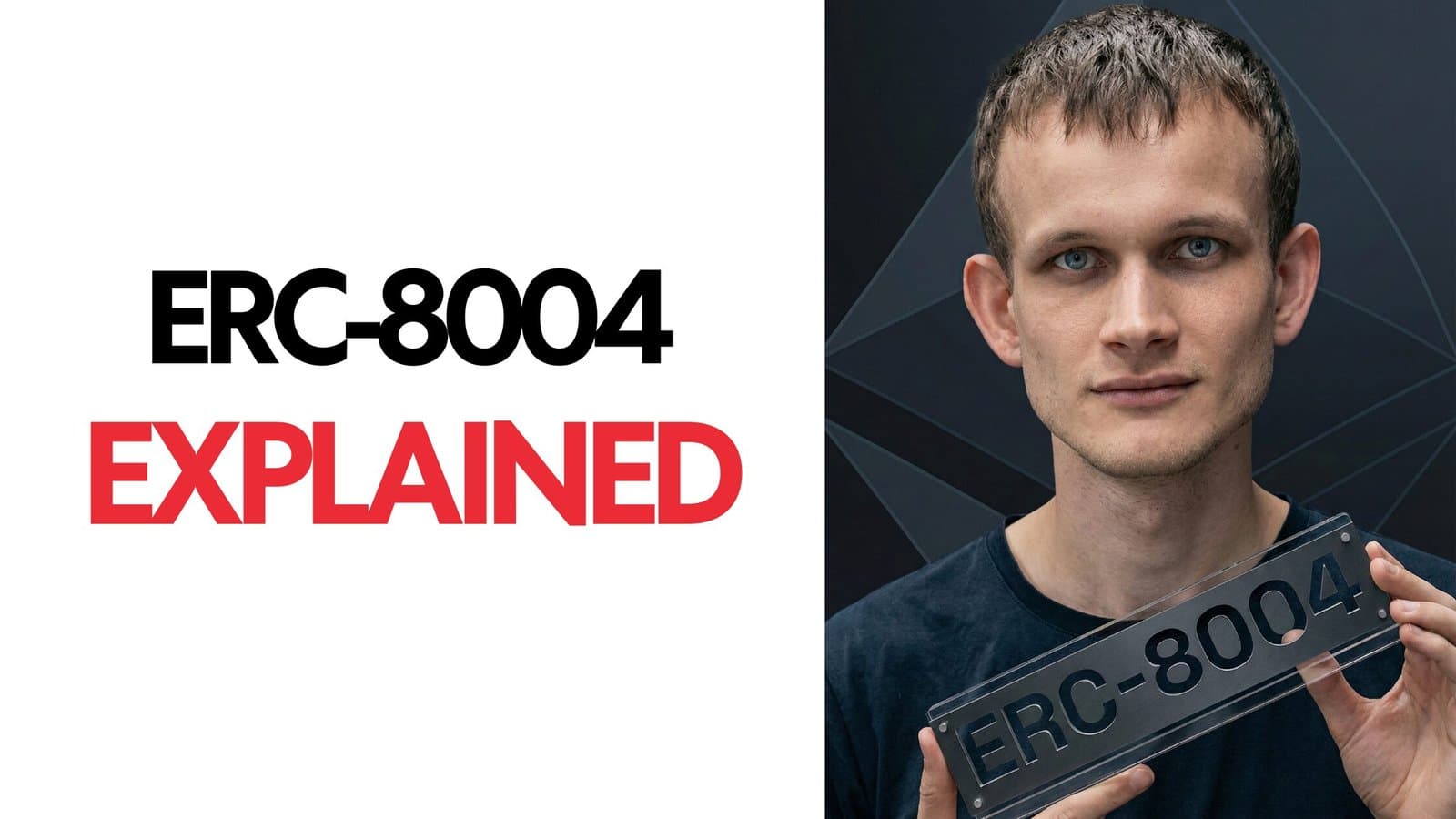
ERC-8004 enables trustless AI agent interactions on Ethereum through identity, reputation, and validation. Here's why it matters for crypto.

Author: Tanishq Bodh
AI agents are coming to blockchain. Not as a distant promise, but as working infrastructure launching on Ethereum’s mainnet around January 30, 2026. ERC-8004 is the standard making it possible.
It’s designed to solve a fundamental problem. How do autonomous AI agents from different developers, organizations, or ecosystems discover each other, build trust, and collaborate without centralized intermediaries?
Prior to ERC-8004, AI agents operated in silos, lacking shared standards for identity or trust. Consequently, this limited their scalability and interoperability across platforms.
This standard changes that by creating what amounts to a passport and résumé system for agents. Furthermore, it allows them to carry portable credentials across platforms, establishing verifiable identity and reputation on-chain.
The timing matters. As AI capabilities accelerate and crypto infrastructure matures, ERC-8004 positions Ethereum as the settlement layer for machine-to-machine economies. However, whether it delivers on that vision depends on solving real technical challenges and achieving meaningful adoption beyond testnet experiments.
ERC-8004 is an Ethereum standard, formally an Ethereum Improvement Proposal, designed to enable trustless interactions between AI agents on the blockchain.
It provides a framework for AI agents, which are autonomous software programs that can perform tasks like data analysis, trading, or decision-making, to operate with verifiable identity, reputation, and validation mechanisms.
The standard addresses a key challenge in the emerging agent economy. Specifically, how can AI agents from different developers or organizations work together without relying on centralized gatekeepers?

The standard was co-authored by experts from the Ethereum Foundation, Google, and Coinbase. Moreover, it builds on earlier drafts from August 2025, incorporating extensive feedback from the community.
ERC-8004 creates infrastructure for AI agents to interact in open markets where they can be hired, paid, and reviewed without central control. This represents a significant step toward integrating AI with blockchain for secure, decentralized operations.
ERC-8004 revolves around three on-chain registries that form the core infrastructure for trustless AI agents. These registries are smart contracts on Ethereum that anyone can interact with, ensuring transparency and decentralization.
The Identity Registry establishes who the agent is. Agents mint ERC-721 tokens, similar to NFTs, as Agent Cards. These include metadata such as capabilities, endpoints, supported tasks, and ownership. Consequently, this enables discovery, allowing agents to be found via on-chain queries and making them accessible across ecosystems.
The Reputation Registry tracks whether an agent has earned trust. It collects standardized feedback tied to real transactions and payments. Furthermore, this prevents fake ratings or sybil attacks involving fake identities. Reputation is portable, following the agent across chains or apps based on client feedback or performance history.
The Validation Registry verifies whether the agent did the work correctly. It supports multiple proof models, including zkML proofs, Trusted Execution Environments, or stake-backed re-execution. This ensures outputs are reliable and verifiable, with economic incentives like staking to penalize bad behavior.

Developers can choose from various trust models, such as reputation-based systems or cryptographic proofs, to suit different use cases. This flexibility allows the standard to adapt to diverse applications across industries.
ERC-8004 often pairs with complementary standards like x402 for micropayments and session-based authorizations, creating a full agent stack.
For example, a user discovers an agent via the Identity Registry, checks its reputation and validation history, then sets up a payment channel with x402 to pay per task in stablecoins like USDC. Subsequently, the agent performs the work, settles payment on-chain, and updates its reputation automatically.
Tools like 8004scan.io already exist for exploring agents on testnets including Ethereum, Base, and Polygon, showing real-time adoption even before mainnet launch.
The development of ERC-8004 followed a relatively compressed timeline compared to other major Ethereum standards.
The standard was initially proposed in August 2025, then refined with community input throughout the fall. It was formally finalized in October 2025 after incorporating feedback from developers, researchers, and early implementers.
Mainnet launch is expected imminently as of late January 2026. Announcements from the Ethereum Foundation emphasize its role in enabling AI-to-AI interactions at scale.
Early adopters are already integrating the standard across multiple projects. Warden Protocol has a live implementation for an Agent App Store. Unibase is building a memory layer for agents on chains like BNB and Optimism, adding permanent context and traceability.
OpenServ is using it for multi-agent workflows, allowing on-chain registration and monetization. ChaosChain has developed an SDK for building verifiable agents with identity and reputation built in.
Virtuals is in the integration process for ecosystem-wide agent standards. Meanwhile, projects like AGI Alpha and AGIJobs are exploring proof-native settlement and agent markets.
Excitement is high in both crypto and AI communities, with posts from Ethereum’s official account and developers highlighting its potential to scale AI economies. However, skeptics note challenges like overhype or slow adoption if verification models prove too complex for practical implementation.
ERC-8004 has broad implications that shift how AI integrates with daily life and economic activity.
For individual users, it empowers everyday people to use AI agents for tasks like automated trading, personal finance management, or operations automation such as a billing agent handling subscriptions.
You can hire agents with confidence, knowing their reputation is verifiable and not manipulated. This reduces risks in AI interactions, including scams or poor performance, and enables micropayments for small tasks without high fees.
Portable reputation means agents level up over time, potentially lowering costs for reliable services. For crypto users specifically, it could mean seamless AI-driven DeFi strategies or NFT management without manual intervention.
For developers and builders, ERC-8004 lowers barriers to creating and monetizing AI agents. Instead of building everything from scratch, developers can plug into existing registries for discovery and trust, fostering innovation in areas like autonomous systems or machine-to-machine economies.
However, challenges remain. Success depends on overcoming technical hurdles like integrating zkML proofs or ensuring cross-chain compatibility. Additionally, adoption might be slow if verification proves resource-intensive or if the developer experience isn’t smooth enough.
For businesses and organizations, ERC-8004 unlocks cross-organizational AI collaboration.
Imagine supply chain agents negotiating deals autonomously, or financial agents coordinating complex DeFi strategies across protocols. This could create a $10 billion-plus trustless AI economy on Ethereum, with applications spanning finance, logistics, healthcare, and beyond.
It reduces reliance on Big Tech platforms, eliminating walled gardens like those from Google or OpenAI. Instead, it promotes open markets where AI services compete on merit, with verifiable track records rather than brand recognition.
The broader societal impacts cut both ways. On the positive side, ERC-8004 accelerates a decentralized agentic economy where AI handles routine tasks, potentially boosting productivity and innovation. It aligns AI development with blockchain’s ethos of transparency, reducing centralization risks inherent in AI.
Concerns exist as well. If not managed properly, it could amplify AI biases through reputation systems or enable unchecked autonomous systems. For instance, in trading scenarios, this might lead to market volatility. Privacy issues arise from on-chain data, though cryptographic proofs help mitigate this risk.
Overall, it positions Ethereum as the settlement layer for AI-to-AI interactions, potentially transforming industries by making AI more accessible and trustworthy while introducing new governance challenges.
Despite the excitement, ERC-8004 faces real hurdles before achieving widespread adoption.
Verification models like zkML proofs are still emerging technology. They’re computationally expensive and not yet optimized for every use case. Consequently, this could limit which types of agents can realistically participate in the ecosystem.
Cross-chain compatibility remains an open question. While tools like Unibase are working on multi-chain memory layers, ensuring agents can operate seamlessly across different L1s and L2s without fragmenting their reputation or identity is non-trivial.
Economic sustainability is another concern. The standard relies on agents staking value or paying fees for validation. If these costs are too high, smaller developers or experimental agents might be priced out. If they’re too low, security guarantees weaken.
User experience will determine mainstream adoption. For ERC-8004 to succeed beyond crypto-native builders, the complexity of registries, proofs, and on-chain interactions must be abstracted away completely. Most people shouldn’t need to know this infrastructure exists.
Governance questions loom large. Who decides what constitutes valid reputation feedback? How are disputes resolved when agents malfunction or behave unexpectedly? These aren’t purely technical problems.
ERC-8004 represents more than just another Ethereum standard.
It’s foundational infrastructure for a future where AI agents are as interoperable as tokens or NFTs are today. This won’t revolutionize industries overnight, but as adoption grows, it could democratize AI access in meaningful ways.
Currently, sophisticated AI capabilities are concentrated in a few large platforms. ERC-8004 creates an alternative model where anyone can deploy, discover, and use AI agents without permission from centralized gatekeepers.
This matters for developers who want to monetize AI services without giving platform fees to Big Tech. It matters for users who want transparency about how AI agents operate and get compensated. It matters for organizations seeking AI collaboration without vendor lock-in.

The standard also addresses trust in ways traditional systems struggle with. Reputation isn’t stored in a proprietary database that one company controls. Validation isn’t based on assertions from a single provider. Instead, these are cryptographically verifiable and economically secured.
If ERC-8004 succeeds, it establishes precedent for how emerging technologies integrate with blockchain. Not by forcing everything on-chain, but by using blockchain where it adds genuine value: identity, reputation, and settlement.
ERC-8004 is an Ethereum standard launching around January 30, 2026, that enables trustless AI agent interactions on blockchain. It provides three core registries for identity, reputation, and validation, allowing agents to discover each other, build trust, and collaborate without centralized intermediaries.
The Identity Registry lets agents mint NFT-like Agent Cards with capabilities and metadata. The Reputation Registry tracks verifiable feedback from real transactions, preventing fake ratings. The Validation Registry ensures work quality through zkML proofs, TEEs, or stake-backed verification.
Co-authored by experts from Ethereum Foundation, Google, and Coinbase, the standard addresses silos in AI development by creating portable credentials that follow agents across platforms. It pairs with standards like x402 for micropayments, forming a complete agent stack.
Early adopters include Warden Protocol, Unibase, OpenServ, and ChaosChain. Potential impacts range from empowering individual users with AI-driven automation to enabling cross-organizational collaboration worth billions. Challenges include technical complexity, cross-chain compatibility, and ensuring user experience abstracts away blockchain complexity.
ERC-8004 positions Ethereum as the settlement layer for machine-to-machine economies, potentially democratizing AI access while introducing new governance needs.
ERC-8004 won’t transform AI overnight, but it lays critical groundwork.
As the standard goes live on mainnet, the real test begins. Will developers build agents that people actually want to use? Can verification models scale without becoming prohibitively expensive? Will users trust autonomous agents enough to delegate meaningful tasks?
These questions won’t be answered in weeks or months. Rather, they’ll unfold over years as the ecosystem matures, tooling improves, and use cases emerge that nobody anticipated.
What’s clear is that ERC-8004 represents a genuine attempt to solve real problems in AI coordination. It creates public infrastructure where previously only closed platforms existed. It establishes standards where chaos and fragmentation would otherwise prevail.
For those building in crypto or AI, the registries and explorers are already available on testnets. Experimentation is happening now. The opportunity is to shape how this infrastructure gets used before patterns solidify.
ERC-8004 won’t be the final word on AI and blockchain. But it might be the first sentence in a much longer conversation about how autonomous systems coordinate, transact, and build reputation in decentralized environments.
The agent economy is coming. This is the standard trying to make it trustless.



Genome Protocol Rug Pull: Explained
Top 6 ZachXBT Revelations That Shocked The World
AI Agent Payments Explained: Circle Nanopayments and the x402 Protocol
Top 7 Projects in the World Liberty Financial (WLFI) Portfolio
Genome Protocol Rug Pull: Explained
Top 6 ZachXBT Revelations That Shocked The World
AI Agent Payments Explained: Circle Nanopayments and the x402 Protocol
Top 7 Projects in the World Liberty Financial (WLFI) Portfolio