Loading Search...



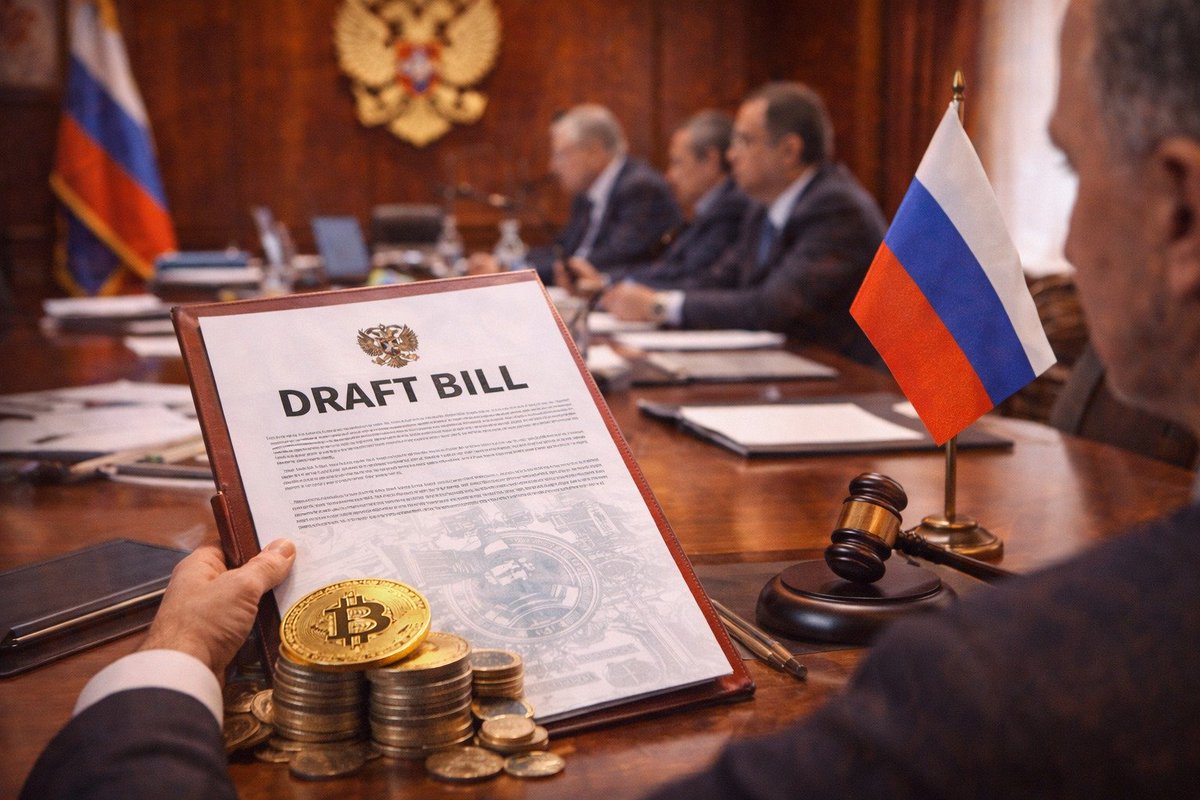
Russia crypto trading moves closer to legalization as lawmakers finalize a draft bill opening regulated access for retail investors.

Author: Kritika Gupta
15th January 2026– Russia crypto trading is moving closer to full legalization as the government finalizes a draft bill to formally regulate digital asset markets. Announced on January 13, 2026, the proposal was finalized by Anatoly Aksakov, Chairman of the State Duma Committee on Financial Markets, and is expected to be debated by the State Duma during its spring session. If passed, the bill would allow access for retail investors through licensed platforms, bringing digital assets closer to mainstream finance in one of the world’s largest economies.
High Signal Summary For A Quick Glance

Crypto Town Hall
@Crypto_TownHall

RUSSIA FINALIZES DRAFT BILL TO LEGALIZE CRYPTO TRADING Russia has finalized a draft bill aimed at legalizing cryptocurrency trading, marking a significant step toward formal regulation of digital assets as the country looks to bring crypto activity into a defined legal https://t.co/byhZSuEUO5
11:30 PM·Jan 14, 2026

The Rundown
@rundowndaily_
JUST IN: Russia finalizes draft bill to legalize crypto trading $BTC https://t.co/iWJiijeRpZ
08:50 PM·Jan 14, 2026

Watcher.Guru
@WatcherGuru
Russia finalizes draft bill to legalize crypto trading. https://t.co/udfgkDLkpH
08:49 PM·Jan 14, 2026
Russia’s crypto stance began shifting after Western sanctions in early 2022. Those measures disrupted banking channels and cross-border payments.
At first, officials remained cautious. In 2022, the Bank of Russia labeled crypto a high-risk, pyramid-like scheme. Authorities worried about financial stability and capital flight.
Before sanctions, progress was limited. Between 2020 and 2021, Russia recognized digital assets as property. However, it banned their use for domestic payments in rubles.
The major shift came in 2024. In July, lawmakers approved crypto for international settlements. By November, Russia legalized crypto mining nationwide. That decision accelerated adoption. By mid-2025, Russia emerged as a global mining hub.
Momentum continued into 2025. Authorities tested trading frameworks for qualified investors. In December, the central bank proposed broader regulation. This led to the January 2026 draft bill. Lawmakers moved to remove crypto from special regulation.
Key milestones related to this development
Putin signs 259-FZ, recognizing crypto as property while banning its use for domestic payments (effective Jan 1, 2021).
The Bank of Russia maintains a cautious stance as early ban proposals circulate, while sanctions push increased crypto use for cross-border activity.
A new law allows digital financial assets (DFAs) to be used for international transactions.
Russia legalizes crypto for international settlements under an experimental regime and moves toward full legalization of crypto mining.
The legal framework enabling cross-border crypto payments officially enters into force.
Russia starts regulated crypto mining, helping the country become the world’s second-largest Bitcoin mining power by mid-2025.
Authorities introduce experimental trading frameworks for qualified investors to test regulated access and controls.
The central bank proposes a full regulated crypto trading framework, targeting July 1, 2026 for implementation.
Anatoly Aksakov finalizes a draft bill that removes crypto from “special regulation” and allows limited retail access (~300,000 RUB / ~$3,800 per year) while keeping domestic payments banned.
Lawmakers debate the bill during the spring session, with a possible effective date of July 1, 2026 if approved.
The draft bill, led by State Duma Financial Markets Committee Chairman Anatoly Aksakov, introduces a two-tier system. The goal is to balance innovation with investor protection.
First, non-qualified investors will face defined limits. Everyday individuals may buy select, highly liquid cryptocurrencies such as Bitcoin and Ethereum. However, they must first pass a risk-awareness test.
In contrast, qualified investors receive broader access. They can trade a wider range of cryptocurrencies, excluding anonymous assets. There are no annual investment limits, allowing freer participation on regulated platforms.
Meanwhile, the bill maintains key restrictions. Cryptocurrencies remain banned for domestic ruble payments. However, the framework supports their use for international settlements and investment purposes.
Finally, the proposal integrates crypto into Russia’s formal financial system. Licensed exchanges and intermediaries would oversee trading.
The draft bill is expected to reach a vote during the State Duma’s spring 2026 session. Current estimates place the probability of passage between 70% and 80%. Momentum from earlier reforms strengthens the bill’s outlook.
The framework would integrate crypto into Russia’s financial system. This approach balances participation with oversight.
Long term, the policy marks a strategic shift. Russia supports crypto adoption without abandoning control. That balance could attract institutional interest and sustain gradual market growth.
Our Crypto Talk is committed to unbiased, transparent, and true reporting to the best of our knowledge. This news article aims to provide accurate information in a timely manner. However, we advise the readers to verify facts independently and consult a professional before making any decisions based on the content since our sources could be wrong too. Check our Terms and conditions for more info.