Loading Search...


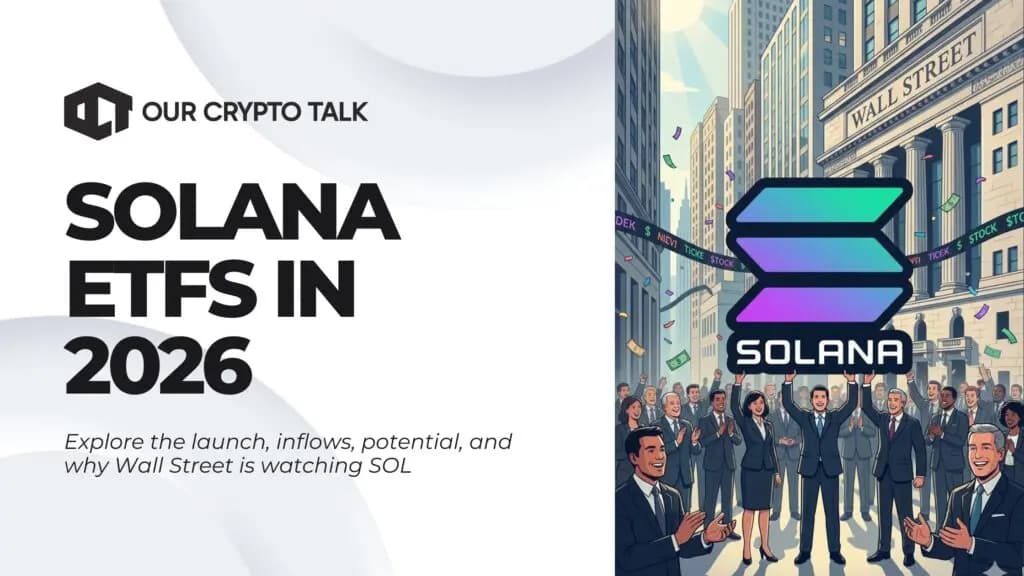
Solana ETFs are reshaping crypto investing. Explore their launch, inflows, staking potential, and why Wall Street is watching SOL.

Author: Chirag Sharma
The crypto ETF story did not stop with Bitcoin and Ethereum. In 2025, a new chapter opened when Solana ETFs began trading in the United States, giving traditional investors direct exposure to one of the fastest-growing blockchain ecosystems. As of March 2026, spot Solana ETFs have been trading for nearly five months across major U.S. exchanges. These funds allow investors to gain exposure to Solana (SOL) through ordinary brokerage accounts, retirement portfolios, and institutional investment platforms.
The response has been stronger than many expected. Despite SOL trading significantly below its peak levels around the time the first funds launched, Solana ETFs have still accumulated roughly $1.5 billion in cumulative inflows. Multiple issuers now offer competing products, including funds from VanEck, Fidelity Investments, Bitwise Asset Management, Franklin Templeton, Grayscale Investments, 21Shares, and others.
The emergence of Solana ETFs marks a key moment in crypto’s institutional evolution. What once required navigating exchanges, wallets, and private keys can now be accessed with a simple stock trade. But the road to this point was far from straightforward.
The journey toward Solana ETFs began shortly after the launch of spot Bitcoin and Ethereum ETFs.
When the U.S. Securities and Exchange Commission approved spot Bitcoin ETFs in January 2024, billions of dollars quickly flowed into products like BlackRock’s iShares Bitcoin Trust. Ethereum ETFs followed in July 2024, proving that crypto assets could exist inside regulated financial structures without destabilizing markets. That success created a new question. If Bitcoin and Ethereum could function inside ETFs, could other blockchain networks qualify as well?
The first serious step came in 2024 when VanEck filed an S-1 registration statement for a Solana ETF known as the VanEck Solana Trust. Just one day later, 21Shares submitted its own application.
These filings were not isolated experiments. By late 2024 and throughout 2025, a wave of additional proposals followed from major asset managers, including:
At the same time, exchange operators such as Cboe Global Markets submitted parallel rule-change proposals to list and trade these products. The strategy was clear. Issuers wanted to replicate the model that had already worked for Bitcoin and Ethereum: a regulated ETF structure that holds the underlying crypto asset in custody while issuing tradable shares to investors. For Solana, this represented the next step toward institutional legitimacy.
At their core, Solana ETFs are straightforward financial vehicles. Each fund holds actual SOL tokens in cold storage with regulated custodians. The ETF then issues shares that track the price of Solana. Investors buy and sell these shares on traditional exchanges just like they would trade stocks or commodity ETFs.
This simple structure solves several problems that previously limited access to crypto assets.
For many investors, direct crypto ownership comes with operational risks. Managing private keys, safeguarding wallets, and navigating crypto exchanges require technical knowledge and security awareness. Institutional investors face even more restrictions due to compliance policies and fiduciary responsibilities. Solana ETFs remove these barriers entirely. Investors can gain exposure through brokerage platforms without handling wallets or seed phrases. Custody is managed by institutional providers such as Coinbase Custody and other regulated entities.
Large capital pools—including pension funds, endowments, and wealth managers and often cannot directly purchase cryptocurrencies due to regulatory requirements. ETFs solve this issue by offering exposure within traditional financial structures. Solana ETFs can be held in retirement accounts such as IRAs or 401(k) portfolios, significantly expanding the potential investor base.
One feature that differentiates Solana ETFs from Bitcoin ETFs is staking. Because Solana operates on a proof-of-stake consensus model, holders can earn rewards by delegating their tokens to validators. Some Solana ETF proposals included mechanisms to stake a portion of the holdings and distribute the yield to shareholders. This transforms the ETF into a potential yield-generating product, similar to dividend-paying securities. Although staking required additional regulatory discussions with the SEC, several issuers incorporated it into their ETF designs through trusted custodians.
Among all altcoins, Solana emerged as the strongest candidate for ETF approval.
Launched in 2020, the network gained attention for its high throughput and low transaction costs. While Ethereum struggled with congestion and high gas fees during peak activity, Solana offered dramatically faster settlement speeds.
Key characteristics strengthened the case for Solana ETFs:
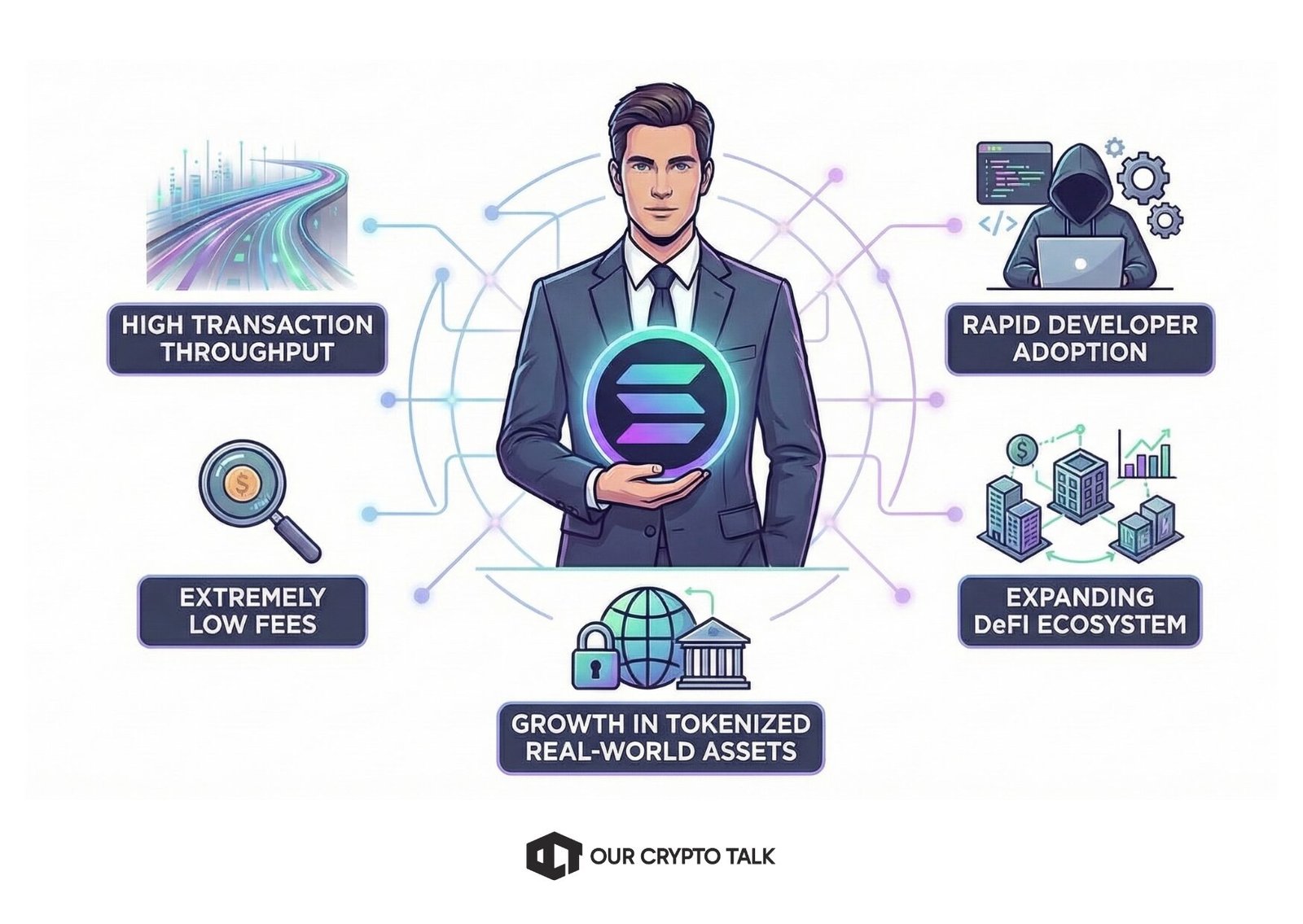
These factors positioned Solana as a credible blockchain infrastructure platform rather than a speculative token. By early 2026, the network had also achieved a notable milestone: Solana surpassed Ethereum in total RWA token holders, highlighting its growing adoption for tokenized assets. From an institutional perspective, this growth created a compelling investment thesis. Without ETFs, however, most traditional investors had no practical way to access Solana.
After months of regulatory engagement, the SEC approved the first spot Solana ETFs in October 2025.
The process followed a familiar pattern. Initial skepticism from regulators gradually shifted toward pragmatic acceptance once issuers demonstrated adequate safeguards.
These included:
The first funds began trading on U.S. exchanges in late October 2025, with additional products launching over the following weeks.
By early 2026, the Solana ETF landscape included several major funds:
Five months after launch, Solana ETFs have demonstrated surprising resilience.
Cumulative inflows have reached roughly $1.5 billion, even though SOL’s price declined significantly during the same period. At times, the cryptocurrency traded around $85 to $100, far below the levels seen when the first ETF announcements were made. Normally, such price declines would trigger large outflows from investment funds.
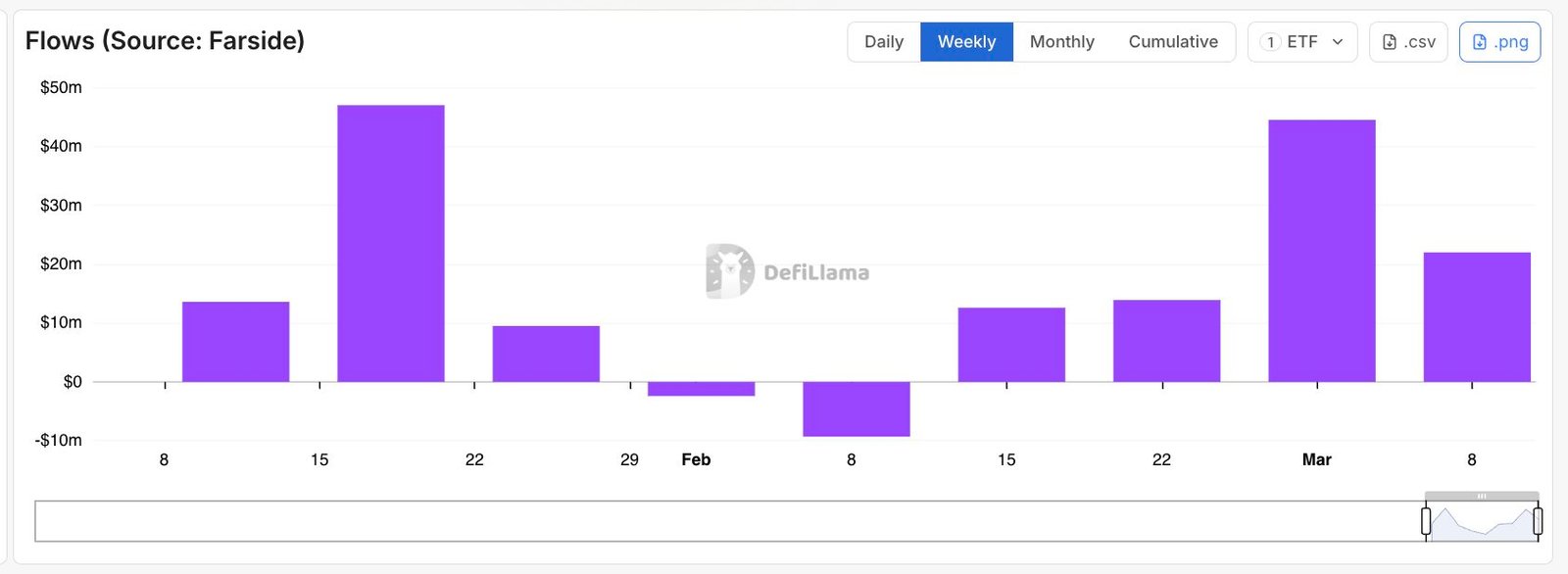
Instead, Solana ETFs have largely retained investor capital.
Some months even delivered strong inflows. November 2025 alone reportedly brought over $400 million in new investment, suggesting that many institutional buyers viewed lower prices as an opportunity rather than a warning sign.
There are major reasons for its resilience.
First, the investors buying these ETFs appear to be long-term allocators rather than short-term traders. Institutional capital often moves more slowly but tends to hold positions longer.
Second, Solana’s ecosystem growth continues despite market volatility. Developer activity, DeFi adoption, and stablecoin usage have all increased over the past year.
Finally, the ETF structure itself encourages gradual accumulation. Portfolio managers often allocate small percentages to emerging asset classes rather than making speculative bets.
Together, these factors suggest Solana ETFs may represent a durable new capital channel rather than a temporary trend.
Despite their early success, Solana ETFs still face several risks.
SOL remains significantly more volatile than traditional financial assets. Daily price swings of 10 percent or more are not uncommon. This volatility could discourage conservative institutional investors.
Although the Solana network has improved reliability in recent years, past outages still influence investor perception. Any major disruption could affect ETF sentiment.
Crypto regulation continues to evolve. Changes in staking policies, tax treatment, or ETF compliance requirements could alter the economics of these funds.
Solana ETFs also face competition from other crypto investment vehicles. Additional altcoin ETFs may emerge, forcing issuers to reduce fees or differentiate their products. Despite these challenges, the overall trajectory remains positive.
Looking ahead, Solana ETFs may play a major role in shaping the next phase of crypto adoption.
Several factors support continued growth.
First, the tokenization of real-world assets is accelerating. Stocks, bonds, and real estate are increasingly being issued on blockchain networks, and Solana’s high throughput makes it an attractive platform for these applications.
Second, institutional familiarity with crypto ETFs continues to expand. As more investors become comfortable with Bitcoin and Ethereum products, allocating to Solana becomes a natural extension.
Finally, improvements to the Solana protocol—such as the anticipated Alpenglow consensus upgrade which could strengthen network efficiency and reliability. If adoption trends continue, analysts believe Solana could attract substantially larger ETF inflows over the coming years.