Loading Search...


A complete guide to crypto launchpads , explaining how they work, top platforms in 2026, benefits, risks, and future trends for investors.

Author: Chirag Sharma
Crypto markets thrive on new ideas. Every major blockchain innovation, from decentralized finance to gaming tokens, began as an early-stage project in need of funding, users, and visibility. Crypto launchpads emerged to solve this exact problem.
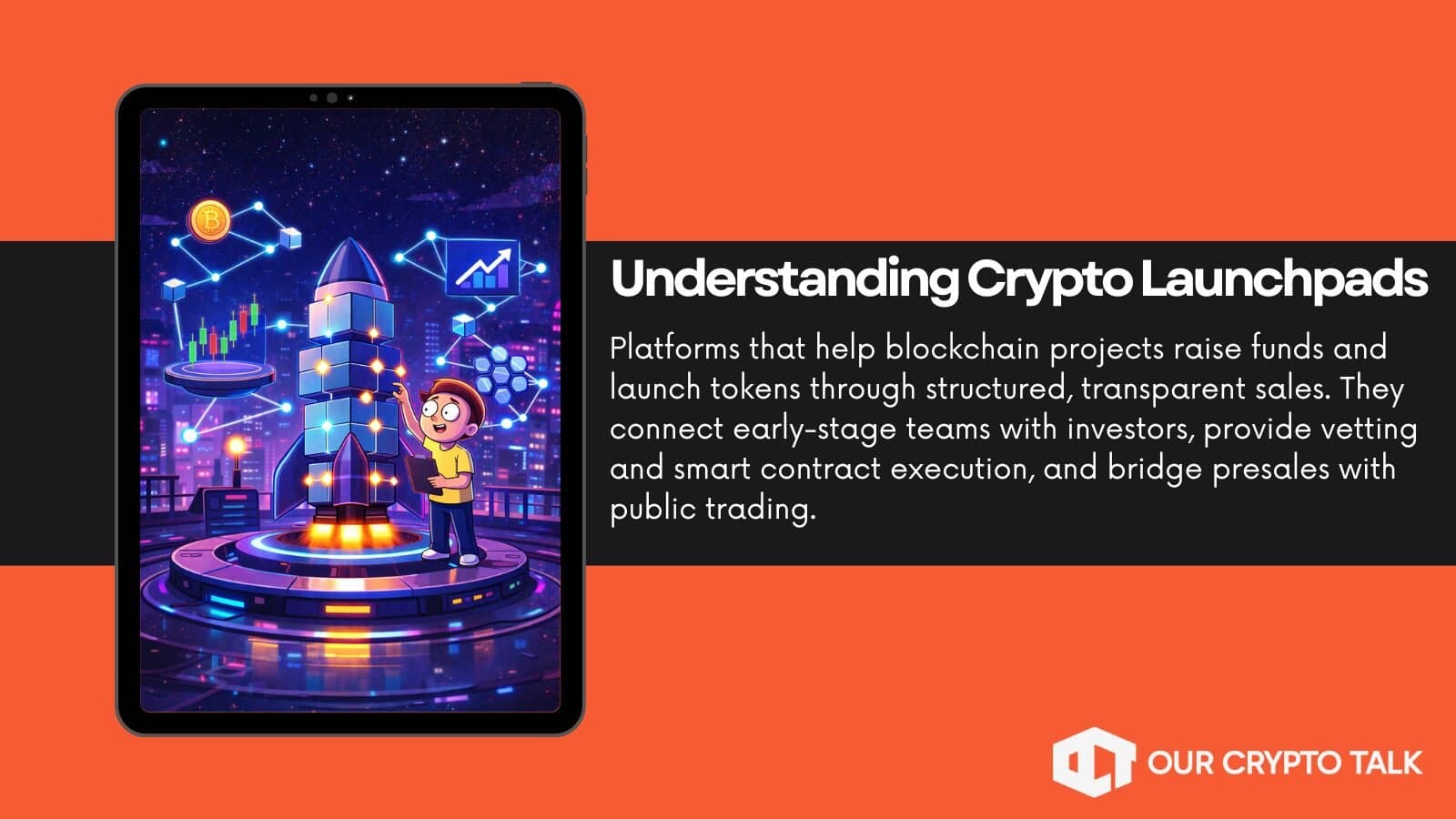
At a high level, crypto launchpads act as structured gateways between new blockchain projects and investors. They provide a controlled environment where tokens are introduced to the market through presales, most commonly via Initial DEX Offerings (IDOs) or curated token launches. Instead of chaotic, unregulated fundraising, launchpads bring process, standards, and accountability.
This shift did not happen by accident. During the 2017–2018 ICO boom, open fundraising models led to rampant scams, weak products, and billions in losses. As trust eroded, the industry needed a better mechanism. Crypto launchpads filled that gap by adding vetting, smart contract enforcement, and community-driven access.
Today, crypto launchpads are no longer just fundraising tools. They have evolved into full ecosystems that support marketing, liquidity provisioning, community building, and governance. In 2026, with launchpad-related tokens representing a multi-billion-dollar segment of the market, their influence extends far beyond early token sales.
For both builders and investors, understanding how crypto launchpads work is now a core Web3 skill.

Crypto launchpads are platforms designed to help blockchain projects raise capital and distribute tokens before public exchange listings. In simple terms, they act as incubators for early-stage crypto projects.
Unlike traditional venture capital, launchpads democratize access. Retail investors can participate in presales alongside larger players, often at lower entry prices. This shift aligns closely with the decentralized ethos of blockchain.
A typical crypto launchpad offers:
Well-known examples like Binance Launchpad have demonstrated how launchpads can propel projects into mainstream adoption. Successful launches such as Polygon and Axie Infinity showcased how curated exposure combined with liquidity can accelerate growth.
Launchpads also differ by focus:
Most operate on major blockchains such as Ethereum, BNB Chain, and Solana, using smart contracts to enforce transparency and distribution rules.
Importantly, modern crypto launchpads attempt to reduce risk. Teams undergo checks that may include technical audits, KYC verification, and tokenomics review. While this does not eliminate failure, it filters out many low-effort or malicious launches.
In essence, crypto launchpads formalize what used to be chaotic. They provide structure without fully sacrificing decentralization.
While each platform has nuances, most crypto launchpads follow a similar multi-stage process.
The process begins with project submission. Teams present their whitepaper, roadmap, tokenomics, and technical details to the launchpad.
The platform typically evaluates:
Some launchpads also require third-party smart contract audits or identity verification to reduce fraud.
Once approved, the launchpad schedules a token sale. Participation usually depends on one of two models:
Centralized platforms often require KYC, while decentralized launchpads allow wallet-based participation.
During the sale window, smart contracts handle:
This automation reduces human intervention and increases transparency.
To prevent immediate sell pressure, tokens are often vested over time. Liquidity is then added to decentralized exchanges, allowing public trading to begin.
Some launchpads actively support post-launch marketing and liquidity incentives to stabilize early price action.
By 2026, crypto launchpads have diversified into distinct categories. No single platform dominates every niche. Instead, each serves a specific investor profile, risk appetite, and project type.
Centralized launchpads remain the most trusted entry point for conservative participants.
Binance Launchpool continues to lead this category. Backed by the largest exchange in the world, it prioritizes security, compliance, and scale. Projects launched here benefit from immediate global exposure and deep liquidity. However, access is competitive. Allocation often favors large BNB holders, which limits retail participation.
CoinList takes a different approach. It emphasizes regulatory compliance and institutional-grade offerings. CoinList has hosted launches for foundational networks, making it attractive to long-term investors. The trade-off is accessibility. Strict KYC, geographic restrictions, and higher minimums deter casual users.
KuCoin Spotlight targets retail users more aggressively. It supports multichain projects and offers a smoother onboarding experience. While returns have historically been strong, liquidity and post-launch performance can vary widely.
Decentralized crypto launchpads prioritize permissionless access and community-driven allocation.
Platforms like Polkastarter and DAO Maker popularized IDO-based fundraising by allowing wallet-based participation. These launchpads reduce reliance on centralized exchanges but expose users to higher volatility and less predictable outcomes.
DAO Maker, in particular, introduced structured funding models and compliance layers while maintaining decentralization. This hybrid approach appeals to users seeking balance between access and safety.
A newer category has emerged around speed and experimentation.
Pump.fun represents this shift. Built on Solana, it allows anyone to deploy a token instantly using bonding curves. There is no vetting, no roadmap requirement, and minimal friction. All you need to do is fill a few form fields and your coin is launched.

This model prioritizes organic price discovery. While it has generated massive volume and engagement, it also carries extreme risk. Most tokens fail quickly, and volatility is severe.
Successors like Bags.fm and Bappfun are experimenting with milestone-based releases to reduce rug pulls while preserving creator freedom.
Other crypto launchpads focus on specialization.
These platforms reflect a broader trend. Launchpads are no longer generic. They are becoming tailored infrastructure for specific Web3 verticals.
Crypto launchpads play a structural role in sustaining blockchain innovation. Without them, early-stage projects would either rely on private capital or face unstructured fundraising risks.
Traditional venture funding favors geography, networks, and scale. Crypto launchpads invert this model.
Anyone with a wallet and capital can participate. This global access aligns with the decentralized philosophy of blockchain. It also distributes upside more widely, rather than concentrating it among insiders.
Launchpads enable community-first funding. Token holders often gain governance rights, allowing early supporters to shape protocol direction.
This shift matters. It transforms users into stakeholders and aligns incentives between builders and communities.
By bridging presales with decentralized exchange listings, crypto launchpads reduce fragmentation. Liquidity provisioning becomes smoother, and price discovery begins in a transparent environment.
This process lowers barriers for both traders and long-term participants.
Launchpads also function as narrative amplifiers. In recent cycles, they have been instrumental in pushing:
By curating these launches, platforms influence which ideas gain traction.
Modern crypto launchpads increasingly emphasize user education. Tokenomics breakdowns, risk disclosures, and vesting schedules help investors make informed decisions.
While this does not eliminate losses, it raises the baseline level of market literacy.
The rise of crypto launchpads is not accidental. These platforms solve multiple inefficiencies that previously held back blockchain innovation.
For project teams, launchpads provide instant visibility. Instead of building from zero, projects tap into existing communities of investors, traders, and early adopters. This exposure accelerates user acquisition and shortens the path to liquidity.
Fundraising efficiency is another key advantage. Launchpads streamline capital raises by integrating smart contracts, allocation rules, and automated distribution. Teams spend less time managing logistics and more time building the product.
Credibility also improves. Projects that pass launchpad vetting signal seriousness to the market. Even basic checks like audits and KYC filter out many low-quality launches, improving overall ecosystem trust.
For investors, the benefits are equally compelling.
Crypto launchpads offer:
Many platforms reward long-term users through staking systems, creating additional yield beyond token appreciation. Community features also allow investors to interact directly with teams, improving transparency.
At an ecosystem level, launchpads reduce barriers to entry. They allow niche ideas, such as gaming economies or privacy protocols, to find funding without relying on centralized gatekeepers.

Despite their advantages, crypto launchpads are not risk-free. Understanding these risks is critical for responsible participation.
Post-launch volatility remains the most common issue. Tokens can experience sharp price swings immediately after listing. In extreme cases, prices drop 80–90% within hours, especially on memecoin-focused platforms.
This volatility often stems from:
While modern launchpads reduce fraud, risks persist. Some decentralized platforms allow anonymous launches with minimal oversight. In these cases, creators may abandon projects after raising funds.
Even audited contracts cannot prevent all forms of exploitation, particularly social engineering–based scams.
Regulation remains a moving target. Jurisdictional changes can restrict token sales, impose compliance requirements, or shut down platforms entirely.
Centralized launchpads mitigate this risk through KYC and compliance, but decentralized alternatives remain vulnerable.
Not every funded project succeeds. Some fail to attract users or developers, leading to low liquidity and trapped capital. Others struggle to deliver promised features, eroding confidence over time.
Investor overexposure to early-stage projects magnifies these risks.
Tiered allocation models often favor large token holders. While this incentivizes loyalty, it can also create uneven playing fields where smaller participants receive negligible allocations.
Risk mitigation ultimately depends on discipline. Diversification, independent research, and realistic expectations remain essential.
As the market matures, crypto launchpads are evolving beyond simple fundraising tools.
A growing trend involves tying token releases to development milestones. Platforms like Legion experiment with unlocking funds only after teams deliver measurable progress.
This approach aligns incentives and reduces capital misuse.
AI-driven analysis is becoming more common. Some launchpads now use automated systems to assess:
Platforms like ChainGPT Pad represent this shift toward data-assisted due diligence.
Launchpads are increasingly chain-agnostic. Rather than committing to a single ecosystem, platforms support Ethereum, Solana, Base, and emerging networks simultaneously.
This flexibility allows projects to choose infrastructure based on use case rather than platform constraints.
Memecoin launchpads are also evolving. Newer versions introduce:
These changes aim to preserve experimentation while reducing abuse.
Some platforms are moving toward DAO governance, where users influence which projects launch and under what conditions. This model reinforces decentralization and aligns long-term incentives.
Crypto launchpads have become foundational infrastructure in Web3.
They sit at the intersection of innovation and capital, transforming how blockchain projects are born and funded. While risks remain, the evolution from chaotic ICOs to structured launchpads marks clear progress.
As standards rise and tools improve, the role of crypto launchpads will only expand. Those who understand how to evaluate them carefully will be better positioned to navigate future market cycles with clarity rather than hype.