Loading Search...


A complete guide to fear and greed index in crypto, explaining how the it works, how to use with historical performance and strategies

Author: Chirag Sharma
Cryptocurrency markets move fast. Prices can surge 20 percent in days and collapse just as quickly. While technology, liquidity, and macroeconomic factors all influence these swings, one force remains constant: human emotion.
Fear and greed crypto cycles drive much of the volatility traders experience. During bull markets, optimism turns into euphoria. Investors chase momentum, social media amplifies narratives, and leverage increases. Conversely, during corrections, fear spreads rapidly. Panic selling accelerates losses, even when fundamentals remain intact.
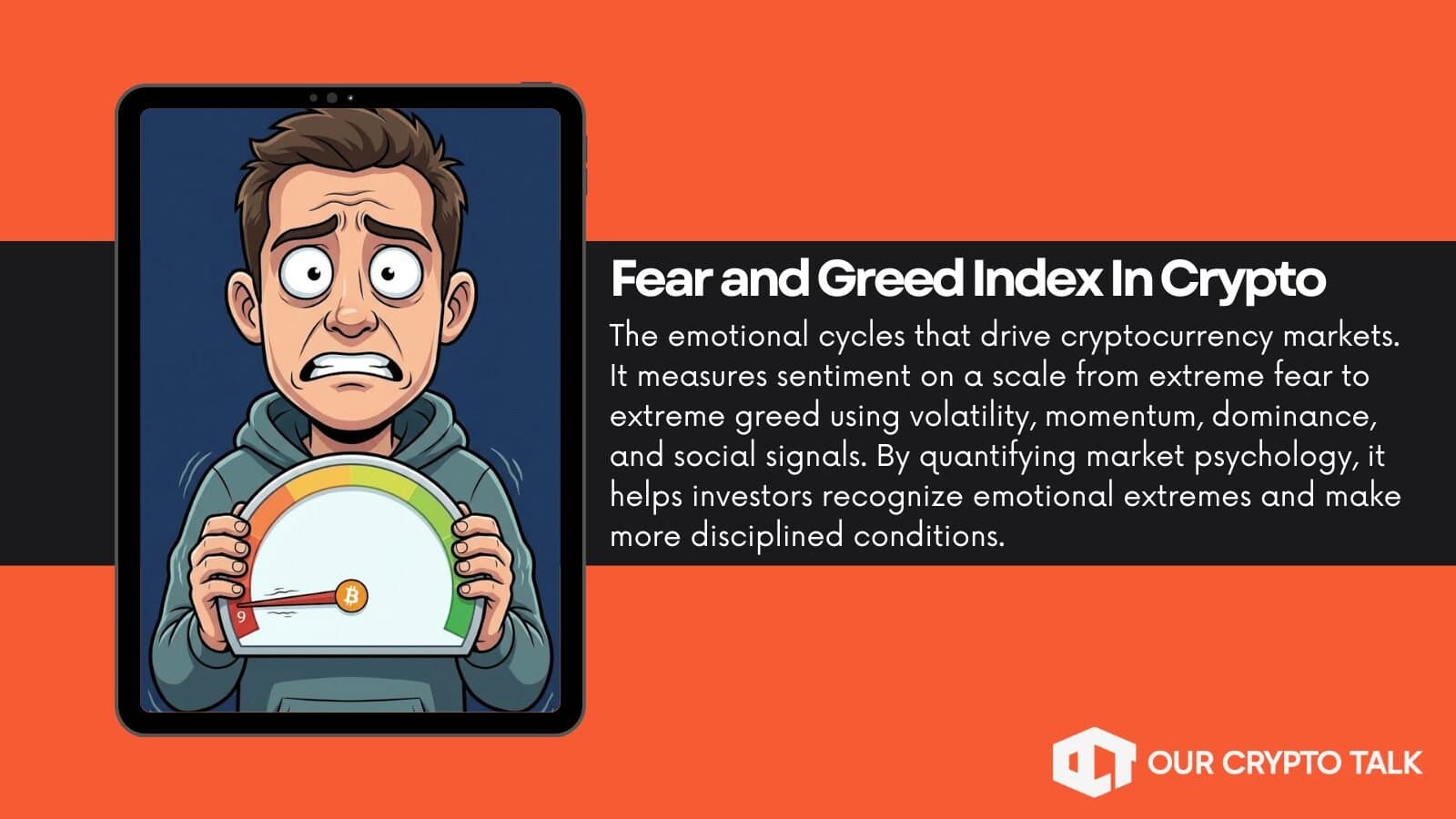
Understanding these emotional cycles is essential for disciplined investing. This is where the Fear and Greed Index in crypto becomes valuable. Rather than relying solely on price charts or technical indicators, this tool attempts to quantify market sentiment. It measures whether investors are acting out of fear or greed at any given moment.
Originally adapted from traditional finance sentiment indicators, the crypto version was introduced in 2018 by Alternative.me. It tracks emotional extremes on a scale from 0 to 100. A score near 0 signals extreme fear. A score near 100 signals extreme greed.
As of early 2026, the index has frequently dipped into extreme fear territory during periods of macro uncertainty. When readings approach single digits, it reflects widespread pessimism. Historically, such conditions have often coincided with long-term accumulation zones.
However, fear and greed crypto signals are not magic numbers. They are sentiment snapshots. To use them effectively, investors must understand how they work and what they actually represent.
The Fear and Greed Index in crypto is a sentiment indicator designed to measure the emotional state of the cryptocurrency market. While it primarily tracks Bitcoin, its implications extend to the broader digital asset ecosystem.
The scale operates as follows:
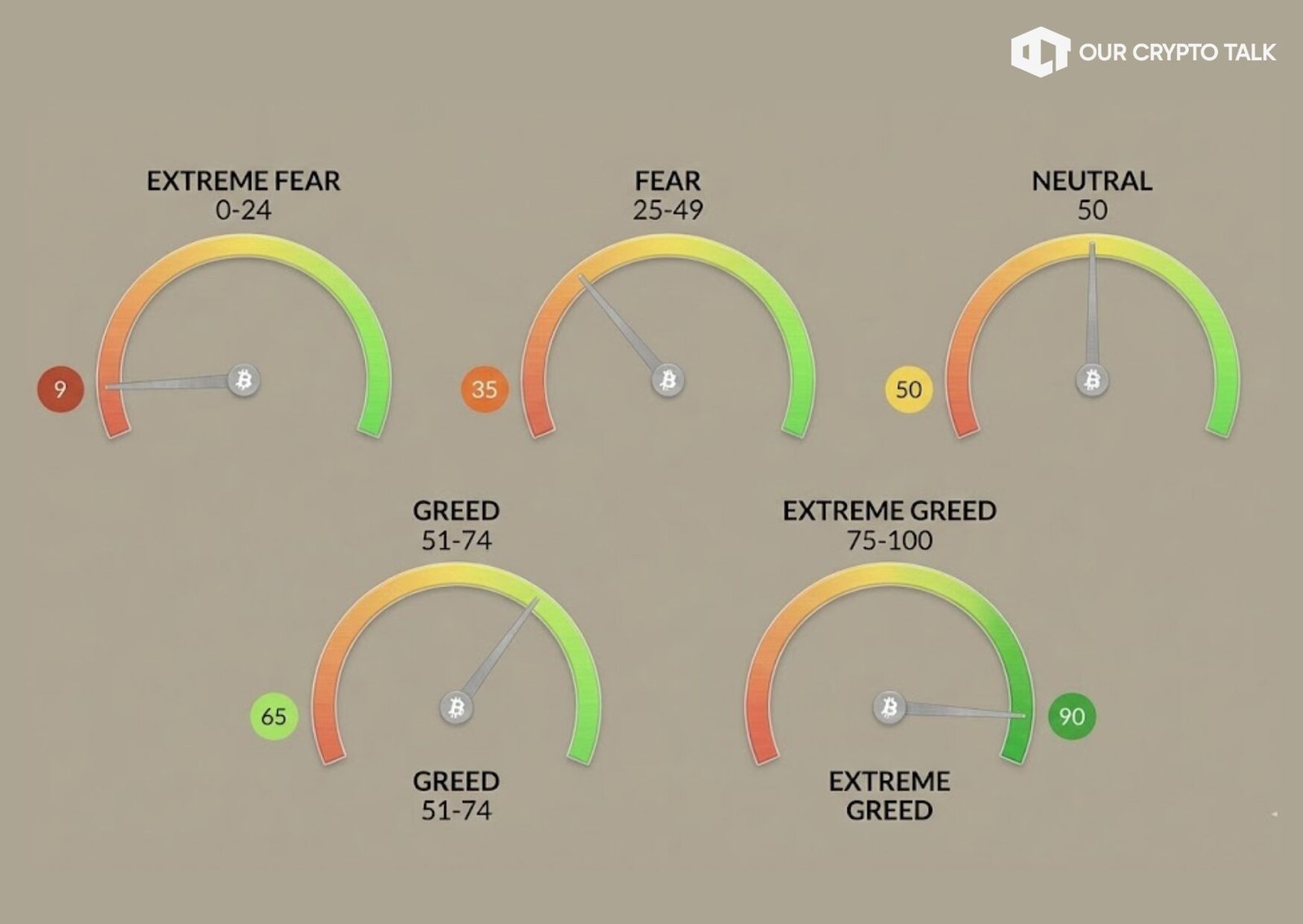
At its core, the index reflects a simple behavioral finance principle. Excessive fear tends to push prices below intrinsic value. Excessive greed often inflates prices beyond sustainable levels.
This concept aligns with Warren Buffett’s well-known principle: be fearful when others are greedy and greedy when others are fearful. In crypto markets, where retail participation is high and narratives spread quickly online, emotional extremes tend to be amplified.
Unlike traditional technical indicators, which analyze price patterns or historical momentum, fear and greed crypto readings attempt to capture psychological momentum. They provide insight into how market participants feel, not just what price is doing.
This distinction matters.
Markets often bottom when sentiment is worst. Conversely, markets often peak when confidence feels strongest. The index attempts to detect those emotional turning points.
It is important to note that the index does not predict immediate reversals. Extreme fear can persist for weeks. Extreme greed can extend during strong bull runs. Instead, the index highlights when risk asymmetry may be shifting.
For educational purposes, understanding fear and greed crypto dynamics teaches investors to separate emotion from strategy. It encourages discipline, especially during high-volatility periods.
Crypto markets operate 24 hours a day. Social media accelerates sentiment cycles. Leverage magnifies moves. These factors combine to make emotional extremes more frequent than in traditional markets.
During bull phases, fear of missing out drives rapid capital inflows. Traders increase leverage. Funding rates rise. Narratives become dominant. In these moments, greed can override risk management.
On the other hand, during corrections, negative headlines and liquidation cascades intensify fear. Investors sell not because fundamentals collapse, but because volatility becomes uncomfortable.
Fear and greed crypto signals help identify when markets are overreacting emotionally.
For example:
By tracking these phases, investors can adjust behavior rather than follow the crowd.
This does not mean blindly buying every fear reading or selling every greedy spike. Instead, it means recognizing that emotional extremes often create asymmetric opportunities.
To fully understand the index, it helps to examine the behavioral biases behind it.
Key biases include:
Fear and greed crypto cycles amplify these biases. During rallies, confirmation bias reinforces bullish narratives. During crashes, loss aversion dominates.
The index attempts to quantify these emotional swings using objective data inputs, which we will explore in the next section.
By learning to interpret these readings properly, investors develop emotional resilience. They move from reactive behavior to structured analysis.
To understand how reliable the fear and greed crypto index is, you must understand how it is built. It is not based on opinion polls or random sentiment guesses. Instead, it aggregates multiple market data inputs into a weighted daily score.
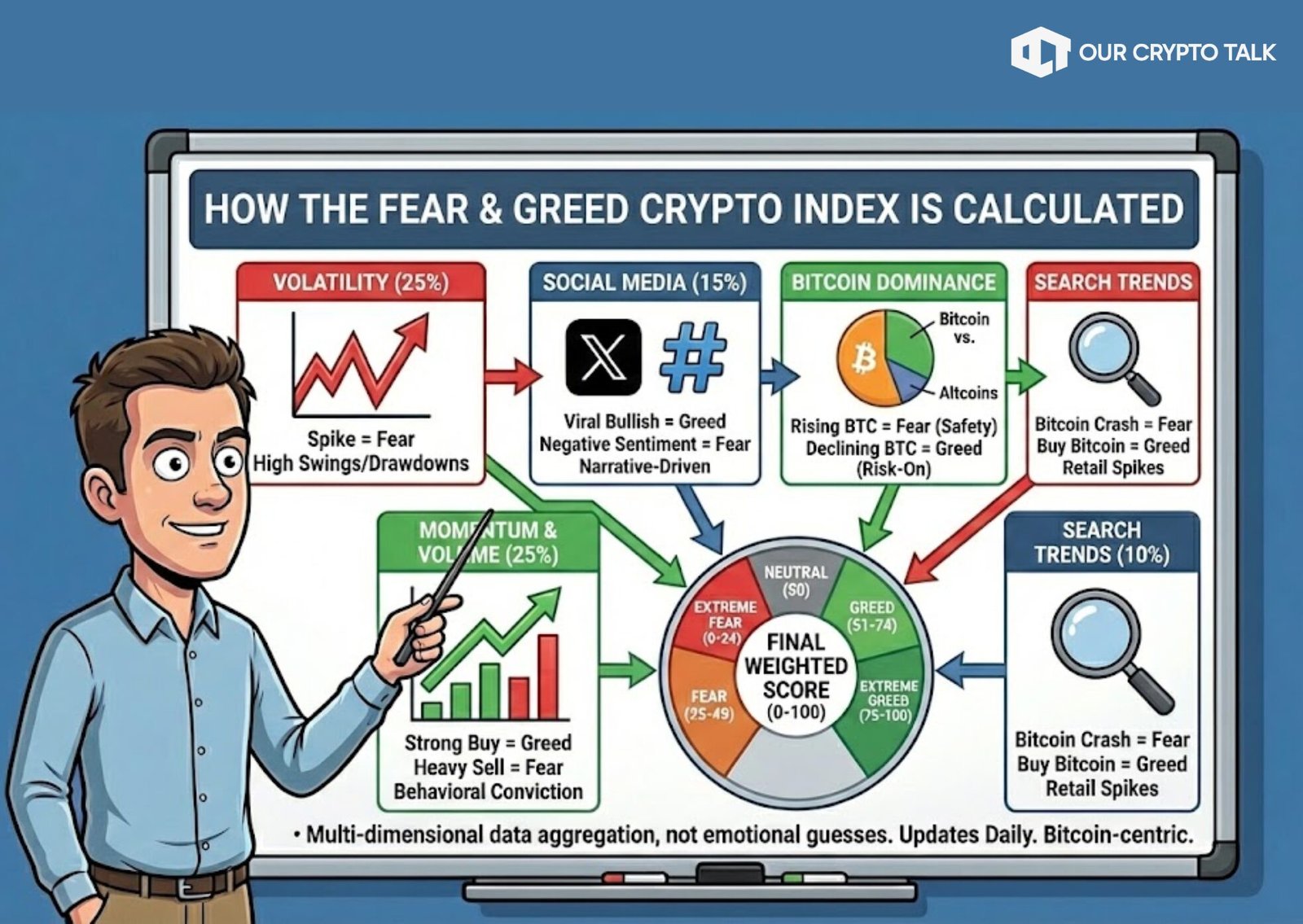
The most widely referenced version is maintained by Alternative.me. Its methodology focuses primarily on Bitcoin while reflecting broader crypto sentiment. The score is calculated using several weighted components.
Volatility measures current price swings and maximum drawdowns compared to historical averages over 30 and 90 days.
When volatility spikes significantly above baseline levels, it typically signals fear. Sharp price drops and aggressive liquidations create uncertainty, which is reflected in lower index scores.
However, volatility alone does not determine direction. It simply measures emotional intensity.
Momentum compares current trading volume and price trends against longer-term averages.
Strong buying pressure combined with rising prices indicates greed. Conversely, heavy sell volume during declines signals fear.
This component is important because it captures behavioral conviction. High volume in either direction reveals emotional participation rather than passive drift.
Social engagement across platforms such as X plays a measurable role in fear and greed crypto analysis.
Rapid increases in hashtags, keyword mentions, and engagement typically align with greedy conditions. Viral bullish narratives often precede market overheating.
On the other hand, negative sentiment spikes can reinforce fear readings.
While social data introduces some noise, it reflects crypto’s uniquely narrative-driven structure.
Bitcoin dominance measures Bitcoin’s share of total crypto market capitalization.
Rising dominance often signals fear. Investors move capital from smaller altcoins into Bitcoin, which is perceived as safer.
Declining dominance may signal greed. Capital rotates into higher-risk altcoins during speculative phases.
Dominance therefore provides insight into risk appetite within the ecosystem.
Google search activity adds another layer of behavioral data.
For example:
Search spikes often precede retail participation waves, making this metric particularly useful.
Each component contributes to a final weighted score between 0 and 100. The score is then categorized into:
Because the index updates daily, it reflects shifting sentiment quickly. However, its Bitcoin-centric structure means altcoin-specific sentiment may diverge at times.
Understanding this calculation framework is critical. It reinforces that fear and greed crypto readings are multi-dimensional, not emotional guesses.
The primary use of the fear and greed crypto index is contrarian positioning. Investors use it to identify moments when the market may be emotionally overextended.
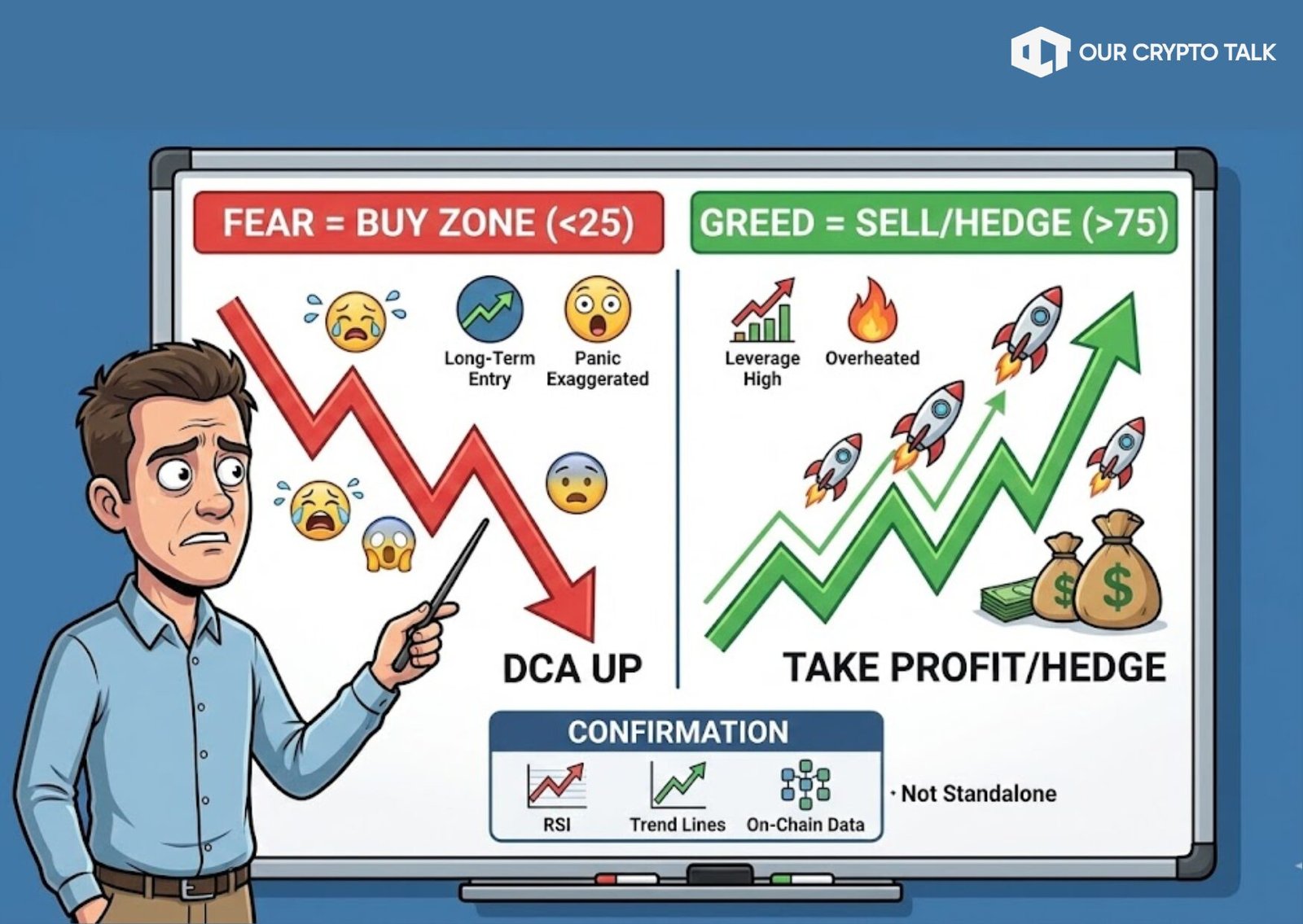
When the index drops below 25, it signals extreme fear.
Historically, such conditions have often aligned with strong long-term entry zones. Fear tends to peak during sharp corrections, forced liquidations, or negative macro headlines.
Long-term investors often increase exposure during these phases. Rather than timing exact bottoms, they use extreme fear as confirmation that panic may be excessive.
Dollar-cost averaging strategies can be adjusted accordingly:
This approach smooths volatility while exploiting sentiment extremes.
When readings exceed 75, markets may be overheating.
Extreme greed often coincides with:
Traders may reduce risk exposure, take partial profits, or hedge positions during such periods.
Importantly, greed phases can persist during strong bull markets. Selling too early can reduce upside. Therefore, many investors combine fear and greed crypto signals with trend analysis before acting.
Fear and greed crypto signals work best as confirmation indicators.
For example:
Used in isolation, the index can mislead. Used alongside technical and on-chain data, it becomes powerful.
Institutional investors monitor sentiment indicators to gauge retail positioning.
High greed readings often imply crowded long positioning. Conversely, extreme fear may indicate reduced leverage and cleaner market structure.
Sentiment analysis complements derivatives metrics such as funding rates and open interest.
Beyond trading signals, the index provides a psychological anchor.
Crypto markets amplify emotion due to:
By observing fear and greed crypto readings daily, investors learn to detach from immediate emotional impulses.
Instead of reacting to headlines, they interpret market mood systematically.
This discipline is perhaps the most valuable benefit of the index.
The popularity of the fear and greed crypto index comes from its simplicity. A single number summarizes complex market sentiment into an actionable signal. However, like all indicators, it has strengths and weaknesses.
1. Simplicity and Accessibility
The index converts multiple data inputs into a single daily score. Investors do not need advanced modeling tools to interpret it. This accessibility makes it useful for beginners and professionals alike.
2. Encourages Contrarian Thinking
One of the biggest advantages of fear and greed crypto analysis is psychological discipline. It pushes investors to question crowd behavior.
Historically, contrarian approaches have often outperformed reactive trading.
3. Behavioral Finance Awareness
The index educates investors about emotional cycles. Instead of blaming volatility, traders begin to recognize herd behavior, loss aversion, and recency bias.
Over time, this awareness improves decision-making quality.
4. Free and Transparent Data
Platforms like Alternative.me publish historical data dating back to 2018. This allows investors to analyze past patterns and test strategies objectively.
Despite its benefits, fear and greed crypto readings are not predictive guarantees.
1. It Is Reactive, Not Predictive
The index reflects current sentiment. It does not forecast macroeconomic events or regulatory changes.
Extreme fear can persist longer than expected. Extreme greed can extend during strong bull markets.
2. Bitcoin-Centric Bias
Most versions of the index are heavily weighted toward Bitcoin data. During altcoin cycles, sentiment in smaller-cap assets may diverge from the Bitcoin-driven index reading.
3. Social and Search Data Noise
Social media engagement and search trends can be influenced by bots, hype cycles, or coordinated campaigns. While useful, these components introduce noise.
4. Over-Reliance Risk
Treating fear and greed crypto readings as standalone signals can lead to poor timing decisions. Markets are multi-dimensional. Sentiment alone does not determine direction.
Understanding these limitations ensures responsible use.
The most effective use of fear and greed crypto signals comes from integration.
The Relative Strength Index measures overbought and oversold conditions.
This combination aligns emotional sentiment with momentum exhaustion.
Trend matters.
Buying extreme fear during a long-term uptrend differs from buying fear during a structural downtrend. Many investors use the 200-day moving average as a macro filter.
If price remains above long-term averages, fear readings often present opportunity. Below major trend lines, caution increases.
Derivatives data adds deeper insight.
Combining these metrics reduces false signals.
Whale accumulation data often aligns with fear phases.
If large wallets accumulate during extreme fear, it reinforces bullish asymmetry. Conversely, distribution during greed may signal caution.
The key lesson is clear. Fear and greed crypto signals work best as confirmation tools, not primary decision drivers.
Backtests provide perspective on effectiveness.
Several independent analyses have shown that contrarian strategies using the fear and greed crypto index often outperform passive approaches over multi-year periods.
For example:
However, context matters.
During prolonged bear markets, extreme fear can persist for weeks. Investors who expect instant reversals may become discouraged.
Similarly, during extended bull runs, greed phases may continue as prices trend higher.
Data also shows that median short-term returns after extreme fear are positive but modest. Patience remains critical.
The broader takeaway is not that fear guarantees upside. Instead, it suggests that extreme sentiment often creates asymmetric opportunities when combined with sound risk management.
So how should investors approach fear and greed crypto readings in practice?
First, view the index as a sentiment thermometer. It measures emotional temperature, not price targets.
Second, combine it with structural analysis. Consider macro trends, liquidity conditions, and broader market structure.
Third, adjust exposure gradually. Rather than making binary decisions, scale entries and exits according to sentiment extremes.
For example:
Finally, maintain risk controls. Stop-loss strategies, diversification, and disciplined position sizing remain essential regardless of sentiment.
The crypto market is driven as much by psychology as by technology.
The fear and greed crypto index provides a structured way to measure emotional extremes in a volatile, narrative-driven environment. While it cannot predict the future, it offers insight into crowd positioning and behavioral bias.
Used responsibly, it encourages discipline, patience, and contrarian thinking. Used blindly, it can mislead.
As markets evolve, so should your strategy. No indicator replaces research, diversification, and sound risk management. However, understanding fear and greed crypto dynamics equips investors with a psychological edge that many overlook.
When sentiment swings to extremes, opportunity often hides beneath the noise. The key is learning to recognize it without becoming part of it.