Loading Search...


Pokemon Go built a DePIN network before the term existed. 30B images, centimeter accuracy, zero payout to contributors. Here is what happened

Author: Tanishq Bodh
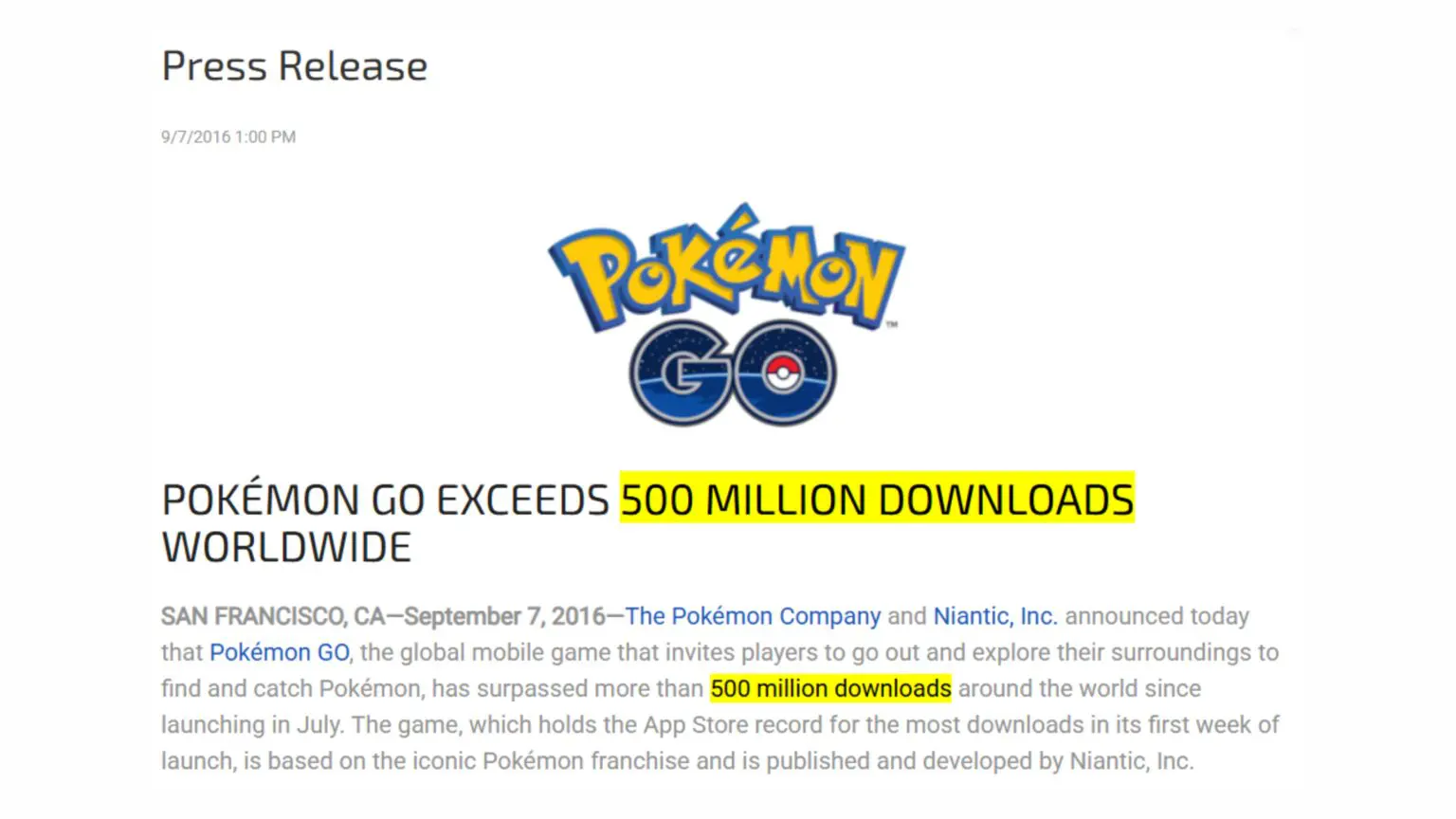
Five hundred million people installed Pokemon Go in its first 60 days. They thought they were catching Pikachu. They were actually building the largest crowdsourced mapping dataset in human history. Nobody told them that part. What they built was Pokemon Go DePIN before the term existed.
Eight years later, Niantic Spatial, the AI spinoff of the company behind Pokemon Go, announced that those players collectively generated more than 30 billion geotagged images of real-world locations. Every angle, every weather condition, every time of day. Across thousands of cities. Niantic used that data to train a Visual Positioning System that pinpoints your exact location on Earth to within a few centimeters, without GPS, just by analyzing what is visible around you.

Their first paying client? Coco Robotics. A delivery robot company running 1,000 sidewalk bots across Los Angeles, Chicago, Miami, Jersey City, and Helsinki.
Here is the uncomfortable truth. What Niantic built, and what Pokemon Go DePIN mechanics made possible, is exactly what the crypto DePIN sector has been trying to construct since 2021. The difference is that Pokemon Go players received Pokeballs. DePIN contributors receive tokens with real ownership. That gap tells you everything about why decentralized physical infrastructure networks exist at all.
In 2020, Niantic added Field Research tasks to Pokemon Go. Players were asked to scan real-world landmarks, statues, and buildings using their phone cameras. They received in-game items and Pokemon encounters in exchange.
Millions of people participated. Repeatedly. From different directions. At different hours. Across different seasons. A single PokéStop might accumulate morning scans in sunshine, evening scans in rain, winter scans with snow, and weekend scans with pedestrian crowds flowing through the frame.
No mapping company deploying dedicated camera vehicles could have replicated that diversity on the same timeline or at comparable cost. Google Street View relies on camera cars that cost roughly $500,000 each. Hivemapper’s dashcams run $279 to $649 per unit. Pokemon Go’s data collection cost Niantic $0 per device. The players brought their own hardware and generated the data voluntarily.

The metadata was rich. Every image came tagged with GPS coordinates, camera orientation, device pose, motion data, and sensor readings. Aggregate 30 billion of those images and the output is something no organization on Earth had built before: a living, multi-angle, multi-condition 3D map of urban environments worldwide. The technical accuracy is now centimeter-level. Niantic CTO Brian McClendon, a veteran of Google Maps and Google Earth, has stated that they know precisely where you are standing and, critically, where you are looking.
Strip away the Pikachu skin and the DePIN structure is obvious. A distributed contributor network. Physical infrastructure built through participation. An incentive layer driving contribution. Data aggregated into a commercial product. That is the Pokemon Go DePIN playbook, executed at global scale before the term existed.
Understanding how this played out requires understanding what Niantic became after the data was collected.
In May 2025, Niantic was acquired by Scopely, which is owned by Saudi Arabia’s Savvy Games Group, a subsidiary of the Public Investment Fund. But the mapping and spatial AI division was not included in that deal. Instead, it was spun off into a separate entity called Niantic Spatial, backed by Niantic’s original investors with some Scopely participation.
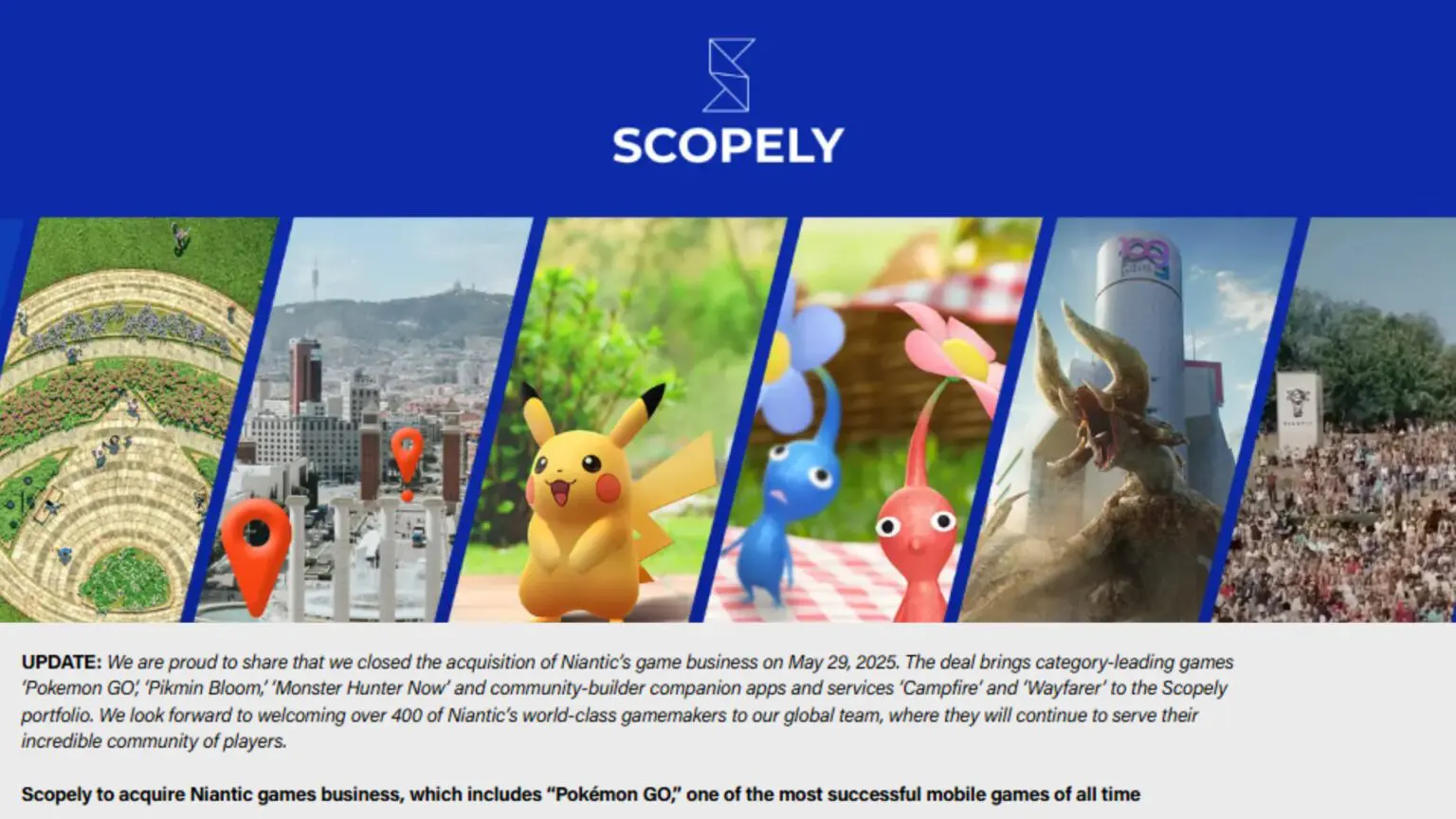
The split is revealing. The game went to Saudi money. The data went to an AI company.
Niantic Spatial’s CEO is John Hanke, who co-founded Niantic inside Google and launched Pokemon Go. Its CTO is McClendon. These are not gaming executives. They are mapping infrastructure people who built a consumer game as a mechanism to collect the data they actually wanted.
Niantic’s terms of service are clear. Submitted data can be used however the company decides, including by third parties. Players agreed to this when they installed the app. But agreeing to terms and understanding what you are consenting to are fundamentally different things. In 2016, nobody downloading Pokemon Go was thinking about delivery robots navigating Helsinki in 2026.
Pokemon Go players generated 30 billion images over 8 years. That dataset is now the commercial foundation of Niantic Spatial, which is actively selling navigation services to robotics companies. How much of that commercial value went back to the players who built it? Zero.
The incentives were digital items inside a closed game economy. Pokeballs. Stardust. Rare encounters. None of it carried transferable value. None of it represented ownership of the infrastructure those players were building.
Niantic is not an outlier. Google’s reCAPTCHA ran the same playbook. For years, users clicked on images of traffic lights and stop signs to prove they were human. They were labeling training data for Google’s autonomous vehicle division. Waze crowdsourced traffic data from millions of drivers. Tesla does it today through every car with Autopilot engaged. The drivers are actively training Tesla’s neural networks every time they take the wheel. Tesla captures the value. Contributors pay $12,000 for the privilege of supplying the data.
The pattern is consistent. Build an engaging consumer product. Collect data through interaction. Monetize that data later for something users never anticipated. DePIN is the direct structural response to this pattern.
Hivemapper runs the same fundamental operation as Pokemon Go’s mapping program. Drivers earn $HONEY tokens for capturing street-level imagery through dashcams. That data powers a global mapping network with commercial buyers including Lyft and Volkswagen’s autonomous vehicle division. The technology and data collection method are comparable. The value flow is entirely different.
The numbers reinforce the distinction. Hivemapper has mapped over 6 million unique road kilometers, covering roughly 10% of the world’s roads, at a rate four times faster than Google Street View achieved in its early expansion. Contributors do not just collect data. They also validate quality through AI trainer games, earning tokens for reviewing and annotating imagery captured by other drivers. The entire pipeline, from collection to quality assurance to commercial delivery, runs on contributor participation. And that participation is rewarded with transferable economic value.
Pokemon Go DePIN proved that crowdsourced mapping at scale works. Hivemapper proved that the people building the map should receive compensation proportional to their contribution.
Mapping is one application. The DePIN thesis extends across physical infrastructure categories where centralized providers have historically extracted value from distributed contributors without returning ownership.
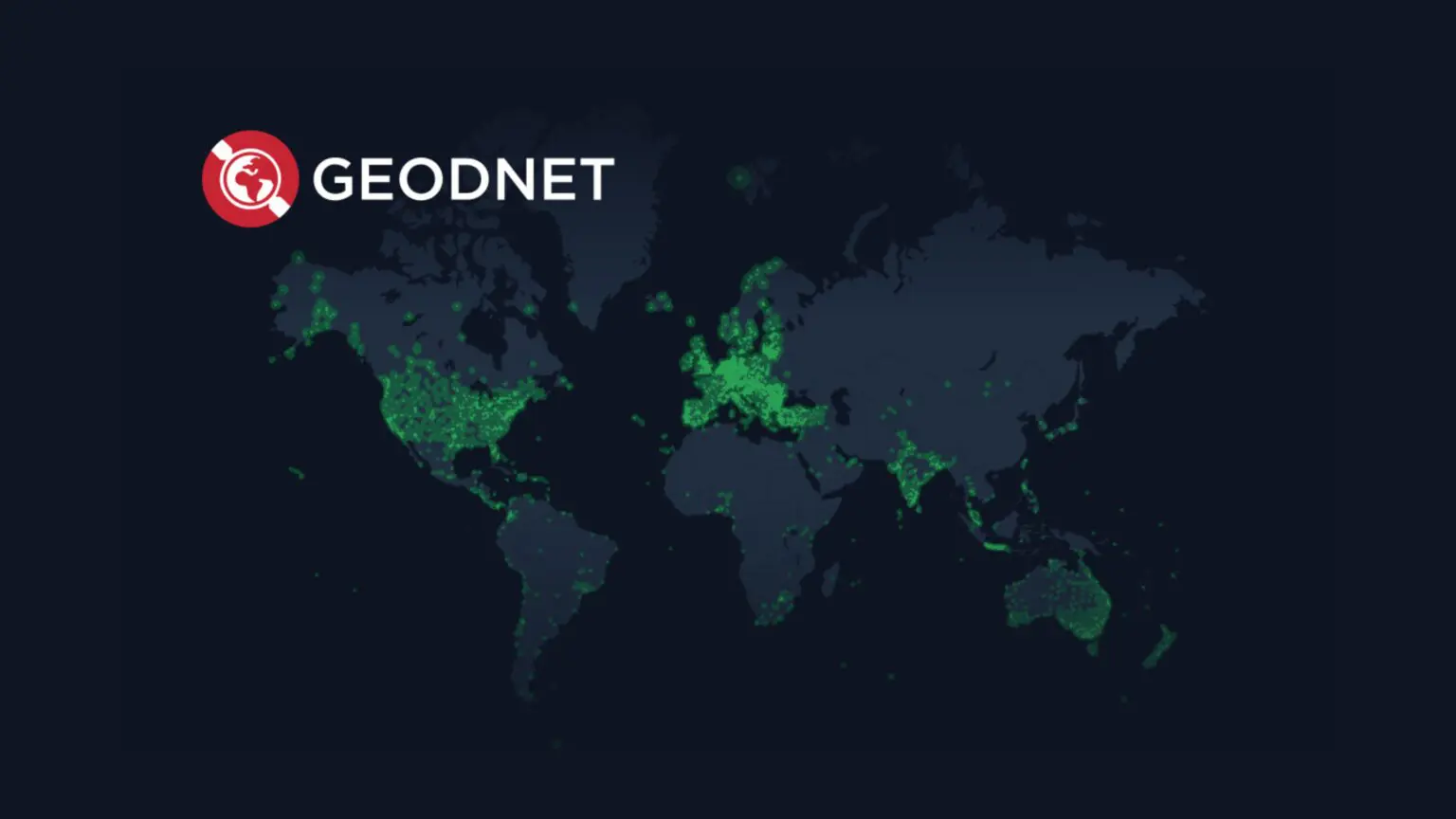
Helium has built a network of over 400,000 active hotspots providing wireless coverage that traditional telecom companies ignored as uneconomical. Contributors deploy hardware, earn tokens, and own a stake in the network they are building. Render processes AI workloads on decentralized GPUs that would otherwise sit idle on individual machines. GEODNET provides precise positioning data that competes with legacy systems costing orders of magnitude more, built entirely through distributed hardware contributors.
The combined market cap of the DePIN sector exceeds $19 billion across nearly 250 active projects. These are not experiments. They are functional infrastructure networks with real revenue, real commercial demand, and real ownership structures. Every one of them exists because someone looked at how Niantic, Google, and Tesla extract free labor from users and built an alternative model where contributors receive economic stake in the value they create.
The Pokemon Go DePIN comparison is not a retroactive framing. It is a confirmation that the model works at scale. Five hundred million contributors. Thirty billion data points. Centimeter-level accuracy. Commercial buyers already lined up. The only structural flaw was that the contributors received nothing.
Niantic Spatial is not stopping at delivery robots. The company’s stated long-term goal is to build a living map, a hyper-detailed virtual simulation of the real world that updates continuously as new data flows in.
The flywheel is already in motion. Once Coco’s delivery robots are operating on city streets using Niantic’s positioning model, those robots become new data collection devices. Four cameras per unit, feeding fresh imagery back into the system, refining the map in real time. More robots means more data. More data means higher accuracy. Higher accuracy attracts more commercial clients. The original Pokemon Go players who built the foundation receive nothing from this acceleration.
McClendon has described the ambition directly. The goal is to recreate the real world in digital form: every building, every street sign, every curb. Not a static snapshot, but a living replica that machines use to navigate, plan, and understand physical space. Hanke calls it the connective tissue that will enable AI to meaningfully understand and interact with the physical world.
This is the future of spatial computing. And the 30 billion images from Pokemon Go are the starting layer. The question the DePIN sector is built to answer: when the next version of this infrastructure gets constructed, will the contributors who make it possible own a portion of what they create? Or will they receive Pokeballs again?
Pokemon Go did not just prove that crowdsourced physical infrastructure works at scale. It proved it works better than anything a centralized organization could build alone. No camera fleet, regardless of funding, matches the diversity, coverage, and refresh rate of 100 million people walking every street in the world with phones in hand.
The Pokemon Go DePIN comparison is not flattering to Niantic. The mechanics were there. The scale was there. The commercial outcome was there. What was missing was the part that DePIN was built to supply: the ownership structure that routes value back to the people who generated it.
Tokens are not just rewards. In a properly constructed DePIN network, they are property rights over the value your contribution creates. That is the structural difference between building a map for Pokeballs and building a map for $HONEY.
The DePIN sector did not invent the crowdsourced infrastructure model. It just added the part that was always missing. And Pokemon Go spent eight years proving, at a scale no one else has matched, that the model works.
All the opinions in this article are that of the author and in no way are financial advice. Our Crypto Talk and the author always suggest you do your own research in crypto and to never take anything as financial advice that you read on the internet. Check our Terms and conditions for more info.



Pokemon Go Was DePIN Before DePIN Existed
What Happens When All 21 Million Bitcoins Are Mined? A Beginner’s Guide
Why Does The Ethereum Foundation Keep Selling ETH?
The CLARITY Act Explained: What It Means for Your Crypto
Pokemon Go Was DePIN Before DePIN Existed
What Happens When All 21 Million Bitcoins Are Mined? A Beginner’s Guide
Why Does The Ethereum Foundation Keep Selling ETH?
The CLARITY Act Explained: What It Means for Your Crypto