Loading Search...


The rise and fall of InfoFi explained, covering how information finance grew, collapsed, and what Web3 learned from its failure.

Author: Tanishq Bodh
The rise and fall of InfoFi is one of the clearest examples of how fast crypto narratives can form, scale, and collapse. InfoFi, short for Information Finance, promised to turn attention, data, and knowledge into on-chain financial assets. In theory, it was a natural evolution of DeFi. Instead of trading tokens or liquidity, users would trade information itself.
Between 2023 and late 2025, InfoFi became one of the fastest-growing narratives in Web3. It sat at the intersection of social media, AI, and crypto incentives. Posts, replies, predictions, and engagement were no longer just social actions. They became monetized signals. For a brief period, InfoFi looked like it had solved one of crypto’s biggest problems: how to reward insight rather than capital.
Then it collapsed.
In early 2026, the entire InfoFi model unraveled almost overnight. API bans, incentive failures, spam overload, and platform dependency exposed structural flaws that could not be patched. The rise and fall of InfoFi is not just a story about one failed narrative. It is a lesson in incentive design, platform risk, and the limits of financializing attention.
This article explains what InfoFi was, why it exploded, why it failed, and what survives after the collapse.
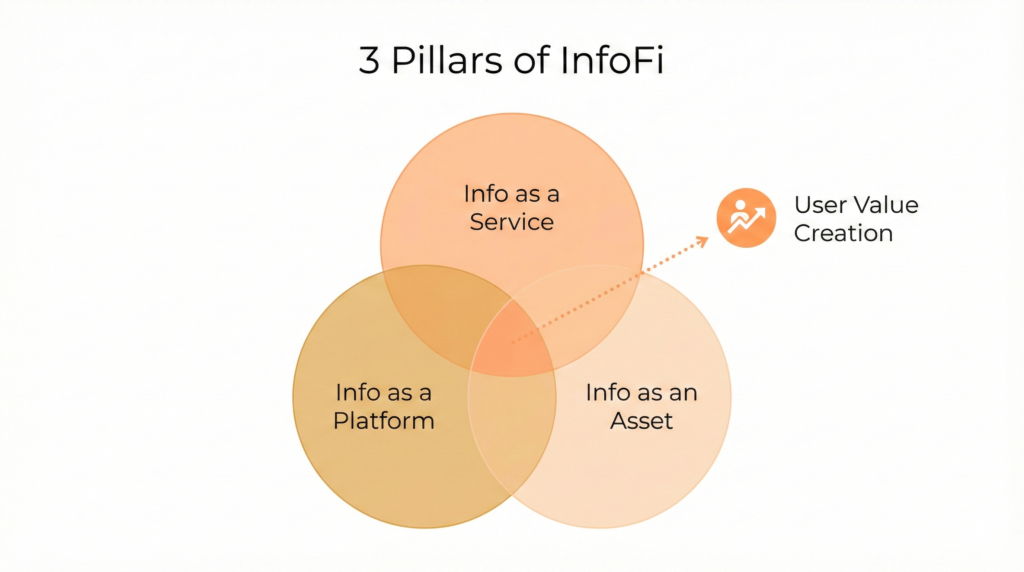
InfoFi refers to a class of protocols and platforms that attempt to financialize information flows. Instead of capital producing yield, information produces yield. Attention, engagement, predictions, and reputation become monetizable assets.
At a technical level, InfoFi combines:
The goal was simple. Valuable information should be rewarded. Noise should be filtered out. In practice, this was much harder to achieve.
The rise and fall of InfoFi began with a powerful insight. Crypto markets run on information asymmetry. Early, accurate, and confident signals often outperform capital-heavy strategies. InfoFi tried to turn that reality into structured, on-chain markets.
The timing of InfoFi was not accidental. After the 2022 collapse, speculative DeFi lost momentum. Yield farming, NFTs, and leverage-driven narratives were exhausted.
From 2023 onward, crypto searched for:
Source : Kaito
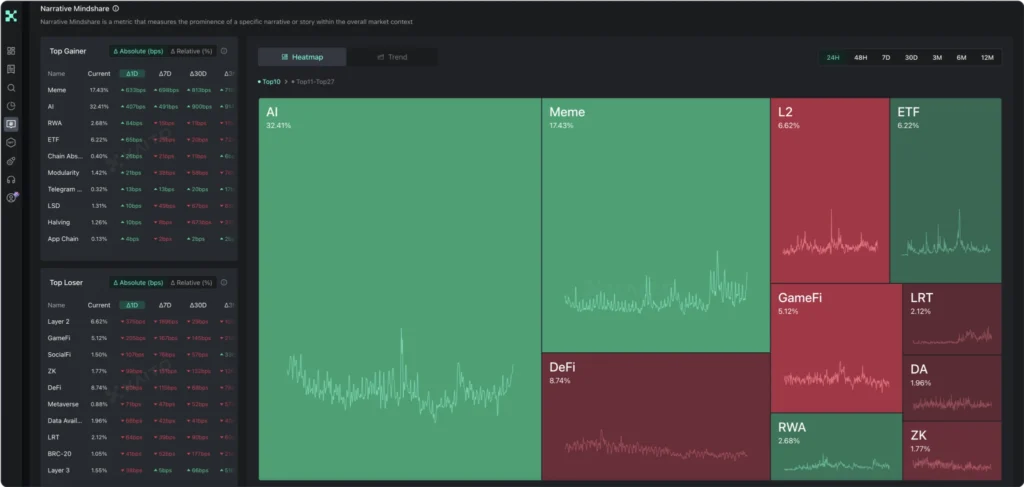
InfoFi fit perfectly. Social platforms like X had become the de facto research layer for crypto. Traders already relied on posts, threads, and replies for signals. InfoFi proposed formalizing that behavior.
Instead of passive consumption, users would earn for contributing. Instead of centralized platforms extracting value, communities would capture it.
This framing powered the rise and fall of InfoFi.
At its core, InfoFi attempted to reinvent prediction markets.
Traditional prediction markets rely on fixed outcomes and binary resolution. InfoFi proposed something more dynamic. Continuous forecasting. Open-ended signal markets. Confidence-weighted predictions that updated in real time.
Users could:
These signals could then be reused by traders, protocols, or AI agents. In theory, InfoFi created a reusable intelligence layer for crypto markets.
This was the intellectual engine behind the rise and fall of InfoFi.
Several projects came to define InfoFi between 2024 and 2025.
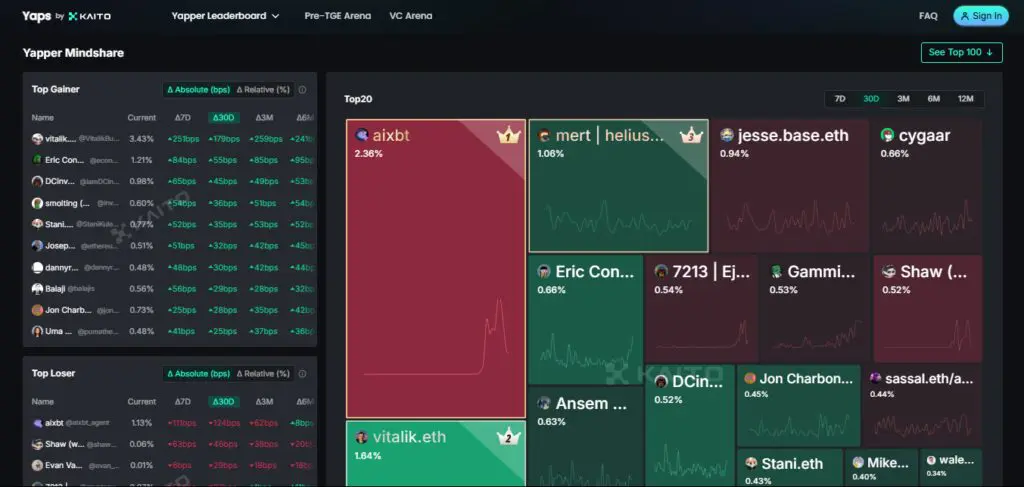
Kaito popularized the Yap-to-Earn model. Users earned points or tokens for posting and engaging on X. AI systems tracked visibility, engagement, and relevance.
Growth was explosive. So were the problems. Leaderboards incentivized volume over insight. Farms quickly dominated rankings. Trust eroded.
Source : Kaito
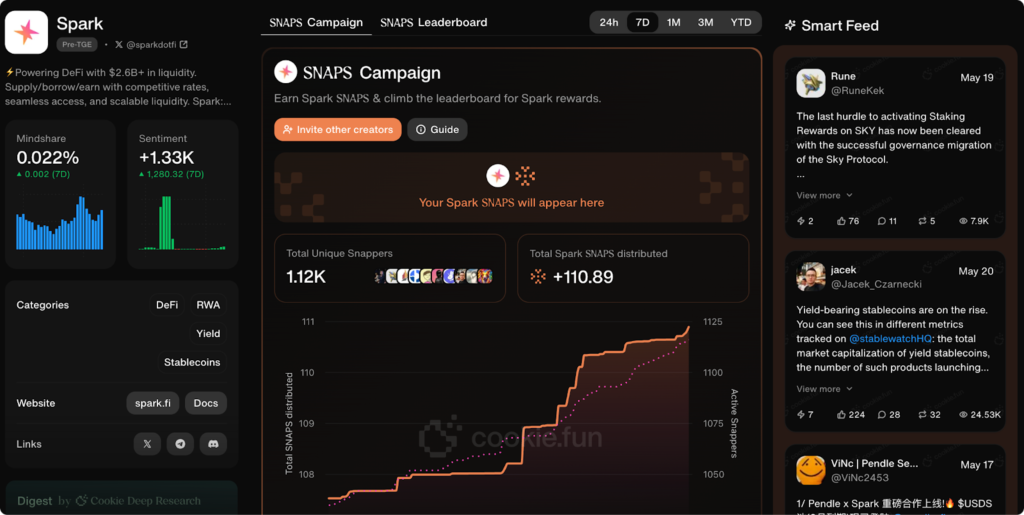
Cookie focused on data infrastructure. It aggregated on-chain and social signals into modular analytics layers. Its Snaps system rewarded campaign participation.
Cookie survived longer by pivoting toward enterprise use cases, but its InfoFi-facing incentives were eventually shut down.
Source : Cookie
Torch and similar projects introduced interval-based price forecasting. Instead of yes or no outcomes, users staked confidence over time windows.
This was one of InfoFi’s strongest ideas, but it never reached scale before the collapse.
Together, these platforms defined the rise and fall of InfoFi as both an innovation wave and an incentive experiment.
Several forces pushed InfoFi into the spotlight.
First, AI made large-scale content evaluation possible. Platforms believed they could algorithmically separate signal from noise.
Second, social mining was easy. Anyone could participate. No capital required.
Third, airdrops and token rewards created immediate demand.
By mid-2025, InfoFi was everywhere. Exchanges published explainers. Wallets educated users. Media framed it as the next evolution of DeFi.
The rise and fall of InfoFi accelerated because participation required almost no friction.
The same incentives that fueled growth also destroyed it.
Most InfoFi systems rewarded:
They struggled to reward:
As a result, spam outperformed thought. Bots outperformed analysts. AI-generated replies flooded feeds.
Once users realized quantity beat quality, the system collapsed from within.
This incentive failure sits at the heart of the rise and fall of InfoFi.
InfoFi relied heavily on X. Distribution, identity, and engagement all flowed through one platform.
In early 2026, X revoked API access for apps that paid users to post. The stated reason was spam and AI-generated slop degrading the platform.
This decision killed InfoFi overnight.

Source : Nikita Bier on X
Projects shut down features within days. Campaigns ended. Tokens sold off. The narrative died.
The rise and fall of InfoFi exposed a fatal flaw. Decentralized incentives built on centralized platforms are not sovereign.
The economic impact was immediate.

The market recognized that InfoFi v1 had no path forward.
This phase cemented the fall of InfoFi as a completed cycle rather than a temporary correction.
Timeline of the rise and fall of InfoFi (as of January 18, 2026)
Publishes “From Prediction Markets to Info Finance,” outlining incentive-aligned information markets.
Early mainstream recognition of tokenized attention and creator rewards via AI-powered InfoFi.
Price runs sharply over ~3 weeks as InfoFi protocols gain traction and mindshare.
Sector report frames attention as value in Web3 and highlights emerging players beyond early leaders.
Essay positions prediction markets as public infrastructure inside the InfoFi stack.
Thread scopes the space, calling out a small set of “true protocols” and key tooling gaining attention.
Several lessons stand out.
First, attention is not value by default. Financializing it requires extreme care.
Second, incentives must reward outcomes, not activity.
Third, platform risk is real. Protocols that depend on Web2 rails inherit Web2 rules.
Fourth, AI amplifies both signal and noise. Without strong governance, noise wins.
The rise and fall of InfoFi is now studied as a textbook example of misaligned incentives.
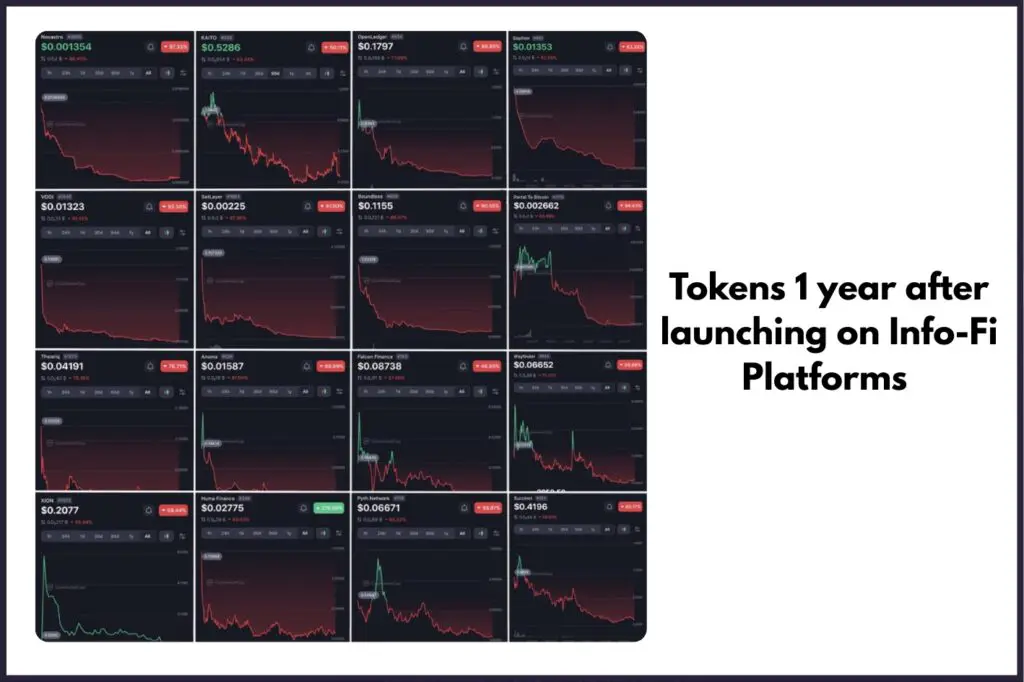
InfoFi did not die completely. Its ideas evolved.
Surviving models now focus on:
The narrative shifted away from social mining and toward information infrastructure.
InfoFi v2, if it emerges, will look very different.
The rise and fall of InfoFi matters because crypto will keep trying to financialize new primitives.
Attention, identity, data, and reputation are all tempting targets.
InfoFi failed, but the problem it tried to solve still exists. Markets need better signal. Communities need better incentives. Creators need fair monetization.
Future systems will build on these lessons.



Token generation event is marketed as a signal-driven reward system for sharing information.
Launch moves to June 30 as listings and low-FDV positioning are pushed across socials.
Token goes live; platform activations and partner reward mechanics follow shortly after.
Explains traction via prediction markets and AI, spotlighting Kaito, Cookie3, Galxe and others.
Live campaign examples show governance + execution vectors across InfoFi-style engagement programs.
Attention farming and spam increase as quality drops, exposing structural weaknesses in rewards.
Crackdown targets “reply spam / AI slop”; tokens sell off and some apps begin shutting down.
Kaito sunsets Yaps; Cookie DAO ends Snaps; broader sector reprices as flows unwind.
Community calls the era over; survivors pivot to sustainable models and “quality over quantity.”
AI Agent Payments Explained: Circle Nanopayments and the x402 Protocol
Top 7 Projects in the World Liberty Financial (WLFI) Portfolio
Where Crypto Actually Makes Money in 2026?
What If Satoshi Nakamoto Was Here in 2026?
AI Agent Payments Explained: Circle Nanopayments and the x402 Protocol
Top 7 Projects in the World Liberty Financial (WLFI) Portfolio
Where Crypto Actually Makes Money in 2026?
What If Satoshi Nakamoto Was Here in 2026?