Loading Search...


Explore how decentralized spatial infrastructure enables scalable, real-world autonomous delivery drones logistics using blockchain

Author: Chirag Sharma
Autonomous delivery drones are emerging as a serious contender for reshaping how goods move across cities and remote regions alike. The promise is clear. Drones can bypass traffic congestion, reduce delivery times from hours to minutes, and operate with a significantly lower carbon footprint than traditional last-mile logistics. For high-density urban zones and hard-to-reach rural areas, they unlock entirely new delivery models.
Industry momentum reflects this shift. Large corporations like Amazon Prime Air have pushed autonomous aerial delivery from experimentation to real-world pilots. Market estimates now project the autonomous delivery drone sector to surpass $30 billion by 2030, driven by advances in AI, battery density, and gradual regulatory approvals. But beneath the hype lies a less glamorous truth.
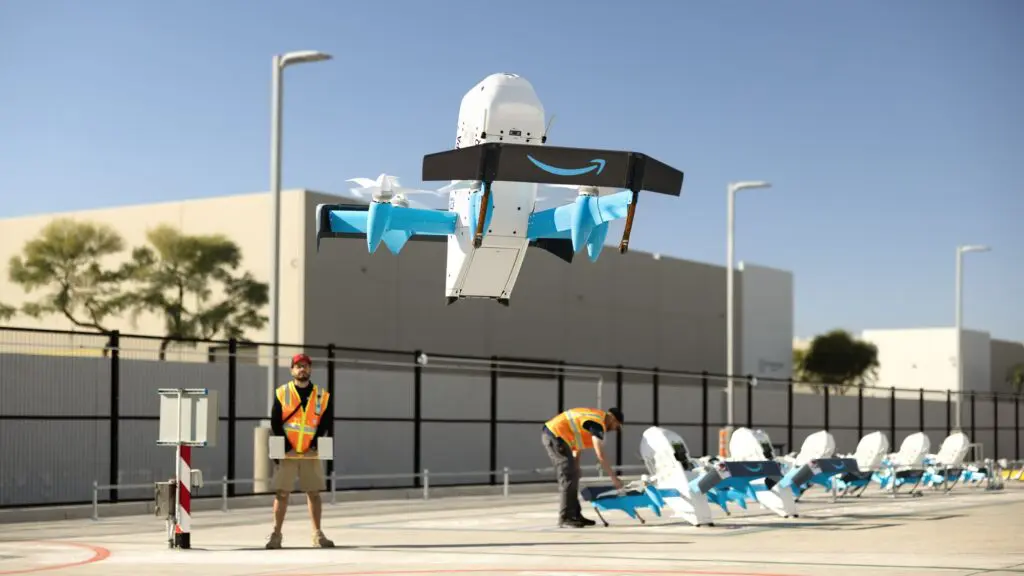
Source : Amazon News
While drones can fly, they still struggle to understand the physical world they operate in. Navigation failures, poor spatial awareness, fragmented systems, and centralized data control remain the biggest barriers preventing drones from scaling safely and autonomously.
This is where a different layer of innovation enters the picture. Rather than building better drones alone, projects like Auki Labs are tackling a deeper issue: how machines perceive, share, and reason about physical space. Through the AUKI Network, they are attempting to build infrastructure that allows autonomous delivery drones to operate with shared spatial intelligence rather than isolated perception.
Understanding this shift is key to understanding where drone logistics is actually headed.
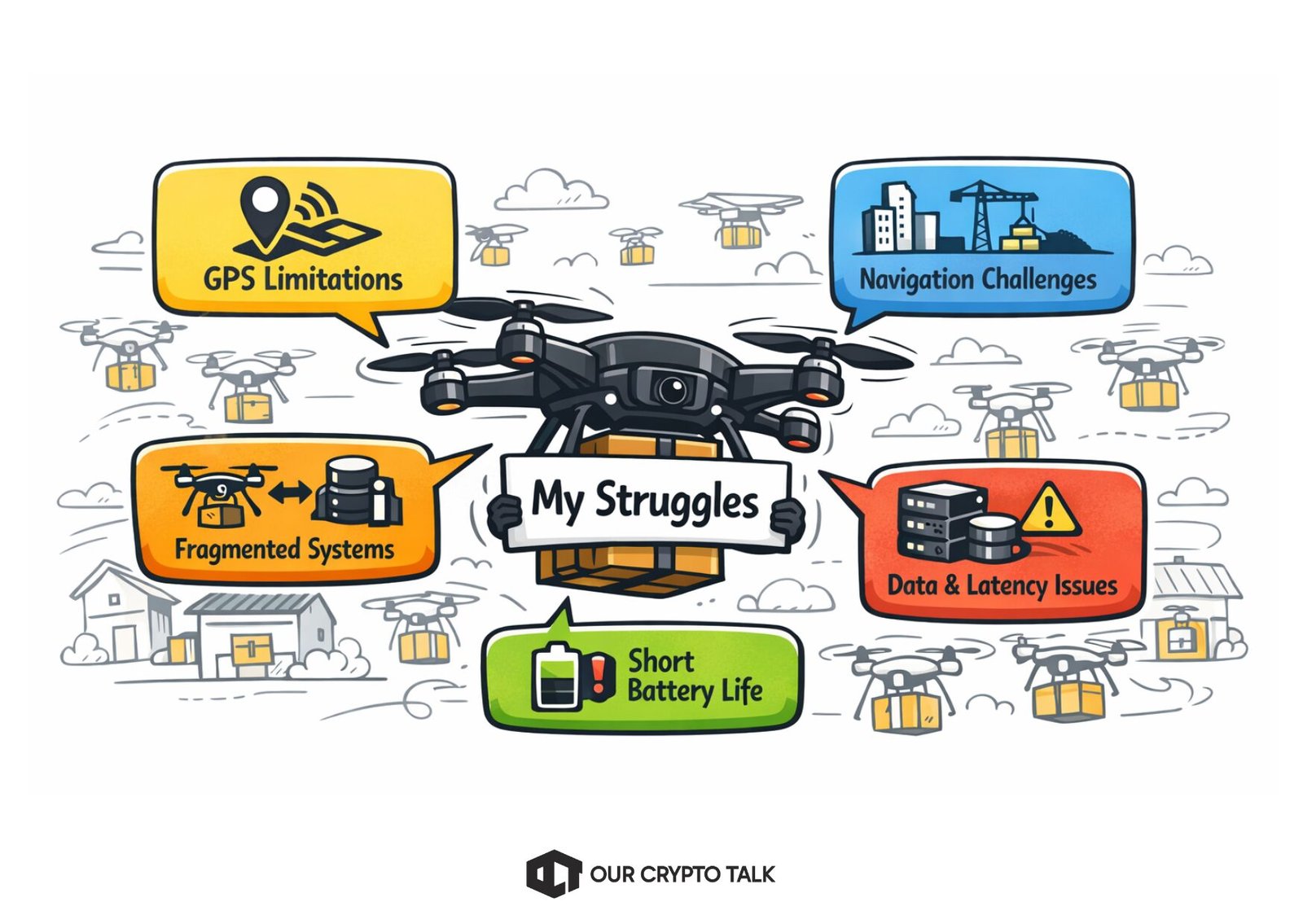
Autonomous delivery drones are often marketed as “self-flying,” but autonomy in controlled demos is very different from autonomy in the real world.
The first and most critical limitation is spatial perception.
Most delivery drones rely heavily on GPS for navigation. That works reasonably well in open environments but breaks down in real delivery conditions:
For a drone attempting a precise landing on a balcony, rooftop, or warehouse dock, GPS error margins of even one meter can be catastrophic.
Then comes the fragmentation problem. Today’s drone fleets operate inside closed ecosystems. Different manufacturers, software stacks, and mapping systems do not communicate with each other. This creates major friction when operators attempt to:
Every new area requires re-mapping, recalibration, and custom integrations, slowing down scalability. Centralization adds another layer of risk.
Most autonomous drones stream visual and spatial data to centralized cloud servers. This introduces:
As drones increasingly operate in public and private spaces, uncontrolled data aggregation becomes both a technical and social liability.
Finally, efficiency remains constrained.
Despite automation, many drone systems still require human oversight for exception handling. Battery life limits flights to short windows, and onboard computing drains energy rapidly when handling complex perception tasks.
All of this adds up to a simple reality: drones can fly autonomously, but they cannot yet operate autonomously at scale.
The core limitation holding autonomous delivery drones back is not hardware. Machines struggle to understand unstructured physical environments on their own. Each drone currently builds its own isolated view of the world, duplicating effort and compounding errors. This is the gap the AUKI Network targets.
Instead of treating perception as a proprietary, centralized service, AUKI introduces a decentralized machine perception layer that allows robots, drones, and AI agents to collaboratively understand physical space.
Posemesh is a decentralized protocol that enables machines to share spatial awareness. Rather than uploading raw data to a central cloud, devices contribute and access spatial context locally through a distributed network of nodes.
For autonomous delivery drones, this changes everything.
A drone entering a new environment no longer starts blind. It can tap into existing spatial intelligence generated by other machines that have already operated there. Navigation becomes faster, safer, and more accurate without relying on a single authority.
This is particularly powerful in environments where delivery drones struggle most:
Shared perception transforms these from hostile environments into navigable systems.
AUKI’s architecture breaks spatial intelligence into specialized, decentralized components that work together without central control.
Each node type plays a specific role.
Together, these components allow drones to operate more like participants in a shared system rather than isolated devices. Interoperability becomes native. A delivery drone entering a warehouse can instantly synchronize with ground robots already operating there. Handoffs become seamless. Routes dynamically adapt based on live spatial data instead of static maps.
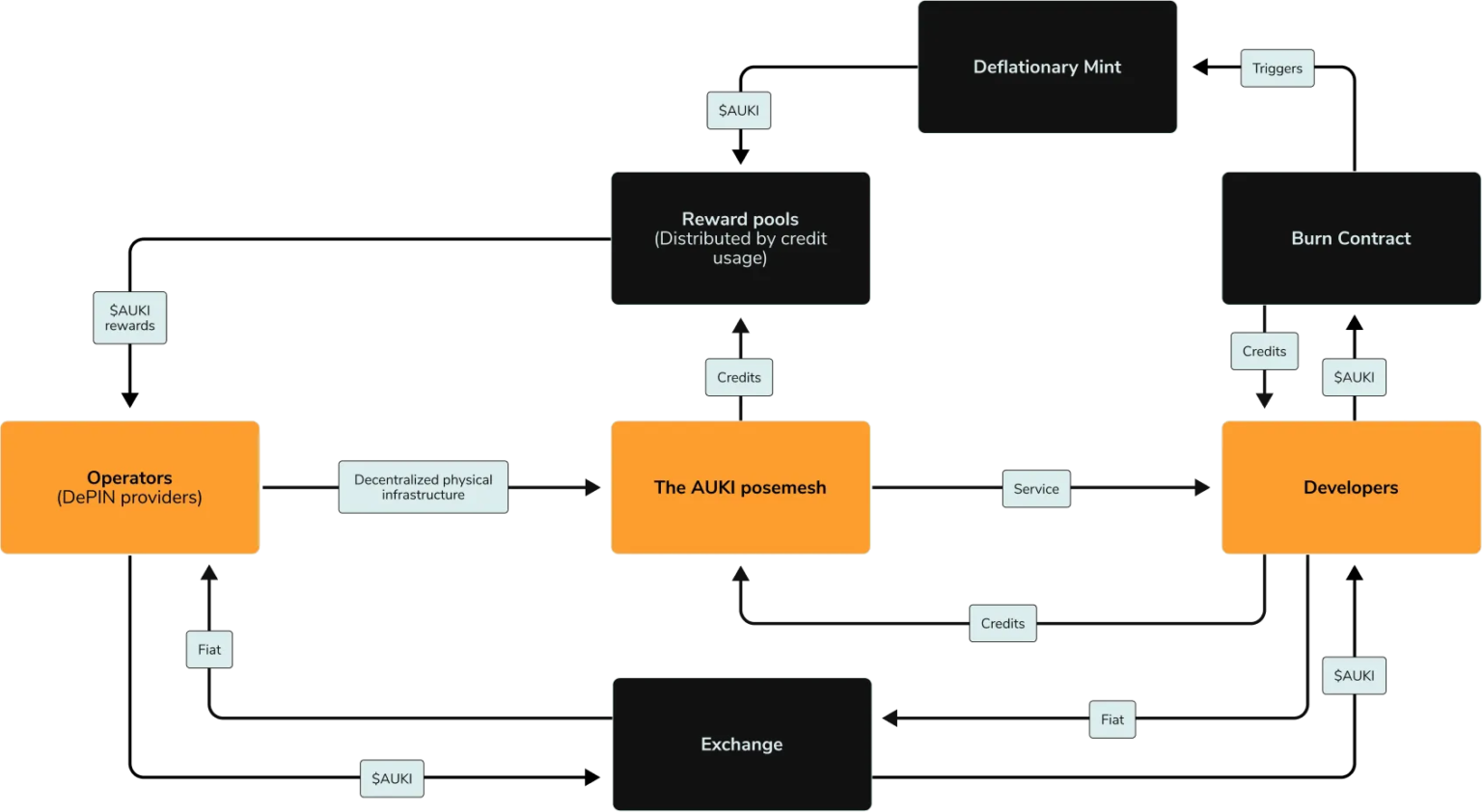
Tokenized incentives reinforce this behavior. Node operators earn $AUKI for providing perception services. Drones pay for access to high-quality spatial intelligence and can also earn tokens by contributing updated data during flights. This creates a feedback loop where better data improves operations, and improved operations strengthen the network.
Despite meaningful progress, autonomous delivery drones are not without unresolved challenges. Regulation remains the largest external constraint. Aviation authorities still impose strict limits on beyond-visual-line-of-sight operations. While shared perception improves safety, legal frameworks evolve slowly and vary across regions.
Environmental factors also persist. Visual positioning systems degrade in poor lighting, fog, heavy rain, or snow. Hybrid sensor fusion using LiDAR or radar helps, but increases cost and complexity.
Scalability must be proven in real time. As drone density increases, perception networks must process vast data streams without latency spikes. Decentralization helps, but optimization at global scale remains a work in progress.
Economic accessibility is another concern. Early adoption favors large enterprises with capital to deploy fleets and nodes. Ensuring smaller operators can participate without prohibitive costs will determine long-term inclusivity.
Governance also matters. Decentralized networks rely on incentive alignment and responsible participation. Poor node behavior or data misuse must be addressed through protocol-level enforcement rather than centralized policing.
These challenges do not negate progress, but they define the roadmap ahead.
Blockchain is not used here as a buzzword.In the AUKI Network, it functions as coordination infrastructure for machines. Smart contracts govern access to spatial services. Drones can autonomously pay for navigation data, charging access, or compute resources without human mediation.
Token burns tie economic value directly to real-world usage. As drone activity increases, token supply tightens, aligning incentives with utility rather than speculation.Integration with broader DePIN ecosystems allows drones and node operators to stake, earn, and participate in governance, reinforcing network resilience.
Most importantly, blockchain enforces transparency. Delivery verification, data usage rights, and economic flows become auditable without requiring trust in a central operator. For logistics systems operating in public spaces, this trust minimization is critical.
Autonomous delivery drones will not scale because they fly better. They will scale because they understand the world better.
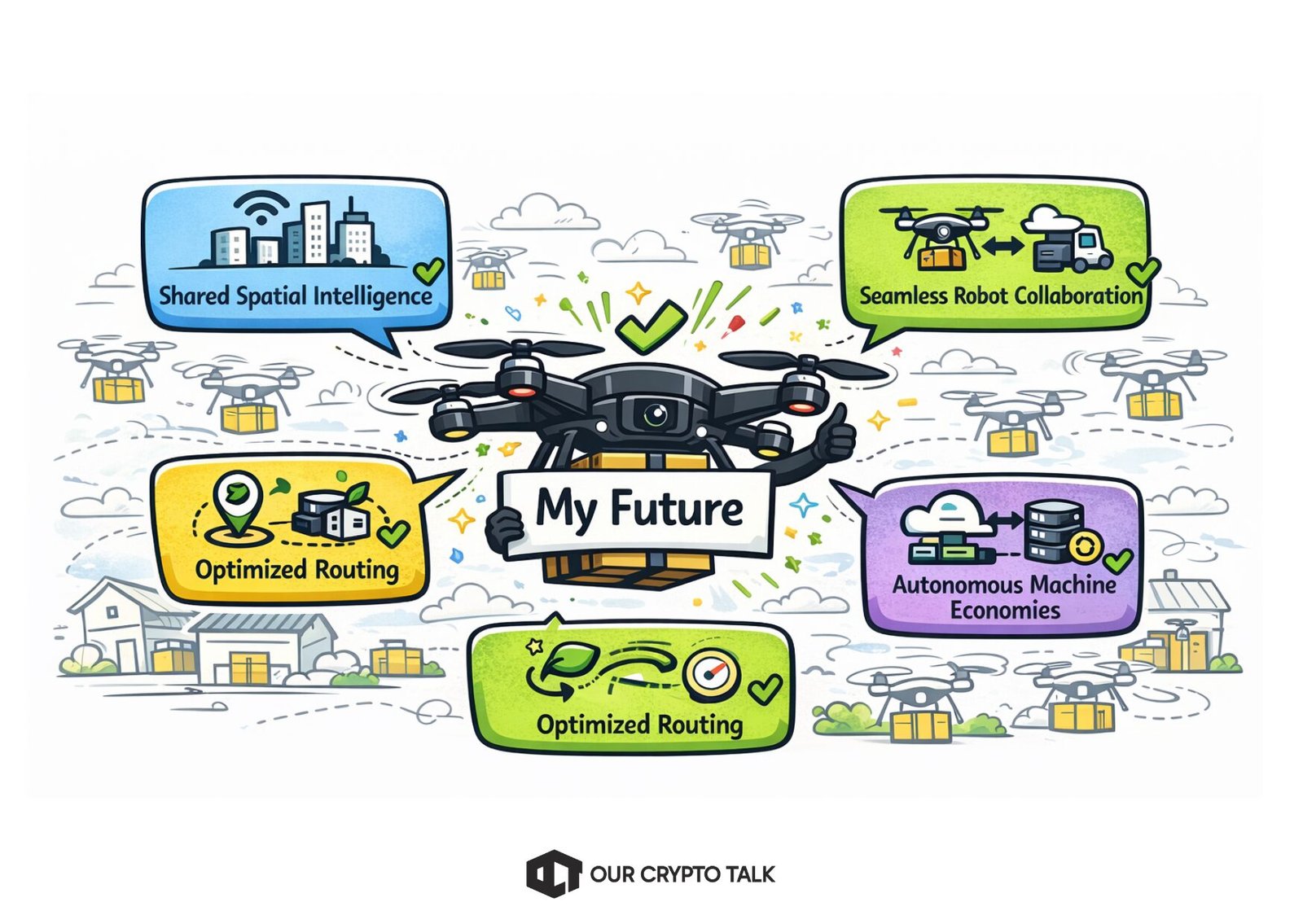
The future points toward:
As spatial computing matures, drones transition from isolated tools into participants in a larger machine ecosystem. If successful, networks like AUKI could become for machines what GPS became for humans: invisible infrastructure that quietly powers everything.
The real breakthrough is not faster delivery. It is a world where machines can safely, efficiently, and independently operate in the physical economy that underpins most of global GDP.