Loading Search...


Epstein files crypto connections reveal expose early links to Coinbase, Blockstream, and key crypto figures, and regulatory questions.

Author: Kritika Gupta
The release of millions of pages from the U.S. Department of Justice’s Epstein files in early 2026 has reignited scrutiny over Jeffrey Epstein’s extensive network, revealing unexpected ties to the cryptocurrency world. The phrase Epstein files crypto has quickly surged across online discussions because the documents include emails, logs, and investment records pointing to interactions with early blockchain figures and institutions.
Epstein, a financier who died in 2019, maintained connections with influential figures across finance, technology, and politics. In the files, emails, logs, and financial records show how his network overlapped with early crypto. Specifically, the documents reference interactions with crypto pioneers, early-stage investments into blockchain ventures, and even claims that he discussed Bitcoin with its “founders.”
At the same time, the revelations arrive during a volatile period for the crypto market. Bitcoin has experienced sharp fluctuations, while the industry continues expanding under increasing regulatory pressure. Although many people named in the files deny wrongdoing or deny meaningful involvement, the documents still show that Epstein’s orbit intersected with the crypto ecosystem during its formative period, especially between 2011 and 2018.
This intersection raises questions about who funded early infrastructure, how influence circulated during key market moments, and whether elite networks shaped narratives inside an industry that brands itself around decentralization and transparency. As the files continue to be analyzed, they offer a window into the hidden dynamics that shaped crypto’s evolution, and they deepen public attention around Epstein files crypto.
The appearance of major crypto figures in the Epstein files crypto is not just gossip. Instead, it highlights real structural weaknesses in an industry that claims to eliminate legacy power dynamics.
Crypto emerged from ideals like decentralization, censorship resistance, anonymity, and independence from institutions. However, the documents suggest early crypto development often relied on the same tools used in traditional elite systems, namely venture capital, political networking, philanthropy, and private relationships.
First, it challenges the “grassroots revolution” story. If early crypto infrastructure relied on elite donor networks or controversial financiers during pivotal moments, then the industry’s public narrative becomes harder to defend. That can reduce trust, especially among retail participants.
Second, the timing matters. Governments worldwide are increasing oversight, including SEC enforcement, international tax reporting frameworks, and stricter compliance expectations. As a result, these revelations may invite heightened scrutiny, since Epstein files crypto can create negative associations even if the documents prove no direct crimes.
Finally, understanding these relationships helps explain early rivalries and strategic conflicts. For example, Bitcoin maximalist circles and infrastructure builders often saw Ripple and Stellar as threats, and those battles influenced technical decisions, funding allocations, and industry narratives.
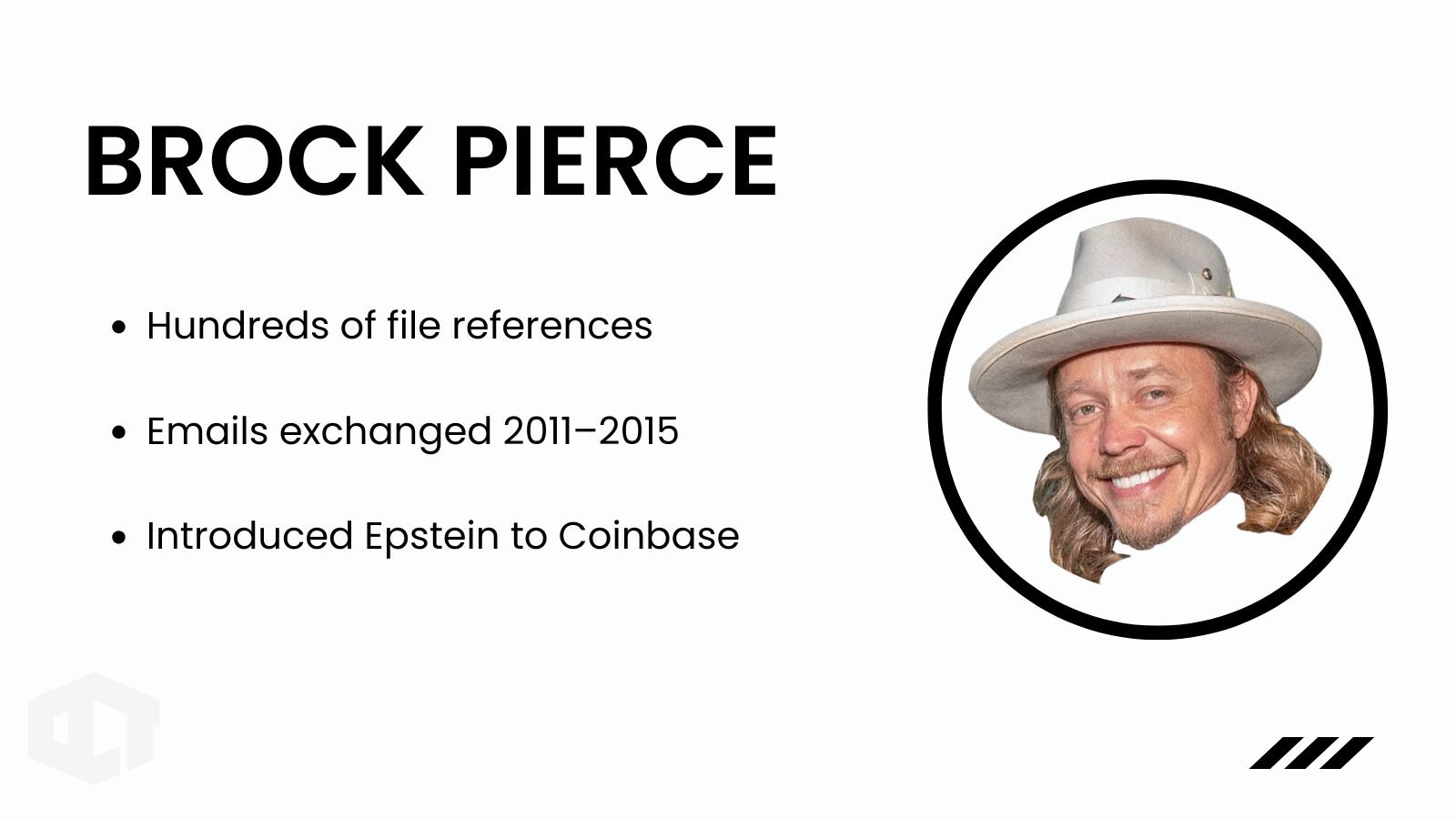
Brock Pierce is an early Bitcoin advocate, a crypto investor, and a partner at Blockchain Capital. He is also widely associated with early stablecoin narratives due to his involvement in the broader Tether-era ecosystem.
Pierce appears frequently in the files, with reportedly hundreds of references. According to the documents, Epstein and Pierce exchanged emails during roughly 2011–2015 about crypto projects, investment opportunities, and strategy discussions. Some of these discussions allegedly took place in Epstein’s Manhattan home.
Most importantly, the files claim Pierce introduced Epstein to Coinbase’s 2014 Series C funding round. In that round, Epstein reportedly invested $3 million through IGO Company LLC. The documents also mention Pierce and Epstein discussing Blockstream-related investments. In 2018 messages, Epstein credited Pierce with teaching him about cryptocurrency.

Adam Back is one of the most important figures in Bitcoin history. He invented Hashcash, which strongly influenced proof-of-work. He later became CEO of Blockstream, a major Bitcoin infrastructure firm.
Back appears in 2014 threads connected to Blockstream’s seed round. The files indicate Epstein invested initially around $50,000, later increased to roughly $500,000, using a fund associated with Joi Ito and MIT Media Lab connections.
Emails show discussion around funding mechanics, logistics, and possible meetings near Epstein-linked locations. Epstein also invited Back to his island, but there is no evidence Back visited.

Austin Hill co-founded Blockstream and previously worked in privacy technology, including Zero-Knowledge Systems.
Hill directly emailed Epstein in 2014 about Blockstream’s seed round. He copied Joi Ito and Reid Hoffman. In one notable message, Hill complained about investors simultaneously backing Ripple and Stellar while also funding Bitcoin-focused projects. He pushed for a “one Bitcoin path” approach and wanted reduced allocations to competing ecosystems. He reportedly titled one thread “Stellar isn’t so Stellar.”
The communications show early crypto rivalry dynamics rather than personal entanglement. Still, this strengthens the Epstein files crypto theme of influence through capital allocation debates.
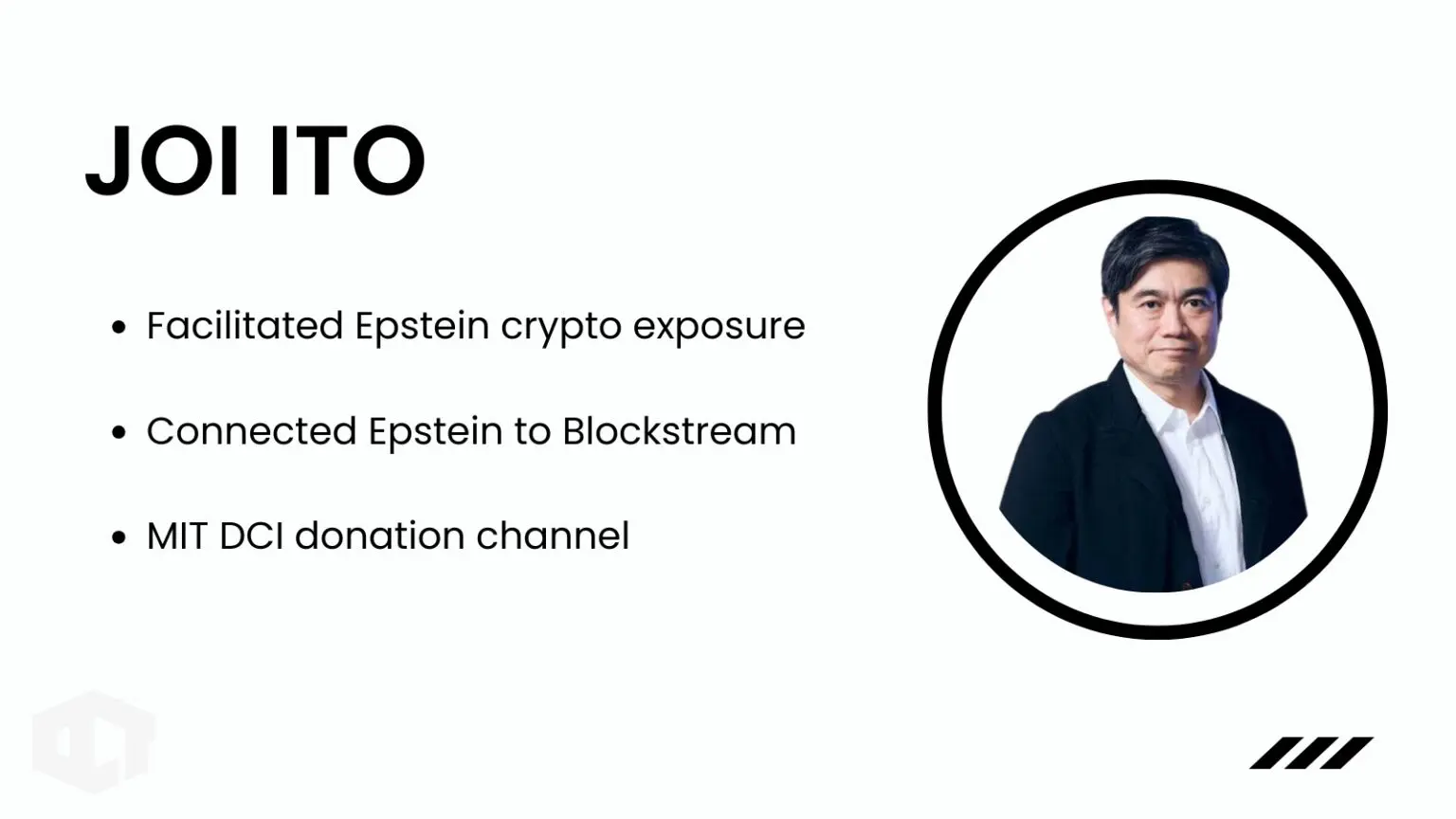
Joi Ito is a prominent Japanese entrepreneur and investor who became globally influential as the director of the MIT Media Lab. In the early 2010s, he also positioned himself as a connector between elite tech networks and emerging frontier technologies like blockchain, which made him a key gatekeeper in the period when Bitcoin still lacked formal institutional support.
Ito appears as a facilitator for Epstein’ crypto exposure. He helped connect Epstein to Blockstream investment structures and supported MIT’s Digital Currency Initiative (DCI). The files mention Epstein-linked donations of roughly $750k–$850k to MIT, partly connected to Bitcoin developer funding gaps in 2014.
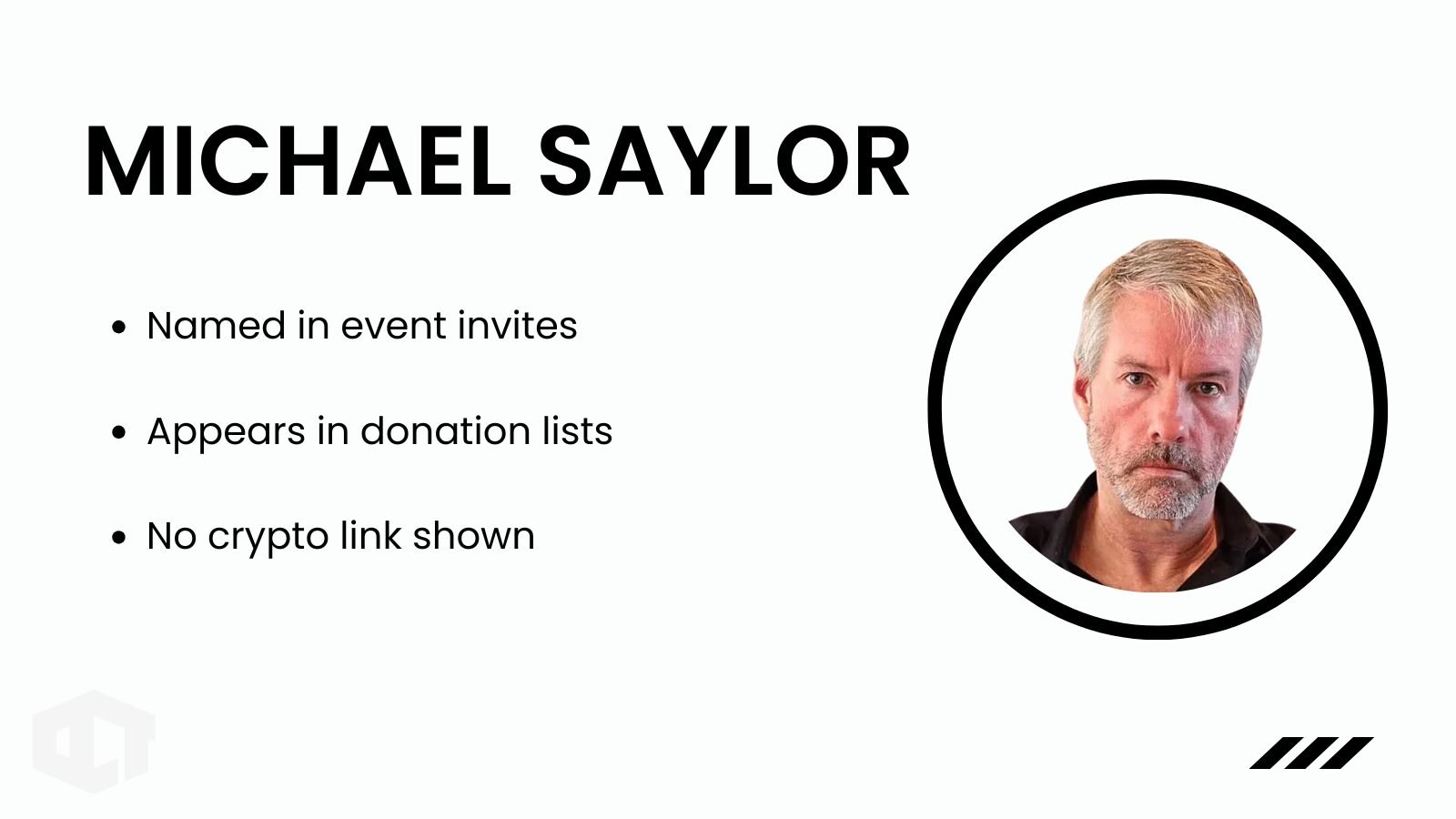
Michael Saylor is best known as the founder of MicroStrategy and the public face of corporate Bitcoin adoption. He pushed Bitcoin as a long-term treasury reserve asset, and his actions influenced institutional perception of BTC more than almost any individual CEO.
Saylor appears lightly, mainly in non-crypto contexts such as social invites or donation lists linked to elite events around 2010. The files describe him as being mentioned in passing, with no meaningful crypto collaboration.
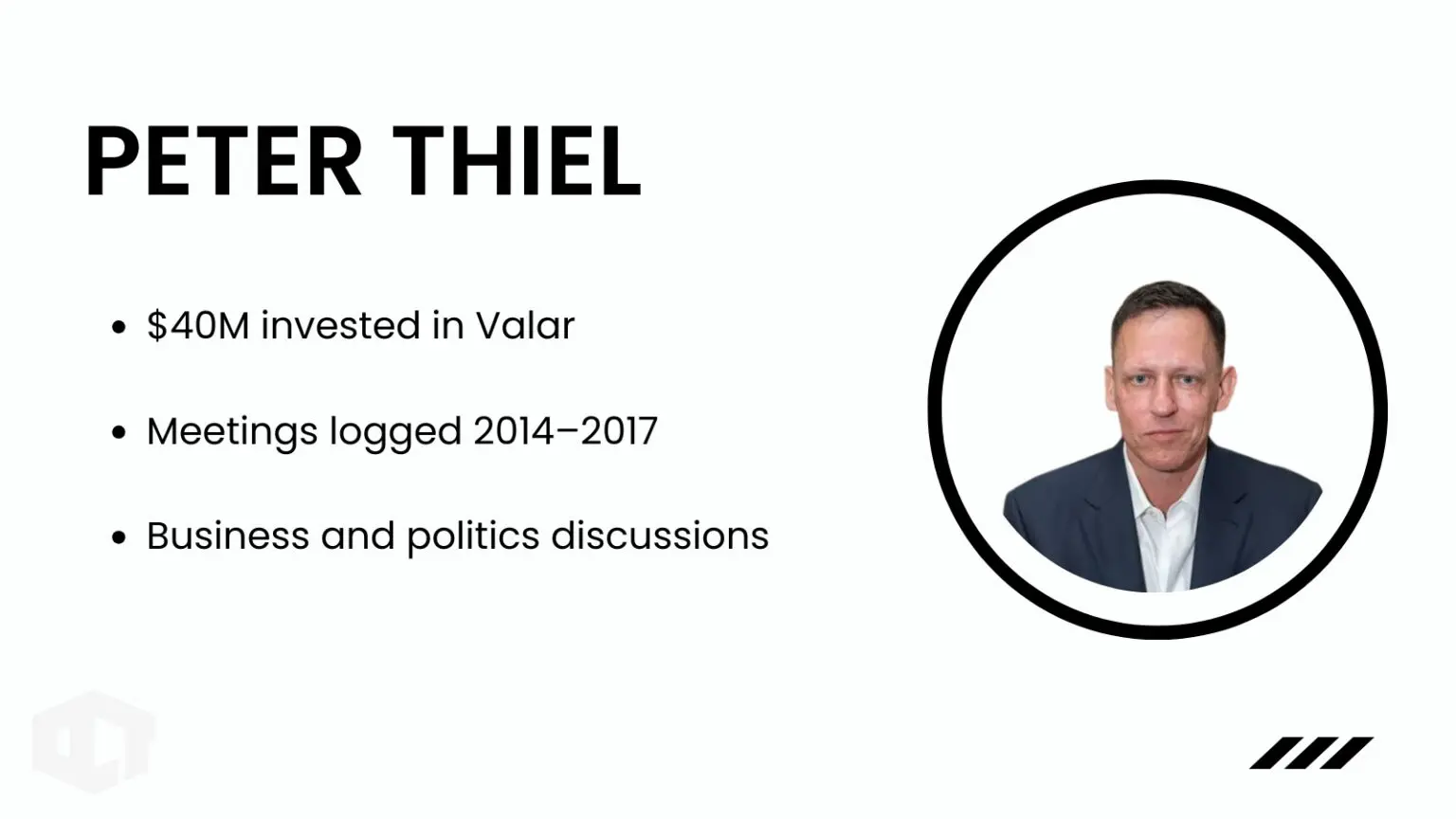
Peter Thiel is one of the most influential venture capital figures in tech and fintech. As a PayPal co-founder and Founders Fund leader, he helped shape early ideological narratives around censorship resistance, sovereignty, and anti-central-bank thinking. His worldview aligned strongly with Bitcoin’s original positioning, which made him an important cultural figure in crypto even outside direct protocol work.
Epstein invested $40 million into Thiel’s Valar Ventures between 2015 and 2016. Logs show scheduled meetings over 2014–2017, where they discussed business and politics. The documents suggest Bitcoin’s implications may have come up, but they do not provide a clear operational link to crypto projects.

Kevin Warsh served as a Federal Reserve Governor during the 2008 crisis era and later became a high-profile figure in policy and central banking debates. Crypto audiences care about Warsh mostly because he has shown openness to innovation narratives and sometimes gets framed as more sympathetic toward Bitcoin as an asset class compared to traditional Fed hawks.
A single 2010 email listed Warsh as a possible guest for a Christmas event. There is no follow-up confirming attendance or any crypto relevance.
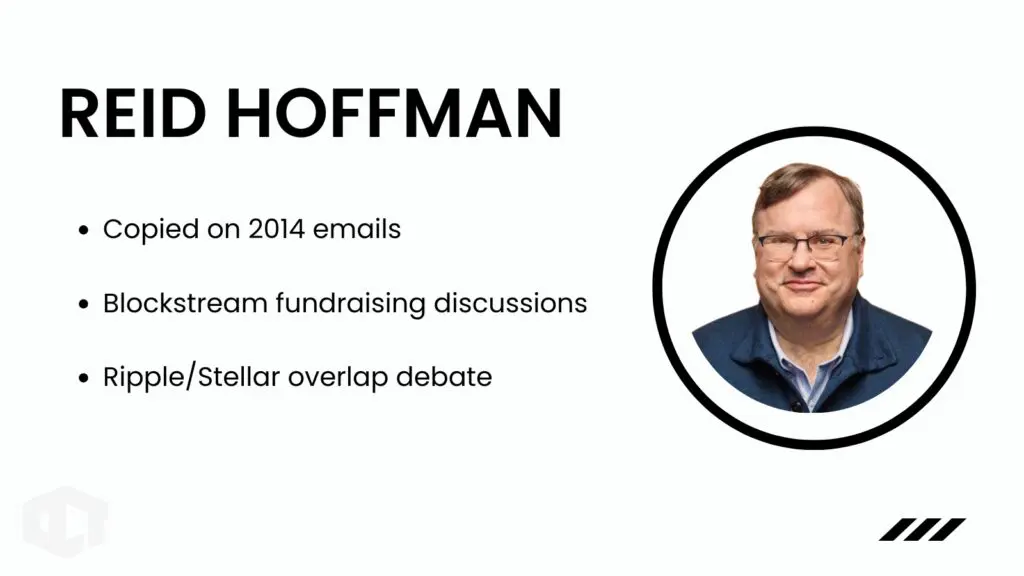
Reid Hoffman is the co-founder of LinkedIn and a major Silicon Valley investor who has backed a wide range of technology and fintech projects. While he is not a “core crypto builder,” he sits inside the same venture capital circles that shaped early crypto fundraising.
The files place Hoffman as a copied recipient in 2014 email threads connected to Blockstream fundraising discussions and investor overlap debates. In these threads, crypto insiders criticized investors who funded Bitcoin infrastructure while also backing Ripple and Stellar, which they viewed as competing networks.
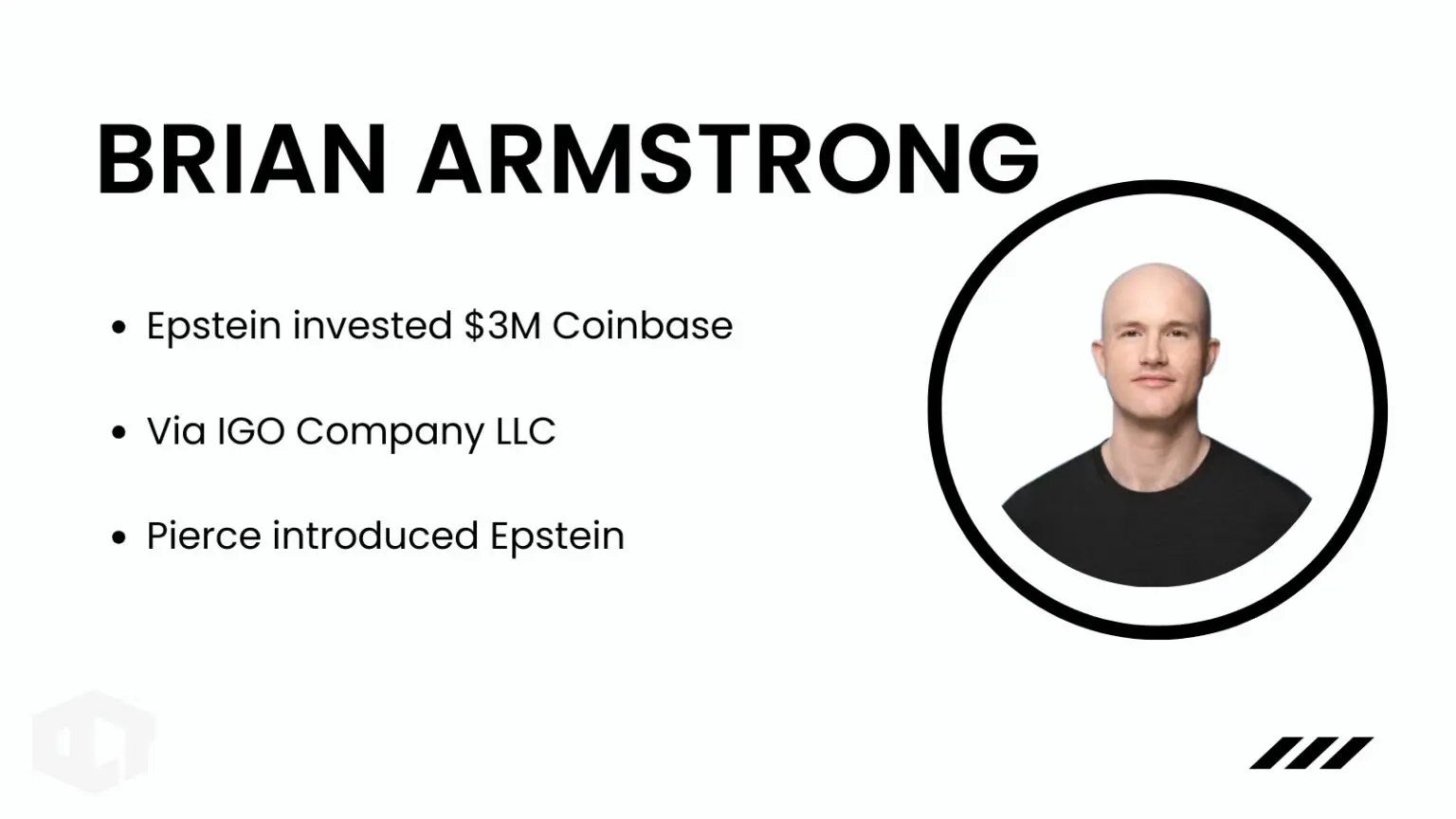
Brian Armstrong founded Coinbase and led its growth into the most important U.S. regulated crypto exchange. Fred Ehrsam co-founded Coinbase and later became a major investor and crypto philanthropist through Paradigm and other ventures. Coinbase’s early fundraising shaped the U.S. exchange landscape and influenced how institutions entered crypto.
The files show Epstein invested $3 million into Coinbase’s 2014 Series C funding round through IGO Company LLC, with Brock Pierce acting as the connecting link. Emails suggest Ehrsam knew about the allocation and supported closing it. Armstrong also appears in later communications tied to the Bitcoin block size / governance debates, where he expressed frustration with a small group of early participants shaping Bitcoin direction.

Bryan Johnson is a tech entrepreneur who sold Braintree to PayPal and later launched projects like Kernel, along with his well-known longevity-focused initiatives. He does not play a central role in crypto, but he sits in the same high-net-worth tech founder ecosystem.
The files include limited correspondence related to meetings or call setups, but they do not show meaningful crypto collaboration or investment strategies linked to Johnson.
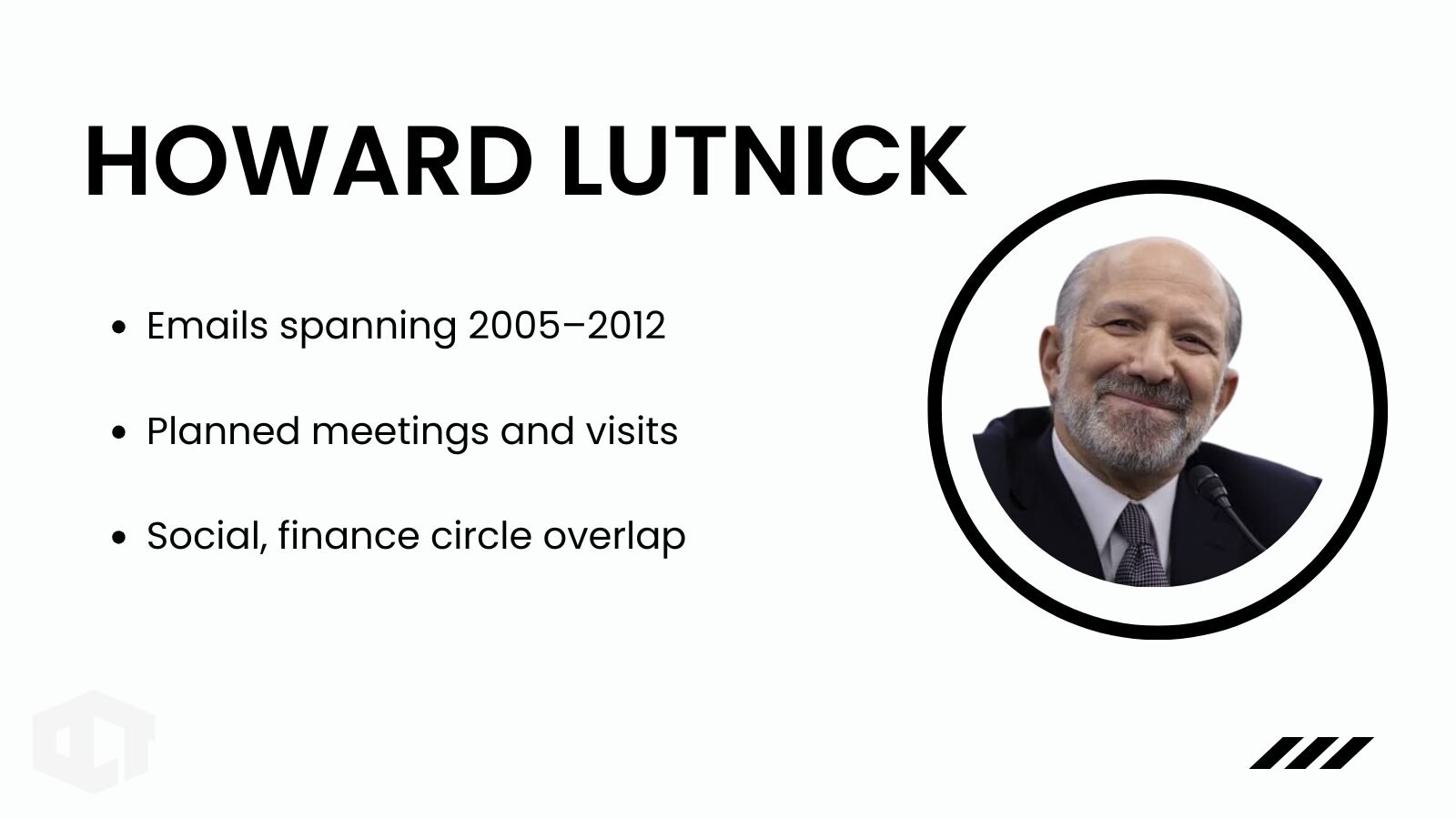
Howard Lutnick is CEO of Cantor Fitzgerald, a major global brokerage and financial services firm. His relevance to crypto increased significantly because Cantor has been tied to stablecoin infrastructure narratives, especially via relationships involving U.S. Treasuries and reserve management that intersect with firms like Tether partners.
Emails and records from 2005–2012 show social planning, shifting tone from distance to friendliness, and mentions of possible visits and meetings involving Epstein locations. The files show a financial-social connection more than a crypto one.
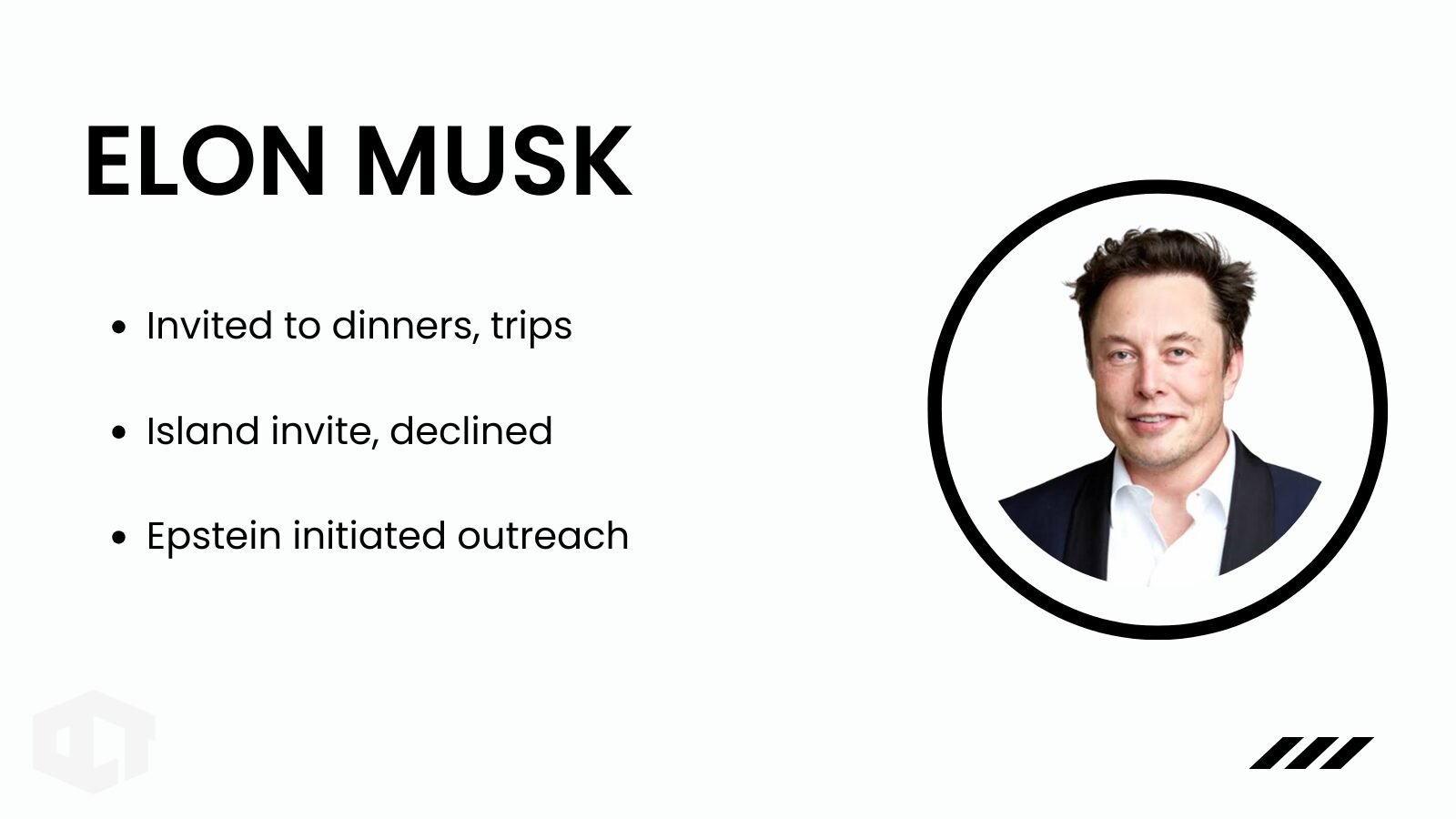
Elon Musk became one of the most influential market-moving figures in crypto history through Bitcoin and Dogecoin narratives, even though he did not build crypto infrastructure directly. His public messaging repeatedly impacted BTC and meme coin market cycles.
The files show Epstein repeatedly trying to invite Musk to dinners, island trips, and parties around 2012–2013. Musk asked about the “wildest” parties in at least one exchange, but records show he declined invitations. Later messages appear more casual and not operational.
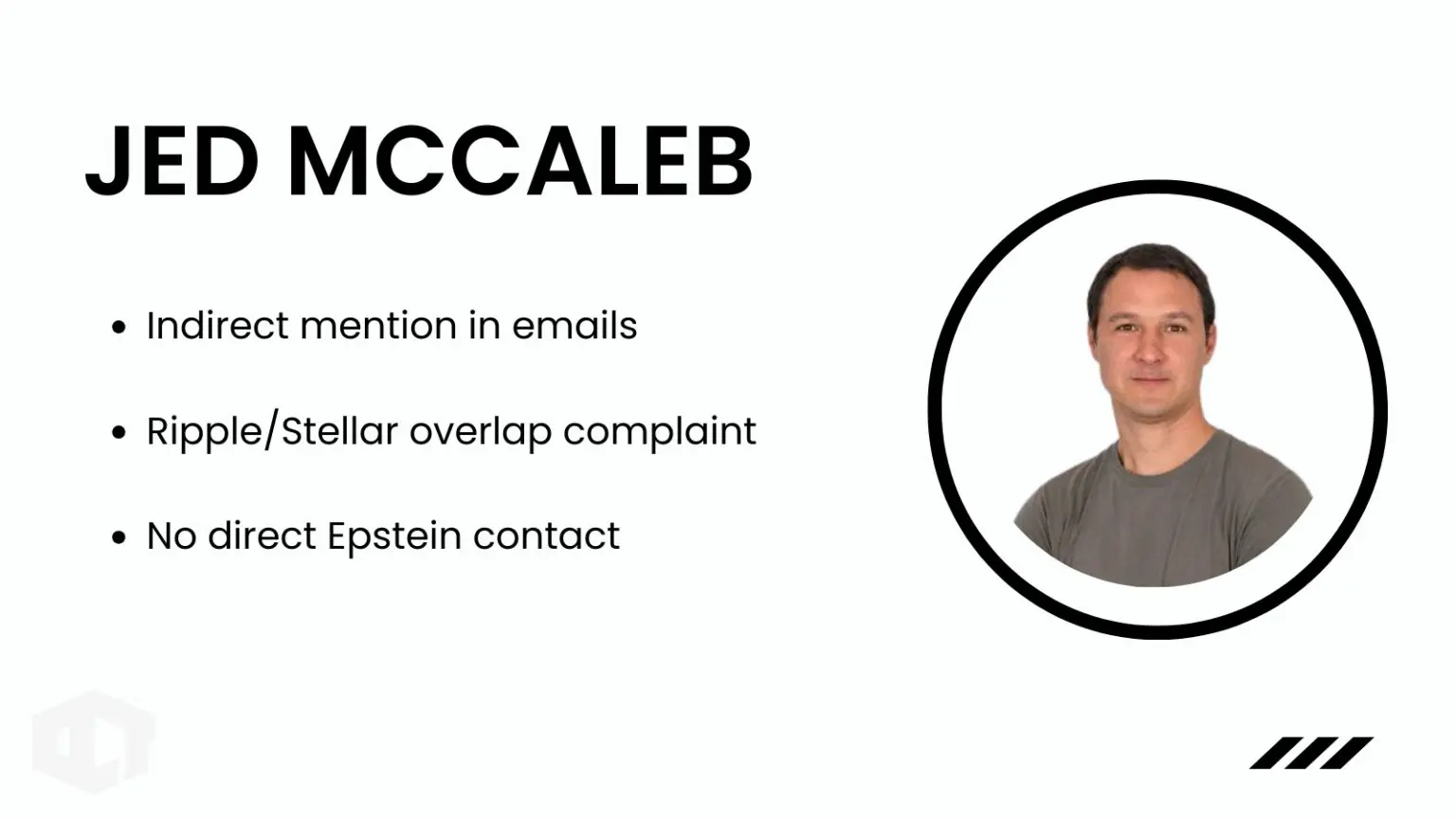
Jed McCaleb played a historic role in crypto by co-founding Ripple and later launching Stellar after leaving Ripple in 2013. Both networks targeted payments and cross-border settlement, and both competed with Bitcoin’s narrative as the dominant global monetary network.
The files only reference McCaleb indirectly. For example, Blockstream-linked emails show industry insiders complaining about investor overlap with Ripple/Stellar ecosystems. However, no evidence shows McCaleb interacting with Epstein directly.
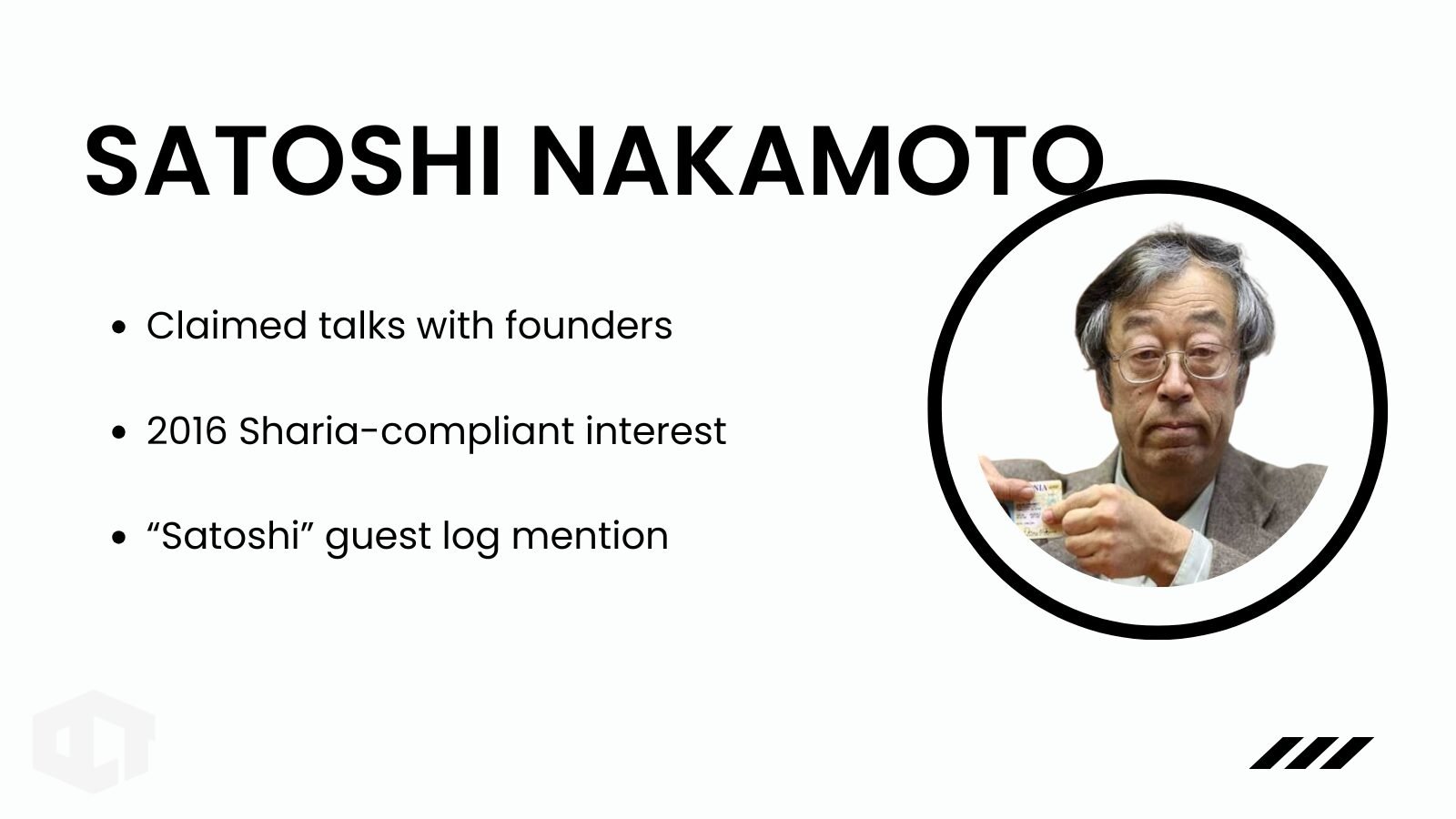
Satoshi Nakamoto is the pseudonymous creator of Bitcoin. Satoshi’s disappearance and anonymity make Satoshi the biggest magnet for speculation whenever powerful outsiders claim “access.”
Epstein allegedly claimed in a 2016 email that he spoke with “some of the founders of Bitcoin.” He also discussed interest in adapting Bitcoin frameworks for Sharia-compliant use cases or a Middle Eastern digital currency. Additionally, event logs reportedly include “satoshi (bitcoin)” references in guest lists, but those appear unreliable and likely symbolic or erroneous rather than evidence of identity.

Larry Summers is a former U.S. Treasury Secretary, former Harvard president, and one of the most influential economists inside U.S. policy networks. He has commented on Bitcoin, digital currencies, and blockchain regulation across multiple cycles.
Summers appears frequently in emails, including after Epstein’s 2008 conviction, reflecting an ongoing elite-network relationship. Topics include politics and economic discussions, plus personal matters. Some crypto-adjacent mentions place Summers near discussions involving Bitcoin’s future, and logs connect him to entries referencing “satoshi (bitcoin)” or “Bitcoin founders,” although the credibility of those logs remains unclear.
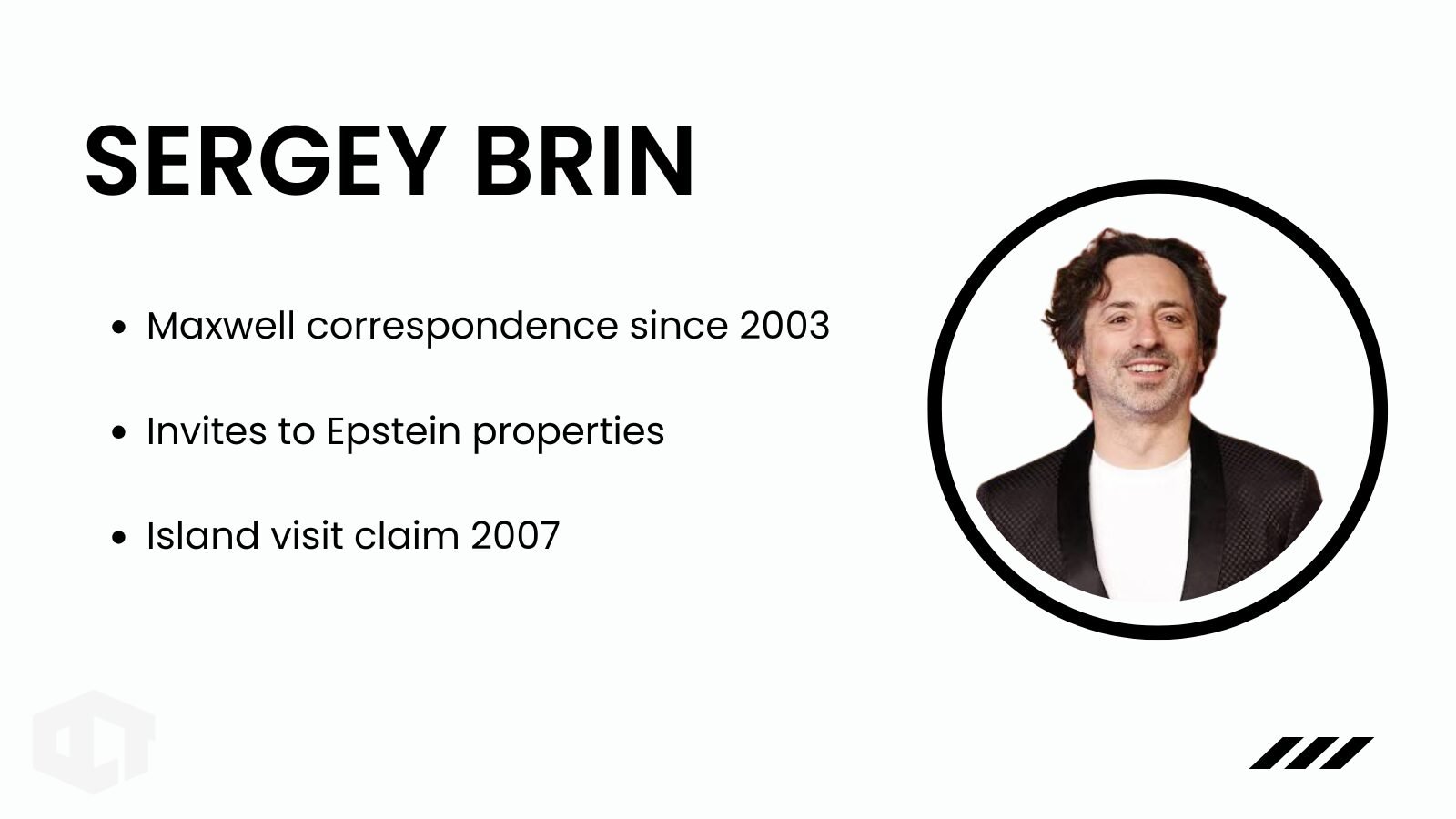
Sergey Brin is Google’s co-founder and one of the most prominent figures in Silicon Valley’s history. While Google’s ecosystem explored blockchain tools and cloud services for crypto companies, Brin’s direct role in crypto remains limited.
The files show correspondence involving Ghislaine Maxwell dating back to 2003, including invites to dinners and events at Epstein-associated properties. Documents also suggest at least one visit to Epstein’s island around 2007 per prior accuser claims and supporting social references. However, the files do not show crypto-specific coordination involving Brin.
The biggest risk is reputational because the Epstein files crypto storyline creates headlines regulators and critics can weaponize to justify tougher oversight. Even without proven criminal wrongdoing, these associations can reduce trust among newer market participants, especially retail traders, at a time when adoption accelerates and regulation tightens globally.
In addition, these files can reignite older narratives around “capture” in crypto, including arguments that Bitcoin’s evolution was influenced by elite capital networks rather than purely open-source communities. At the same time, it is important to recognize the limitations of what the documents actually prove. Many mentions in the files appear casual, indirect, or purely logistical rather than operational.
Several claims are self-reported and remain unverified, and the dataset itself may be incomplete or lacking critical context. Moreover, online discussions often exaggerate or distort details for engagement, which amplifies conspiracy narratives beyond what the evidence supports. Therefore, although the optics are powerful and the reputational impact is real, the documents do not establish that Epstein controlled Bitcoin, influenced protocol governance, or directed crypto industry outcomes in any provable way.
The Epstein files reveal a hidden layer of crypto history, where elite networks overlapped with early blockchain funding, infrastructure bets, and internal rivalries. They show Epstein investing in Coinbase, entering Blockstream’s orbit through MIT-linked channels, and participating in conversations about strategic competition with Ripple and Stellar.
At the same time, most people named in the documents have denied wrongdoing, and the files described here do not show clear evidence of operational control over Bitcoin or the broader crypto ecosystem.



Top 6 ZachXBT Revelations That Shocked The World
AI Agent Payments Explained: Circle Nanopayments and the x402 Protocol
Top 7 Projects in the World Liberty Financial (WLFI) Portfolio
Where Crypto Actually Makes Money in 2026?
Top 6 ZachXBT Revelations That Shocked The World
AI Agent Payments Explained: Circle Nanopayments and the x402 Protocol
Top 7 Projects in the World Liberty Financial (WLFI) Portfolio
Where Crypto Actually Makes Money in 2026?