

Loading Ratings...



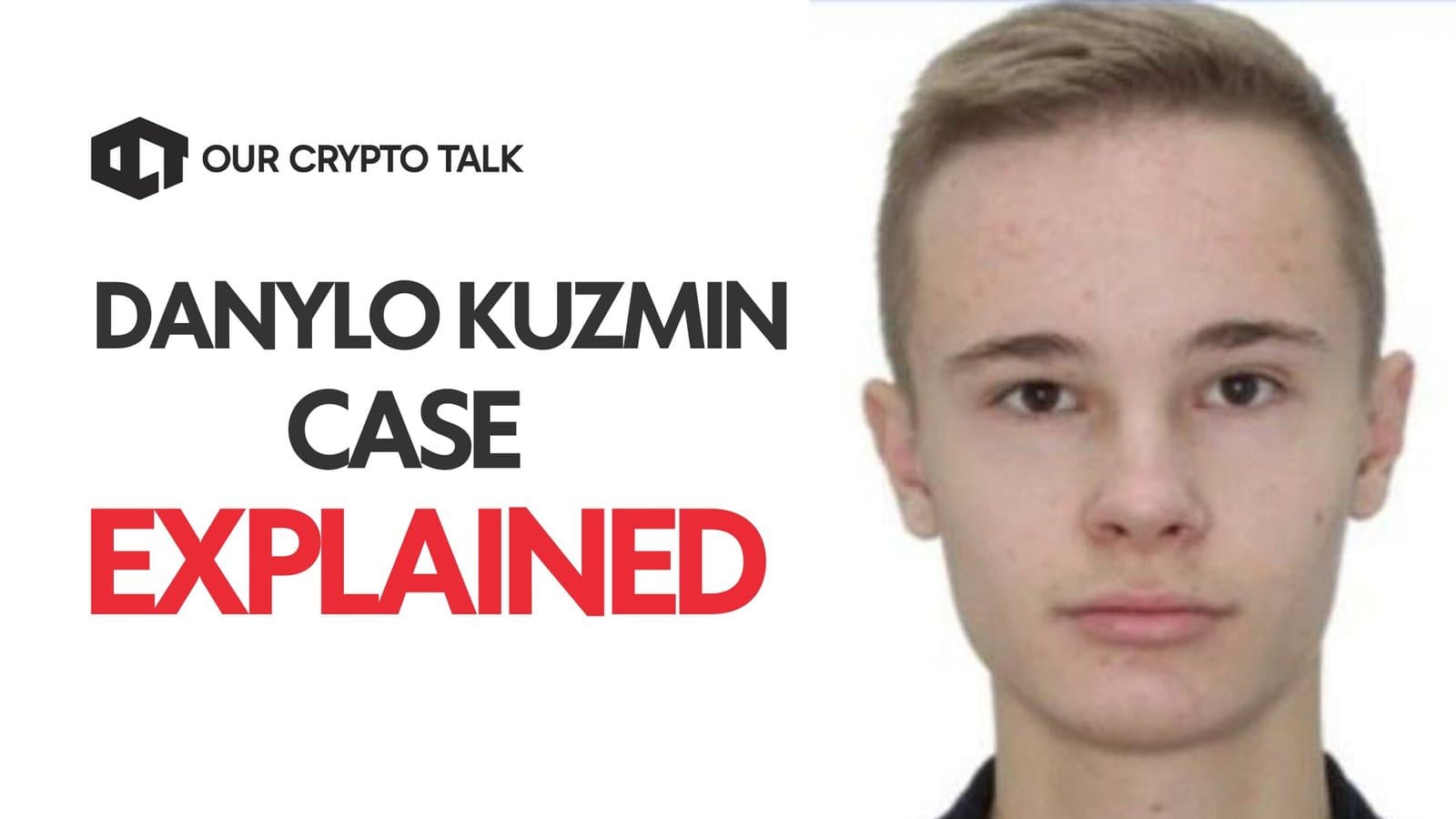
The Danylo Kuzmin robbery and murder explained, revealing how crypto exposure and physical security risks led to a fatal crime in Vienna.

Author: Akshay
Published On: Wed, 24 Dec 2025 07:44:08 GMT
The killing of Danylo Kuzmin in Vienna stands as one of the most disturbing crypto-related crimes reported in 2025.
What initially appeared to be a violent robbery soon revealed deeper risks associated with cryptocurrency ownership and personal safety. The case drew international attention not only because of its brutality, but also because of the method behind the crime.
Unlike exchange hacks or online fraud, this incident involved direct physical violence used to force access to digital assets.
As cryptocurrency adoption expands globally, incidents like this underline the importance of understanding risks beyond online security.
Digital assets may exist on blockchains, but control over them ultimately resides with people in the physical world. This explained article breaks down who Danylo Kuzmin was, how the crime unfolded, why cryptocurrency was central to the motive, and what broader lessons this case offers for crypto holders worldwide.
Danylo Kuzmin was a 21-year-old Ukrainian national living and studying in Vienna, Austria, Born in 2004, he came from a prominent Ukrainian family with public visibility. His father, Serhii Kuzmin, served as the deputy mayor of Kharkiv, Ukraine’s second-largest city. Despite this connection, Danylo himself was not involved in politics, governance, or public decision-making.
Like many young Ukrainians, he chose to pursue higher education abroad.
Vienna offered academic opportunity, personal freedom, and access to a global student community. Friends and acquaintances described him as living a largely ordinary student life.
He attended university, socialized with classmates, and managed his own living arrangements. However, one detail distinguished him from many peers.
It was widely known within his social and academic circles that he held significant cryptocurrency assets. This information was not shared maliciously, but casually.
In the context of digital assets, such visibility can create severe and unforeseen risks.
Vienna is widely regarded as one of Europe’s safest cities.
It consistently ranks high for quality of life, public safety, and infrastructure. For international students, the city often feels insulated from serious crime. Danylo lived in a comfortable apartment and appeared well integrated into student life.
He reportedly spoke openly about cryptocurrency investments among friends and classmates.
Such discussions are common in tech-aware and financially curious environments.
However, cryptocurrency differs fundamentally from traditional forms of wealth, It does not rely on banks, custodians, or institutional oversight.
Control over crypto assets depends entirely on private keys or wallet access.
Anyone who gains that access can move funds instantly and irreversibly. Once individuals become publicly associated with digital wealth, they may attract attention beyond their immediate circles. In Danylo’s case, trust within academic and social settings created a false sense of security.
On the evening of November 25, 2025, Danylo agreed to meet a fellow university student.
The meeting location was near an underground parking area close to the Sofitel SO/Vienna hotel.
The individual he met was later identified as a 19-year-old classmate, Security camera footage later confirmed that the meeting took place as planned.
What Danylo believed was a routine interaction quickly escalated into violence.
Investigators later concluded that the encounter was a carefully planned ambush. Physical evidence at the scene suggested the attack began almost immediately.
Bloodstains found in the parking area indicated a sudden and forceful struggle.
Danylo was quickly overpowered. He was forced into his own vehicle against his will. At this point, the crime escalated from robbery to kidnapping. From that moment onward, Danylo was under the complete control of his attackers.
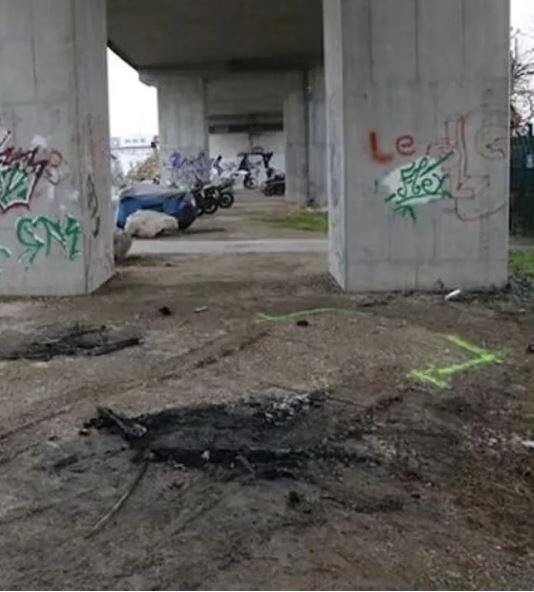
Following the abduction, Danylo was subjected to prolonged physical violence and Authorities later confirmed he endured repeated beatings over several hours.
The violence was not random or impulsive and It was purposeful and designed to extract compliance.
The attackers were focused entirely on accessing his cryptocurrency holdings and They demanded wallet access and authorization for transfers.
Under extreme physical and psychological duress, Danylo was forced to comply. He authorized multiple cryptocurrency transactions.
Approximately $200,000 worth of digital assets were transferred to wallets controlled by the attackers.
These transfers were executed rapidly.
Cryptocurrency transactions require only wallet authorization,
Once confirmed on the blockchain, they cannot be reversed, paused, or disputed, and
This irreversible design feature made cryptocurrency an ideal target for coercive crime.
Once the transfers were complete, the attackers had achieved their financial objective.
After securing the cryptocurrency, the attackers attempted to eliminate evidence and They drove Danylo to Vienna’s Donaustadt district.
Their actions afterward suggested a deliberate effort to destroy forensic traces.
The vehicle was doused with gasoline and set on fire also the authorities later discovered Danylo’s body inside the burned car.
Emergency services responded to reports of a vehicle fire in the early hours of November 26.
The condition of the crime scene confirmed the extreme violence involved where it also pointed to a calculated attempt to conceal the crime.
The discovery marked the end of a crime that unfolded in less than 24 hours.
At the same time, it marked the beginning of an international investigation.
Investigators quickly ruled out any political or ideological motivations behind the crime. Despite Danylo Kuzmin’s family background, authorities found no evidence of political targeting or external influence. The case was determined to be purely financially motivated, with the attackers interested only in cryptocurrency rather than traditional assets.
The perpetrators did not attempt to access bank accounts, credit cards, or physical valuables. Their focus remained entirely on digital assets, reflecting a clear understanding of how cryptocurrency functions. Crypto’s irreversible nature played a central role, as once funds are transferred, no authority has the ability to undo the transaction.
This differs sharply from traditional banking systems, where institutions can freeze accounts, flag suspicious activity, and reverse fraudulent transfers. Cryptocurrency offers none of these protections by design, placing full control in the hands of whoever holds wallet access. This structural reality made cryptocurrency central to both the planning and execution of the crime.
Police investigations revealed that the attackers had prior knowledge of Danylo Kuzmin’s assets, gathered through personal conversations and social interactions. The perpetrators did not rely on hacking, malware, or technical exploits, instead exploiting trust and familiarity within Danylo’s social circle. By arranging the meeting through a known classmate, suspicion was minimized, leaving Danylo with no immediate reason to feel threatened.
The location was selected deliberately, with an underground parking area limiting visibility and escape options. This level of planning reflects a broader trend in crypto-related crimes, where social engineering increasingly replaces technical exploitation. In this case, the technology was never breached; the individual was.
Within days of the murder, Austrian authorities identified two suspects believed to be directly involved in the crime. One was the university classmate who arranged the meeting, while the second was a 45-year-old accomplice with prior government service experience. Investigators determined that both individuals played active roles in planning and carrying out the attack.
Shortly after the murder, the suspects fled Austria and crossed into Ukraine on November 27. Law enforcement agencies coordinated across borders to track their movements, leading Ukrainian special police to arrest them near Odesa on November 29. During the arrests, authorities recovered large sums of cash and froze additional assets linked to the crime.
The speed of the arrests highlighted effective international police cooperation. However, the case soon encountered legal and jurisdictional complexities that would shape the next phase of prosecution.
Because the suspects are Ukrainian nationals, extradition to Austria was not straightforward, leading authorities to transfer prosecution to Ukraine. Both suspects remain in pretrial detention and face charges including premeditated murder, robbery, and torture. If convicted, they could receive life sentences under Ukrainian law, though the legal process is expected to be lengthy and complex.
The case also highlights a broader challenge in crypto-related crime. Digital assets can move across borders within seconds, while legal accountability remains tied to national jurisdictions. This mismatch often complicates investigation and prosecution in international cases.
The murder of Danylo Kuzmin fits into a broader pattern known as crypto wrench attacks, where physical force is used to obtain access to cryptocurrency. The term comes from a well-known security principle that shows how coercion can defeat even the strongest encryption. Instead of hacking wallets, attackers target individuals directly, using threats, assault, or kidnapping in place of malware and phishing.
Security researchers recorded dozens of such attacks globally in 2024 and 2025, highlighting a growing trend as crypto wealth increases. These incidents reveal a critical limitation of technical security measures, as human vulnerability often becomes the weakest link in the security chain.
Traditional finance distributes risk across institutions, with banks, regulators, and insurers providing multiple layers of protection. Cryptocurrency, by contrast, concentrates risk entirely on the individual holder, as private keys grant absolute and irreversible control over funds. Anyone with access can move assets instantly, and there are no built-in safeguards against coercion. This reality makes physical security a core component of crypto ownership, where protecting keys ultimately means protecting oneself.
The risk also extends beyond the individual holder to their surrounding environment. Anyone aware of a person’s crypto holdings can unintentionally increase their exposure to danger. In Danylo Kuzmin’s case, shared knowledge within social circles played a direct role in enabling the crime.
Privacy is the most critical lesson from cases like this, as publicly discussing crypto holdings creates unnecessary exposure. Crypto users should avoid sharing asset sizes or investment success, since even casual conversations can carry serious risk. Layered security becomes essential for larger holdings, and tools such as hardware wallets, multisignature setups, and asset separation can help reduce potential damage.
Operational awareness matters just as much as technology. Daily routines, travel habits, and social behavior all influence personal risk, especially for individuals managing their own assets. Crypto security is not only digital; it is deeply personal and highly situational.
Incidents like this raise important questions about mainstream crypto adoption, particularly as new users may underestimate the physical risks tied to self-custody. Technical security education alone is not enough, as users must also understand real-world threat models and personal safety considerations. While custodial services and insurance solutions may expand as adoption grows, self-custody ultimately places full responsibility on individuals. The case of Danylo Kuzmin highlights a difficult reality: financial sovereignty comes with serious obligations.
Danylo Kuzmin’s death was a preventable tragedy that shows how exposure around digital wealth can escalate into real-world violence. While this case is not an argument against cryptocurrency, it highlights the serious personal responsibilities that come with financial self-custody. As digital assets become more widespread, understanding both technical and physical security risks is essential. Kuzmin’s story serves as a cautionary reminder that crypto safety must extend beyond code into everyday life.