Loading Search...


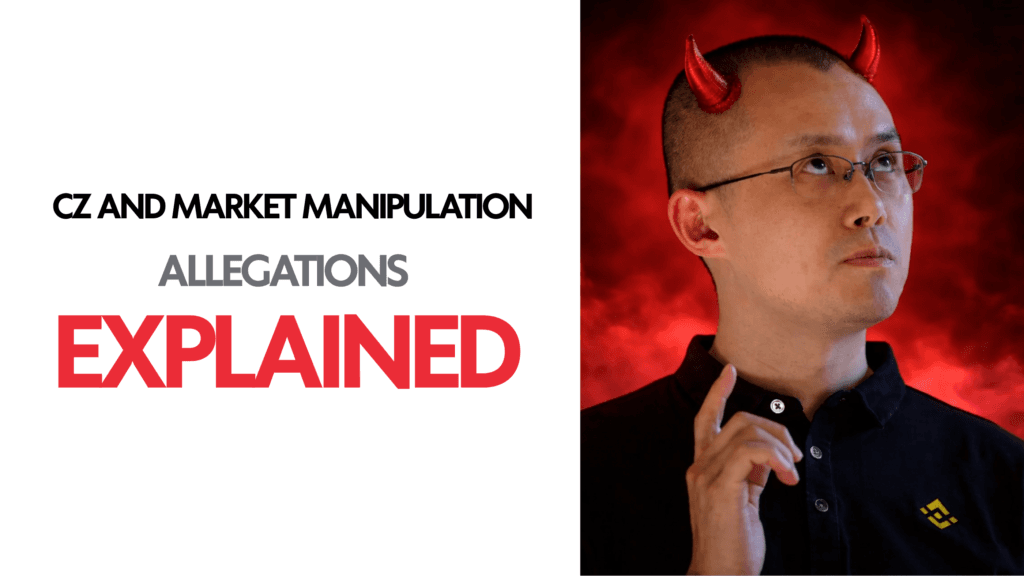
CZ is being attacked all over social media for market manipulation. In this article, we explore the WHAT, WHY and HOW?

Author: Sahil Thakur
Changpeng “CZ” Zhao, the founder of Binance, has recently become a major target of criticism within the crypto community for market manipulation. Many users across social media accuse CZ and Binance of manipulating markets, exploiting users, and contributing to major crypto price crashes. This article explores those repeated allegations. It also reviews community sentiment on platforms like X and Reddit. In addition, it examines Binance’s alleged role in the October 10, 2025 flash crash and the late January 2026 market crash. Finally, it looks at why CZ faces intense backlash and what evidence, if any, supports these claims.
For years, people have speculated that CZ and Binance engage in self serving market tactics. Recently, an anonymous analyst known as Strong summarized many of these accusations in a viral X thread. According to Strong and other critics, Binance allegedly pumped and dumped Initial Exchange Offerings between 2017 and 2019. They claim Binance inflated token prices and later sold large holdings for profit. Furthermore, some believe Binance required projects to provide a portion of their token supply as a listing condition. Critics argue Binance then sold those tokens on the open market, which increased selling pressure. As a result, prices often dropped sharply. Many critics also believe this behavior continued in later years. They claim Binance influenced major market declines in 2021 and 2022 for its own benefit.
Another common accusation focuses on Binance’s treatment of competitors. Some community members believe Binance uses its market power to weaken rival exchanges and projects. Strong’s thread described Binance as taking an aggressive approach to eliminate competition. For example, several Reddit users suggested Binance may have triggered market instability to harm emerging rivals. Some even compared this theory to claims that Binance played a role in FTX’s collapse in 2022. In a similar way, one Reddit theory suggested Binance caused the October 2025 crash to damage Hyperliquid, a growing exchange competitor. Although these claims remain speculative, they reveal a broader belief that CZ will take extreme steps to protect Binance’s dominance.
Binance’s token listing process has also drawn heavy criticism. Many community members note that newly listed coins often surge in price before crashing soon after. In fact, one user created a chart tracking more than 200 tokens listed by Binance in 2025. The data showed that nearly every token trended downward over time. The creator labeled this pattern as structural harvesting, which suggests systematic profit taking at the expense of retail traders. Moreover, critics have focused on Binance Alpha, a platform for early stage project launches. Shared data indicates that many Binance Alpha tokens rose between 10 and 100 times in value before collapsing. Consequently, many users suspect insiders and market makers sell during these spikes. Retail investors then absorb the losses.
ASTER, the token of Aster DEX launched in late 2025, often appears as a key example. CZ actively promoted ASTER and even posted the term Astober before its listing, which many interpreted as a bullish signal. Soon after the Binance listing, ASTER’s price surged. However, the token later fell more than 80 percent from its peak. Community members allege that Binance linked wallets sold large amounts of ASTER during the price increase. As a result, critics believe insiders secured profits before the crash. Since similar patterns appear across multiple Binance listings, many traders now accuse Binance of exploiting retail participants.
<<-aster-2->>
From Shadowy to Brazen: The anonymous analyst Strong claims CZ’s alleged market actions have shifted in style. In the past, these actions appeared more covert. However, Strong argues they have become more open and aggressive over the last six months. One explanation focuses on CZ’s changing regulatory situation. Notably, CZ faced a U.S. conviction related to money laundering. He later served a short sentence. After that, he received a pardon from Donald Trump following Trump’s 2025 inauguration. Because of this shift, Strong suggests CZ may have felt less restricted and more confident in market activity. Furthermore, the analyst pointed out that traders opened large short positions just hours before the October 10, 2025 crash. This timing raised suspicions of prior knowledge. As a result, many traders now view CZ as a powerful figure who influences crypto prices behind the scenes. Over time, repeated rumors and incidents have strengthened this perception.
In late January 2026, public anger toward CZ surged across Crypto Twitter. Searches of CZ’s name showed timelines filled with criticism and insults. Many users labeled him a scammer. Others demanded legal consequences. Some even claimed he was far worse than Sam Bankman-Fried. In addition, a viral graphic ranked CZ among the top so called crypto villains. This collective reaction framed him as the main figure responsible for traders’ losses. English speaking communities expressed especially strong reactions. Meanwhile, Chinese language discussions reflected similar frustrations, although the tone appeared slightly more restrained.
Several factors fueled this emotional response. Many traders faced ongoing losses during the bear market. Consequently, frustration built across the community. A Chinese crypto media outlet observed that bear markets often push people to find someone to blame. In recent days, many directed that blame toward CZ. Whether or not any organized campaign existed, CZ became a convenient target for widespread disappointment. Not only retail traders expressed anger. Industry leaders also added commentary.
On January 28, 2026, Star Xu, founder of rival exchange OKX, noted that the October 10 incident caused lasting damage to the industry. Although he did not mention CZ directly, many readers interpreted the statement as indirect criticism. As a result, this added a bit of legitimacy to public frustration.
The Buy and Hold Tweet Backlash: A key trigger for January’s surge in criticism came from CZ’s own post. On January 25, CZ encouraged followers to buy and hold during periods of volatility. He stated that long term holding often outperforms complex strategies, although he added that the message did not count as financial advice. However, many Binance listed coins had already suffered heavy losses. Because of this context, several users reacted negatively. They argued that such advice ignored the reality that many tokens continued to decline. Consequently, traders who followed that strategy often remained at a loss.
Due to the backlash, CZ clarified his statement on January 27. He explained that buy and hold does not apply to every asset. He also noted that holding every cryptocurrency would likely lead to poor results since only a small percentage of projects succeed. Despite this clarification, criticism continued. By January 28, CZ publicly addressed what he described as distorted narratives. He suggested that many unfamiliar accounts posted nearly identical messages. Therefore, he believed a coordinated campaign might exist. Supporters echoed this belief and questioned whether organized groups aimed to damage Binance’s reputation.
Reddit Discussions: Conversations on Reddit showed similar divisions. In one popular discussion about the October 10 crash, users shared a wide range of theories. Some participants believed market mechanics alone caused the event. They pointed to excessive leverage and liquidation cascades as common triggers. However, others suspected deliberate action. One user suggested Binance may have targeted large traders for forced liquidation. Another theory proposed that Binance aimed to weaken a competing platform through market disruption. Although no clear evidence supports these claims, their popularity highlights widespread skepticism.
Overall, social sentiment remains sharply divided. Many users openly blame CZ for market instability. At the same time, others view the accusations as fear driven speculation. Supporters argue that negative narratives may come from competitors or traders holding short positions. Some even suggest coordinated efforts aim to weaken Binance and influence broader crypto markets. As a result, the community remains split. Critics view CZ as a powerful manipulator. Supporters see him as an unfair target during a difficult market cycle.
The crypto market crash on October 10 and 11, 2025 became a major focal point for accusations against Binance. Many now consider it one of the most severe meltdowns in crypto history. On that day, Bitcoin dropped from around 122,000 dollars to 104,000 dollars within hours. This represented a sudden decline of about 16 percent. At the same time, many altcoins performed even worse. Some lost between 50 and 80 percent of their value almost overnight. In total, liquidations across the market reached an estimated 19 to 28 billion dollars. This marked the largest leveraged wipeout on record.

Src: FTI Consulting
At first, some observers pointed to macroeconomic events. Specifically, they referenced a sudden announcement by Donald Trump regarding a potential 100 percent tariff on China. However, attention soon shifted toward Binance. Evidence suggested that Binance’s platform stood at the center of the chaos.
Binance later confirmed that a software issue and oracle pricing error contributed to the crash. Between October 6 and October 14, Binance updated its price oracle system, which supplies asset prices to its margin platform. During this period, attackers targeted a lesser known stablecoin called USDe. They reportedly sold about 90 million dollars worth of USDe. As a result, Binance’s internal system briefly valued USDe at 0.65 dollars instead of its intended 1 dollar peg.
Because Binance allowed USDe and other yield bearing tokens as collateral, this pricing failure had immediate consequences. Traders suddenly saw the value of their collateral drop. Consequently, many positions no longer met margin requirements. Automatic liquidations followed across the platform. This created a rapid cascade effect. Selling pressure intensified and fueled a broader market decline.
Importantly, other exchanges continued to price USDe at 1 dollar. Therefore, the issue appeared isolated to Binance’s internal systems. This detail raised serious concerns about Binance’s pricing safeguards and risk controls.
As the situation worsened, Binance’s platform struggled to handle the surge in activity. Many users reported delays and unresponsiveness. Because of this, traders could not execute stop losses or reduce exposure. They watched their positions collapse in real time. What started as a localized issue quickly expanded into a global event due to Binance’s large market share.
Within hours, billions of dollars in value disappeared. Later analysis suggested that malicious actors may have deliberately targeted Binance’s temporary vulnerability. Some experts described the incident as a coordinated attack. However, no public evidence has confirmed this theory. Regardless of intent, the consequences proved severe for traders worldwide.
Following the crash, Binance announced a compensation plan for affected users. However, the offer included strict conditions. Binance stated it would compensate traders who could not execute orders due to technical failures. At the same time, it refused to cover losses caused by normal market movements or unrealized profit and loss.
In practice, many liquidated traders received little or no reimbursement. Binance categorized most losses as market driven rather than technical. This decision angered many users. They argued the crash resulted directly from Binance’s internal failures, not typical volatility. Social media discussions quickly filled with complaints that Binance’s response failed to address the scale of the damage.
Some users also accused Binance of favoring influential figures during compensation. They claimed certain large traders or public personalities received better treatment than ordinary users. Although Binance did not confirm these claims, the perception of unequal treatment deepened community frustration.
Beyond confirmed technical issues, additional theories circulated within the community. Some traders reported unusual activity involving market maker accounts. For example, obscure tokens reportedly experienced sudden and extreme price spikes during the broader crash. Others observed unusual promotional activity around specific coins while the rest of the market declined.
Additionally, analysts noticed a large volume of short positions opened shortly before the crash. This pattern raised questions about possible advance knowledge. Some wondered whether attackers, insiders, or third parties anticipated the event. Despite widespread speculation, no concrete proof has surfaced publicly.
Ultimately, the October 2025 crash significantly damaged trust in Binance. The event exposed weaknesses in Binance’s margin pricing system. It also demonstrated how Binance’s market dominance can amplify localized failures into global crises. For many traders, this incident shifted perceptions of CZ. Previously, many viewed him as a respected industry leader. After the crash, some began to see him as a figure surrounded by controversy and suspicion.
One commentator noted that the event created a simple narrative people could easily believe. Many summarized the incident as Binance’s system glitch causing widespread liquidations. In the absence of a clear single cause, Binance became the symbolic focus of blame. As a result, the October crash continues to influence how traders view Binance’s role in the broader crypto market.
The anger from October carried into the next market downturn. In late January 2026, crypto markets faced another sharp decline. Once again, many traders blamed CZ. Around January 29 and 30, Bitcoin fell to roughly 81,000 dollars. This marked its lowest level in more than two months. The move represented about a 6 percent single day drop. At the same time, major altcoins recorded similar or larger losses. As a result, futures markets saw an estimated 740 to 800 million dollars in liquidations. Over leveraged long positions disappeared quickly.
Mainstream media linked the sell off to macroeconomic signals. For example, the U.S. Federal Reserve indicated no immediate interest rate cuts. This announcement unsettled investors across markets. Meanwhile, tech stocks also declined. Therefore, analysts suggested a broad risk off environment rather than a crypto specific event.
However, the crypto community developed a different narrative. Many traders still felt traumatized by the October crash. Because of this, they quickly suspected Binance’s involvement again. Some observers pointed out that BNB and several Binance listed tokens showed particular weakness. Consequently, they argued Binance related selling pressure may have intensified the downturn.
Others revisited CZ’s recent social media statements. Just days before the drop, CZ encouraged users to buy and hold during volatility. Critics claimed this advice appeared poorly timed. Some even speculated that insiders might have reduced exposure while public messaging encouraged confidence. Although no evidence supported these claims, they spread widely across online discussions.
On social media, frustration resurfaced rapidly. Posts criticizing CZ increased as Bitcoin’s price fell. Many users connected the January decline directly to unresolved anger from October. The renewed downturn acted as a trigger. It revived earlier grievances and amplified criticism.
A media appearance added further momentum. During a January 26 interview, Cathie Wood discussed Bitcoin’s recent weakness. She referenced the October Binance software glitch and its large scale forced liquidations. According to Wood, that event continued to weigh on market confidence. Hearing such comments from a well known investor strengthened public suspicion toward Binance.
In response, Binance co founder Yi He argued that Wood’s perspective lacked direct experience with Binance’s platform. Nevertheless, her remarks had already influenced public opinion. As prices continued to fall, Wood’s comments validated existing frustration for many traders. Consequently, criticism toward CZ intensified further.
Importantly, the January downturn did not involve a confirmed Binance technical issue. Even so, the event became a catalyst for renewed accusations. Traders who experienced fresh losses revisited earlier concerns. They accused CZ of misleading investors, approving questionable token listings, and failing to prevent systemic risks.
CZ responded by defending himself publicly. He described the wave of criticism as a coordinated campaign fueled by fear and uncertainty. Supporters echoed this view. They suggested organized groups may have amplified negative narratives to weaken Binance or accumulate assets at lower prices. Observers noted unusual patterns on social media, including new accounts posting nearly identical anti CZ messages. These details added credibility to claims of coordinated messaging.

A key reason CZ attracts strong criticism lies in Binance’s dominant role in crypto markets. Binance processes enormous trading volumes. It offers high leverage products. It also lists hundreds of tokens. Therefore, when market disruptions occur, Binance often sits at the center of events.
Binance’s platform design can amplify local issues into global consequences. During the October crash, internal pricing mechanisms contributed to widespread liquidations. Because Binance holds such influence, traders view it as capable of moving markets significantly. As the public face of Binance, CZ naturally receives much of the blame when volatility appears unusual.
Trust in centralized exchanges weakened after several industry collapses. Many traders now approach major platforms with caution. Binance, as the largest exchange, faces the most scrutiny.
CZ’s legal challenges also affected public perception. U.S. regulators investigated Binance extensively. Eventually, CZ pleaded guilty to anti money laundering violations. He paid large fines and served a brief sentence before receiving a presidential pardon from Donald Trump in 2025. This history influenced public opinion. Many people concluded that regulatory violations suggested broader ethical concerns.
Critics often compare CZ to other controversial figures in crypto history. For instance, economist Nouriel Roubini once questioned CZ’s credibility. He even compared CZ’s reputation to that of Sam Bankman-Fried. Such statements reinforced doubts among traders.
Many accusations stem from the belief that Binance benefits financially during volatile events. Critics argue that Binance profits from trading fees regardless of market direction. Additionally, some claim Binance receives significant token allocations during listings. If tokens later decline sharply, traders suffer losses while Binance still benefits.
During liquidation cascades, Binance may also gain through fees and internal market making. After the October crash, many users experienced heavy losses. Meanwhile, Binance remained operational and financially stable. This contrast created a perception of imbalance. Traders felt the platform avoided consequences while users absorbed damage.
Market psychology also plays a significant role. During bull markets, traders often overlook platform concerns. Profits reduce criticism. However, bear markets increase scrutiny. Losses heighten emotions and encourage blame.
The October 2025 incident left unresolved questions for many traders. For months, users felt they lacked clear explanations. When public figures later referenced the event, frustration resurfaced. The January downturn intensified those emotions. Consequently, CZ became the symbolic figure associated with broader market pain.
Finally, competitive dynamics may influence public narratives. Binance’s rivals benefit when its reputation weakens. After recent volatility, decentralized exchanges and alternative platforms reported higher trading volumes. Some observers interpret this shift as traders exploring alternatives.
At the same time, investment decisions by major firms raised questions about impartiality. For example, while criticizing Binance, Cathie Wood’s firm also increased holdings in Coinbase, a competing exchange. Some supporters argue this timing suggests potential bias.
Additionally, CZ himself noted patterns suggesting coordinated criticism. Many unfamiliar social media accounts posted similar messages. These details indicate that organized campaigns may contribute to negative sentiment.
Overall, multiple factors explain why accusations against CZ intensified. Binance’s size makes it a natural focal point. Regulatory history affected credibility. Market losses fueled emotional reactions. Finally, competitive interests may amplify criticism. Together, these elements created an environment where suspicion toward CZ gained momentum quickly.

Some accusations rest on verifiable evidence. These mainly involve technical failures and observable market patterns. The October 10, 2025 crash stands as the clearest example. Binance acknowledged a pricing oracle bug and later offered limited compensation. This admission confirmed that internal system failures contributed to the event. Independent reviews also supported this timeline. Analysts identified the USDe mispricing, the liquidation cascade, and platform overload as key factors.
However, proof of intent remains absent. No public evidence shows that CZ or Binance deliberately caused the crash. Instead, findings suggest external actors exploited a vulnerability. Attackers reportedly shorted and dumped USDe, which triggered system reactions. Therefore, responsibility points more toward negligence or design flaws rather than planned manipulation. Even so, the scale of the damage led many traders to label the incident as Binance driven interference.
Similarly, patterns surrounding Binance listed tokens appear supported by chart data. Many tokens introduced through Binance Alpha showed rapid price increases followed by steep declines. The case of ASTER illustrates this clearly. The token experienced exponential growth before dropping more than 80 percent from its peak. These movements remain publicly visible in historical data.
Still, the reasons behind these declines prove harder to confirm. Critics believe insiders may have sold tokens during price spikes. Some blockchain analysts attempted to trace wallet activity connected to Binance. However, linking those transactions directly to Binance as an organization remains difficult. No public audit confirms Binance intentionally profited from these collapses. Nevertheless, the timing of promotional posts by CZ often strengthens community suspicion.
Another debated topic involves whether certain traders anticipated major market moves. Some analysts noted unusually large short positions appeared before the October crash. Futures data showed rising open interest and volume before the decline. However, identifying the individuals or institutions behind these trades remains impossible without private records.
Some community members suspect Binance market makers could access internal trading data. They theorize such access might allow strategic positioning against users. Binance strongly denies using customer information in this way. Moreover, no regulatory authority has produced evidence to support these claims.
Many accusations rely more on interpretation than hard evidence. For instance, claims that Binance intentionally caused crashes to weaken competitors remain speculative. Observers base these theories on timing and perceived motive rather than documented actions.
Similarly, assertions that CZ now manipulates markets more openly stem from his public communication style. CZ frequently discusses projects and market conditions online. However, public promotion alone does not prove coordinated pump and dump behavior.
Importantly, no regulatory agency has formally charged CZ with market manipulation as of January 2026. Authorities have penalized Binance for compliance issues such as anti money laundering failures. However, investigations have not established deliberate price rigging. In crypto markets, certain aggressive trading strategies remain legal despite appearing unfair to some participants.
CZ consistently rejects accusations of manipulation. He often emphasizes personal responsibility in trading decisions. In public responses, he encourages investors to conduct independent research. He also argues that broader market forces drive price movements rather than individual actors.
Additionally, CZ suggests coordinated campaigns amplify negative narratives. He points to repeated messaging patterns across unfamiliar social media accounts. Supporters interpret this as evidence of organized efforts to damage Binance’s reputation.
On the other hand, critics believe their concerns remain valid. They argue that even without malicious intent, Binance’s platform design contributed to user losses. The October crash highlighted vulnerabilities in collateral valuation and risk management systems. Legal analysts have suggested Binance could face liability for failing to maintain adequate safeguards.
Transparency also remains a key issue. Community members continue requesting clearer information about listing criteria and token allocation practices. Binance has not provided detailed disclosures that fully address these concerns.
Overall, the accusations against CZ and Binance combine verified events with conjecture. Evidence confirms that Binance’s system malfunctioned during the October crash. Data also shows that many Binance listed tokens declined sharply after launch. Furthermore, CZ’s public messaging sometimes appeared poorly timed during periods of loss.
However, direct proof of intentional manipulation remains unavailable. Allegations of insider trading, coordinated crashes, or competitor sabotage rely largely on circumstantial patterns and public sentiment. No definitive documentation has surfaced to confirm these theories.
Public opinion, however, has shifted noticeably. Many traders associate Binance with recent market instability. Losses during downturns often intensify scrutiny of industry leaders. As a result, CZ has become a central figure in ongoing debates about accountability.
Ultimately, Binance’s future transparency and platform improvements may influence whether skepticism decreases. For now, the crypto community remains divided. Some view Binance as a dominant force capable of shaping markets. Others see it as a convenient scapegoat for broader economic and structural challenges. Until more concrete evidence emerges, discussion continues without a clear resolution.