Loading Search...


Discover the top altcoins of 2025 that delivered major profits, outperformed Bitcoin, and benefited from payments trends.

Author: Kritika Gupta
The year 2025 marked a pivotal chapter in the cryptocurrency landscape, driven by regulatory progress, major technological innovation, and shifting market dynamics that pushed several altcoins to strong gains. Altcoins, which include any cryptocurrencies outside of Bitcoin, showed resilience and expansion even as broader economic uncertainty persisted, including fluctuating interest rates and ongoing geopolitical tensions.
Although Bitcoin delivered relatively modest returns, many altcoins benefited from sector-specific catalysts such as privacy improvements, decentralized finance expansion, and deeper ecosystem integrations. As a result, capital rotated into projects that delivered utility and clear narratives. This retrospective analysis highlights the top 10 altcoins that delivered major profits in 2025, while excluding coins launched during the year to focus on established projects that built on prior foundations.
Notably, these coins rewarded investors and also revealed larger market trends. For example, privacy-focused protocols surged as surveillance concerns rose, while scalable payment networks grew alongside real-world adoption. In addition, AI-driven Web3 applications attracted renewed attention as crypto and AI narratives converged. With total crypto market capitalization rising past $3 trillion by year-end, these altcoins proved how strong execution, timing, and network growth can translate into real market value.
Digital assets continue to integrate with global finance, so understanding the altcoins that thrived in 2025 offers investors valuable insight into how the market evolves. This topic matters because it shifts attention away from hype-driven launches and instead focuses on proven performers that survived prior cycles and delivered measurable adoption. As capital rotated, the top altcoins of 2025 benefited from clear narratives, real adoption, and execution.
By analyzing why these established altcoins generated profits, investors can identify patterns in innovation, narrative alignment, and external catalysts such as regulatory clarity and institutional involvement. For instance, privacy coins surged as concerns about personal data protection increased, while DeFi platforms benefited from better interoperability and maturing infrastructure. Therefore, this analysis helps investors reduce speculation-driven decisions and improve portfolio discipline.
Furthermore, these results reflect a maturing crypto market. Long-term value creation increasingly outweighs short-term volatility, especially when tokens connect to real activity like lending volume, transaction growth, or product adoption. In a year when altcoins outperformed Bitcoin across several sectors, identifying these winners helps investors understand what actually drives sustainable upside.
The top 10 altcoins below earned their rankings based on year-to-date price returns, and market capitalization stability. Importantly, performance came from different sectors. Privacy assets surged due to cultural and regulatory concerns, exchange tokens rallied through platform expansion, and ecosystem protocols benefited from infrastructure upgrades. Together, these tokens show how multiple catalysts can create profit cycles.
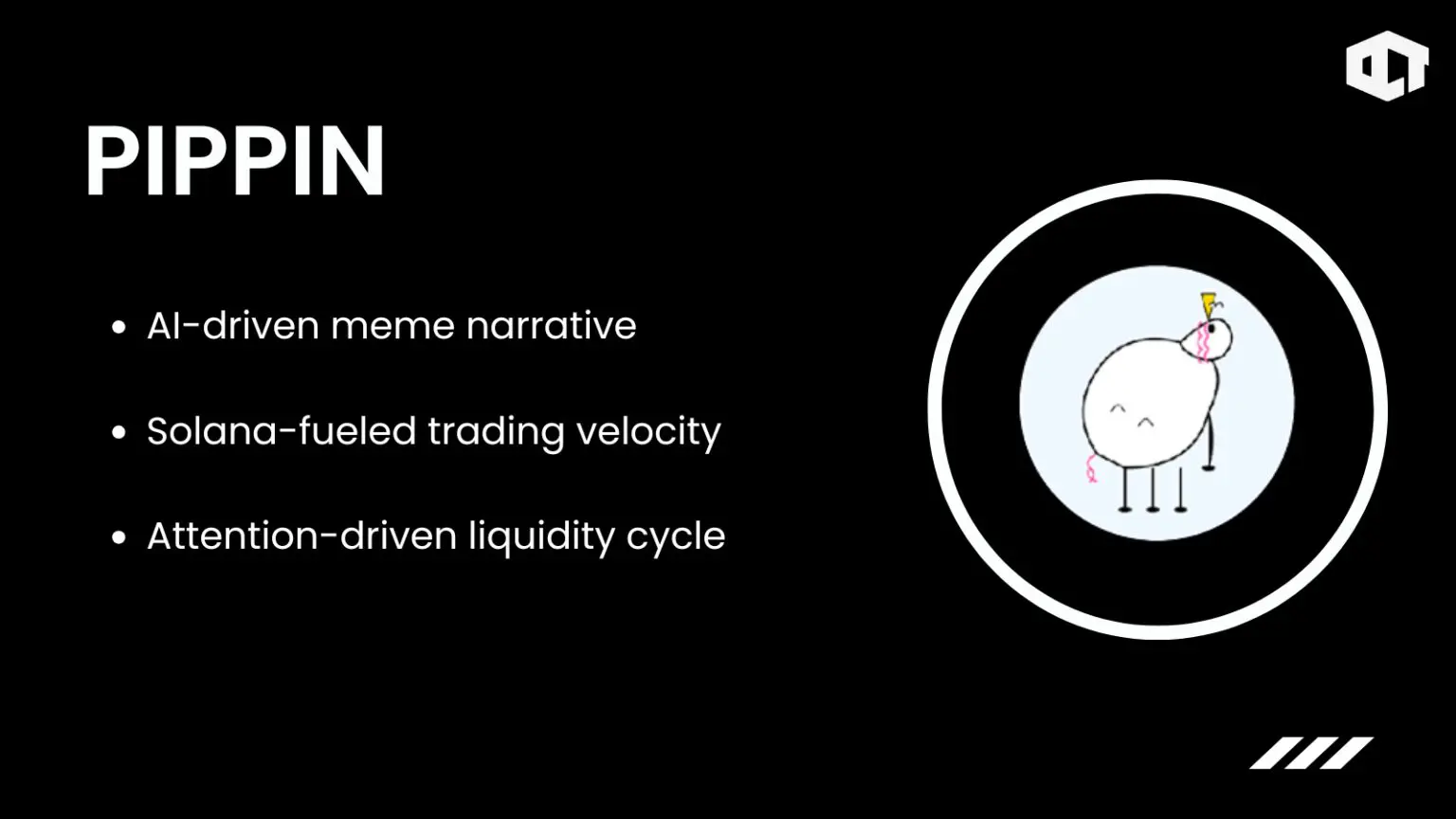
Pippin is a Solana-based meme coin that launched in late 2024 as an experimental AI-generated project. AI innovator Yohei Nakajima (known for BabyAGI) created it, and the project built its identity around a whimsical SVG unicorn character generated using ChatGPT 4o.
Pippin delivered one of the most extreme upside moves of 2025, largely because it captured a perfect convergence of narratives. First, it positioned itself as a high-beta AI-driven meme coin inside the Solana ecosystem, which historically amplifies upside during meme rotations due to low transaction costs and rapid trading velocity. As Solana activity accelerated, PIPPIN benefited from being viewed as a leveraged proxy for both Solana momentum and meme coin speculation.
At the same time, Pippin strengthened its identity through a whimsical unicorn narrative that leaned heavily into AI-generated content and an autonomous agent on X (formerly Twitter). This structure created consistent viral exposure and sustained community storytelling, which matters in meme markets because attention often functions as liquidity.
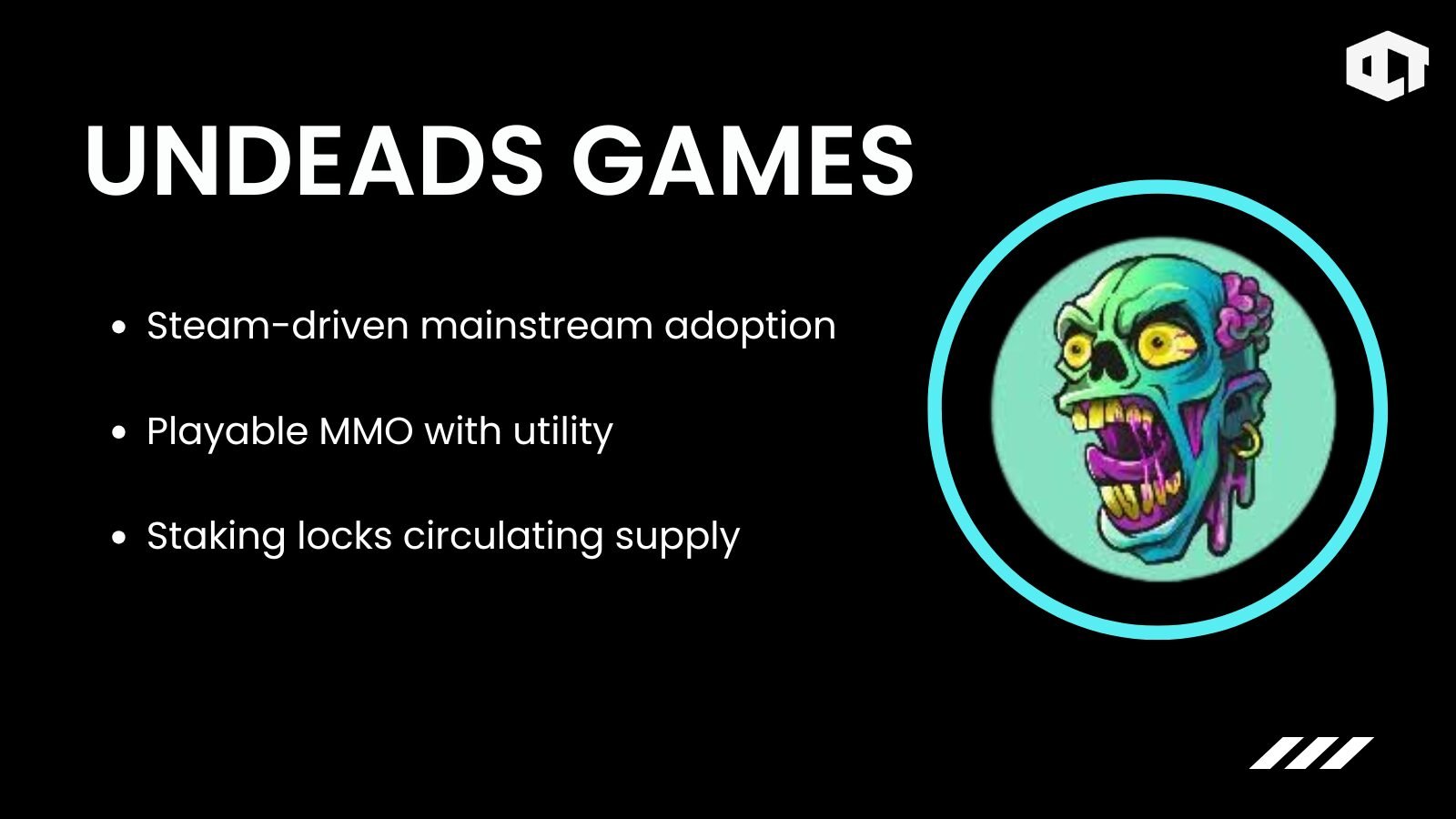
Undeads Games is a Web3 gaming project founded in early 2022 that targets the post-apocalyptic MMORPG niche. The ecosystem focuses on play-to-earn, play-to-own, and play-to-win mechanics, with NFTs, staking, and in-game economies as core components.
Undeads Games surged primarily due to a clear real-world catalyst: the worldwide Steam launch of its zombie-themed MMORPG in December 2025. This mattered because Steam provides exposure to a mainstream gaming audience, including over 120M+ active users, which fundamentally changes the addressable market compared to crypto-native distribution channels.
Importantly, Undeads did not rely on token hype alone. It supported the launch with cross-platform play, NFT utilities, play-to-earn mechanics, and expanding beta participation. As a result, the project converted marketing momentum into measurable on-chain demand, with staking TVL surpassing milestones such as $30M. More capital locked in staking typically reduces float, which often supports price strength during high demand periods.
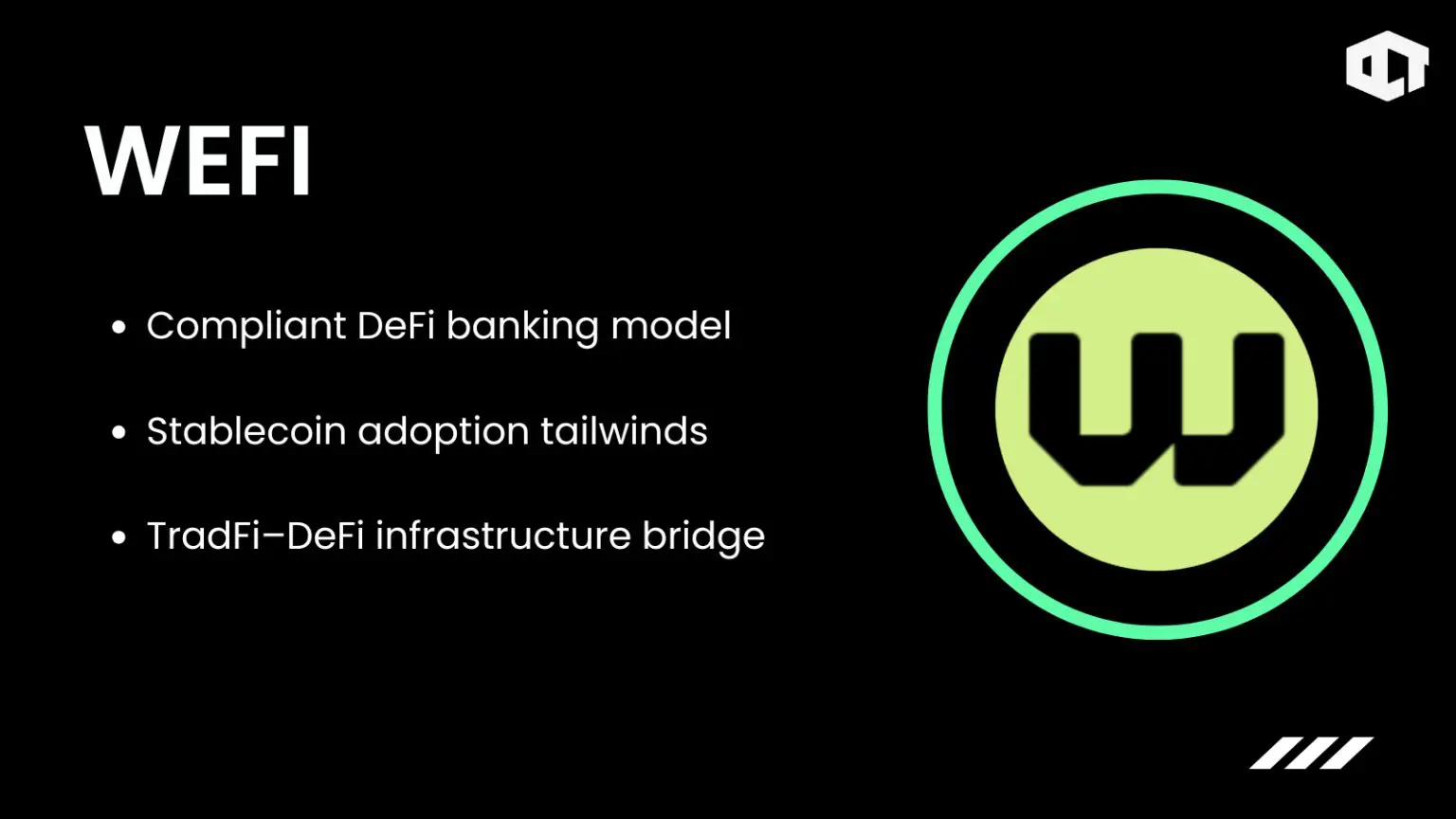
WeFi is a DeFi platform that launched around 2024 on Binance Smart Chain. It positions itself as a compliant “Deobank” that blends fiat and crypto functionality. The project focuses on regulated on-chain banking tools such as self-custodial wallets, stablecoin payments, and AI-driven user features.
WeFi performed strongly because it aligned with one of 2025’s largest structural trends: stablecoin adoption and regulated on-chain finance. Unlike many DeFi protocols that chase yields without clear compliance positioning, WeFi marketed itself as a compliant “Deobank” bridging TradFi and DeFi.
Specifically, it emphasized non-custodial wallets, fiat-crypto hybrid rails, global remittances, AI advisors, and stablecoin yield products. This mix matched the institutional narrative around stablecoins becoming settlement infrastructure for global payments, corporate treasury operations, and cross-border capital flows. This positioning helped WeFi earn a place among the top altcoins of 2025.
Zcash launched in 2016 and remains one of the most recognized privacy coins in crypto. It uses zk-SNARKs to enable shielded transactions, which allow users to transfer value privately while maintaining cryptographic integrity. This makes Zcash one of the core assets tied to the on-chain privacy thesis.
Zcash staged a major comeback due to a revived privacy narrative in 2025. Rising global surveillance concerns, tightening data rules, and broader cultural shifts toward financial autonomy drove traders to reprice privacy assets.
At the protocol level, Zcash benefited from upgrades that improved shielded transaction efficiency. Notably, shielded pool participation climbed to all-time highs, with over 30% of supply in shielded pools. That metric matters because it suggests real usage and a stronger anonymity set, which directly supports ZEC’s privacy value proposition.
QRL launched in 2017 as a blockchain designed specifically for post-quantum cryptography. Unlike networks that retrofit quantum resistance later, QRL built its architecture around quantum-safe signature schemes. It started with XMSS and continues to evolve toward stronger options such as SPHINCS+. This positions QRL as a long-duration bet on security infrastructure.
QRL gained traction because quantum security entered mainstream crypto discourse in 2025. Market participants increasingly discussed the risk that quantum computing could eventually threaten traditional cryptographic assumptions that secure Bitcoin and other chains.
Importantly, QRL did not appear suddenly. The project launched in 2017 as a purpose-built post-quantum blockchain using hash-based signature schemes such as XMSS. Therefore, QRL offered narrative credibility as “quantum-resistant by design,” not “quantum-resistant by marketing.”
COCA is a stablecoin-focused “challenger bank” style app launched in 2025. It targets real-world spending utility through non-custodial wallets, debit and virtual cards, real-time conversions, and cashback reward programs. The app uses MPC security and aims to simplify stablecoin usage for everyday payments.
COCA rallied quickly because it matched the “crypto payments and stablecoin banking” narrative that accelerated in 2025. Instead of building purely on DeFi speculation, COCA leaned into a challenger bank model built for stablecoins and daily spending.
It offered non-custodial wallets, debit and virtual cards, real-time conversions, cashback, and MPC security. These features mattered because crypto adoption increasingly moved toward usability, not ideology. As more users demanded simple payment rails, COCA gained relevance as an interface layer between crypto balances and real-world commerce.
Capverse is a Web3 social mobile gaming project focused on play-to-earn and invite-to-earn mechanics. It also incorporates RWA-related positioning by connecting gameplay rewards to asset-style allocation and micro-ownership incentives.
Capverse gained momentum through a blended narrative: GameFi mechanics plus RWA-style value framing. It integrated play-to-earn and invite-to-earn loops into a Web3 social mobile game, which encouraged viral distribution and repeated user engagement.
At the same time, upgrades such as CAP INFRA and metaverse-related developments improved the story of long-term platform building. Spot listings further boosted liquidity and access, which typically supports price expansions from depressed levels.
Concordium launched in 2021 as a regulatory-compliant Layer-1 blockchain. It stands out by integrating identity support and compliance tooling directly into the protocol. It focuses on enterprise-grade usage, where institutions need privacy-preserving controls along with enforceable compliance standards. Concordium performed well because it offered a regulatory-aligned Layer-1 architecture with built-in identity and privacy controls. That design appealed to enterprises that require compliance-ready rails, especially as global regulation frameworks matured.
In particular, MiCA and broader compliance progress pushed “regulated crypto infrastructure” into a stronger position in 2025. Concordium benefited from exchange listings such as Kraken and ongoing governance development, which signaled institutional accessibility and ecosystem maturity.
Instead of competing directly with high-throughput chains purely on speed, Concordium competed on accountability. That positioning resonated in PayFi narratives where real-world adoption depends on legal compatibility.
Zebec Network emerged in 2021 to 2022, originally building on Solana, and later expanding multi-chain. It specializes in real-time payroll and streaming payments, enabling businesses and users to distribute funds continuously rather than via traditional batch cycles.
Zebec gained strength through a clear product narrative: streaming payments and real-time payroll. This model directly targets real-world employer payroll systems and cross-border payment inefficiencies.
Listings on Kraken and broader multi-chain expansion increased liquidity, awareness, and integration pathways. In addition, token splits and other structural token events often act as psychological catalysts by lowering unit price and increasing perceived accessibility.
Kinesis Silver (KAG) launched in 2018 as a tokenized asset backed 1:1 by physical silver bullion. It operates within the Kinesis platform, where holders can earn yields through a revenue-sharing model tied to platform usage. This gives KAG a hybrid role as both a precious metals proxy and a yield-bearing commodity token.
KAG benefited from macro conditions rather than crypto-native catalysts. As silver prices rose, KAG gained direct tailwinds because it represents 1:1 backed tokenized silver.
In volatile markets, investors often rotate into commodities as safe havens. Therefore, KAG operated as a crypto-accessible inflation hedge with embedded yield through platform revenue sharing. Additionally, audits and platform expansions helped strengthen confidence in backing and peg integrity.
Even though these altcoins delivered impressive profits, investors still face meaningful risks. Altcoin volatility remains structurally high, and major drawdowns can follow strong rallies. In fact, broader corrections reversed a large portion of gains late in the year across many tokens.
Privacy coins like Zcash and Monero face additional uncertainty because regulators may restrict or ban privacy assets in jurisdictions that prioritize strict AML enforcement. Similarly, smaller-cap tokens like ALCH face liquidity risk and manipulation risk, especially during hype cycles.
DeFi protocols also remain exposed to smart contract vulnerabilities, governance failures, and systemic liquidity shocks. Furthermore, older proof-of-work protocols face ESG scrutiny, which may limit institutional participation.
The top altcoins of 2025 proved that innovation, utility, and timing can generate outsized profits, even among established projects. Privacy leaders like Zcash and Monero surged due to real social demand, while payment infrastructure like Zebec gained traction through real-world relevance. At the same time, Ethereum continued delivering steady performance through ecosystem dominance and scaling progress.
However, 2025 also reinforced a core truth: crypto remains highly volatile, and profits can reverse quickly. As investors move into 2026, they should prioritize fundamentals, including product-market fit, strong communities, sustainable tokenomics, and regulatory resilience. In addition, they should reduce exposure to one-dimensional narratives and instead build diversified portfolios backed by data.



Top 6 ZachXBT Revelations That Shocked The World
AI Agent Payments Explained: Circle Nanopayments and the x402 Protocol
Top 7 Projects in the World Liberty Financial (WLFI) Portfolio
Where Crypto Actually Makes Money in 2026?
Top 6 ZachXBT Revelations That Shocked The World
AI Agent Payments Explained: Circle Nanopayments and the x402 Protocol
Top 7 Projects in the World Liberty Financial (WLFI) Portfolio
Where Crypto Actually Makes Money in 2026?