Loading Search...


A deep dive into the top 5 performing crypto narratives of 2025, analyzing RWAs, Layer 1s, Made in USA, meme coins, & DeFi performance.

Author: Akshat Thakur
The Top 5 Performing Crypto Narratives of 2025 show that 2025 was not a “everything rallies” year, it was a year where the market filtered narratives by utility, cash-flow credibility, regulatory survivability, and infrastructure maturity. As the year closed with a more disciplined investor mindset, price action increasingly reflected which sectors could prove real demand rather than simply generate attention. In that environment, narratives backed by real-world value and institutional readiness rose to the top, while narratives tied to retail momentum and cyclic leverage struggled.
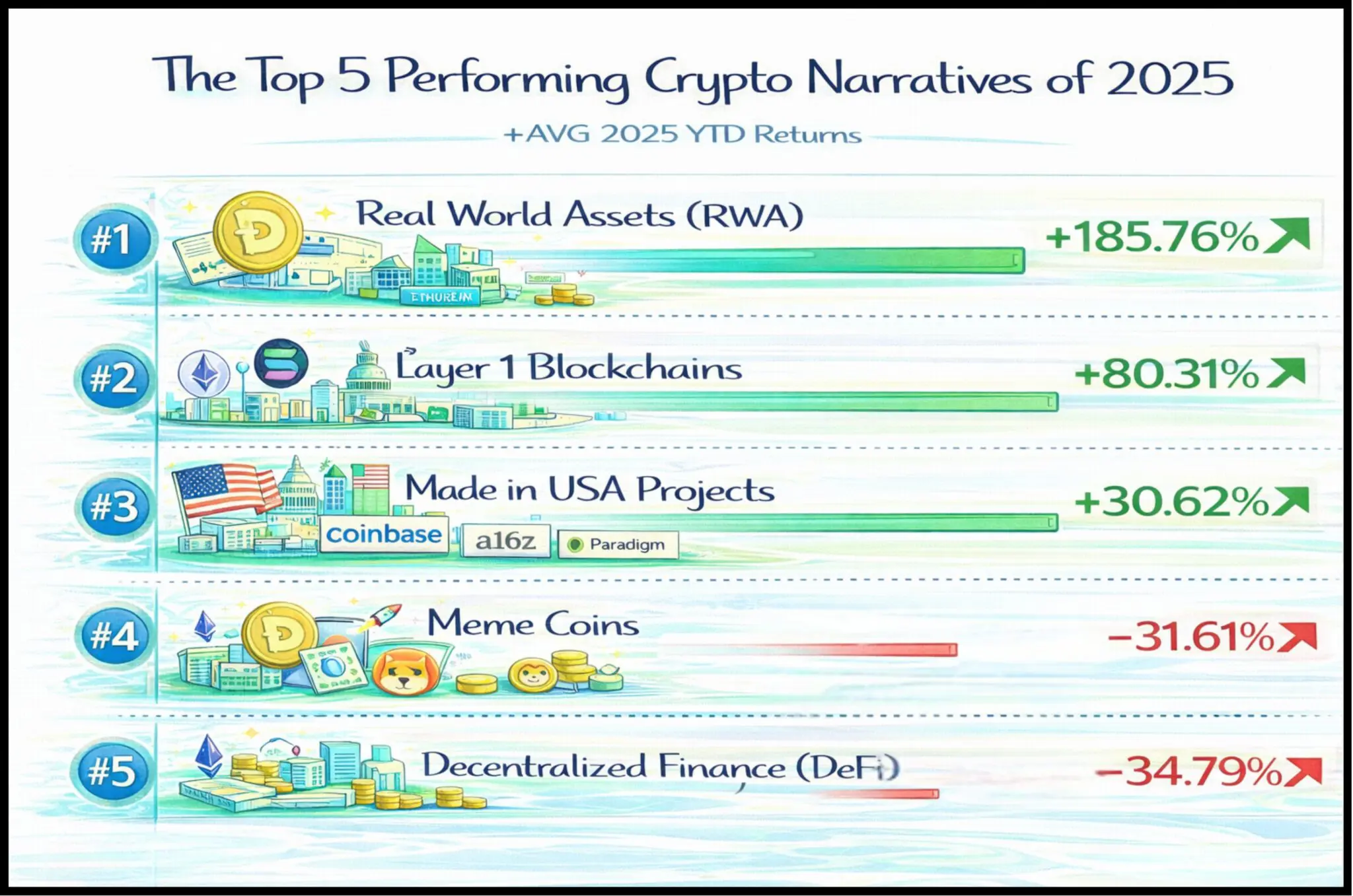
This is why the Top 5 Performing Crypto Narratives of 2025 look structurally different from earlier cycles. CoinGecko’s year-end tracking ranked the narratives by average YTD price returns across leading tokens and found a stark split: only the top three narratives ended the year in positive territory: Real World Assets (RWA) +185.76%, Layer 1 Blockchains +80.31%, and Made in USA projects +30.62% while Meme Coins (-31.61%) and DeFi (-34.79%) finished negative. The implications are significant: 2025 rewarded narratives that could connect to real-world cash flows, regulatory clarity, and foundational infrastructure, and penalized narratives that relied too heavily on sentiment and liquidity bursts.
This retrospective expands beyond performance labels. The goal is to explain not only what happened but why capital rotated the way it did in 2025 and what that rotation signals for next year.
A defining theme in the Top 5 Performing Crypto Narratives of 2025 was the market’s preference for narratives grounded in fundamentals especially those offering measurable utility, stable yield mechanics, and credible compliance pathways. This came alongside an ecosystem that is visibly maturing: institutions returned through regulated access points, builders shipped scalable infrastructure, and regulators signaled that crypto’s long-term viability depends on transparency and risk controls.
At the same time, 2025 also exposed the limit of “mindshare-first” narratives. Strong engagement did not automatically translate into positive returns, especially in sectors where scams, leverage, and thin liquidity amplified drawdowns. In that environment, narratives like RWAs (with real-world yields and TradFi alignment) gained structural advantage, while narratives like meme coins (with cultural dominance but weak cash-flow anchors) struggled to retain capital.
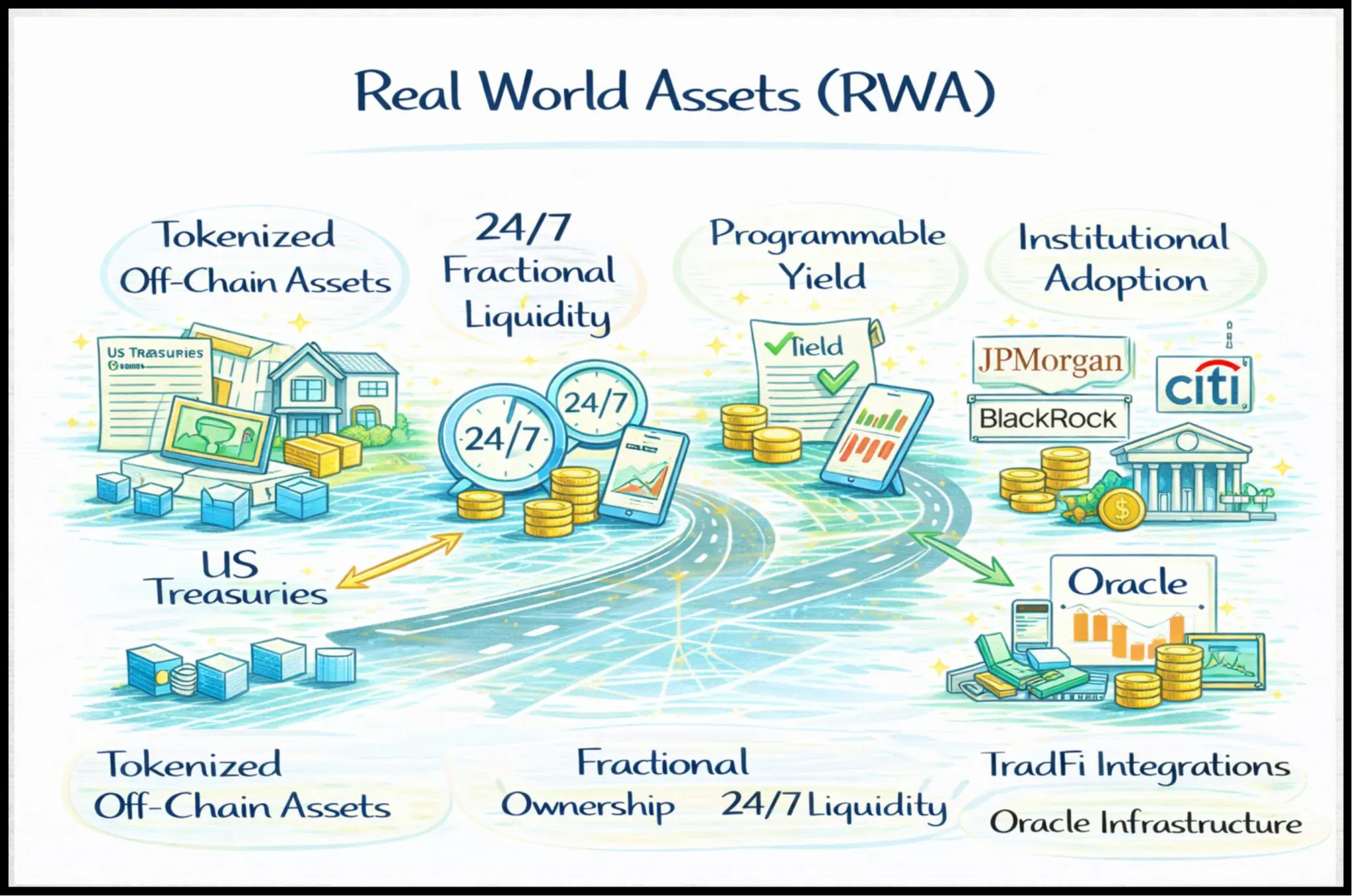
Real World Assets led the Top 5 Performing Crypto Narratives of 2025, evolving from a niche concept into a core pillar of crypto market structure. Earlier RWA experiments centered on tokenized real estate and collectibles, but the narrative matured after the 2022 downturn as investors increasingly preferred assets with intrinsic value and lower volatility. By 2024, tokenized U.S. Treasuries and private credit began attracting institutional demand setting up 2025 as the “breakout year” where RWAs moved from concept to scale. The narrative’s core promise is straightforward: represent off-chain assets bonds, commodities, invoices, real estate, and other real economic instruments on blockchain rails to enable fractional ownership, continuous liquidity, and programmable yield.
What made RWAs the top performer among the Top 5 Performing Crypto Narratives of 2025 was a confluence of structural tailwinds: improving regulatory clarity, rising institutional participation, and an investor rotation toward “cash flows and fundamentals.” RWAs also benefited from supporting infrastructure: oracle technology enabling off-chain data feeds, stablecoin settlement rails, and partnerships that bridged TradFi distribution with on-chain execution. Even during a broader market correction, RWAs remained attractive because they offered exposure to economic activity rather than purely narrative-driven token demand.
RWAs finished 2025 as the clearest “institutional narrative” because the sector translated blockchain benefits transparency, programmability, continuous settlement into products that traditional capital understands. Looking into 2026, RWAs are positioned for deeper institutionalization, more asset classes, and broader adoption in emerging markets if the same regulatory and infrastructure tailwinds persist.
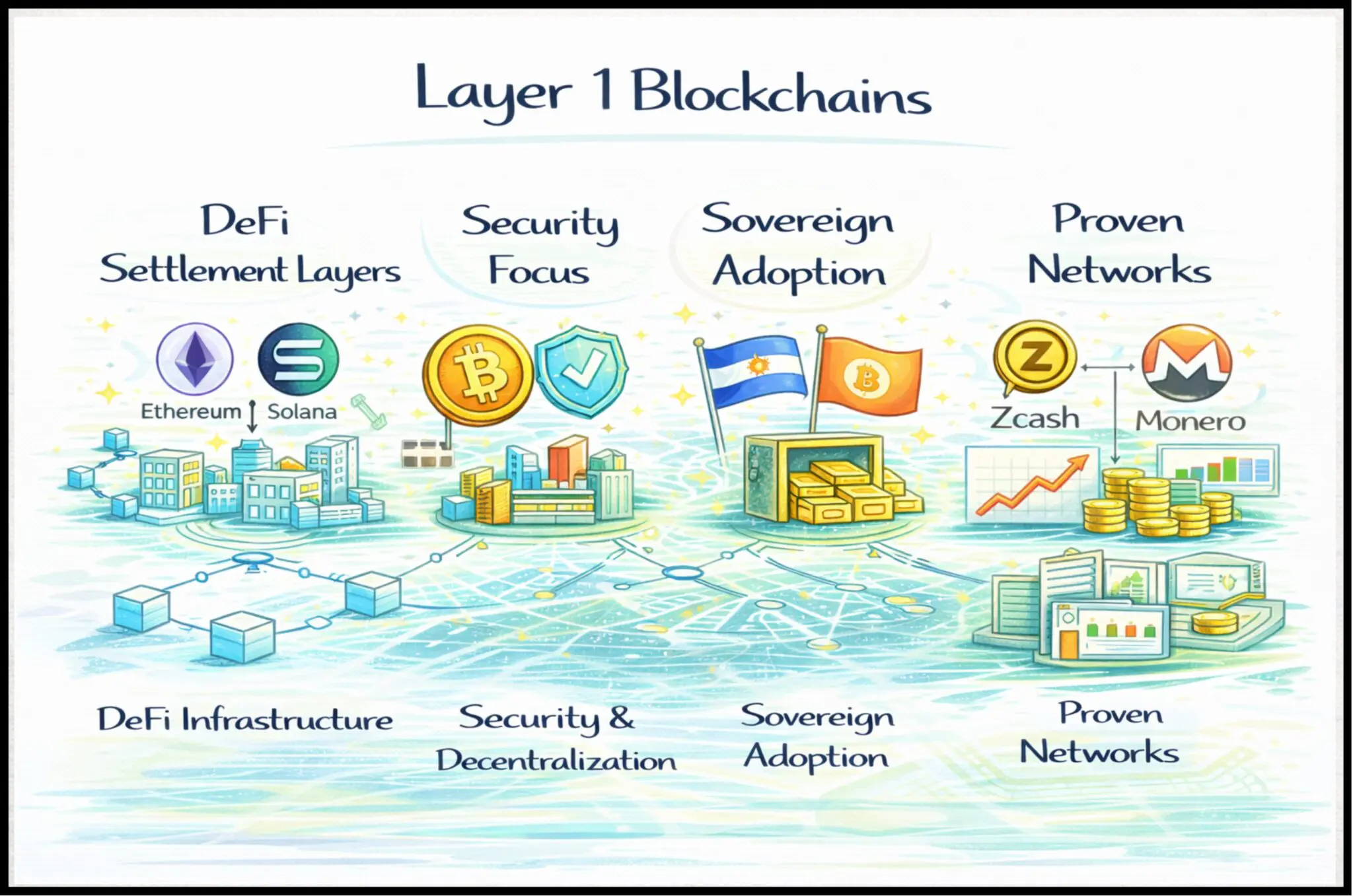
Layer 1 blockchains ranked second among the Top 5 Performing Crypto Narratives of 2025, benefiting from their role as foundational settlement layers for DeFi, RWAs, AI-native apps, and cross-chain liquidity. The narrative has existed since Bitcoin’s inception, but it evolved through the “Layer 1 wars” of the early 2020s, when multiple chains competed primarily on throughput claims. By 2025, the L1 narrative matured: rather than fighting purely on speed, networks increasingly competed on security, decentralization, interoperability, and long-term reliability.
L1s benefited from a narrative shift toward robust infrastructure and “proven track records,” particularly during periods of volatility when capital rotated away from riskier sectors. Privacy-focused Layer 1s also gained prominence due to rising data security concerns, and sovereign adoption discussions (including Bitcoin reserves) elevated the narrative further.
Layer 1s outperformed because the market treated them as “picks and shovels” the infrastructure that captures activity across multiple narratives. Looking into 2026, the core question becomes consolidation and interoperability: the L1s that anchor liquidity, dev mindshare, and institutional integrations are best positioned to retain narrative leadership.
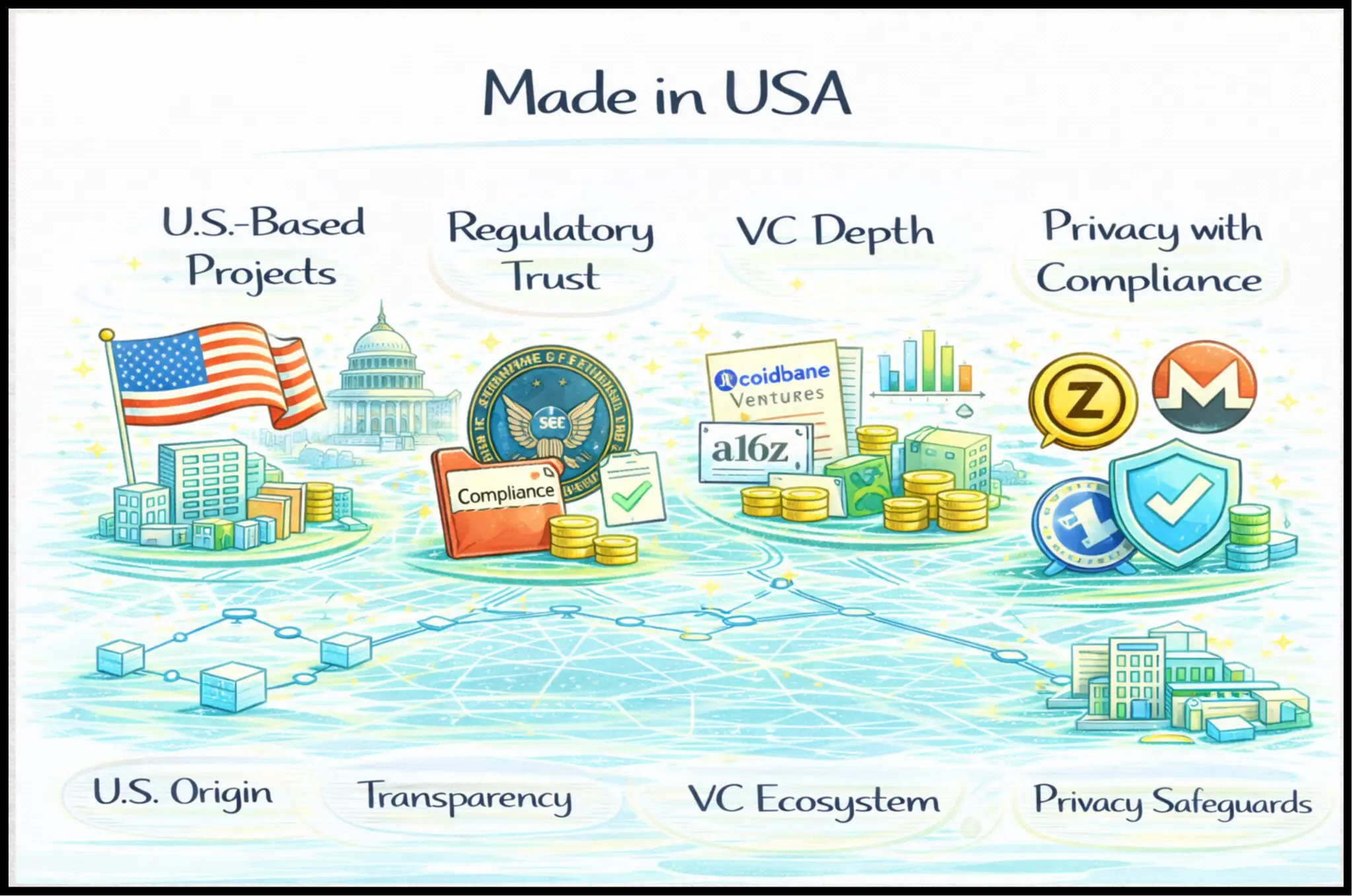
The “Made in USA” narrative placed third among the Top 5 Performing Crypto Narratives of 2025, reflecting the market’s growing tendency to price jurisdictional trust as a premium. This category includes crypto projects founded in the United States, built by U.S.-based teams, or aligned with U.S. regulatory standards and compliance expectations. The narrative gained momentum in the early 2020s as global scrutiny intensified and accelerated after the 2022 FTX collapse highlighted the risks of weak governance and offshore opacity.
By 2025, the narrative expanded beyond “U.S.-based origin” into a broader perception of stability: projects that emphasized transparency, audited practices, institutional accessibility, and policy alignment drew greater attention. Privacy coins positioned within U.S. compliance framing became unusually important because data security and surveillance debates grew louder, and optional privacy models created differentiated appeal.
The “Made in USA” narrative’s 2025 performance was less about hype and more about perceived survivability. Heading into 2026, this narrative positions for deeper TradFi integrations and more mainstream adoption if regulatory clarity continues to improve.
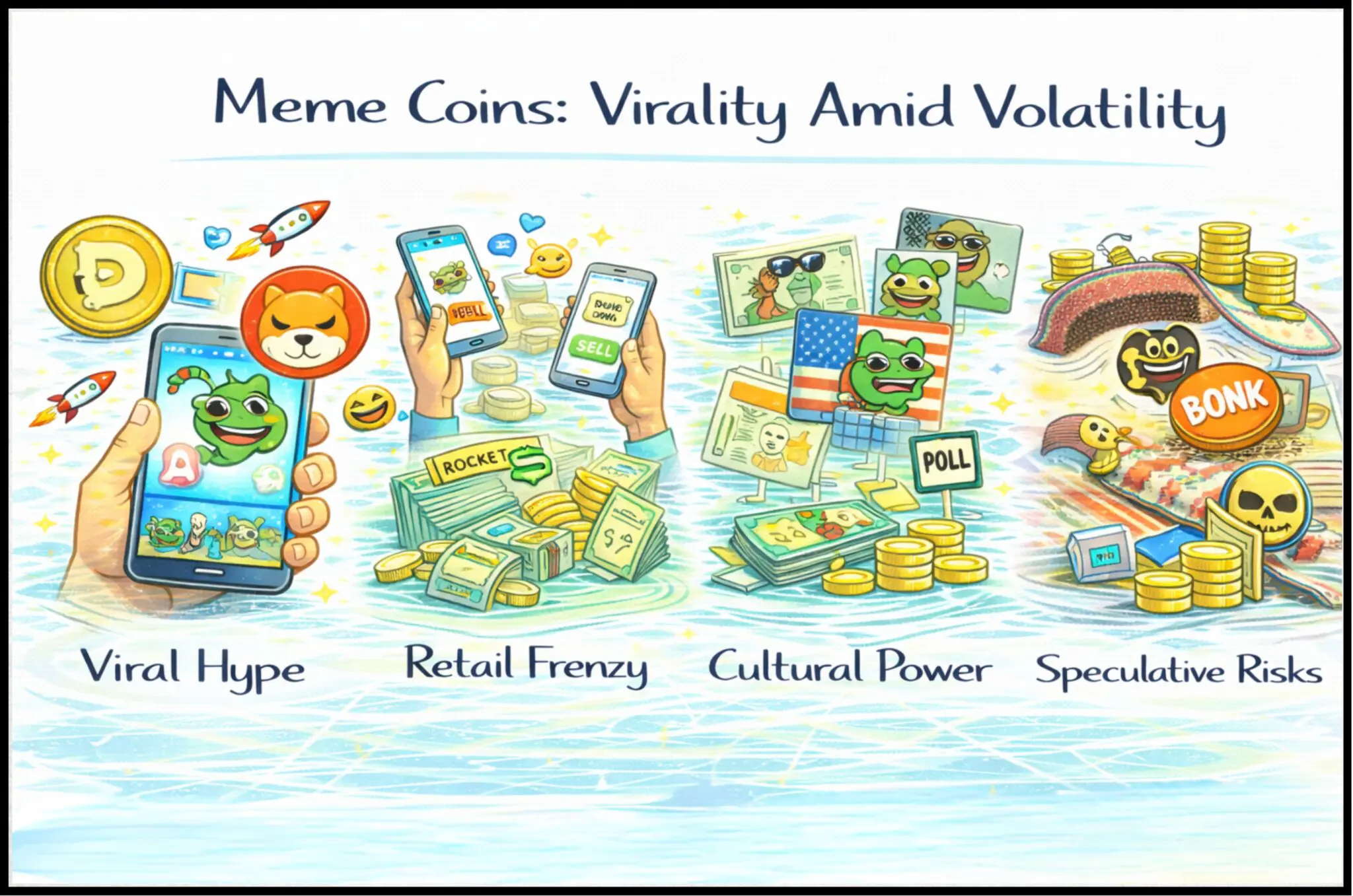
The Meme Coins ranked fourth among the Top 5 Performing Crypto Narratives of 2025, ending at -31.61% average YTD, despite dominating attention. Meme coins as a narrative won mindshare but lost on returns an important distinction in a year where the market demanded fundamentals. Meme coins evolved from satirical experiments into a major retail onboarding channel, with the genre expanding beyond animal memes into AI-driven meme production, political satire tokens, and community-governed launches. By 2025, meme coins had matured culturally into a large ecosystem, but structurally remained defined by volatility and speculative reflexes.
What stands out is that meme coins dominated conversation: they captured 25.02% of global crypto mindshare. However, the same forces that made them culturally powerful low barriers, rapid launches, social-driven momentum also made them fragile under tighter liquidity conditions.
The meme narrative ends 2025 as the clearest example of the gap between attention and returns. 2026 could bring “Meme+” sophistication AI tools, stronger governance, better liquidity design but volatility remains structural unless quality and regulation improve.
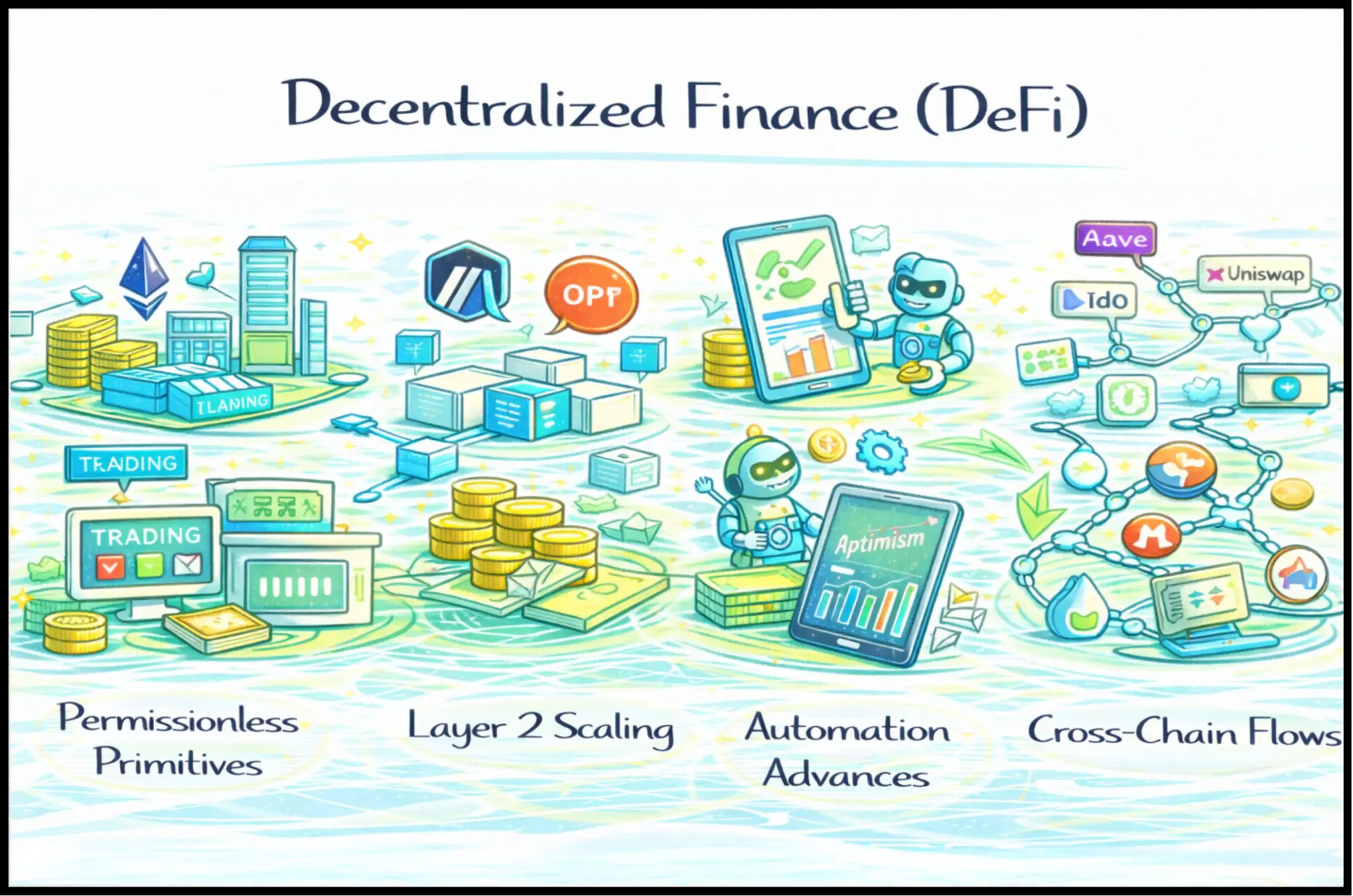
DeFi placed fifth among the Top 5 Performing Crypto Narratives of 2025, ending at -34.79% despite ongoing innovation and deep infrastructure relevance. DeFi’s historical arc is clearly defined: it emerged around 2020 with Ethereum’s smart contracts recreating lending, trading, and yield mechanisms without intermediaries; it surged during DeFi Summer; it suffered major setbacks in 2022 via exploits and liquidity crises; and it recovered through 2023–2024 with Layer 2 scaling and new primitives like liquid staking and perpetual DEXs.
By 2025, DeFi entered a “renaissance” phase incorporating AI agents (DeFAI), modular systems, and interoperability improvements yet it still underperformed because investors favored RWAs and safer yield narratives.
DeFi is less defined by speculative peaks and more by durability and institutional-grade infrastructure. The forward outlook suggests that clearer stablecoin regulation, RWA integration, and usability gains could drive resurgence in 2026 though security remains the key gating factor.
A key takeaway from the Top 5 Performing Crypto Narratives of 2025 is that crypto is no longer one market it is multiple markets layered together. RWAs represent institutional yield and TradFi integration, L1s represent base infrastructure, Made in USA represents regulatory alignment, meme coins represent retail culture and distribution, and DeFi represents the programmable financial stack. The “winning” narratives were the ones that aligned best with the 2025 environment: compliance pathways, real yield, and scalable infrastructure.
If 2026 becomes a year of deeper TradFi integration and clearer regulation, the RWAs and Made in USA narratives described in your text may continue strengthening. If liquidity loosens and retail participation returns, meme coins could regain momentum but only if the scam-heavy dynamics are reduced. DeFi’s path depends most on security, UX, and integration with RWA-style fundamentals.
The Top 5 Performing Crypto Narratives of 2025 delivered a blunt market verdict: utility outperformed imagination. Real World Assets dominated because they connected crypto rails to real economic value and institutional demand. Layer 1 blockchains performed strongly because infrastructure remained the foundation of every other narrative. Made in USA projects gained because regulatory alignment became a premium in a maturing market. Meanwhile, meme coins proved that cultural dominance does not guarantee positive returns, and DeFi demonstrated that foundational importance does not automatically translate into narrative leadership during risk-off periods.
Taken together, these five narratives show a market transitioning from speculative adolescence toward selective maturity. The narratives that survived 2025’s discipline were those with clear settlement value, compliance direction, and cash-flow credibility. As the ecosystem moves into 2026, the dominant question will be whether crypto continues down the fundamentals path deepening TradFi integration and infrastructure or whether liquidity conditions bring back narrative cycles that reprice attention more than execution. Either way, 2025 made one structural truth hard to ignore: narratives now compete on proof, not promises.



AI Agent Payments Explained: Circle Nanopayments and the x402 Protocol
Top 7 Projects in the World Liberty Financial (WLFI) Portfolio
Where Crypto Actually Makes Money in 2026?
What If Satoshi Nakamoto Was Here in 2026?
AI Agent Payments Explained: Circle Nanopayments and the x402 Protocol
Top 7 Projects in the World Liberty Financial (WLFI) Portfolio
Where Crypto Actually Makes Money in 2026?
What If Satoshi Nakamoto Was Here in 2026?