Loading Search...


Discover 50 altcoins with the lowest token unlock risks for 2026, focusing on high circulating supply and reduced dilution exposure.

Author: Arushi Garg
Crypto has a dirty secret that most investors only discover after taking losses. It is not always the technology that fails, even among the best altcoins with the lowest token unlock risks. More often, portfolios suffer because unexpected token supply enters the market and overwhelms demand.
Token unlocks have quietly become one of the biggest wealth destroyers of this cycle. Cliff unlocks, linear emissions, and large “team incentives” often translate into sudden sell pressure. When new supply hits thin liquidity, prices react quickly and retail holders are usually the last to adjust.
Heading into 2026, this issue is not fading. In many sectors, it is accelerating. Projects launched during the last expansion phase are now entering heavy unlock schedules, increasing inflation risk across multiple altcoins.
This article focuses on survivability in the current market structure. We break down why token unlocks matter, how high circulating supply changes risk dynamics, and which altcoins carry lower inflation exposure. From there, we analyze 50 altcoins across five key narratives that may offer stronger supply stability heading into the next market phase.
Every cycle has a defining pressure point. In 2021, excessive leverage amplified volatility. In 2022, insolvency and contagion dominated headlines. For 2024 and 2025, supply expansion has emerged as the hidden force reshaping altcoin performance.
Token unlocks act like a delayed tax on price. Even fundamentally strong crypto projects struggle when a large percentage of supply remains locked, early investors receive liquidity before retail participants, or emissions stay elevated while demand stagnates.
Markets can absorb temporary selling pressure. What they cannot absorb indefinitely is structural inflation. When new tokens continuously enter circulation without matching growth in adoption or liquidity, price performance suffers.
That is why narratives alone are no longer enough. Investors need to ask a harder and more practical question: how much new supply can realistically enter the market from here?
A high circulating supply does not guarantee upside. However, it significantly reduces downside risk driven by dilution.
Projects with 90% to 100% of tokens already in circulation have typically passed the most painful phase of their token economics. Early investors are largely liquid, major unlock cliffs are behind them, and emission schedules are transparent and largely priced in by the market.
This creates a fundamentally different risk profile. Instead of constantly monitoring unlock calendars, investors can shift focus toward adoption metrics, revenue growth, narrative momentum, and overall market structure. These assets begin to resemble operating tokens rather than venture-style bets dependent on future supply releases.
Now let’s break this down by narrative.
Real-world asset protocols operate in an environment where credibility and capital efficiency matter. Unlike purely speculative tokens, they often rely on sustainable models tied to real yield.
Many leading RWA projects already have a high percentage of supply circulating. That means future growth must come from usage, integrations, and revenue expansion rather than token dilution. In a market increasingly sensitive to inflation risk, that structural discipline becomes a competitive advantage.
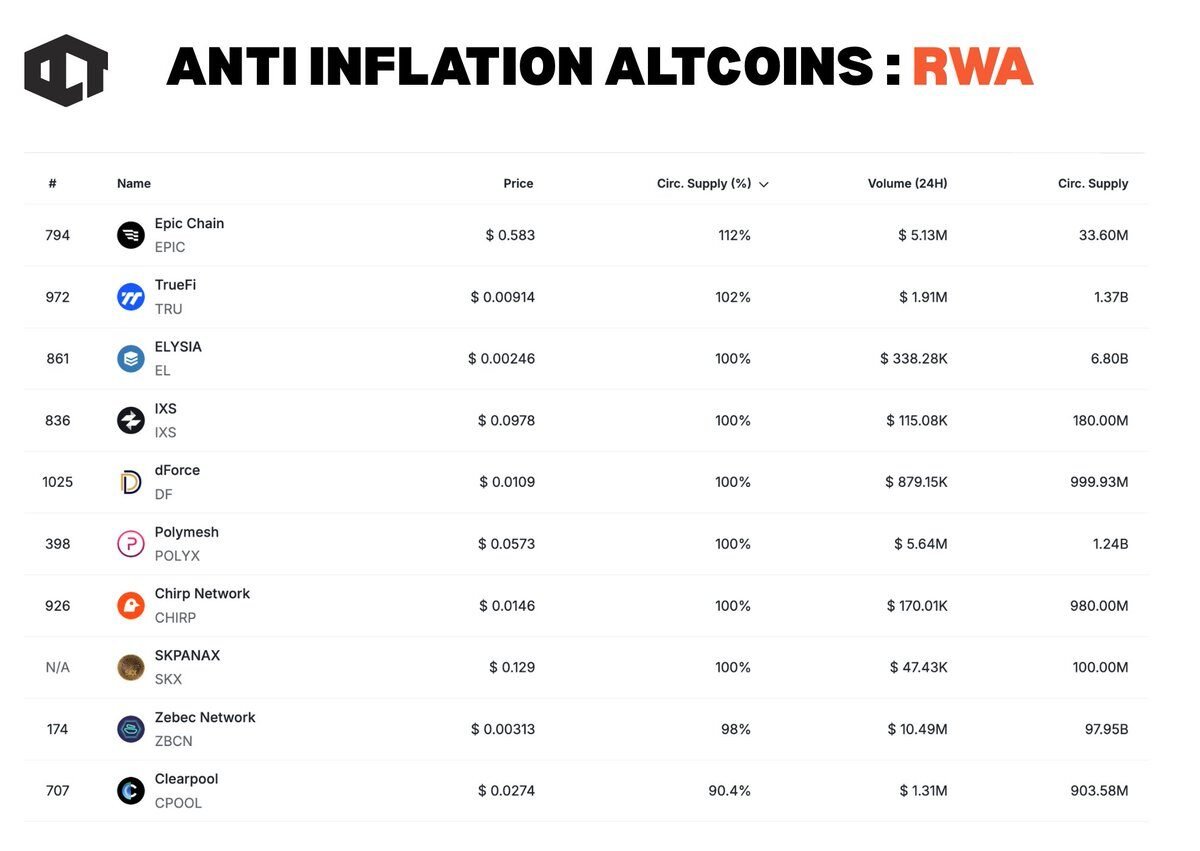
The common thread across these real-world asset projects is not short-term price performance. It is token maturity. Most of these protocols already have a large percentage of their supply in circulation, reducing the risk of sudden dilution events. As RWAs continue attracting institutional participation and regulated capital, transparency and supply discipline become competitive advantages.
In 2026, high circulation and predictable tokenomics may matter more than headline APY. Institutions care about trust, clarity, and stability. Tokens with cleaner supply structures face fewer barriers to adoption with lowest token unlock risks.
Artificial intelligence remains the loudest narrative in crypto. Capital, attention, and speculation continue to flow into AI-linked tokens.
However, tokenomics in this sector are often overlooked. Many AI projects launched with aggressive emissions to bootstrap networks and incentivize early participation. Over time, that inflation created consistent sell pressure.
The projects that survived the early expansion phase are now moving beyond heavy emissions. As supply growth stabilizes, the market begins to separate sustainable AI tokens from those still dependent on dilution-driven growth.
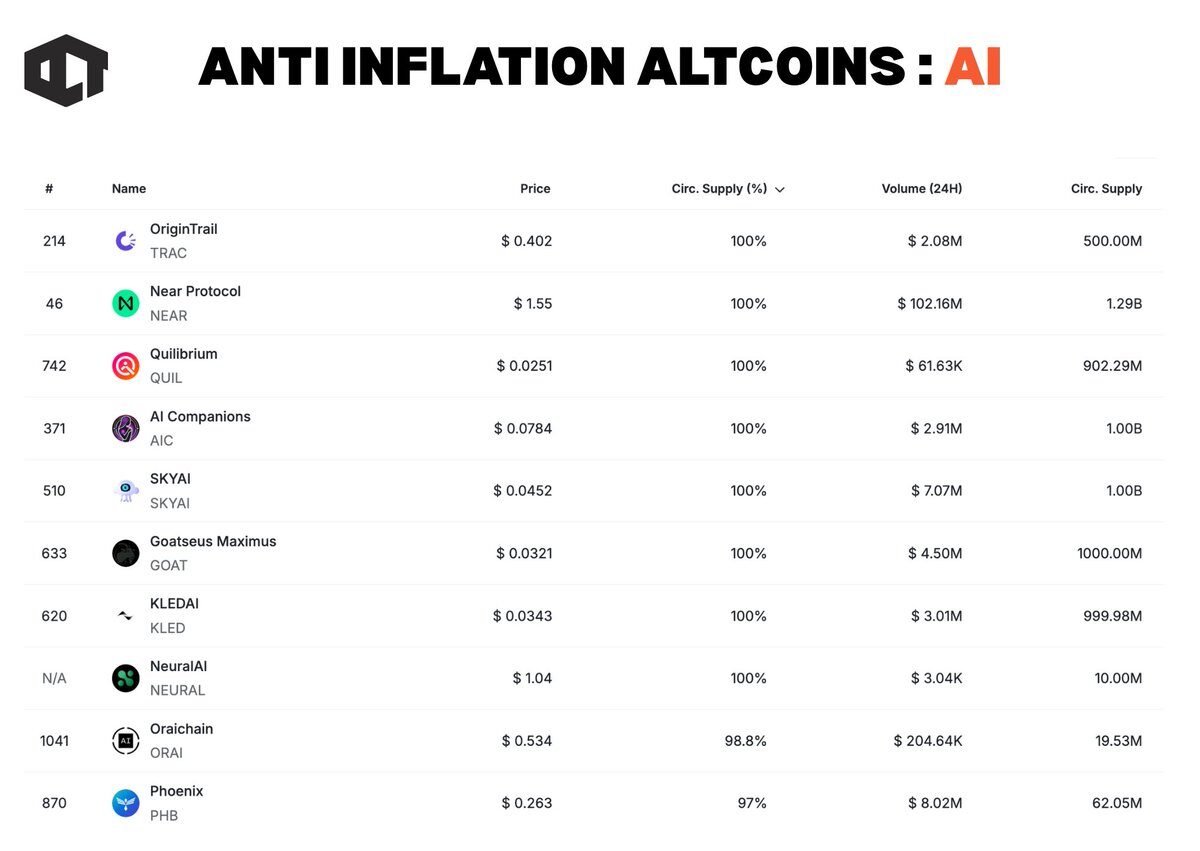
The common factor among these AI-focused projects is not hype. It is supply visibility. Many of these tokens already have a high percentage of circulation, meaning major dilution events are either behind them or clearly mapped out. As the AI narrative matures, the market is beginning to reward projects that operate like long-term infrastructure rather than short-term experiments.
In 2026, capital is more likely to rotate toward AI protocols with predictable token supply and sustainable growth models, not just impressive demos or viral marketing.
Layer-1 blockchains do not get second chances when it comes to tokenomics. Their supply structure is typically defined early, and the market prices it accordingly.
If emissions remain high or unlock schedules create persistent selling pressure, investor confidence erodes quickly. In a competitive Layer-1 environment, disciplined supply management is not optional. It is foundational.
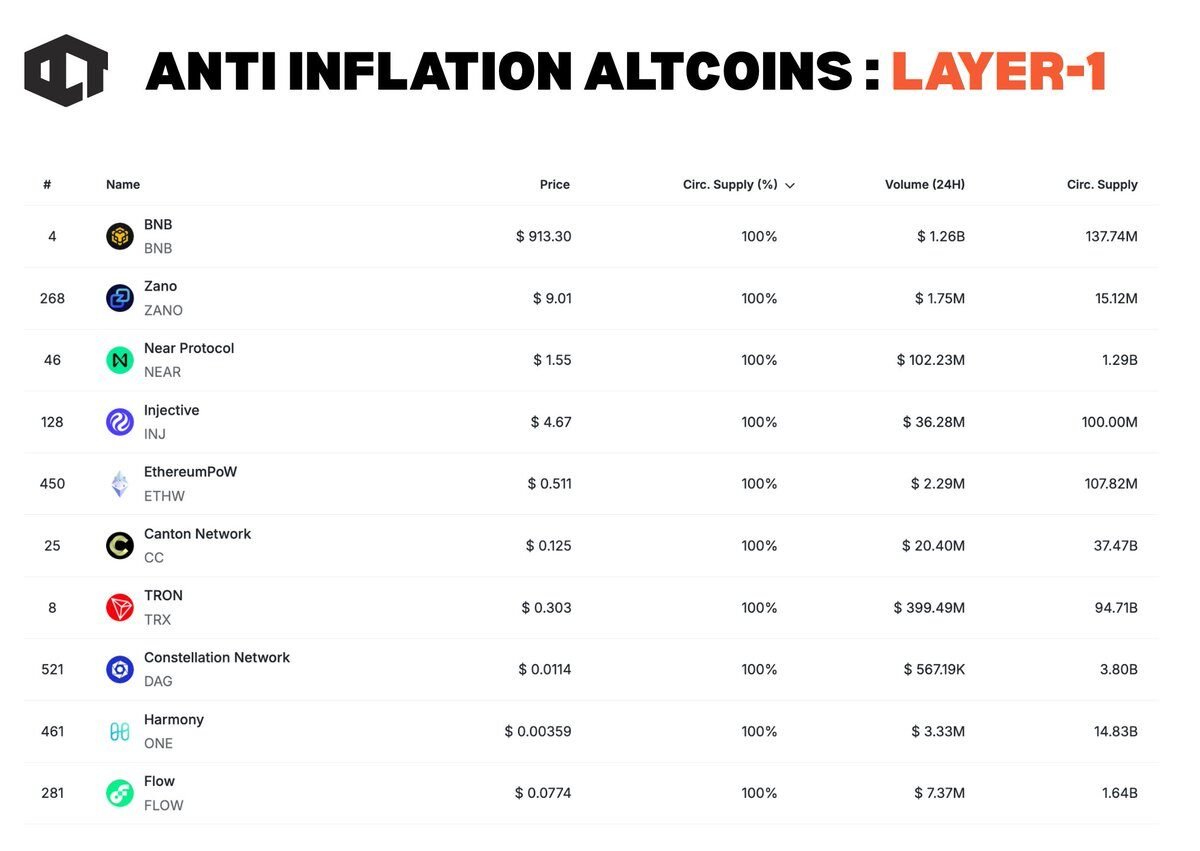
This does not automatically make them winners. It simply means inflation risk is no longer the dominant variable in their valuation.
With most tokens already circulating, the supply story is largely written. That shifts the focus away from unlock calendars and toward fundamentals. In the next cycle, Layer-1 performance is more likely to depend on ecosystem depth, developer retention, network activity, and real usage rather than unexpected token emissions. When dilution risk fades, execution becomes the deciding factor.
Decentralized physical infrastructure networks are not short-term momentum trades. They are long-term build-outs that require sustained capital and user participation.
Long-term capital demands stability. Investors funding infrastructure do not want unpredictable unlock schedules or aggressive emission curves undermining price structure. For DePIN projects, supply discipline is not just a tokenomics feature. It is part of the investment thesis itself.
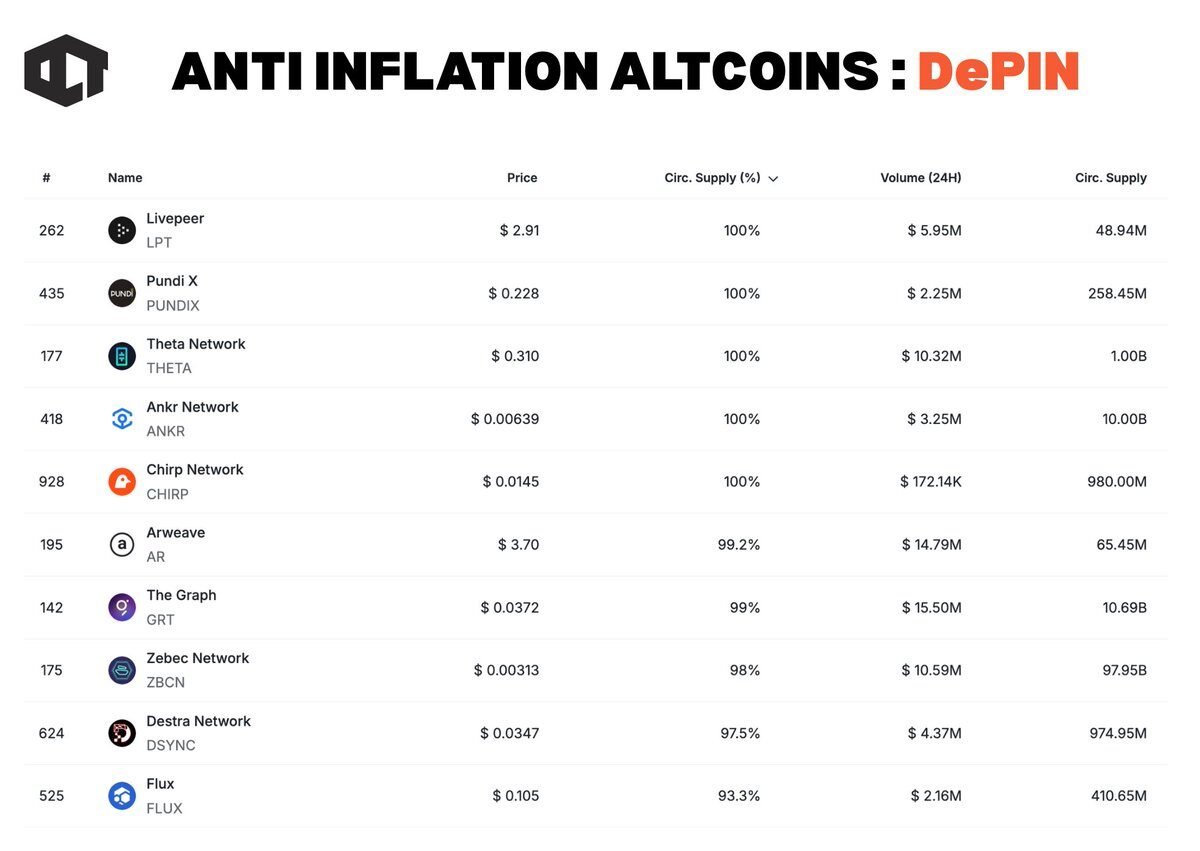
Many of these DePIN tokens, often viewed among the best altcoins in the infrastructure category, are already valued more like long-term network assets than speculative growth plays. That distinction becomes increasingly important heading into 2026.
As real-world usage expands across decentralized storage, bandwidth, compute, and streaming networks, supply certainty becomes a competitive advantage. Investors are more comfortable allocating capital to projects where inflation risk is limited and token economics are transparent.
In infrastructure narratives, predictable supply is not a minor detail. It is part of the core investment thesis.
Privacy-focused cryptocurrencies occupy a unique position in the market. They are not built around hype cycles or mass marketing narratives. Instead, they respond to structural demand for censorship resistance and financial confidentiality.
Many leading privacy coins, often ranked among the best altcoins for supply discipline, already have fully circulating or near-fully circulating supply. That reduces dilution risk and allows price performance to be driven more by adoption and macro conditions rather than token unlock schedules.
In an environment where regulation tightens and data scrutiny increases, privacy assets represent an anti-fragile edge case. Their value proposition strengthens under pressure rather than weakens.
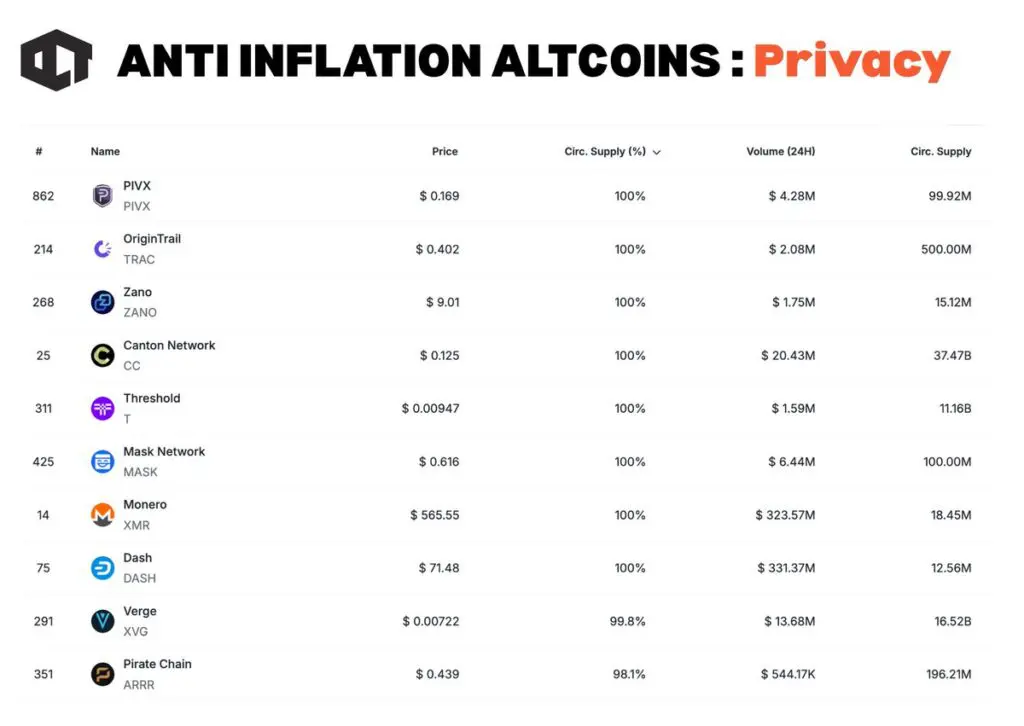
Privacy tokens, often considered among the best altcoins for long-term resilience, do not depend on constant emissions to justify their existence. Their value proposition is structural, not cyclical. Demand for financial privacy does not disappear when narratives rotate.
Because many of these assets already have high or fully circulating supply, dilution risk is limited. That gives them unique resilience during periods of liquidity tightening, when inflation-heavy tokens often struggle the most.
This article is not about predicting the next 10x winner. It is about avoiding the hidden losers that suffer from unchecked token inflation.
In 2026, investor focus is likely to shift. Short-term incentives and flashy announcements will matter less than supply transparency, emission discipline, and long-term survivability.
High circulating supply does not guarantee upside. Strong execution, adoption, and revenue still determine long-term success. However, high circulation removes one of crypto’s most brutal failure modes: unexpected dilution.
Sometimes, avoiding structural damage is the real edge.
If you are positioning for 2026, ask one simple question:
How much of this token’s future selling pressure is already behind us?
That answer may matter more than narrative strength, marketing momentum, or short-term price action.
All the opinions in this article are that of the author and in no way are financial advice. Our Crypto Talk and the author always suggest you do your own research in crypto and to never take anything as financial advice that you read on the internet. Check our Terms and conditions for more info.