Loading Search...



Crypto market war impact follows a brutal pattern: 5-15% crashes, liquidations, then recovery. Here's every major conflict since 2020.

Author: Tanishq Bodh
The crypto market just got a brutal reminder that it doesn’t exist in a vacuum. On February 28, 2026, the United States and Israel launched a coordinated military strike on Iran – dubbed “Operation Epic Fury” – targeting missile infrastructure, naval assets, and nuclear facilities. Within hours, the total crypto market cap shed roughly $128 billion. Bitcoin dropped from nearly $70,000 to around $63,000 – a sharp 6%+ decline.
The crypto market war impact follows a disturbingly consistent playbook.
Every major military escalation in recent years has played out the same way. The bombs drop, Bitcoin dumps, altcoins get massacred, leveraged traders get wiped, and then… it recovers. Sometimes violently to the upside.
Let’s break down the pattern using six real case studies from 2020 to today.
This is not a contained strike. Instead, this is a multi-country, multi-front military engagement unlike anything the crypto market has dealt with before. As a result, the crypto market war impact is unfolding in real time across seven nations.
Israel launched what Defense Minister Israel Katz called a preemptive strike on Iran early Saturday. Subsequently, President Trump confirmed major combat operations targeting Iran’s missile inventory, navy, and nuclear infrastructure. Approximately 200 Israeli fighter jets carried out strikes, marking the largest military flyover in Israel’s air force history.
Iran’s response came immediately and swept across the region. Tehran fired missiles at US bases throughout the Gulf, hitting Bahrain (US Navy 5th Fleet headquarters) while targeting Qatar’s Al Udeid Air Base, Kuwait’s Ali Al Salem Air Base, the UAE’s Al Dhafra Air Base, and sites in Saudi Arabia, Iraq, and Jordan. Furthermore, explosions rocked Dubai, Abu Dhabi, Doha, Riyadh, and Erbil. A prominent hotel in Dubai’s Palm Jumeirah took a direct hit. Additionally, a drone struck Kuwait International Airport, and one person died in Abu Dhabi.
Iran’s Revolutionary Guard Corps declared that all US and Israeli targets in the Middle East have been struck and that operations will continue relentlessly. Clearly, this is no longer a bilateral exchange. This is a regional conflict.
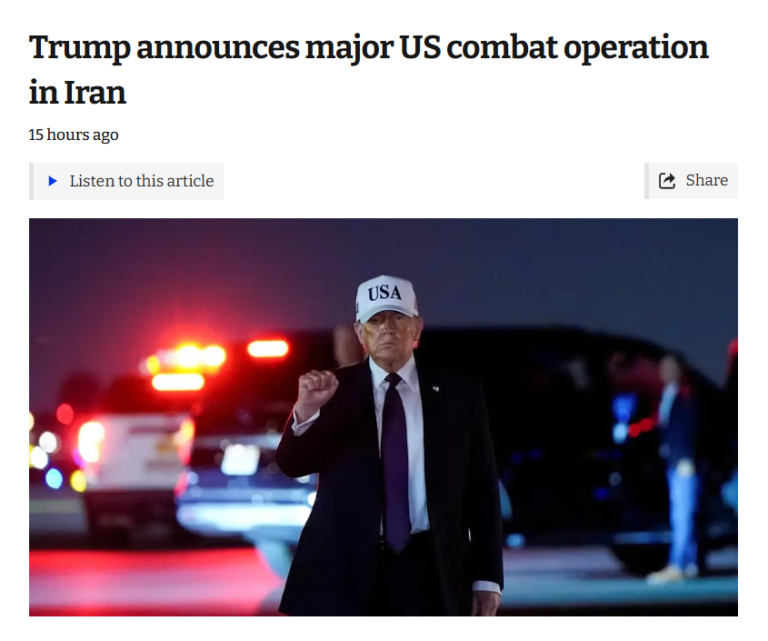
Because crypto trades 24/7, it absorbed the full brunt of the initial risk-off wave while traditional markets remained closed for the weekend. Bitcoin crashed from roughly $70,000 to $63,038, representing a drop of about 10% from the week’s high. At the same time, Ethereum dropped to $1,835, and the total market cap lost $128 billion. Over $515 million in liquidations hit 152,000 traders. Notably, the largest single liquidation reached $11.17 million on the BTC/USDT pair. Predictably, the Fear and Greed Index plunged to Extreme Fear.

However, here’s the fascinating twist. While crypto bled, DeFi proved its thesis. On Hyperliquid, a decentralized exchange offering 24/7 perpetual futures on commodities, oil perps surged 6.2% to $70.6 per barrel. Similarly, gold perps jumped 5% to $5,464 per ounce, and silver rocketed 8% to $97.5 per ounce. Traders who couldn’t access traditional commodity markets on a Saturday used crypto-native infrastructure to price in the geopolitical risk in real time.
As Wintermute’s Jake Ostrovskis put it, BTC is acting as a proxy for broader risk being the only market open. This is exactly why more asset classes need to move to 24/7 trading.
The biggest wildcard remains whether Iran closes the Strait of Hormuz, a 21-mile-wide chokepoint handling roughly 20% of global oil shipments, about 20 million barrels per day. If that happens, oil could spike to $120-$150, consequently triggering an inflation shock that would hammer risk assets even harder. Nevertheless, most experts consider a full closure unlikely. The shipping lanes predominantly pass through Omani waters, not Iranian. Moreover, Iran itself exports through the strait. Closing it would be self-destructive.

In a wild intersection of prediction markets and military intelligence, six Polymarket accounts earned roughly $1.2 million by correctly betting the US would strike Iran on February 28. Suspiciously, most of the wallets received funding just hours before the attacks, raising serious insider trading questions. Blockchain analytics firm Bubblemaps flagged the suspicious activity.
Here’s the critical context every crypto investor needs to understand. Military conflicts follow a remarkably consistent three-phase pattern in the crypto market war impact cycle.
Phase 1: The Flash Crash (Hours to Days)
Crypto dumps 5-15% on the initial shock. Simultaneously, leveraged positions get liquidated, and Extreme Fear takes over. Importantly, Bitcoin acts like a high-beta risk asset, not a safe haven.
Phase 2: Stabilization (Days to Weeks)
Once the initial panic subsides and the situation shows signs of containment, selling pressure eases. Bitcoin stabilizes, and sidelined capital starts looking for re-entry.
Phase 3: The Recovery Rally (Weeks to Months)
Markets not only recover but often surge past pre-crisis levels. Capital flight from affected regions flows into crypto. Additionally, the digital gold narrative re-emerges, and institutional buyers who stayed patient during the panic accumulate at lower prices.
This isn’t theory. Rather, it’s documented across every major conflict in the modern crypto era.
The US drone strike killed Iranian General Qasem Soleimani in Baghdad, the head of Iran’s IRGC Quds Force.
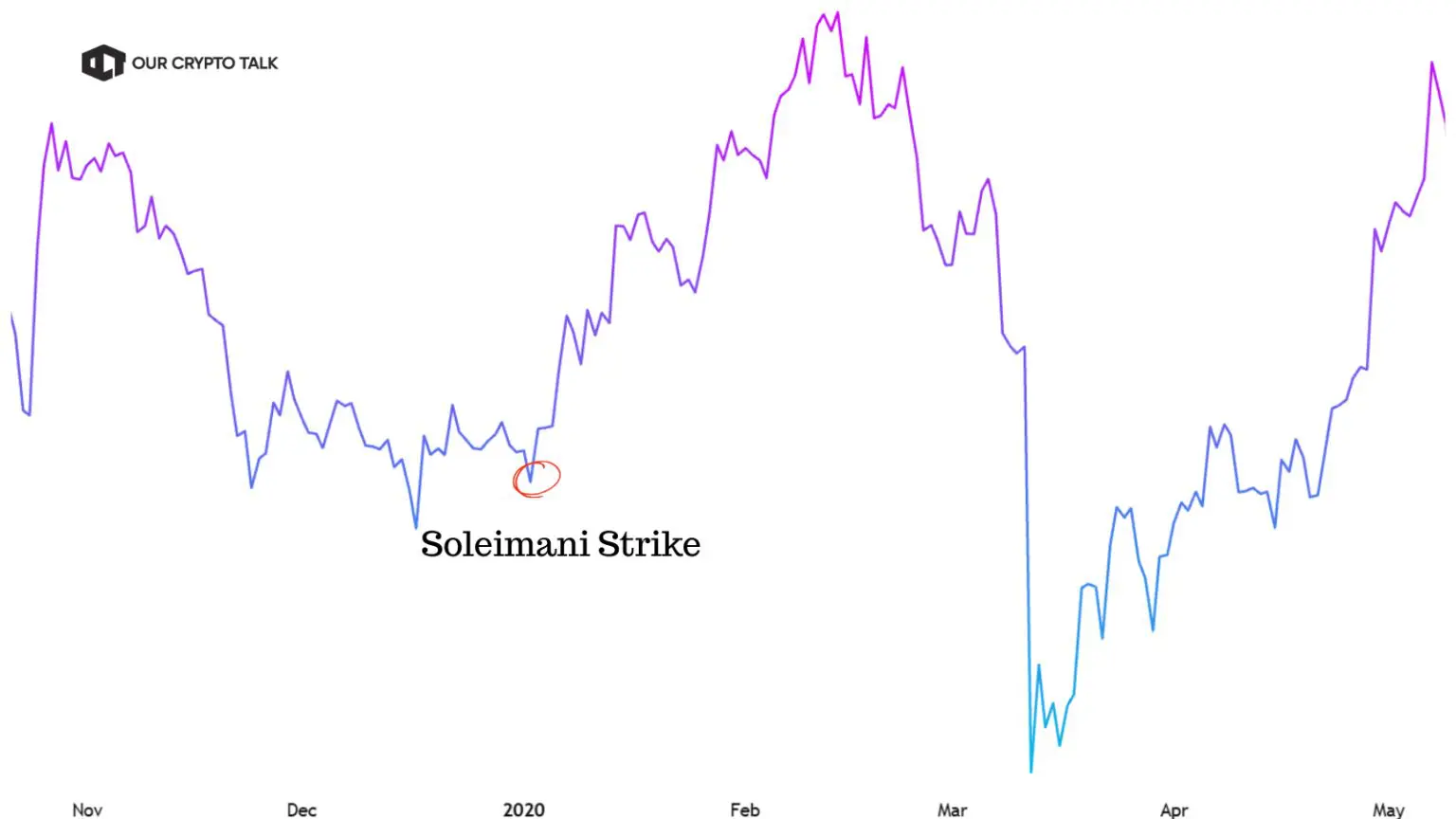
Unlike later conflicts, Bitcoin actually rallied. The price spiked from around $7,200 to above $7,300 immediately. Meanwhile, oil jumped 3%.
The market was much smaller and less institutional. Bitcoin traded below $8,000, and the digital gold narrative dominated. Retail investors treated the escalation as a reason to buy BTC as a hedge against geopolitical uncertainty.
Bitcoin rallied over 40% in the following month. In 2020, crypto remained retail-dominated. The buy-the-war instinct was strong because investors genuinely perceived BTC as an alternative safe haven. However, that narrative has since faced stress-testing and broken.
Russia launched a full-scale invasion of Ukraine, the largest military operation in Europe since World War II.
Bitcoin initially surged 20% in the first few days as speculation grew that Russian oligarchs would use crypto to bypass Western sanctions. But then reality hit hard.
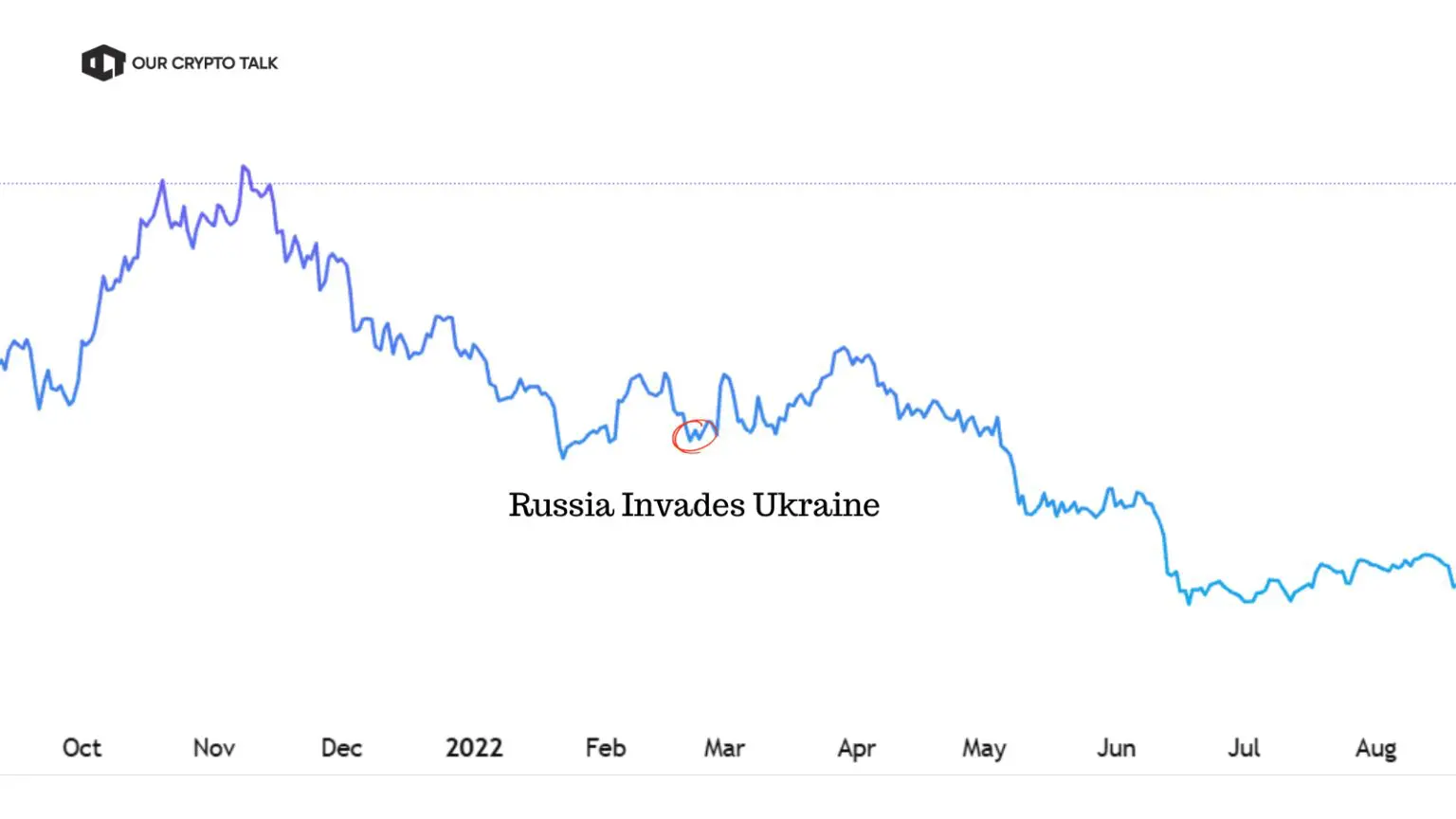
Over the following months, Bitcoin crashed 65%. The war drove European natural gas prices to historic peaks. Consequently, the Fed launched its most aggressive rate-hike cycle in 40 years. Energy disruption fueled inflation, and inflation forced tightening, creating a toxic combination for risk assets.
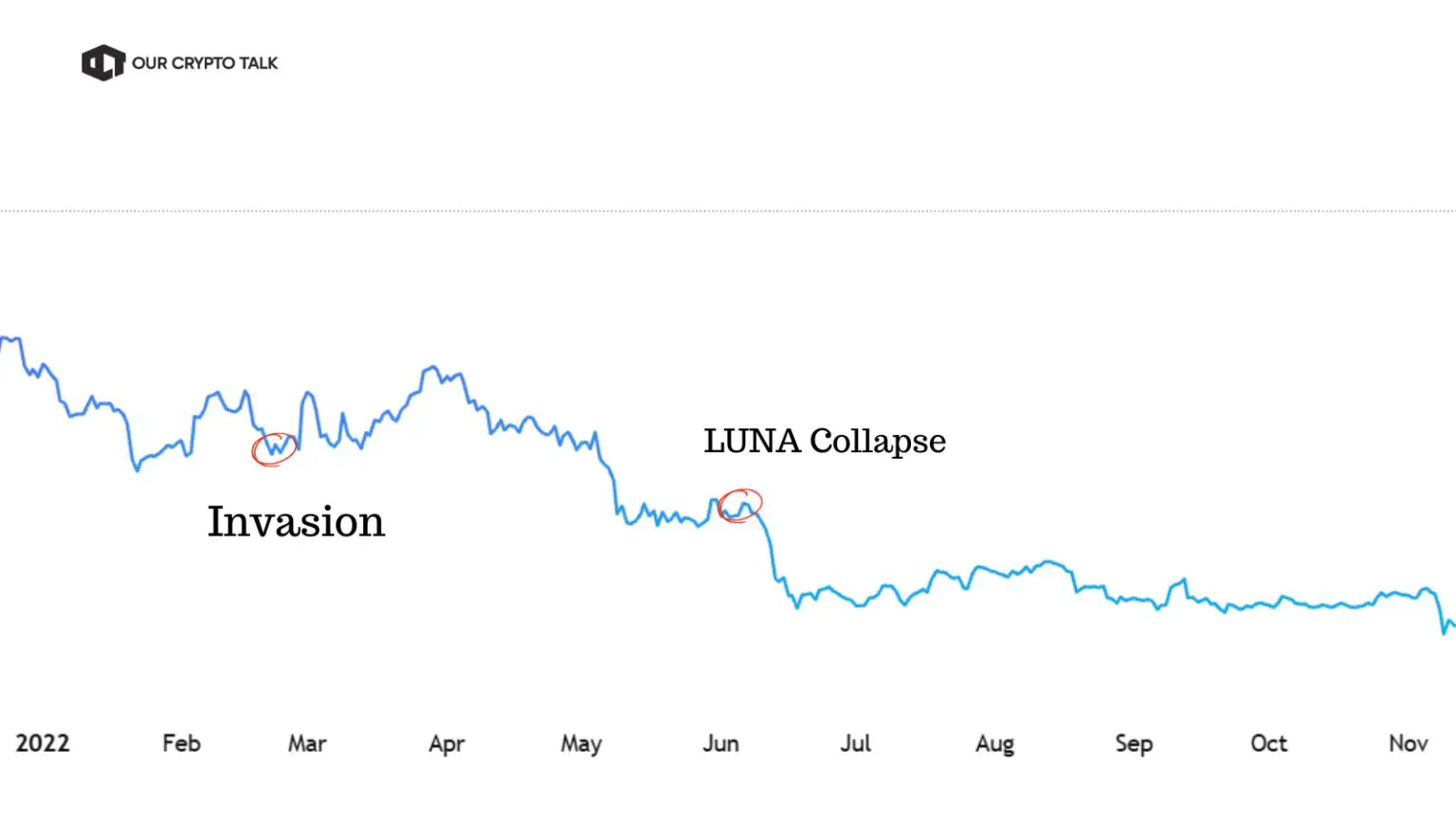
It took until mid-2023 for Bitcoin to fully recover to pre-invasion levels.
The conflict proved crypto’s utility. Ukraine raised millions in crypto donations. Simultaneously, Russia explored crypto as a sanctions evasion tool. Both narratives reinforced Bitcoin’s value as an alternative financial infrastructure.
The initial crypto move during a conflict can mislead investors. Ultimately, macro conditions like Fed policy, inflation, and energy markets determine the medium-term trajectory. The crypto market war impact doesn’t exist in isolation from broader economic reality.
Hamas launched a surprise attack on Israel on October 7, 2023. Israel declared war immediately.
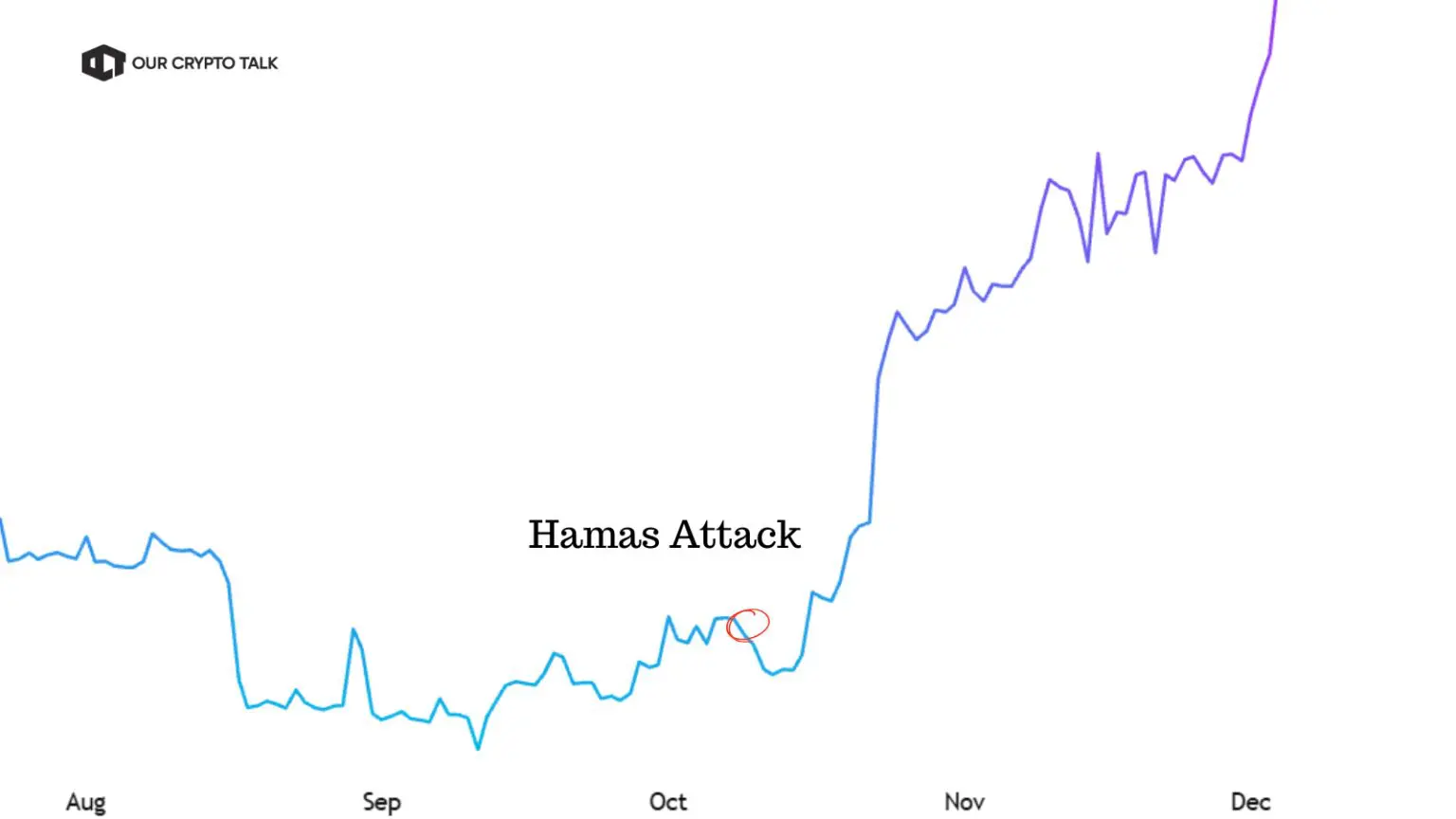
Bitcoin dipped briefly to around $27,000 but showed remarkable resilience. Within 50 days, it traded above pre-crisis levels.
The conflict, while devastating, remained geographically contained. Oil supply chains faced no direct threats. Moreover, institutional investors had entered the market through ETF anticipation, providing a demand floor.
Geographically contained conflicts with limited oil disruption risk have a diminishing impact on crypto markets. The crypto market war impact shrinks when the conflict doesn’t threaten global energy flows.
Iran launched a barrage of over 300 drones and missiles at Israel in retaliation for an Israeli strike on an Iranian embassy compound in Damascus.
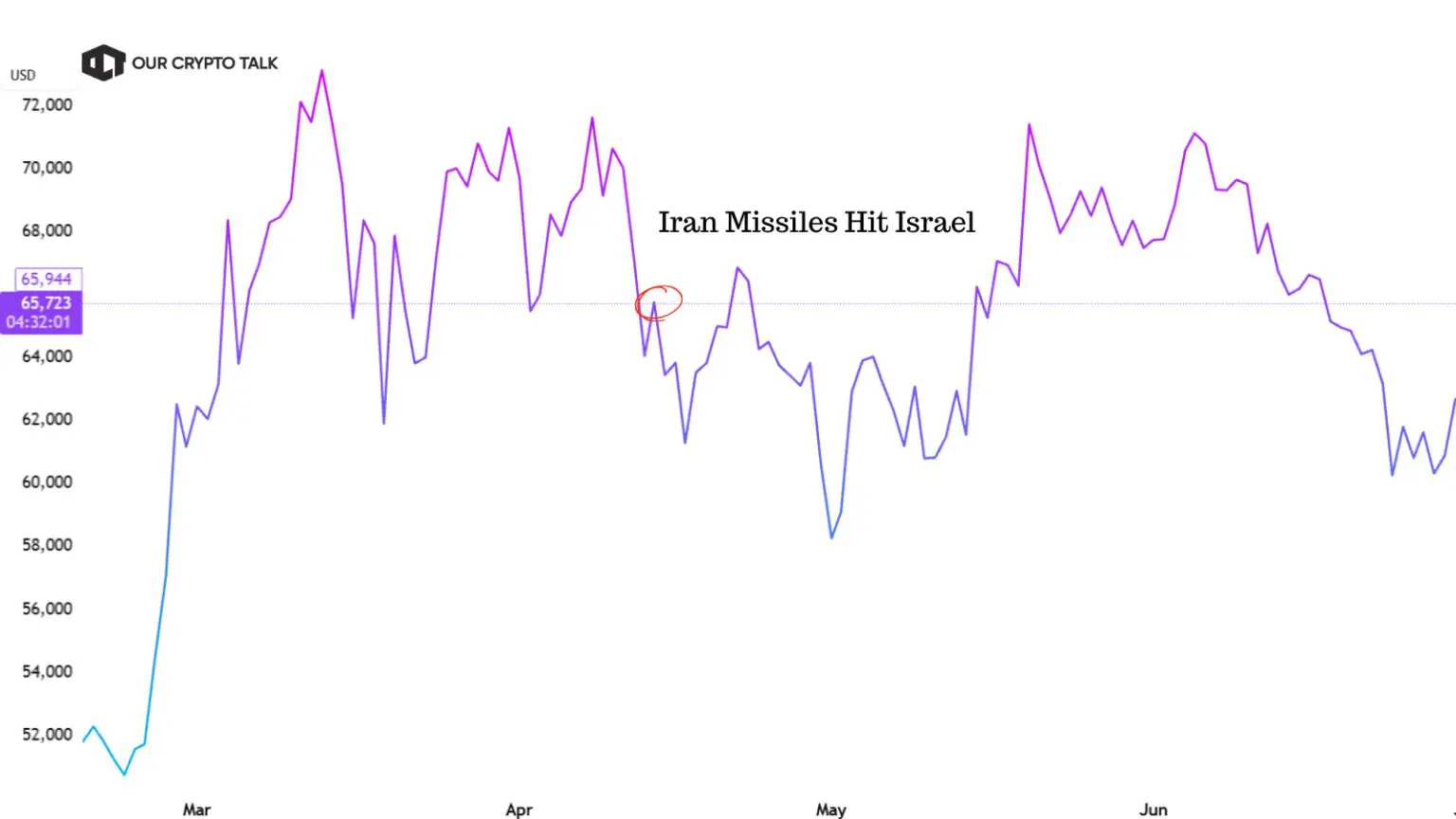
Bitcoin dropped nearly 8%, falling from approximately $67,000 to $61,000 in a single Saturday night session. Meanwhile, Ethereum and Solana saw declines of up to 20%.
The market stabilized within 48 hours once it became clear the escalation would not lead to a full-scale regional war.
This marked the first major geopolitical shock of the spot Bitcoin ETF era. BlackRock’s ETF saw a net inflow of $420 million in a single day, acting as a volatility buffer. On the day of the missile attack, Bitcoin’s volatility reached only about 3%, less than one-third of the Russia-Ukraine shock.
Institutional infrastructure like ETFs and spot demand now provides a structural floor that didn’t exist in previous conflicts. Professional capital is dampening the crypto market war impact.
In Operation Lion Rise, Israel attacked multiple Iranian cities, military bases, and nuclear facilities on June 13, 2025. The US bombed three Iranian nuclear sites.
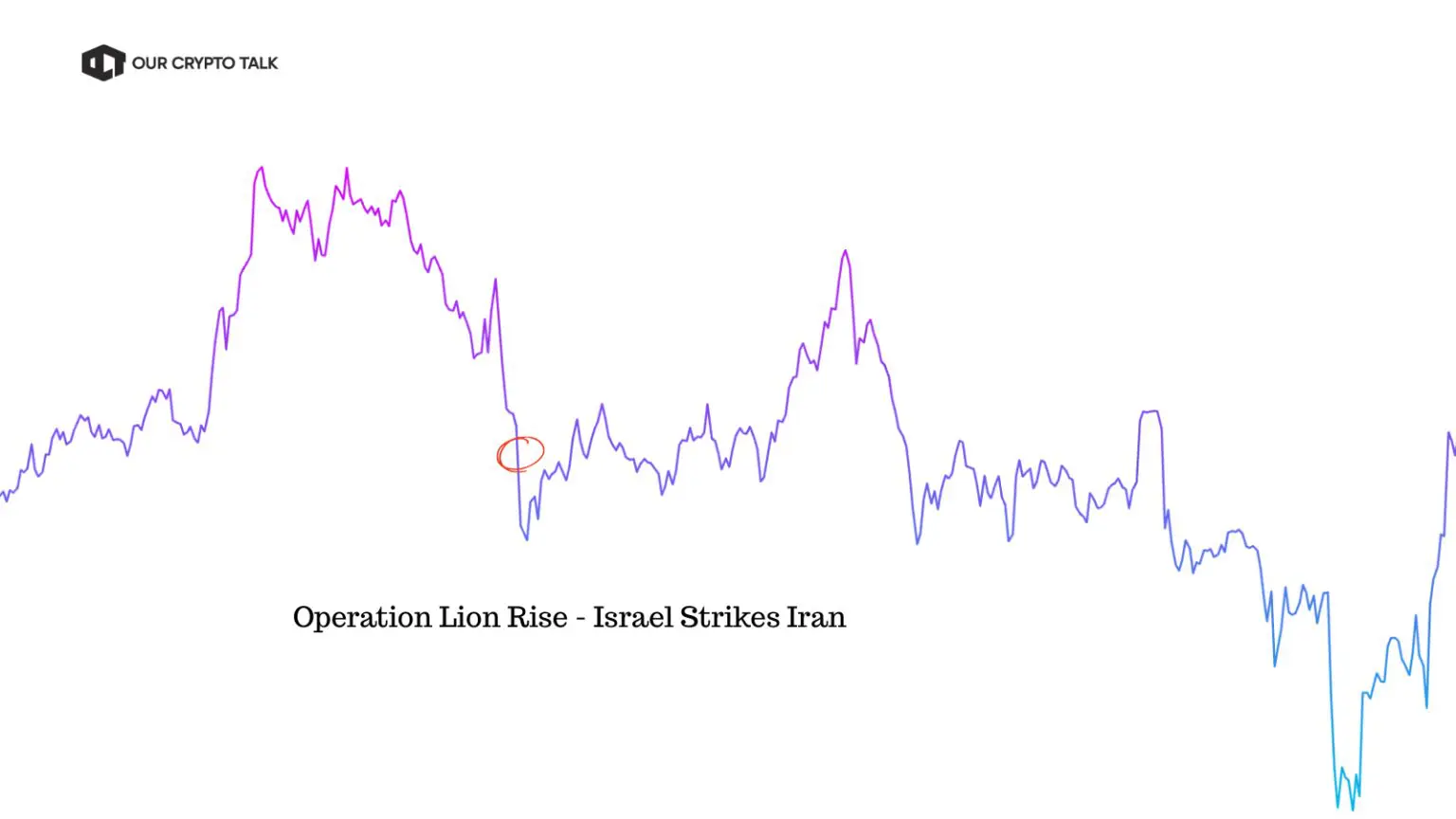
Bitcoin dipped from $110,000 to $103,000, a sharp but relatively contained 6% correction. Over $1 billion in long positions faced liquidation in 24 hours.
Within two months, Bitcoin rallied 62% to hit new all-time highs. The war-related volatility acted as a local bottom, clearing out leveraged positions and creating a clean launch pad.
Bitcoin bounced back above $101,000 within days as markets priced in a short-lived conflict. Gold pulled back from intraday highs, reinforcing the expectation that broader escalation was unlikely.
The June 2025 precedent shows that even direct US strikes on Iranian nuclear facilities led to a contained dip and rapid recovery. However, the critical difference with 2026 is scale. This time it’s not contained.
The February 28, 2026 escalation breaks from the pattern in several critical ways, making the crypto market war impact potentially more severe and prolonged.
Previous Iran-related shocks involved bilateral exchanges. Israel hits Iran, Iran retaliates, both sides telegraph their moves, and it de-escalates. This time, however, missiles have hit seven countries. Dubai’s skyline has smoke rising from it. Kuwait’s airport took a direct hit, and residential buildings in Bahrain suffered drone strikes. This is a regional war.
Trump explicitly called for the Iranian people to take over the government. CNN’s Fareed Zakaria assessed that the operation focuses on regime change, not a nuclear deal. This isn’t a limited strike. Rather, it’s an open-ended campaign. That introduces uncertainty that markets cannot price efficiently.
Iran’s Revolutionary Guard issued radio transmissions saying no ship is allowed to pass through the Strait of Hormuz. Whether this is a bluff or genuine, it introduces a tail risk for oil markets that didn’t exist in previous escalations. A sustained disruption could spike oil to $120-$150, consequently triggering global inflation and forcing central banks to maintain tight policy even as growth slows.
Bitcoin traded around $70,000 heading into this, well below its all-time highs. The market was already deleveraging. Previous shocks hit Bitcoin during uptrends. In contrast, this one hit during a period of existing weakness. That compounds the crypto market war impact because there’s less momentum to absorb the selling pressure.
The real test comes Monday when stock, oil, and bond markets open. Bitcoin’s weekend price action is happening in thin liquidity. If equities gap down hard, a second wave of selling could push Bitcoin toward or below $60,000. The full crypto market war impact won’t be visible until global risk assets reprice simultaneously.
There’s a unique wrinkle that most coverage is missing. Iran accounts for an estimated 2-5% of global Bitcoin hashrate. Mining operations there leverage heavily subsidized electricity, with an estimated cost of around $1,320 per BTC. Many of these operations reportedly have links to the IRGC. Chainalysis found that Iran’s total crypto activity exceeded $7.78 billion in 2025.
If strikes damage Iran’s already fragile power grid, that hashrate could drop to near-zero, temporarily extending block times and spiking transaction fees. However, when China removed over half the global hashrate in 2021, the network adjusted within weeks. An Iranian grid failure would be far smaller in comparison. Therefore, the crypto market war impact from hashrate loss is likely negligible compared to macro risk-off flows.
Based on every case study above, the crypto market war impact pattern is clear.
The uncomfortable truth is this: the crypto market war impact in the immediate term is brutal, but the long-term structural case for Bitcoin gets reinforced with every conflict. Fiat currencies fail. Borders close. Banks freeze accounts. Bitcoin keeps running.
Bitcoin is NOT a safe haven during the initial shock of a military escalation. That narrative has faced repeated testing and broken consistently. In the first 24-48 hours, Bitcoin trades like a high-beta risk asset. Institutional traders sell the most liquid thing they can access to cover margin calls, move to cash, or rotate into gold and oil. The crypto market war impact is always negative in the flash-crash phase.
Bitcoin is the fastest-recovering major asset after geopolitical shocks, and it’s the only large liquid market open on a Saturday afternoon when bombs start falling.
In a world where DeFi platforms like Hyperliquid let you trade oil and gold perpetuals 24/7, where Polymarket prices in military strikes hours before they happen, and where Bitcoin provides the only real-time global risk barometer while traditional markets sleep, crypto isn’t just reacting to wars anymore. Instead, it’s becoming the world’s 24/7 financial nervous system.
This weekend proved that crypto infrastructure, perpetual swaps, prediction markets, 24/7 settlement, isn’t a novelty. Rather, it’s a structural upgrade for how the world processes information and prices risk. The crypto market war impact is now inseparable from how global markets function during crises.
The crypto market war impact follows a pattern that has held across six major conflicts since 2020. First comes the flash crash. Then stabilization. Finally, recovery. Sometimes violent recovery. The question is never whether Bitcoin will recover. Rather, the question is how long the stabilization phase lasts and whether you have the conviction to hold through it.
These events destroy accounts. The $515 million in liquidations today proves that. Reduce leverage or face liquidation. The crypto market war impact destroys over-leveraged positions without mercy.
Every single major geopolitical crash in the last five years has created a buying opportunity on a multi-month horizon. The pattern isn’t a guarantee, but the data is overwhelming. The June 2025 Iran strikes offer the closest historical parallel. Bitcoin dipped 6%, then rallied 62% in two months.
This weekend proved that crypto’s role in the global financial system is no longer speculative. Instead, it’s operational. When bombs drop and traditional markets close, crypto becomes the only price discovery mechanism for global risk. That’s not a bug. Rather, that’s the feature that will drive trillions in capital into this space over the next decade.
The bombs will stop. The code won’t.
All the opinions in this article are that of the author and in no way are financial advice. Our Crypto Talk and the author always suggest you do your own research in crypto and to never take anything as financial advice that you read on the internet. Check our Terms and conditions for more info.