

Loading Ratings...



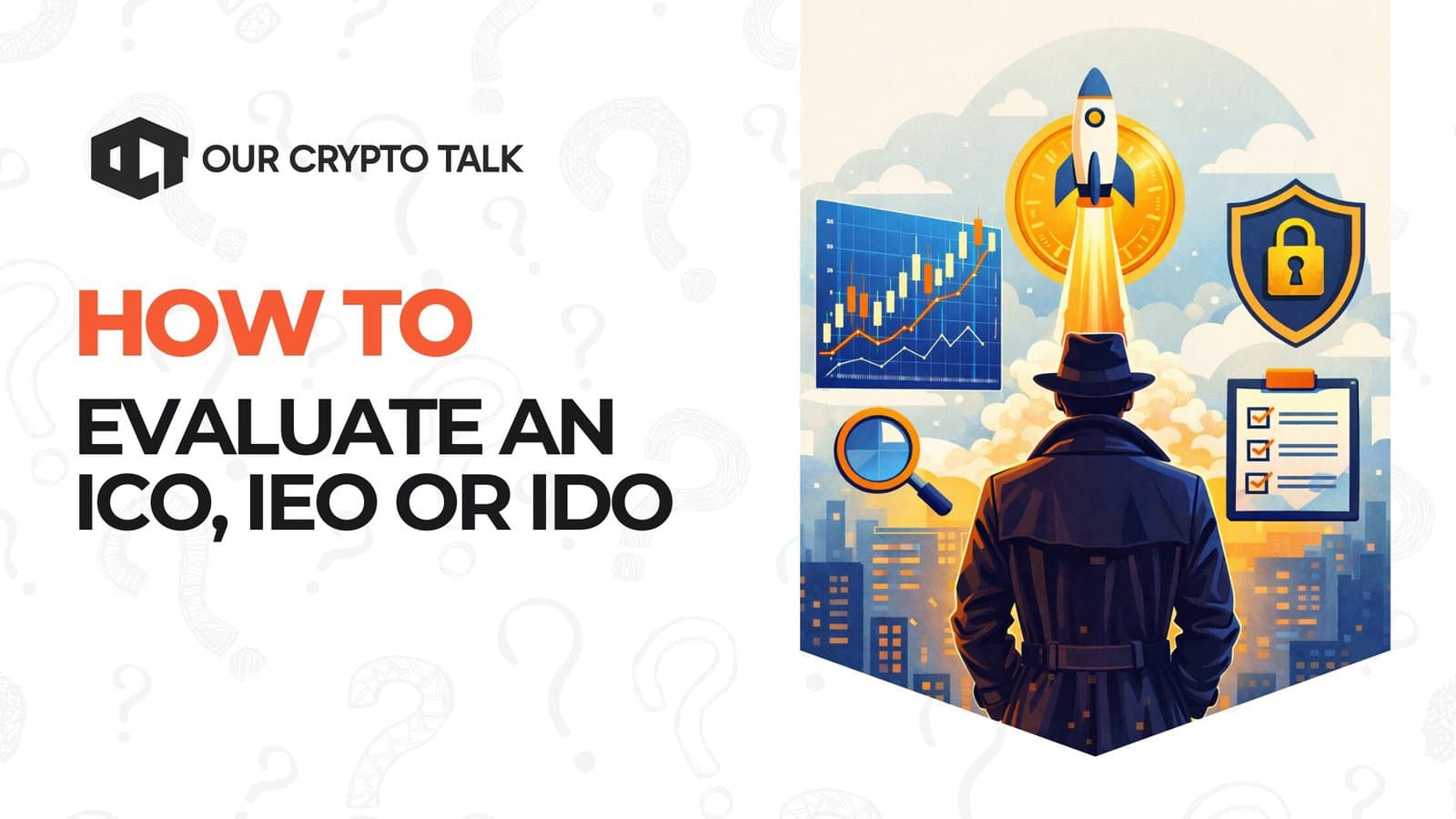
Learn how to evaluate an ICO, IEO, or IDO before investing. Simple steps to check team, tokenomics, risks, and red flags.

Author: Arushi Garg
Published On: Sat, 20 Dec 2025 17:39:23 GMT
Many people lose money in crypto not because the market is bad, but because they didn’t Evaluate ICO IEO IDO opportunities before investing. New tokens. Early access. Big promises. But they also come with risk, confusion, and misinformation.
You will learn how to evaluate an ICO, IEO, or IDO before investing using clear, repeatable steps. By the end, you will know exactly what to check, where to click, and how to spot red flags before putting in your money.
This is not about finding the next moonshot. It is about making informed decisions and avoiding obvious mistakes. Take it step by step. It is simpler than it looks.
An ICO, or Initial Coin Offering, is a way for a new crypto project to raise funds by selling its tokens directly to the public. The project team manages the sale themselves. Users usually send crypto, like ETH or USDT, to a wallet address and receive the new token in return. Because there is no middle platform reviewing the project, ICOs carry higher risk. Anyone can launch one, which is why careful evaluation matters.
An IEO, or Initial Exchange Offering, is similar to an ICO, but the sale is hosted on a centralized exchange. The exchange acts as an intermediary. Users participate using their exchange account, and the token is distributed by the exchange. IEOs are often seen as safer than ICOs because exchanges usually perform basic checks on the project before listing it. However, this does not mean the project is guaranteed to succeed.
An IDO, or Initial DEX Offering, happens on a decentralized exchange or launchpad. Tokens are usually sold through smart contracts, and users connect their wallets to participate. IDOs are permissionless, meaning there is no central authority controlling access. This allows faster launches but also increases risk if the smart contracts or token design are weak.
All three methods are ways for crypto projects to raise money early. The key difference is who controls the sale and how much oversight exists.
While ICOs, IEOs, and IDOs all raise funds for new crypto projects, the way they operate is not the same. Understanding these differences helps you evaluate risk more clearly before investing.
An ICO is fully managed by the project team. They control the token sale, the wallets, and the distribution. This gives the team flexibility, but it also means there is no external review. Because of this, ICOs carry the highest responsibility on the investor to verify everything.
An IEO is managed through a centralized exchange. The exchange handles user access, payments, and token distribution. Projects usually go through basic checks before being approved. This adds a layer of trust, but it does not remove risk. If the project fails, the exchange is not responsible for losses.
An IDO takes place on a decentralized exchange or launchpad. Users connect their own wallets and interact with smart contracts. There is no central authority controlling participation. This allows fast launches and open access, but it also increases technical and security risk if contracts or token design are weak.
The key differences come down to control, oversight, and responsibility. Knowing who manages the sale helps you decide how much verification is needed before investing.
When you invest early in a crypto project, you are stepping in before most people. That early access can offer upside, but it also comes with higher risk. At this stage, there is usually no long history to review. The product may still be under development. In some cases, there are no real users yet, only plans and promises.
This is why evaluating an ICO, IEO, or IDO before investing is important. Without evaluation, most losses happen for predictable reasons.
The first risk is scams. Some projects look polished, with clean websites and active social media. Behind the scenes, there may be no real product or long-term intention. Once the funds are collected, the team disappears. A few basic checks can help you avoid these situations.
The second risk is weak execution. Many teams are honest but inexperienced. They underestimate development time, overestimate demand, or build something people do not actually need. These projects often struggle after launch, even if the token initially performs well.
The third risk is poor token design. A project can have a decent idea but still fail because the token supply is badly structured. Large unlocks, high team allocations, or unclear utility can push the token price down after launch, regardless of market conditions.
Proper evaluation helps you spot warning signs early. It helps you understand how the token may behave once trading begins. Most importantly, it helps you decide whether the level of risk fits your personal goals.
You are not trying to predict the future. You are simply reducing avoidable mistakes. A small amount of research can protect you from most beginner losses.
Go to the official website.
Look for:
Open the whitepaper or litepaper.
Focus on:
You do not need to understand everything.
You should understand the main idea.
If the whitepaper avoids details or copies other projects, that is a warning sign.

Look for:
Search the names outside the website.
Anonymous teams are higher risk. Not always scams, but riskier.

Tokenomics means how the token supply works.
Check:

For IEOs:
For IDOs:
Reputable platforms reduce risk, but do not remove it.

Check Telegram, Discord, and X.
Look for:
If all messages are hype and price talk, be cautious.

Ask yourself:
Overpromising is common. Execution is rare.
Follow these steps carefully, stay cautious, double-check every detail, and use our website guides for tools and walkthroughs to help you evaluate projects with confidence.