Loading Search...


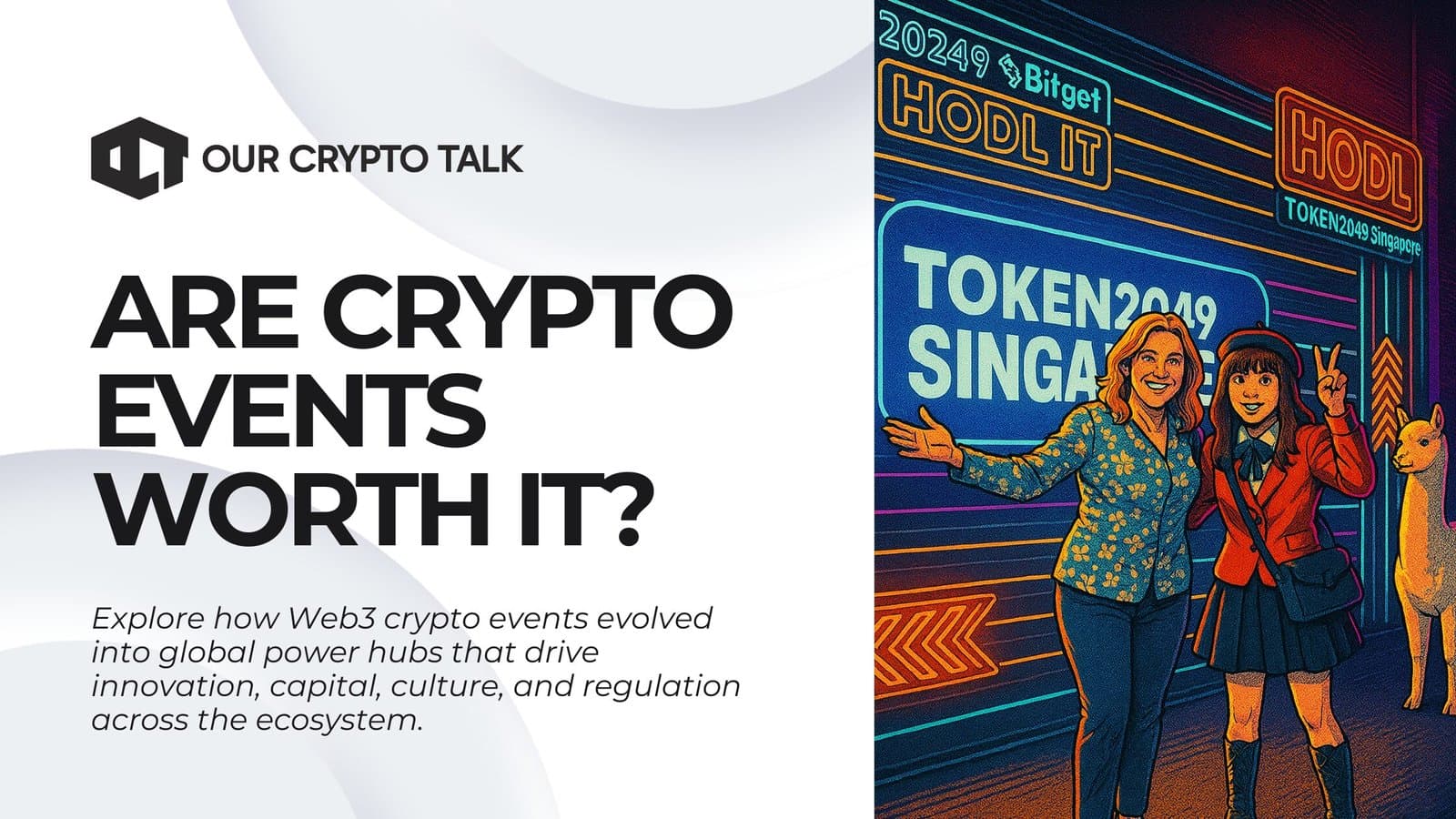
Explore how Web3 crypto events evolved into global power hubs that drive innovation, capital, culture, and regulation across the ecosystem.

Author: Tanishq Bodh
Imagine 25,000 people packed inside Singapore’s Marina Bay Sands Expo at three in the morning. Champagne flows freely. A DJ pushes techno across the hall. A layer-2 founder signs a $120 million funding round while dancing under neon light. That was TOKEN2049 Singapore last year, and the industry now treats scenes like this as normal. Web3 and crypto events no longer resemble traditional conferences. Instead, they operate as temporary autonomous zones where builders, investors, artists, regulators, and communities collide. Code is shipped. Capital moves in minutes. Narratives form in real time. As a result, the energy feels raw, immediate, and global.

Today, the circuit is larger than ever. More than 400 flagship Web3 and crypto events will take place across six continents. Together, they will generate more than half a billion dollars in direct revenue while facilitating billions in private deals, sponsorships, and token launches. What began as a 50-person hackathon in a squat in Berlin has since transformed into stadium-sized productions in Dubai, Singapore, Paris, and Abu Dhabi.
Consequently, these gatherings have become the industry’s central nervous system. They connect fragmented ecosystems, accelerate funding cycles, and serve as pressure valves during downturns and narrative engines during bull phases. For many teams, a single event can define the next year of building.
In this context, this article explores how Web3 and crypto events evolved from underground meetups to mainstream economic engines, and why they now matter more than ever. It also charts the cultural shift, the historical roots, and the rise of global mega-events that shape decentralization each year. Most importantly, it explains how these gatherings influence innovation, regulation, capital flow, talent pipelines, and community identity.
The world of crypto does not run on quarterly board meetings. It runs on moments. It runs on cities hosting thousands of dreamers at once. And ultimately, it runs on events that feel less like conferences and more like cultural accelerators.
This is the story of how the global circuit formed, and where it is headed next.
The first “crypto conference” did not feel like an industry fixture. It felt like a meetup. In November 2013, around 300 Bitcoiners gathered in an Atlanta hotel for the Bitcoin Conference. The crowd was mostly cypherpunks, libertarians, early miners, and a few curious outsiders. No venture capital, No sponsorship decks, No media frenzy.

Everything changed one year later. Devcon-0, held in June 2014 in Berlin, became the birthplace of Ethereum culture. Vitalik Buterin, Gavin Wood, and roughly 40 contributors camped inside a rented house in Kreuzberg. People slept on mattresses and worked through the night. There were no corporate banners. There was only a belief that programmable money could reshape the internet.
From 2015 to 2017, the crypto conference scene exploded.

Between 2018 and 2020, Asia stepped into the spotlight. Korea Blockchain Week, TOKEN2049 Hong Kong, and Dubai’s first Future Blockchain Summit created regional hubs. As Western regulators debated classification, Asian cities built infrastructure, sponsored events, and backed innovation. When COVID arrived, the industry adapted quickly. Devcon Bogotá 2020 shifted fully online and still attracted 9,000 attendees.
From 2021 to 2025, crypto entered the era of mega-events. Post-bear-market resilience, Middle Eastern sovereign wealth funds, and clearer regulations triggered the busiest event cycle in history. In December 2025 alone, Dubai and Abu Dhabi will host Binance Blockchain Week, Solana Breakpoint, and the Global Blockchain Show within a span of ten days.
What began as a grassroots movement has become a global circuit with real economic gravity.
Web3 and crypto events now span a diverse ecosystem. Although each serves a different purpose, they all reinforce the same decentralized culture.
Pure Developer Conferences
Devcon, ETHGlobal, Solana Breakpoint, and Cosmos Vers Days focus on builders. Expect marathon hackathons, ZK workshops, and caffeine-powered shipping sessions.
Investor and Founder Summits
TOKEN2049, Permissionless, and Messari Mainnet prioritize capital formation. Deal flow is the product, and meetings often run until sunrise.
Regional Ecosystem Weeks
Korea Blockchain Week, India Blockchain Week, Paris Blockchain Week, and Dubai Blockchain Week blend policy, community, and culture. They attract talent from across entire continents.
Bitcoin-Only Gatherings
Bitcoin Miami, Bitcoin Amsterdam, and Bitcoin MENA preserve the maximalist ethos with focused education and advocacy.
Policy and Enterprise Events
DC Blockchain Summit and the Digital Asset Summit draw regulators, banks, and fintech leaders. Suits outnumber hoodies.
Culture and Consumer Festivals
NFT.NYC, ApeFest, VeeCon, and NFT Paris merge art, gaming, collectibles, and celebrity culture into immersive experiences.
A typical week follows a familiar rhythm: keynotes in the morning, panels in the afternoon, side events sprawled across the city, private dinners for deal-makers, nightclub takeovers until dawn, and Telegram groups buzzing with introductions and term sheets. Then repeat for several days.
Web3 does not separate work and culture. It blends them, and events are the arena where everything converges.
TOKEN2049 did not set out to become the industry’s flagship event, yet that is exactly what happened. Launched in Hong Kong in 2018 with only 1,000 attendees, it has since grown into the most influential gathering in crypto. In essence, the formula is simple: two editions per year one in Dubai and one in Singapore with both cities acting as global crossroads for capital, builders, and institutions.
Furthermore, the 2024 numbers speak for themselves. TOKEN2049 Singapore hosted more than 20,000 paid attendees, 750 speakers, and nearly 800 side events that overtook the entire Marina Bay district. Meanwhile, Dubai’s April edition added another 15,000 paid attendees, marking the first time a Middle Eastern event reached global scale. Together, both editions represented more than one trillion dollars in combined project valuation.

TOKEN2049 attracts a rare mix. Exchange founders walk the halls next to hedge fund managers. Seventy percent of the top fifty crypto VCs arrive with full teams. Middle Eastern sovereign wealth funds send delegations. Celebrities drift in and out, sometimes speaking, sometimes just walking the expo floor. The result is a concentration of capital and influence that no other event has matched.
Signature moments have become part of its identity. Balaji Srinivasan’s “Network State” keynote in 2023 reshaped governance debates. Tether used the 2024 Dubai stage to unveil a UAE dirham stablecoin. Startups regularly launch tokens mid-event and watch them multiply in value before the afterparties end. The environment carries both excitement and risk, yet it captures the essence of Web3: speed, scale, and narrative power.
Dubai’s rise as a crypto superhub is one of the most rapid transformations in the industry’s history. In 2017 the city had zero licensed crypto firms. By 2025 the UAE hosts more regulated crypto companies than Singapore and Switzerland combined, supported by a government that treats digital assets as a strategic priority.
The calendar reflects this shift. December 2025 is widely called “Dubai Crypto Month,” with Binance Blockchain Week, the Global Blockchain Show, and Solana Breakpoint all taking place within ten days. More than three hundred side events fill the gaps between main stages. Every rooftop bar, DIFC lounge, desert resort, and art gallery becomes a venue for deal-making.
Dubai works because every layer of the ecosystem aligns. VARA, the world’s first independent crypto regulator, provides clarity that builders crave. Zero income tax attracts talent. Direct flights from most global hubs reduce friction. And a government eager to host innovation has helped major players like Bybit, OKX, and Crypto.com relocate headquarters to the region.
The culture here contrasts with Asia. The atmosphere is louder, more extravagant, and more state-coordinated, yet the deal flow is unmatched. A founder once told me he closed three term sheets in a single shisha lounge in 2024. Investors move quickly. Sovereign funds attend quietly. Family offices sit in the front row. The lines between private and institutional capital blur.
Dubai’s blockchain events do not just promote crypto adoption. They reshape it. With massive state support, a growing talent base, and global accessibility, the city has become one of the most important stops on the Web3 crypto event circuit. The MENA region is no longer the periphery. It is now a central pillar of the movement.
Korea Blockchain Week has grown into Asia’s most dynamic and culturally expressive Web3 gathering. Founded in 2018 by Factblock and Hashed, it saw record momentum in 2024 with more than 61,000 attendees across the week. The main IMPACT conference blended seamlessly with Micro Seoul, a massive EDM festival that turned the city into a blockchain carnival. Korea’s position as a tech-forward nation, where nearly one in four adults owns crypto, fuels the event’s scale.

KBW offers a unique blend of culture, capital, and consumer adoption. Korean conglomerates like Kakao and Naver anchor the ecosystem. Retail traders, NFT creators, and gaming studios fill the halls. Builders from Japan and Southeast Asia join the mix, creating a regional melting pot. For many companies, KBW serves as the gateway to Asia.
Devcon represents a different energy altogether. It remains the purest expression of Ethereum’s developer culture. Vitalik Buterin attends each year. The agenda centres on research, protocol upgrades, and open collaboration. Devcon-6 in Bangkok (2024) drew 12,500 developers from 130 countries. Sessions ranged from danksharding to rollup economics to hands-on node workshops for beginners.
Devcon refuses commercialization. No main-stage sponsors, No VIP tables, No marketing theatrics. It operates on meritocracy, attracting the people who write the code that shapes Ethereum’s roadmap. For new developers, attending Devcon often feels like joining a global family.
Together, KBW and Devcon anchor East Asia’s influence in Web3. One provides culture and mass adoption; the other offers depth and protocol innovation. Both stand as essential stops on the global crypto circuit.
Choosing the right event can determine whether your trip becomes a career milestone or an expensive distraction. With more than four hundred global Web3 and crypto events scheduled for 2025 and 2026, founders, investors, developers, and creators must be strategic. Not all conferences serve the same purpose. Some are built for fundraising, others for deep technical work, and a few exist almost entirely for networking at midnight rooftop parties.
A simple decision matrix helps cut through the noise.
If you are an early-stage founder raising your seed or Series A, your best opportunities sit at TOKEN2049 Dubai in April or TOKEN2049 Singapore in September. The density of VCs and family offices makes both locations ideal for fast deal flow. Developers should gravitate toward Devcon, ETHGlobal hackathons, or Solana Breakpoint, because these events focus on research, tooling, and hands-on building.
Veterans share a few rules that never fail. Buy tickets the moment they release because many sell out in hours. Book hotels nine to twelve months ahead because prices spike fivefold during event week. Spend most of your time at web3 crypto side events because the most meaningful relationships are built in small rooms, not on main stages. Bring business cards again because in 2025 the industry has rediscovered their strangely timeless charm. Finally, keep your schedule flexible. The most important meeting is usually the one you did not plan.
The next phase of web3 crypto events will look different from anything the industry has seen. Five trends already shape the coming cycle. AI and crypto will merge into a new meta, and every major event in 2026 will feature an “Agent Stage” showcasing autonomous bots trading, building, and transacting live. On-chain ticketing and identity systems will mature, with GET Protocol, POAPs, and DID standards turning attendance into verifiable credentials. Conferences will adopt carbon-negative commitments as chains like Solana and Tezos continue offsetting emissions from 2024. A harsh filter is coming with the next macro downturn, and only the strongest events will survive the 2026–27 bear market. Community-run event DAOs will rise as developers vote on cities, speakers, and treasuries, bringing decentralization full circle.
In 2014 Aya Miyaguchi described Devcon as an “infinite garden.” Eleven years later that garden has grown into a global forest. It is sprawling, unpredictable, and sometimes chaotic, yet it remains full of life. Web3 crypto events are no longer just gatherings. They are moments where the future of Web3 is shaped in real time.
If you work in this industry, the global circuit is no longer optional. It is the heartbeat of the movement. See you on the road.
All the opinions in this article are that of the author and in no way are financial advice. Our Crypto Talk and the author always suggest you do your own research in crypto and to never take anything as financial advice that you read on the internet. Check our Terms and conditions for more info.