Loading Search...


The Bittensor halving explained: TAO emissions drop 50% as institutional demand rises. Here’s how the supply shock impacts miners and subnets.

Author: Tanishq Bodh
Bittensor (TAO) is one of the most unique networks in crypto. It blends blockchain incentives with AI development, rewarding participants who contribute machine learning, inference, coding, agent work, and model intelligence. With a capped supply of 21 million TAO, the same as Bitcoin, Bittensor relies on programmed halving to slow down emissions, increase scarcity, and strengthen long-term value.
The first halving arrives on December 14, 2025, and the timing could not be more symbolic. As emissions drop by 50 percent, institutional demand is accelerating at the exact same moment, led by Grayscale’s expansion into TAO investment products. Scarcity meets accessibility, a combination that has defined every major supply-shock rally in crypto history.
This article breaks down the halving mechanism, why it matters for miners and subnet owners, how it reshapes the Bittensor ecosystem, and why institutions are preparing aggressively for the post-halving era.
A halving is a structural event that cuts the issuance of new TAO tokens in half.
Before the halving, the network issues roughly 7,200 TAO per day, which creates about 25 percent annual inflation. After the halving, that drops to 3,600 TAO per day, cutting inflation to 12.6 percent.
Unlike Bitcoin, which halves based on fixed block counts, Bittensor halves based on circulating supply milestones. The first halving triggers when total supply reaches 10.5 million TAO, exactly half of the maximum supply.
This makes the event directly linked to network growth rather than time. As more TAO enters circulation from mining and subnet rewards, the halving approaches naturally.
The next halving happens at 15.75 million TAO, then 18.375 million, and so on, until emissions taper toward zero around 2032–2036.
Bittensor’s emissions schedule is designed to encourage early participation while maintaining long-term scarcity.
Rewards are distributed across miners, validators, and subnet owners. Because emissions tighten immediately, every participant experiences reduced rewards. Underperforming subnets may deregister if the economics no longer justify their compute contributions.
An additional complexity is Bittensor’s dynamic TAO (dTAO) system: each subnet creates its own “Alpha” token, which mirrors the halving schedule. This allows liquidity and speculation to flow across subnets while preserving standard TAO’s scarcity model.
Finally, registration fees for new subnets are recycled back into the emission pool. This temporarily reduces circulating supply and can delay halving events by small margins.
The first halving takes place December 14, 2025.
Original estimates pointed to November, but recycling mechanisms and shifting subnet performance slowed down circulating supply growth. This halving marks the end of Bittensor’s first full emission cycle since launch in 2021, four transformative years that took the network from a niche research experiment to a multi-billion-dollar decentralized AI ecosystem.
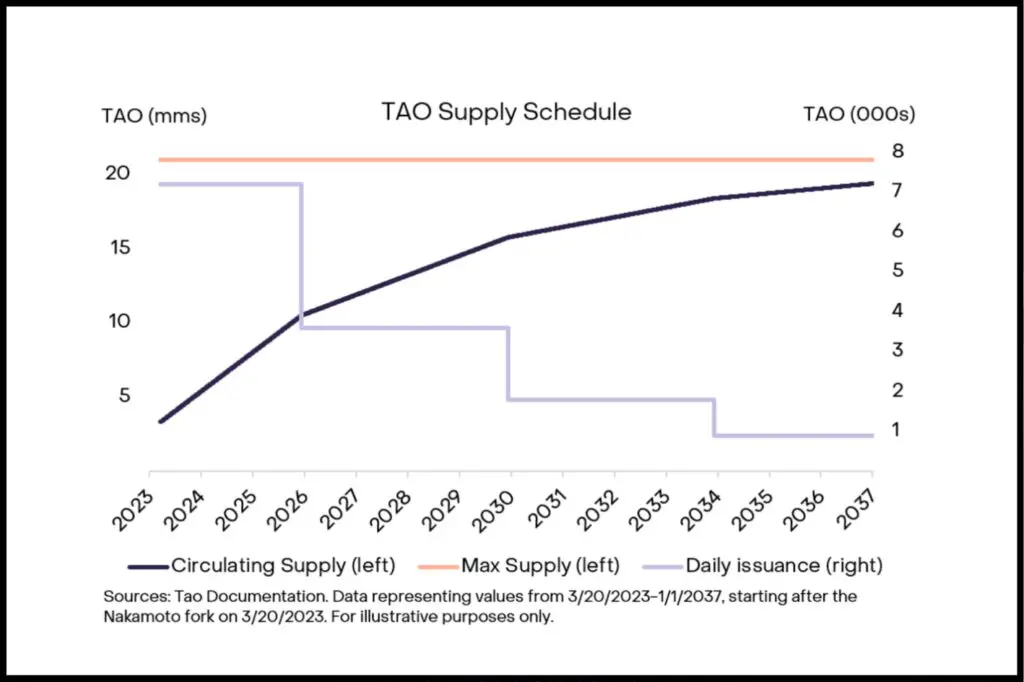
The halving hits at a moment of rising demand and tightening supply, which often sets the stage for price appreciation.
TAO recently traded around $278–$290, up roughly 15 percent in the days leading to the event. Analysts expect a broader move toward $540–$610 in the short term if sentiment remains strong and supply pressure drops as expected.
Halvings historically reduce sell pressure by cutting miner income. If demand holds, the result is a classic supply shock, the same mechanism that pushed Bitcoin through long-term price cycles.
But Bittensor pairs a halving with something Bitcoin did not have in its early days: institutional on-ramps.
Loading chart...
Grayscale has spent more than a year building investment pathways into Bittensor.
The sequence is no coincidence.
2024: Grayscale launches the first Bittensor Trust, giving accredited investors a regulated way to gain TAO exposure.
October 2025: Grayscale files a Form 10 for the TAO Trust, the same regulatory route that GBTC used before becoming a multi-billion-dollar product.
July 2025: xTAO lists on the TSX Venture Exchange, expanding retail access.
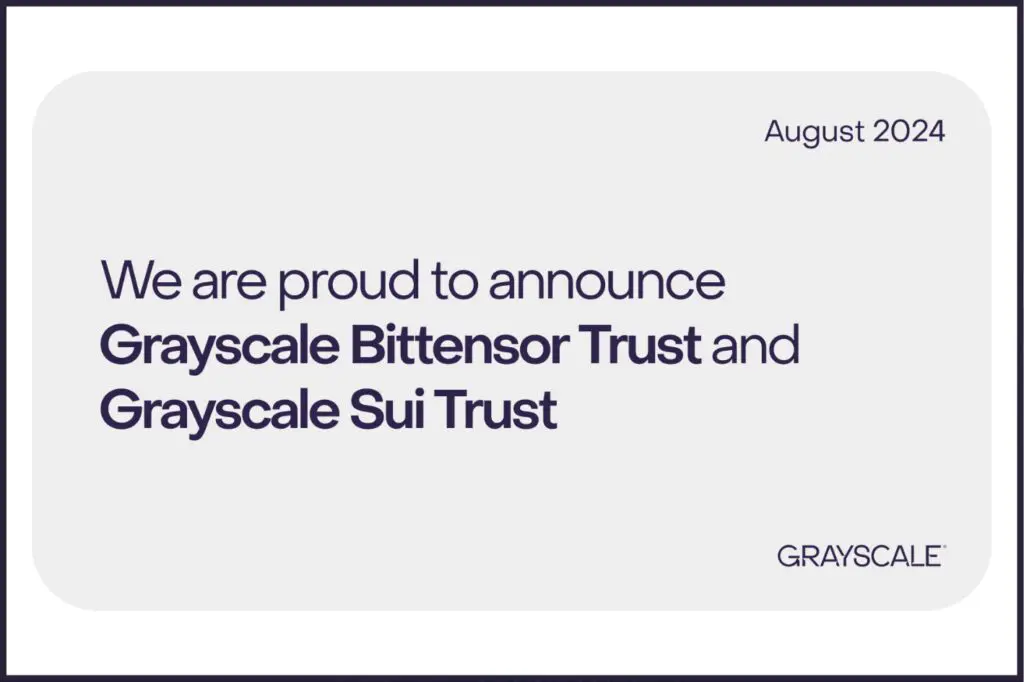
Each step brought TAO more legitimacy and reduced liquid supply by locking tokens inside long-term custodial vehicles. The Form 10 filing alone pushed TAO up more than 30 percent in a single day.
Now the halving arrives, and Grayscale is actively absorbing supply while emissions drop 50 percent overnight. This is how supply shocks compound.
Scarcity meets regulated demand.
Simple math. Powerful implications.
The halving ripples across the entire Bittensor ecosystem:
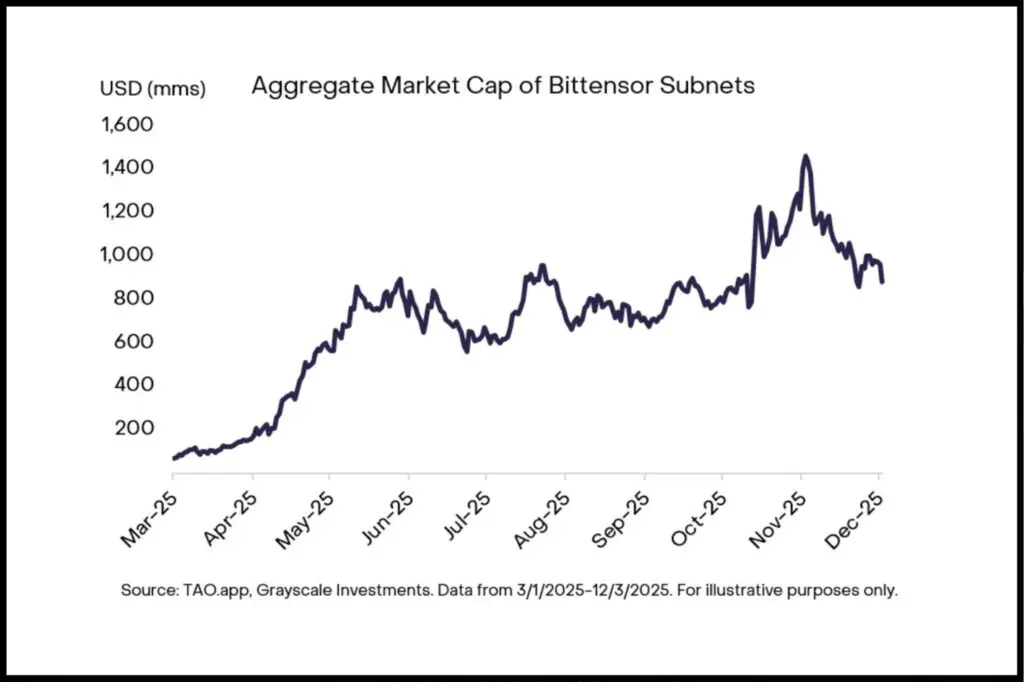
Strong subnets, especially those focused on model inference, ranking, validation, and agentic workflows are expected to consolidate dominance. Weaker subnets may dissolve or merge as emission pressure squeezes profitability.
This competitive pressure is part of Bittensor’s design. The network evolves by rewarding intelligence and efficiency. Halvings accelerate that evolution.
Bittensor is often described as the “Bitcoin of AI,” not because it mirrors Bitcoin’s code but because it gives economic value to computational intelligence. TAO is the base asset of an emerging decentralized AI market.
Several factors strengthen the AI-crypto narrative heading into and after the halving:
As emissions fall, any incremental increase in demand : from developers, miners, subnet founders, or Grayscale-driven institutions, will have amplified impact.
The halving is not guaranteed upside. Several risks remain:
Halvings compress supply but do not guarantee demand. Price depends on Bittensor continuing to attract builders, researchers, and enterprise interest.
Bitcoin began halvings without institutional access, ETFs, or ecosystem infrastructure.
Bittensor enters its first halving with:
This is a halving with both scarcity and utility, a rare combination in crypto.
The Bittensor halving is more than a supply reduction. It is an inflection point.
Grayscale’s involvement amplifies the effect. Every TAO removed from circulation now has deeper economic consequences because new supply is shrinking at the same time institutional capital is rising.
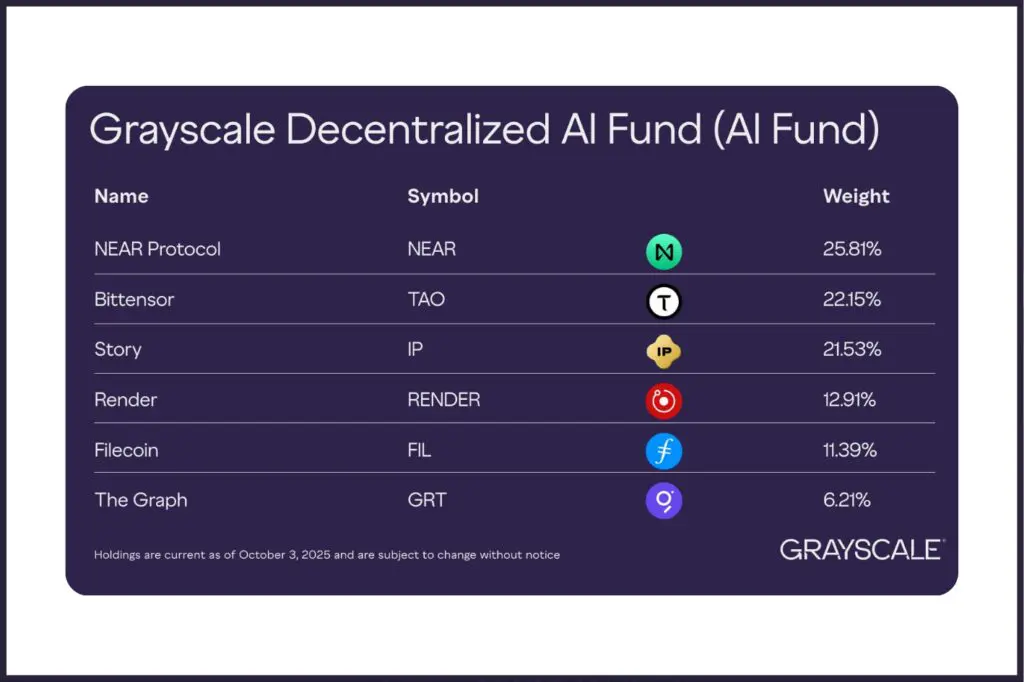
Whether TAO hits $450 or $600 in the next wave depends on a simple but powerful equation:
Halving -> Lower Emissions
Grayscale -> Higher Demand
Subnets -> Higher Utility
Institutions -> Stickier Capital
If Bittensor becomes a core layer of decentralized intelligence, this is the moment everyone will point to years from now, the moment the ecosystem tightened supply, expanded demand, and entered its next evolutionary phase. The halving is not hype. It is structural. And it is here.



AI Agent Payments Explained: Circle Nanopayments and the x402 Protocol
Top 7 Projects in the World Liberty Financial (WLFI) Portfolio
Where Crypto Actually Makes Money in 2026?
What If Satoshi Nakamoto Was Here in 2026?
AI Agent Payments Explained: Circle Nanopayments and the x402 Protocol
Top 7 Projects in the World Liberty Financial (WLFI) Portfolio
Where Crypto Actually Makes Money in 2026?
What If Satoshi Nakamoto Was Here in 2026?